
Argentina South Korea Nigeria Greece
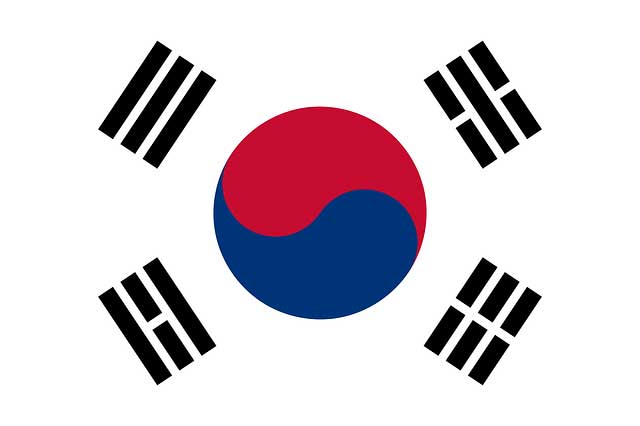
Being placed in the so-called Group of Death energized South Korea who went through the eight games of the final round, and indeed, the entire 14 match campaign unbeaten.
The third round against the likes of Jordan, Turkmenistan and North Korea presented few problems but was uninspiring and there wasn't too much optimism around before the start of the final stage especially with Iran, Saudi Arabia, North Korea and UAE the opposition – four teams with nine World Cup appearances between them.
The final stage was much more impressive than what had gone before as the Taeguk Warriors clinched qualification with two games, both at home at that, to spare. Four wins and four draws suggests consistency with a 2-0 win in Riyadh and 1-1 draw in Tehran the picks of the octet though it was a 4-1 win over UAE in October 2008 that really kick-started the campaign.
A 2-0 win in Dubai in June ended it and at the end of a sticky night's work in West Asia, players and fans dancing on the pitch as a seventh successive spot was secured.
 |
 |
South Korea Kit 1 |
South Korea Kit 2 |
South Korea v Greece 12 June; Port Elizabeth
South Korea v Argentina 17 June; Johannesburg
South Korea v Nigeria 22 June; Durban
Compared to 2006, this is a younger, more dynamic and more confident South Korean team. The only outfield member from 2002 that is guaranteed to play is none other than Park Ji-sung. Now 28, the Manchester United man is the skipper and the senior man in the team and is responsible for leading youngsters such as Lee Chung-yong, Ki Sung-yong and Lee Keun-ho through what will be a first World Cup.
The team looks to have a healthy mix of domestic-based players and those who ply their trade overseas. Kim Jung-woo, Cho Won-hee, Oh Beom-seok, Lee Woon-jae, Kim Chi-woo, Cho Hobng-yong and Kang Min-soo are all K-leaguers and are all looking for a starting place in South Africa.
2002 veteran Lee Woon-jae is going to be in between the sticks, barring injury or a severe loss of form and of the other stars from eight years ago, Lee Young-pyo will make the plane with Kim Nam-il, Cha Du-ri and Seol Ki-hyeon hopeful of doing so.
South Korea are looking to go one better than 2006, a tournament that brought four points but no place in the second round, and prove that 2002 was no fluke. It is not going to be easy but an opener against Greece, a team that Korea defeated in London in 2007, is an opportunity to get three points in the bag before tests come against Argentina and Nigeria, though the 2004 European champions will be thinking the same.
Korea's problem, as with many Asian teams, is scoring goals. Chances will be created but at times, watching strikers and midfielders, spurn such opportunities is a frustrating way to spend ninety minutes. There are signs of improvement however with the emergence of Park Chu-young as a genuine goalscorer who can also link the play but there is still the question of who will play along side the Monaco marksman. If goals are not forthcoming then the team's vulnerability at the back, particularly to set pieces could prove to be very costly.
An obvious choice but ‘Captain Korea' is vital to the national team. Discussions abound in his homeland as to whether he should be played on wide or in the middle but wherever he starts, Park has more freedom and responsibility for the Taeguk Warriors than he does for Manchester United and he relishes it. Park has promised that this is his third and last World Cup and he will not travel to Brazil in 2014, should the team qualify. Park is approaching 100 caps and his experience, intelligence and energy are vital to his young team-mates and his very presence gives the team a lift.
The striker will be approaching 24 by the time the World Cup finishes but at the moment, he is in the best form of his life. A huge star at the age of 19 when he was named Asia's Young Player of the Year, he has come of age only in the past 18 months since a move to Monaco. A solid first season by the Mediterranean has been followed by more goals and rumours of moves to the really big leagues.
Huh Jung-moo wasn't a popular choice to succeed Pim Verbeek at the end of 2007. He wasn't the first choice either and now it could be Mick McCarthy or Gerard Houiller preparing the East Asian team for South Africa. It was only in the final round of qualification that Huh started to look as if he may stay in the hotseat and reporters started to come round to the idea. Not afraid to give young players a chance and responsibility, Huh led the team on a 27-match unbeaten run that ended at the hands of Serbia in London in November.
1954, 1986, 1990, 1994, 1998, 2006 First Round. 2002 Semifinals
Will make it out of the group and maybe, just maybe beyond.
World Cup Betting
Won group B in the final round of Asian qualification.
2010 will be their eighth World Cup, easily the best record in
Asia.
Buy World Cup Tickets
As groups go there are harder and there are easier. Much depends on the opening match with Greece. Three points in Port Elizabeth and things will be looking good for the second round. Confidence is quite high that a win is attainable but what needs to happen is that Korea starts taking the chances that the team creates and solves its problems in defence, especially those that involve defending set pieces.
Goalkeepers: Kim Young-kwang (Ulsan), Lee Woon-jae (Suwon),
Jung Sung-ryong (Seongnam)
Defenders: Kim Dong-jin (Ulsan), Kim Hyung-il (Pohang), Oh Beom-seok (Ulsan), Lee Young-pyo (Al Hilal, Saudi Arabia), Lee Jung-soo (Kashima, Japan), Cha Doo-ri (Freiburg, Germany) Cho Yong-hyung (Jeju), Kang
Min-soo (Suwon)
Midfielders: Ki Sung-yong (Celtic, Scotland), Kim Bo-kyung (Oita Trinita, Japan), Kim Nam-il (Tomsk, Russia), Kim Jae-sung (Pohang), Kim Jung-woo
(Gwangju), Lee Chung-yong (Bolton, England), Park Ji-sung (Manchester United, England)
Forwards: Park Chu-young (Monaco, France), Ahn Jung-hwan (Dalian, China), Lee Seung-ryul (Seoul), Yeom Ki-hun (Suwon), Lee Dong-gook (Jeonbuk)