

The Bosnian national team manager Blaz "Baka" Sliskovic holds a unique distinction in modern football: besides coaching Bosnia and Hercegovina, the 45-year old former soccer idol is Hajduk Split manager. Or, at least, he is sincerely trying to fulfill that dual role.
After Ivan Katalinic was sacked as the Croatian champion's coach, Hajduk's directors tried to woo their former star player, but he only accepted the post under condition that he could keep his Bosnia job as well.
"I came to an agreement with Hajduk's directors that Bosnia would come first to me, so Hajduk would have to suffer on certain occasions," said Sliskovic, whose promising debut against Zadar (2-0 at home) was followed by a 0-3 loss at archrivals Dinamo Zagreb. Before the big match, Sliskovic supervised only one Hajduk's training session, and it showed.
While the Croatian press cannot understand Hajduk's gamble with the Bosnia manager, Sliskovic is being viewed with an ever-increasing scepticism in his homeland as well. In fact, the FA banned him from even mentioning Hajduk Split during the national team gathering for the Group 7 World Cup qualifier against Spain.
It may look as though the FA is eagerly awaiting his first serious slip to sack him, but Bosnia earned a good draw with the Spaniards in Zenica, which gave the coach a new lease of life in one of his current jobs.
Sliskovic is one of the cult footballing personalities throughout the former Yugoslavia. An ethnic Croat born in Mostar, in the predominantly Croat region of Hercegovina, he used to be a highly technical offensive midfielder.
Such were his skills that he was unreservedly respected on all grounds, regardless of ethnic or soccer affiliations. His arsenal of dribbles, passes, one-twos, swerving shots or ball-stopping skills actually made him a big crowd puller on his own, regardless of his team's position in the table.
Sliskovic's footballing prowess was matched only by his less than professional attitude towards his duties: he was known to disappear from the club for a couple of days, much in the style of George Best in his Manchester United heyday, only to win back the coach's confidence with another sensational performance.
Having debuted for Velez aged 16, he starred in the Yugoslav Olympic team that won fourth place at the 1980 Moscow Olympics, and lead his club to an epic FA Cup win over Zeljeznicar Sarajevo a year later. As an established star of Yugoslav soccer, he was then transferred to Hajduk Split, which would become the club of his heart.
After two initial seasons marred by injuries and compulsory military service, he went on to shine for three more years, frequently stunning crowds, opponents and teammates alike with breathtaking moves.
On several occasions he scored goals directly from corner kicks, notably against Red Star in the 1984 FA Cup final, while another of his legendary goals came against Sparta Prague in the UEFA Cup quarterfinals: a maliciously taken free kick from a sharp angle to the near corner of the Czech goal.
A major idol in Yugoslavia, Sliskovic signed for Olympique Marseille in 1986, but in spite of many good displays he was transferred to Pescara of Serie A just a year later. There he encountered another "phenom", the Brazilian Junior, with whom he struck up an immediate understanding.
The supremely gifted tandem was voted the best in the 1987/88 season ahead of Roma's Boniek-Voller, Milan's Gullit-Van Basten, and Inter's Passarella-Scifo.
Surprisingly, he was again offloaded, this time to Lens in France, without the selling club's true motives ever becoming known. Perhaps it was his supremely casual approach to practice or a poor propensity to defensive commitments that alienated his coaches and ultimately club owners.
By 1987 he had already lost his place in the Yugoslav national team, having collected just 26 caps - about one third of what experts and writers had predicted for him on his debut in 1979.
"From 35 yards onwards, he is great. But, he is thinking only of offense. If he paid half as much attention to defense, maybe he would be as good as Maradona," said the Yugoslav soccer guru, Miljan Miljanic, the former coach of Yugoslavia, Red Star and Real Madrid.
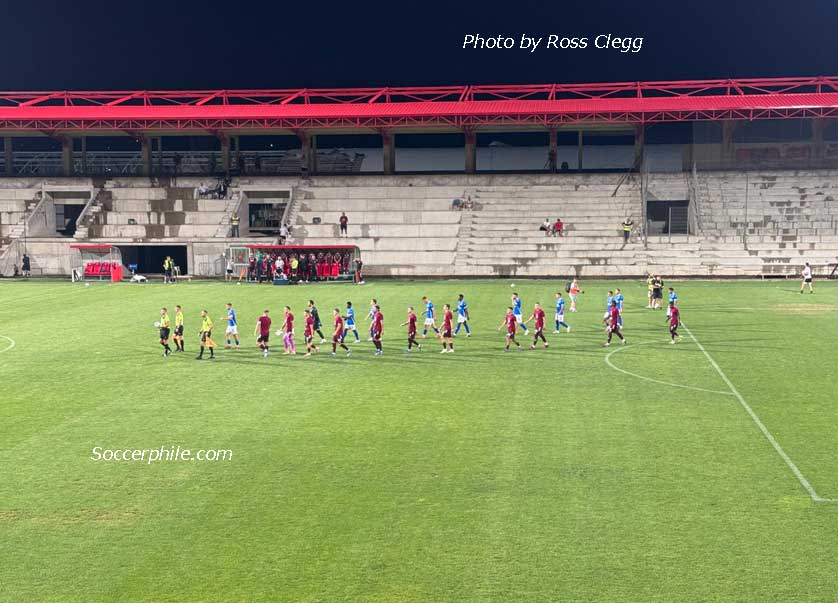 Football in Bosnia
After moving to Lens, Sliskovic would change teams on six more occasions, even coming back to Pescara for another spell, this time a middling season in 1992/93.
Still, he was good enough to help Hrvatski Dragovoljac to reach the Croatian First Division in 1996, before hanging up his boots at 37 and starting a chequered coaching career.
He managed, among others, Hrvatski Dragovoljac, and Bosnian clubs Zrinjski, Posusje and Brotnjo, whom he lead to the Hercegovina title, before the ethnic unification of the club scene in Bosnia and Hercegovina took place.
Named Bosnia and Hercegovina coach in 2002, he did a wonderful job, missing out on direct qualification for Euro 2004 by one single goal. On the last day of the competition, Bosnia had to beat Denmark at home to win Group 2, but could only draw and finished fourth behind Denmark and Norway and the highly-fancied Romania.
Sliskovic's ascension to the national team post coincided with the long-awaited unification of club football in the country, after years of ethnic Serb, Croat and Bosnian Muslim leagues.
The team now had a charismatic and a respected personality in charge, someone who openly stated that a player's ethnicity or religion played no role whatsoever as far as his chances of being called up for the national team were concerned.
"I can play ten or no Croats, depending on the shape they are in," said this Bosnian Croat, earning additional respect from all sectors of Bosnian society, adding: "For me, there is no difference between Hibic (Muslim), Grujic (Serb) or Papac (Croat). The only thing I care about is how one plays football, regardless of anything else."
So far, his recipe has proven good for the national team, but his attention now divided between two jobs may eventually prove to be his undoing. After all, was he not his own biggest enemy during his playing days?
 Home of FK Velež Mostar