
How to get to J.League Stadiums in Japan plus information on stadium capacity and other useful J-League stadium information. See a listing of J.League grounds with images from A-Z (Albirex to Yokohama Marinos) including J1, J2, J3 and JFL clubs.
Albirex Niigata | Avispa Fukuoka | Azul Claro | Belugarosso Iwami | Cerezo Osaka | Consadole Sapporo | Ehime FC | Fagiano Okayama | FC Gifu | FC Tokyo | Fujieda MYFC | Gainare Tottori | Gamba Osaka | Giravanz Kitakyushu | JEF United | Jubilo Iwata | Kagoshima United | Kamatamare Sanuki | Kashima Antlers | Kashiwa Reysol | Kataller Toyama | Kawasaki Frontale | Kyoto Sanga | Machida Zelvia | Matsumoto Yamaga | Mito Hollyhock | Montedio Yamagata | AC Nagano Parceiro | Nagoya Grampus | Oita Trinita | Omiya Ardija | Reilac Shiga | Roasso Kumamoto | Sagan Tosu | Sanfrecce Hiroshima | Shimizu S-Pulse | Shonan Bellmare | Atletico Suzuka | Thespa Kusatsu | Tochigi SC | Tokushima Vortis | Tokyo Verdy | Urawa Reds | Vegalta Sendai | Veertien Mie | Ventforet Kofu | Vissel Kobe | V-Varen Nagasaki | Yokohama FC | Yokogawa Musashino FC | Yokohama Marinos | National Stadium
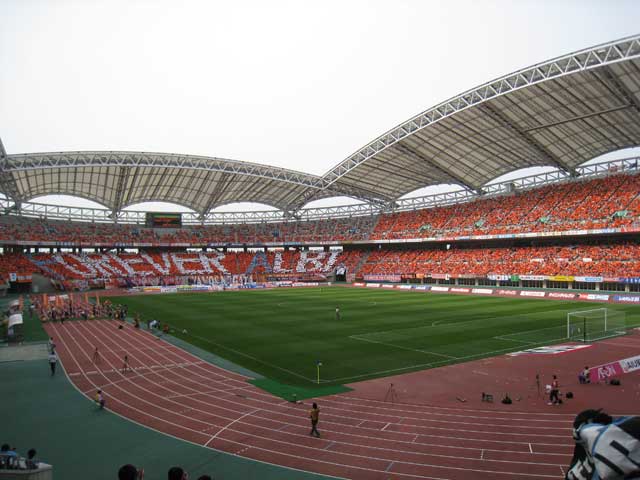
Home ground: Niigata 'Big Swan' Stadium
Address: 68 Seigoro, Niigata-City, Niigata 950-0933
Capacity: 42,300
When built: 2001
Nearest train station: JR Niigata Station
Nearest bus stop: Sports Koen
Other useful info: Known colloquially as 'Big Swan' as the roof of the stadium is supposed to resemble a resting swan.

Home ground: Hakata-no-Mori Stadium (Higashi-Hirao Park Hakatanomori Football Stadium)
Address: 2-1-1 Higashihirao-koen, Hakata-ku, Fukuoka City, Fukuoka 816-0052
Capacity: 22,563
When built: 1989
Nearest train station: Fukuoka Airport Station
Nearest bus stop: Higashi Hirao Koen Iriguchi
Other useful info: The ground is a fair distance from Fukuoka city centre and the nearest train station, so bus is the best method of travel to attend a game here. The stadium is now known as Best Denki Stadium for sponsorship reasons. Between 2008 and 2019 it was the Level-5 Stadium again for sponsorship reasons.

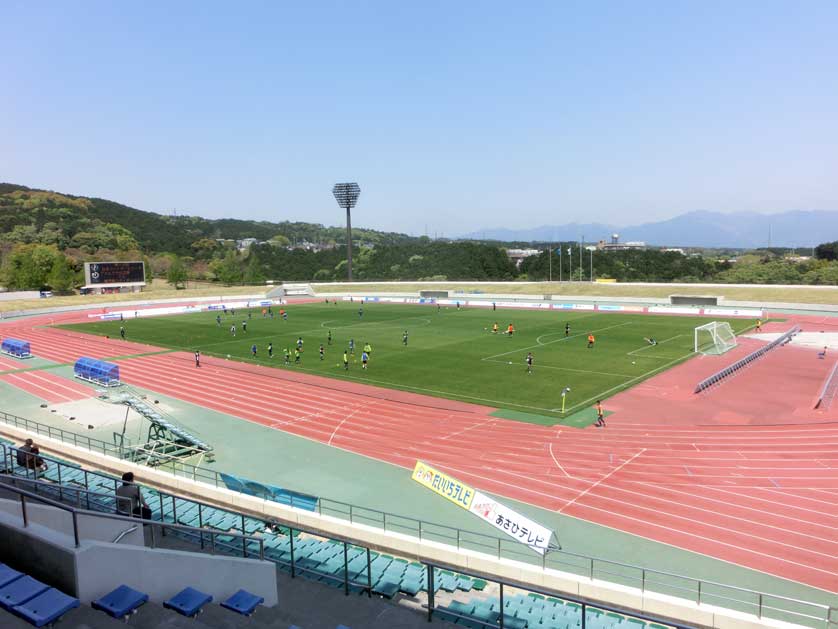
Home ground: Ashitaka Park Stadium
Address: 202 Ashitaka, Numazu, Shizuoka 410-0001
Capacity: 10,000
When built: 1996
Nearest train station: JR Numazu Station
Nearest bus stop: Ashitaka Undo Koen
Other useful info: Take bus 711 from Numazu Station North Exit. There are grass banks behind each goal with one covered stand (capacity 5,000) at the side of the pitch.
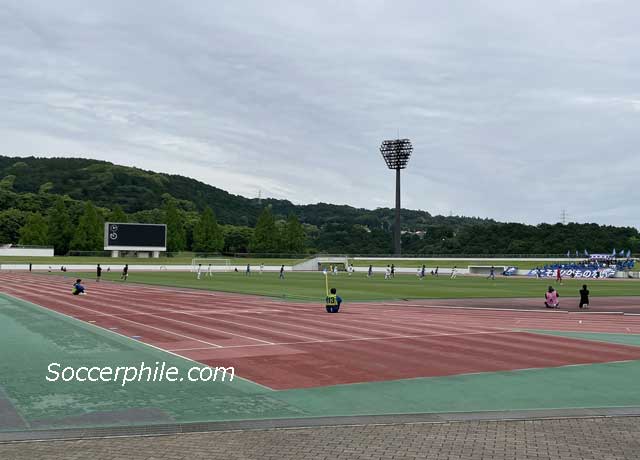
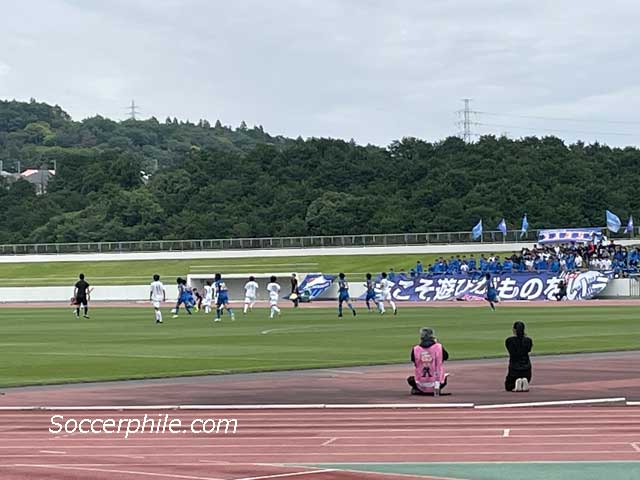
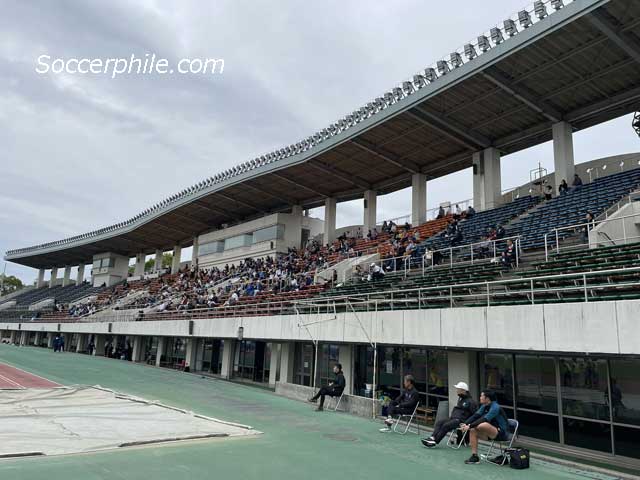

Home ground: Sun Village Hamada Soccer Ground
Address: 2457 Kamikoucho, Hamada, Shimane 697-0005
Capacity: 2,000
When built: 1996
Nearest train station: JR Hamada Station
Nearest bus stop: Kokubunji
Other useful info: There is no public transport direct to the ground which is 20 minutes on foot from the nearest bus stop.
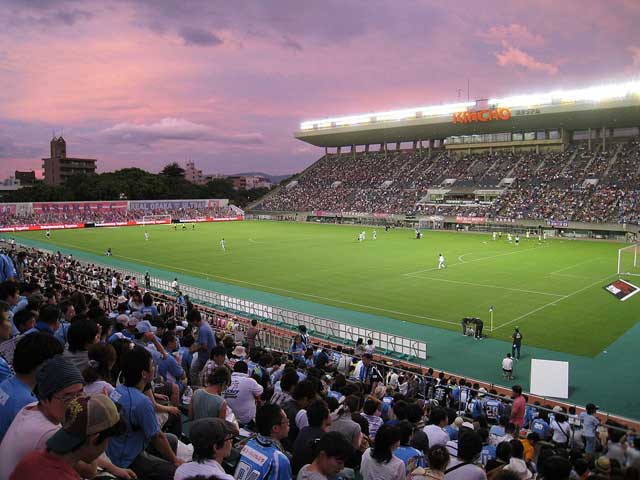
Yodoko Sakura Stadium in Osaka is the more usual home ground of J.League club Cerezo Osaka, rather than the much larger and adjacent Nagai Stadium, which is more commonly used for prestige friendlies and matches against the bigger J.League sides and so-called 'Osaka derbies' with Cerezo's crosstown rivals Gamba.
Home ground: Yodoko Sakura Stadium
Address: 1-1 Nagai-Koen, Higashisumiyoshi-ku, Osaka City, Osaka 546-0034
Capacity: 24,481
When built: 1987
Nearest train station: Nagai Station on the Midosuji Line of the Osaka subway
Nearest bus stop: Gojosuji

Home ground: Nagai Stadium
Address: 1-1 Nagai-Koen, Higashisumiyoshi-ku, Osaka City, Osaka 546-0034
Capacity: originally 45,409 (now 47,000)
When built: 1996
Nearest train station: Nagai Station on the Midosuji Line
Nearest bus stop: Gojosuji
Other useful info: The stadium was refurbished for the 2007 World Athletics Championships.
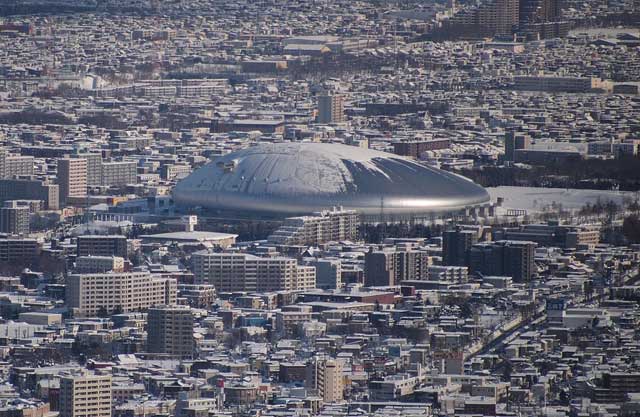
Home ground: Sapporo Dome
Address: 1 Hitsujigaoka, Toyohira-ku, Sapporo City, Hokkaido 062-0045
Capacity: 41,580
When built: 2001
Nearest train station: Fukuzumi Subway Station
Nearest bus stop: Sapporo Dome Mae
Other useful info: One of the most high-tech football stadiums in the world, the Sapporo Dome alternates between an artificial pitch used for baseball and a turf pitch - which is grown outside and lifted into the stadium prior to match days.
Home ground: Sapporo Atsubetsu Park Stadium
Address: 1-2-1 3-jo Kaminopporo, Ashibetsu-ku, Sapporo City, Hokkaido 004-0033
Capacity: 20,005
When built: 1980
Nearest train station: Oyachi Station
Nearest bus stop: Atsubetsu Koen Iriguchi
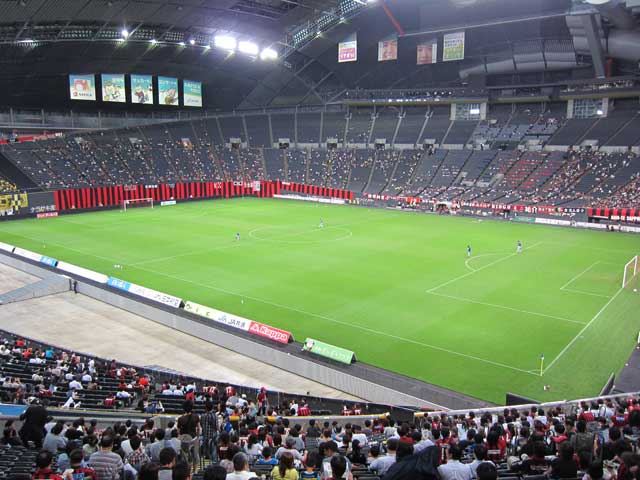
Other useful info: The spiritual home of Consadole, the Atsubetsu Park Stadium is decrepit compared to the ultra-modern Sapporo Dome, and the wide running track makes it difficult to generate an atmosphere here.
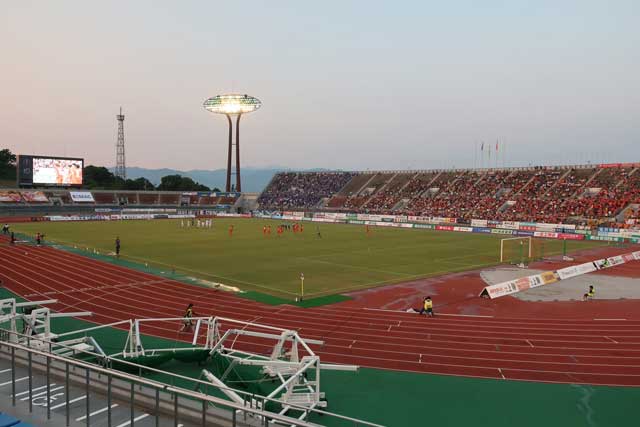
Home ground: Ehime Matusyama Athletic Stadium
Address: 1139 Ido-cho, Matsuyama City, Ehime 791-1114
Capacity: 20,000
When built: 1980
Nearest train station: Matsuyama JR Station
Nearest bus stop: Ehime Koen
Other useful info: The official name of the stadium is the somewhat comical "Comprehensive Movement Park" now known as Ningineer Stadium.
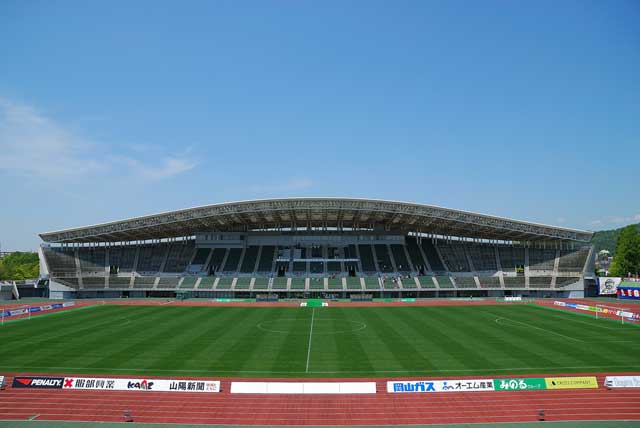
Home ground: Momotaro Stadium
Address: 2-1-11 Izumino, Kita-ku, Okayama 700-0985
Capacity: 20,000
When built: 1957
Nearest train station: Hokaiin-eki
Nearest bus stop: Okayama University of Science
Other useful info: Named for the popular Japanese folk hero, there is a statue of 'Momotaro' and his animal friends outside the stadium. Presently known as City Light Stadium.
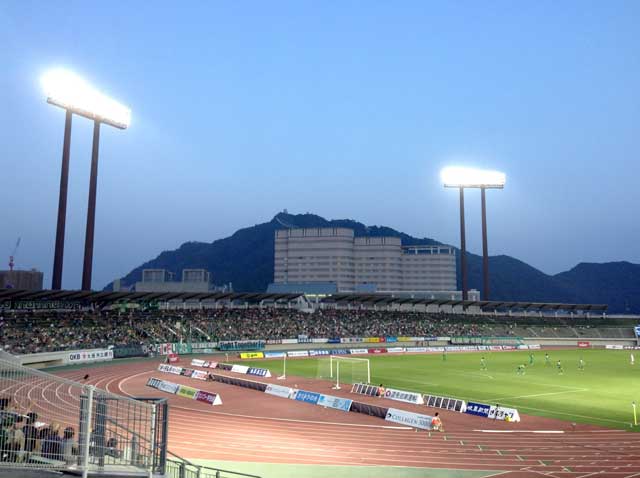
Home ground: Nagaragawa Stadium
Address: Nagarahara, Fukumitsu, Ono 2675-28, Gifu City, Gifu 502-0817
Capacity: 31,000
When built: 1990
Nearest train station: Gifu JR Station or Gifu Meitetsu Station
Nearest bus stop: Gifu Memorial Center-mae or Nagaragawa Kokusaekaigijo Kitaguchi
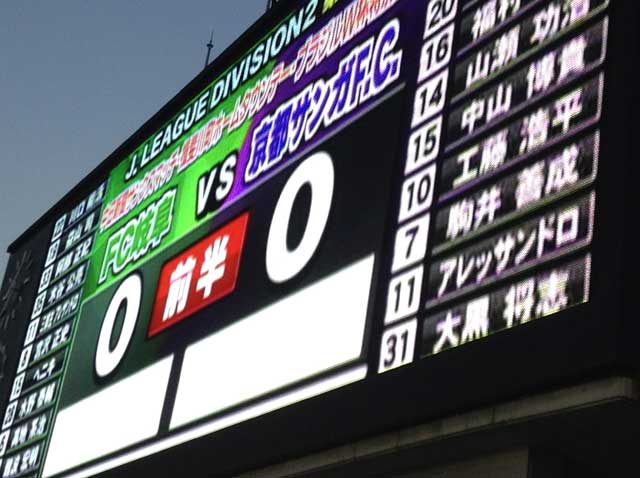
Other useful info: The Nagaragawa Stadium is the home ground of FC Gifu who gained J2 status in 2008 and is part of the Gifu Memorial Center sports complex situated on the north bank of the Nagara River (Nagaragawa).
The stadium has a running track so spectators are a bit removed from the action. Not all the stadium is covered and though the grass banks are great for picnics they are not pleasant in the rain. Nagaragawa is north of the city center and can be accessed by bus from both the JR and Meitetsu stations. The journey time is about 20 minutes. Buses back after a game are crowded.
Sports facilities at Nagaragawa Stadium include an athletics track, a baseball field (used occasionally by the Chunichi Dragons pro-baseball team), tennis courts, a swimming pool, a martial arts building and indoor stadia for volleyball, gymnastics, table tennis, basketball etc.
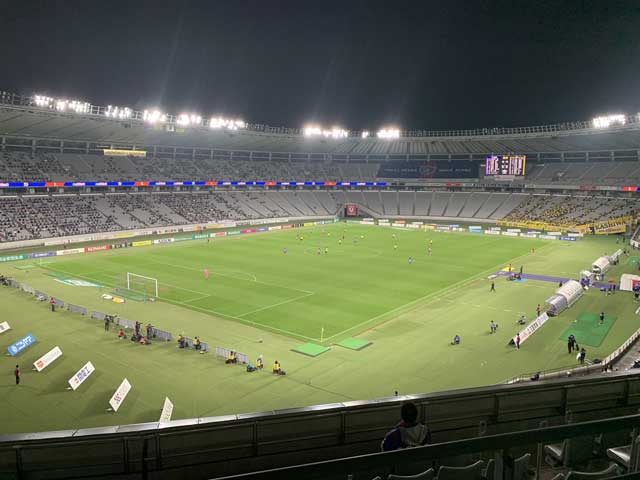
Home ground: Ajinomoto Stadium
Address: 376-3 Nishi-machi, Chofu-shi, Tokyo 182-0032
Capacity: 50,000
When built: 2000
Nearest train station: Tobitakyu Station
Nearest bus stop: Ajinomoto Stadium Minami-guchi
Other useful info: Ajinomoto Stadium did not host any matches at the 2002 FIFA World Cup, despite being one of Japan's most high-tech stadiums.
Read more on Ajinomoto Stadium
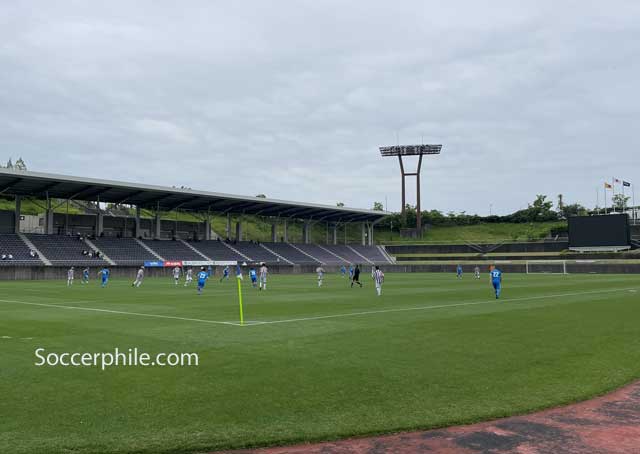
Home ground: Fujieda Soccer Stadium
Address: 100 Hara, Fujieda, Shizuoka 426-0086
Capacity: 13,000
When built: 2002
Nearest train station: Fujieda Station
Nearest bus stop: Horinouchi-shita
Other useful info: Wisteria flowers can be seen on the club logo and MYFC adopt the color purple for their home jersey.
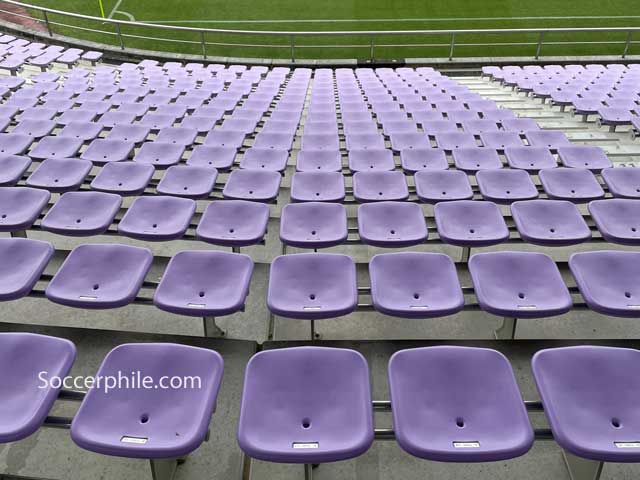
Home ground: Axis Bird Stadium (previously Tottori Bank Bird Stadium)
Address: 253-1 Kume-cho, Yonago-shi, Tottori 683-0824
Capacity: 16,033
When built: 1996
Nearest train station: Tottori Station
Nearest bus stop: Kurata Primary School
Other useful info: Tottori's home ground is actually Higashiyama Athletics Stadium in Yonago but as the stadium does not meet J. League requirements, they are forced to play in Tottori city. Presently called Axis Bird Stadium.

Home ground: Suita City Football Stadium (Panasonic Stadium Suita Osaka)
Address: 3-3 Senri Banpaku-koen, Suita, Osaka Prefecture 565-0826
Capacity: 39,694
When built: 2016
Nearest train station: Banpaku Kinen Koen
Nearest bus stop: Banpaku Kinen Koen
Other useful info: The new Suita City Football Stadium replaced the former Osaka Expo '70 'Banpaku' Stadium in 2016 and is located close to the old stadium near Expo Park.

Former Stadium
Home ground: Osaka Expo '70 'Banpaku' Stadium
Address: 5-2 Senri-Banpaku-Koen, Suita City, Osaka 565-0826
Capacity: 21,000
When built: 1968
Nearest train station: Banpaku Koen Higashiguchi
Nearest bus stop: Banpaku Koen Higashiguchi
Other useful info: The stadium took its name from the 1970 World Exposition hosted by Osaka, and was refurbished in 1974.
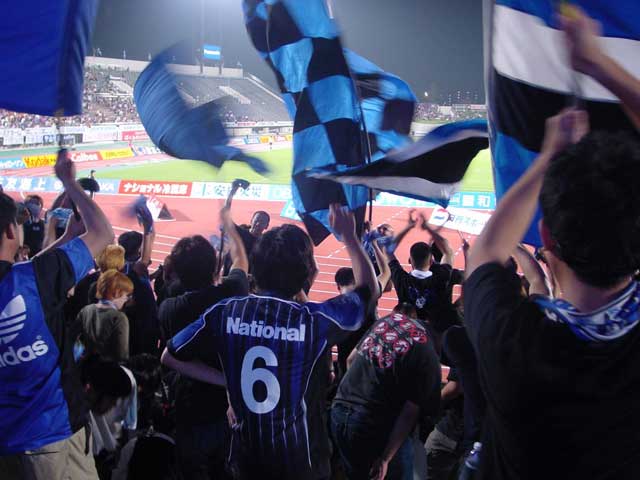 Osaka Expo '70 'Banpaku' Stadium
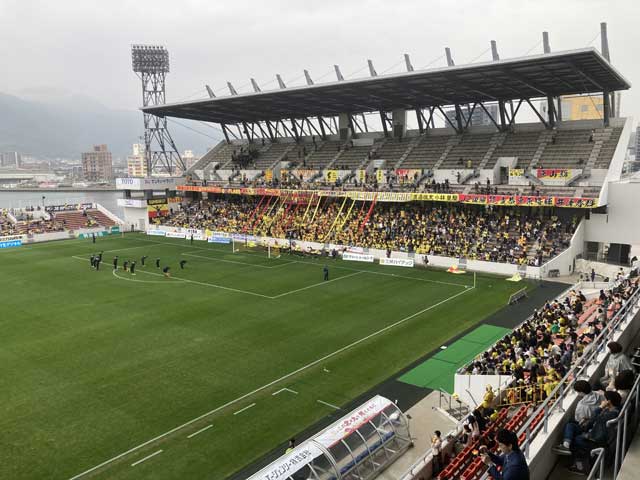 Mikuni World Stadium Kitakyushu
Home ground: Mikuni World Stadium Kitakyushu
Address: 3-9-33 Asano, Kokurakita-ku, Kitakyushu, Fukuoka 802-0001
Capacity: 15,300
When built: 2017
Nearest train station: JR Kokura Station
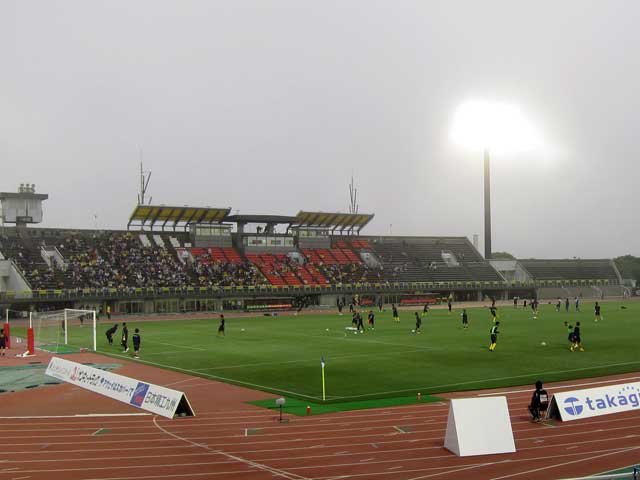
Home ground: Honjo Athletic Stadium
Address: Honjo Park, 1-16-1 Yahata Nishi-ku, Kitakyushu 807-0804
Capacity: 10,202
When built: 1990
Nearest train station: Honjo Station
Nearest bus stop: Orio Station
Other useful info: A non-descript venue completely open to the elements leaves Giravanz Kitakyushu hoping to build a soccer-specific stadium in the near future. In 2017 the team subsequently moved to Kitakyushu Stadium (Mikuni World Stadium Kitakyushu).
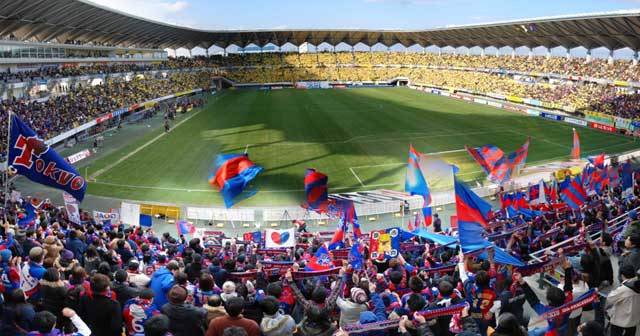
Home ground: Fukuda Denshi 'Fukuari' Arena
Address: 1-20 Kawasaki-cho, Chuo-ku, Chiba 260-0935
Capacity: 19,781
When built: 2005
Nearest train station: JR Soga Station
Nearest bus stop: JR Soga Station
Other useful info: One of the best football-only facilities in Japan, the stadium was built as an alternative venue to United's former home ground, the unpopular Ichihara Seaside Stadium.

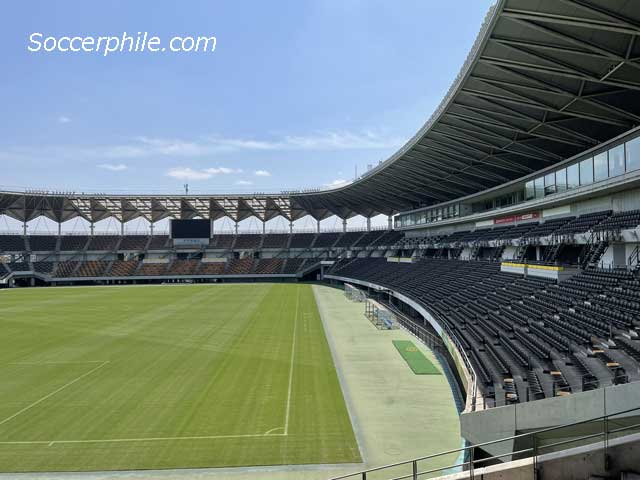
Fukuda Denshi Arena Stadium Guide

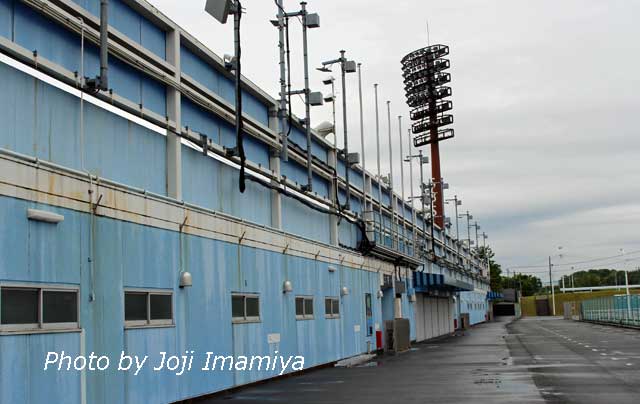


Home ground: Yamaha Stadium
Address: 2500 Shingai, Iwata City, Shizuoka 438-0025
Capacity: 17,000
When built: 1978
Nearest train station: JR Mikuriya Station
Nearest bus stop: Hamamatsu Bus Terminal
Other useful info: Yamaha Stadium was used as the home base by the Japan national team during the 2002 World Cup and hosts the majority of Jubilo's home fixtures.
Home ground: Shizuoka 'Ecopa' Stadium
Address: Ogasayama Sports Park, Aino, Fukuroi City 437-8666
Capacity: 51,349
When built: 2001
Nearest train station: JR Aino Station
Nearest bus stop: Ogasayama Undo Koen
Other useful info: A 2002 FIFA World Cup venue, Jubilo Iwata play their more high profile matches at Ecopa Stadium, which they share with prefectural rivals Shimizu S-Pulse, other fixtures are held at Yamaha Stadium.
Brazil beat England 2-1 here during the 2002 World Cup. Visitors will need to take a local JR train from Hamamatsu Station if coming east from Osaka or Nagoya on the Shinkansen Bullet line connecting Tokyo and Osaka. If traveling west from Tokyo change at Kakegawa. Note that the fastest Nozomi trains on the Tokaido Line do not stop at Hamamatsu or Kakegawa.
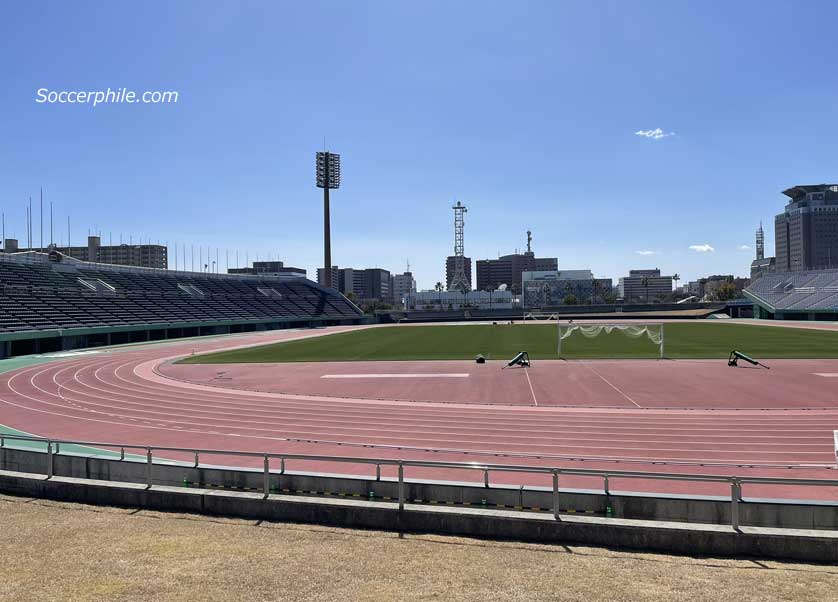
Home ground: Shiranami Stadium
Address: 2-2-2 Yojiro, Kagoshima City, Kagoshima Prefecture, 890-0062
Capacity: 12,606
When built: 1972
Nearest train station: JR Korimoto Station
Nearest bus stop: KKB
Other useful info: The stadium has been known as Shiranami Stadium for sponsorship reasons since 2018. Shiranami is a brand of shochu (distilled spirit) produced by Satsuma Shuzo based in Kagoshima Prefecture. Before that the stadium was known as Kagoshima Kamoike Stadium. The ground is home to J3 club Kagoshima United.
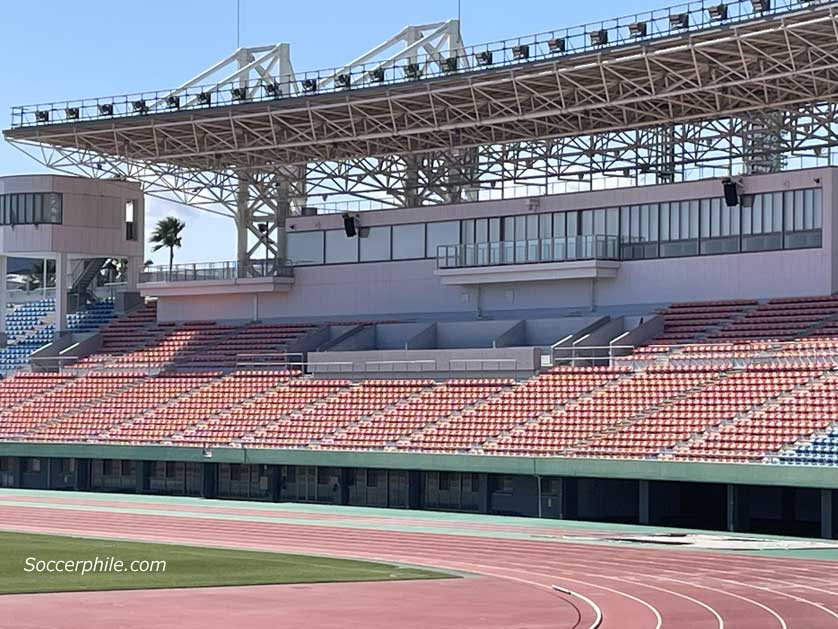
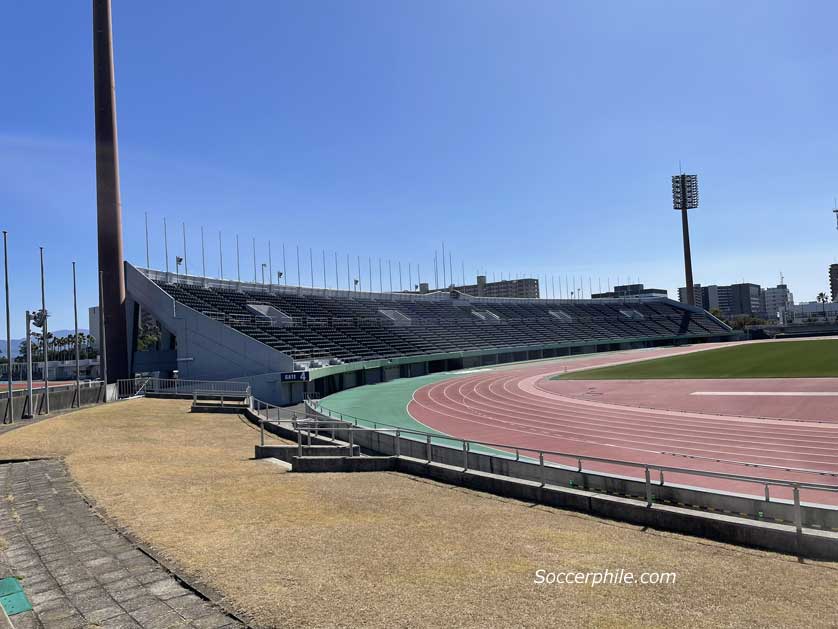
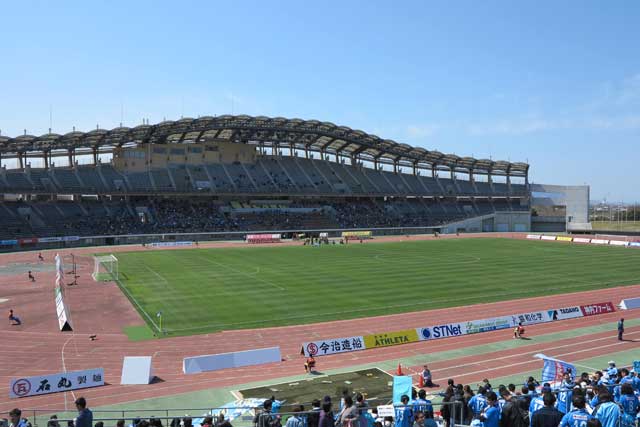
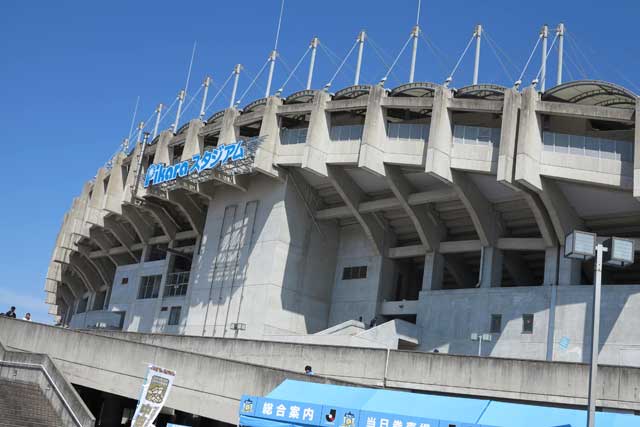
Home ground: Pikara Stadium
Address: 830 Kanakuracho, Marugame, Kagawa 763-0053
Capacity: 30,099
When built: 1997
Nearest train station: JR Konzoji Station
Nearest bus stop: Konzoji tateba
Other useful info: The stadium is the home ground of Kamatamare Sanuki, relegated from J2 to J3 in 2018. The name 'Sanuki' is the former Edo Period name of what is now Kagawa Prefecture. 'Kamatama' is a type of udon (noodle dish) for which the area is famous, plus the Italian 'mare' meaning sea.
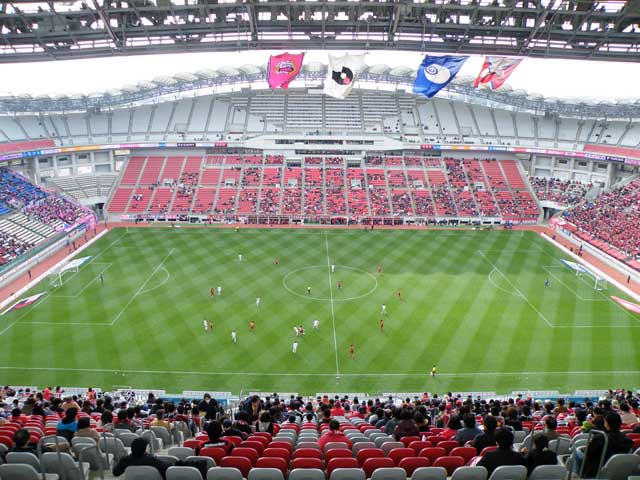
Home ground: Kashima Soccer Stadium
Address: 26-2 Ushiroyama, Jinkoji, Kashima City, Ibaraki 314-0007
Capacity: 39,000
When built: 2001
Nearest train station: Kashima Stadium Station or Kashima Jingu Station and then bus.
Nearest bus stop: Piston
Other useful info: The ground once had a capacity of just 16,000 but was completely refurbished and used as a host venue for the 2002 FIFA World Cup.


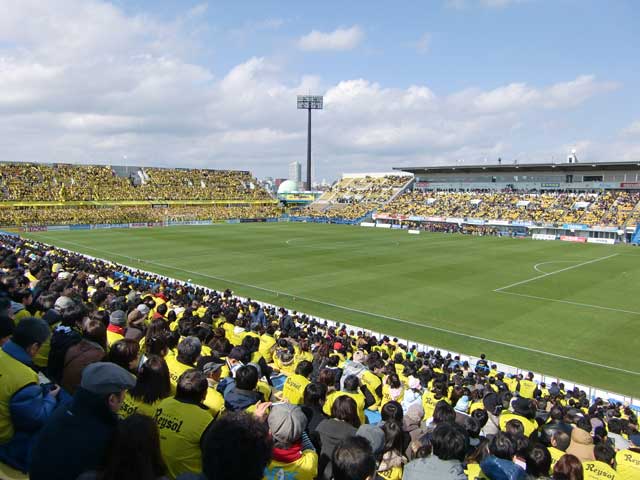
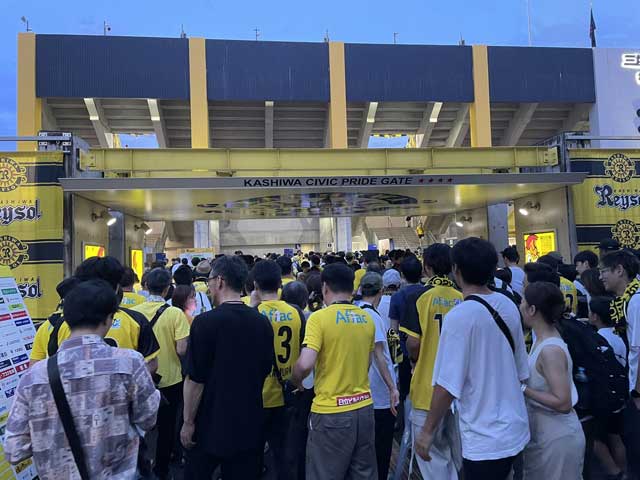
Home ground: Kashiwa Hitachi Stadium
Address: 1-2-50 Hitachidai, Kashiwa City, Chiba 277-0083
Capacity: 15,900
When built: 1975
Nearest train station: JR Kashiwa Station
Nearest bus stop: Midorigaoka
Other useful info: One of the smallest stadiums in the J-League, the stadium has only one covered stand, meaning that spectators can expect to get wet in the rain. Presently known as Sankyo Frontier Kashiwa Stadium.
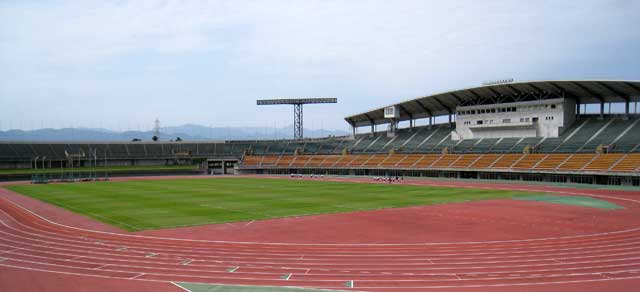
Home ground: Toyama Athletics Stadium
Address: 62-1 Takashima, Toyama 939-8064
Capacity: 25,250
When built: 1968
Nearest train station: Unten Kyouiku
Nearest bus stop: Unten Kyouiku
Other useful info: Located close to the Japan Sea, the large open-air Toyama Stadium is one of the colder venues in Japan outside the summer months.
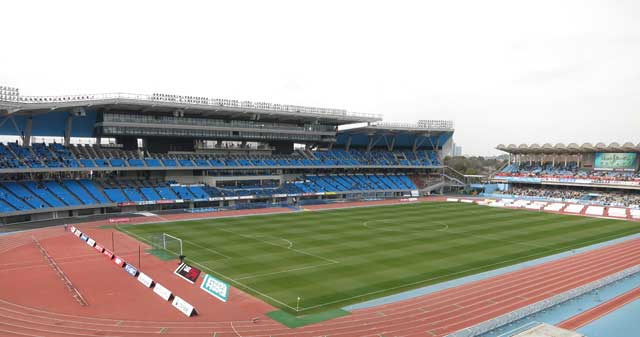
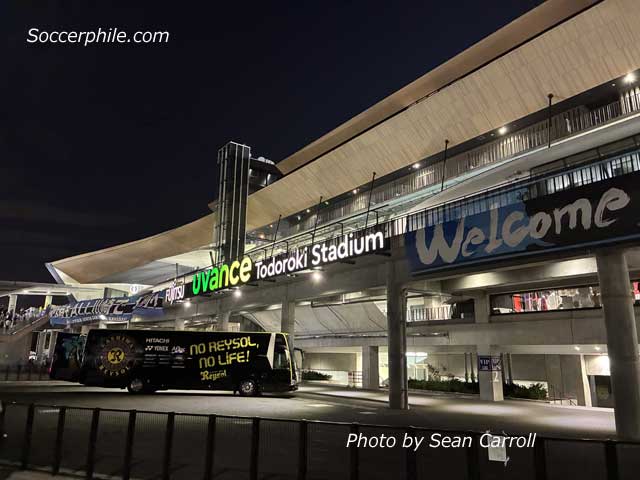
Home ground: Todoroki Athletic Stadium
Address: 1-1 Todoroki, Nakahara-ku, Kawasaki City, Kanagawa 211-0052
Capacity: 25,000
When built: 1965
Nearest train station: Shin Maruko
Nearest bus stop: Shiei Ground Mae
Other useful info: The former home ground of the once great Verdy Kawasaki, who these days are more recognisable as Tokyo Verdy.


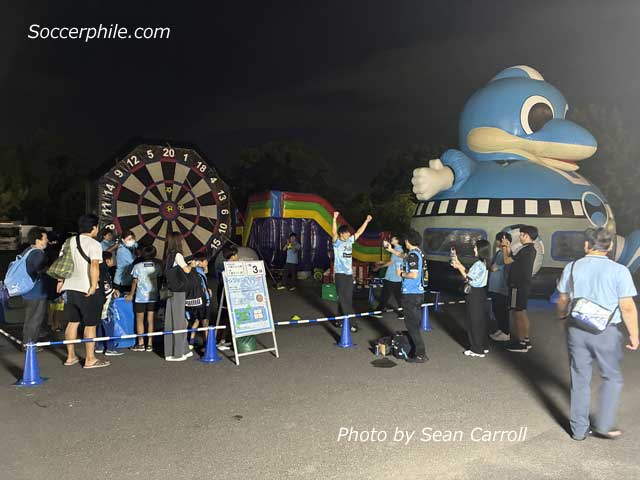
 Sanga Stadium by Kyocera
Kyoto's new stadium Sanga Stadium opened in 2020 and replaced Nishikyogoku. Sponsored by Kyocera the stadium has a capacity of 21,600. The ground is a 5-minute walk from Kameoka Station reached by train from Kyoto Station of Nijo Station in 30 minutes or less. It is one of a new-breed of soccer-specific stadiums in Japan and a massive upgrade on Nishikyogoku for watching games.
Home ground: Sanga Stadium by Kyocera
Address: 32 1-chome-8-2 Kameokaekikita, Kameoka, Kyoto 621-0807
Capacity: 21,600
When built: 2020
Nearest train station: Kameoka Station (JR Line)
Nearest bus stop: Kameoka Station Minami-guchi
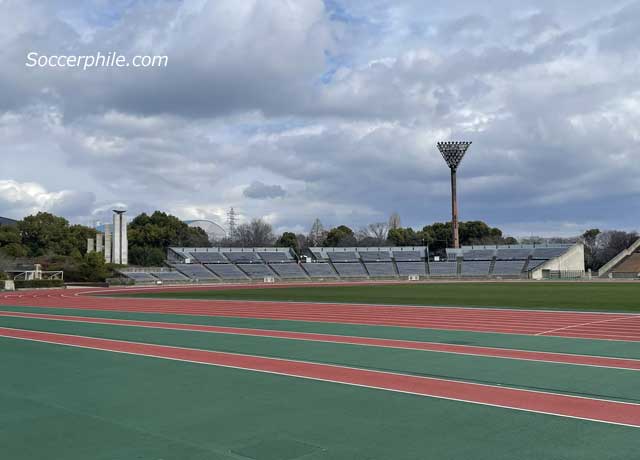 Nishikyogoku
Former Home ground: Nishikyogoku Stadium (Takebishi Stadium Kyoto)
Address: 32 Nishikyogokushinmei-cho, Ukyo-ku, Kyoto City, Kyoto 615-0864
Capacity: 20,242
When built: 1942
Nearest train station: Nishikyogoku Station (Hankyu Line)
Nearest bus stop: Nishikyogoku Undo Koen Mae
Other useful info: More fans now attend Kyoto Sanga games following the move to Kameoka.
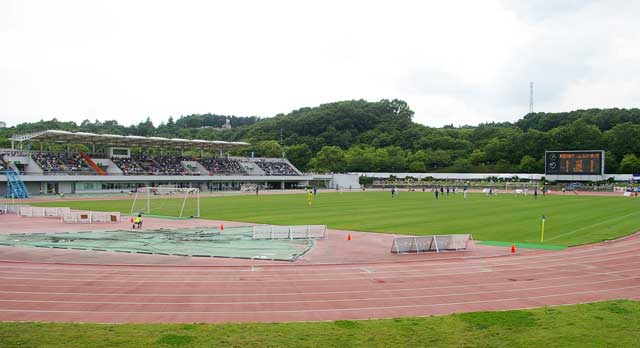
Home ground: Machida GION Stadium, Tokyo (aka Nozuta Stadium / Machida Athletic Stadium)
Address: 550 Okura, Machida City, Tokyo 195-0062
Capacity: 15,489
When built: 1990
Nearest train stations: Tsurukawa Station / Fuchinobe Station
Nearest bus stop: Machida Sun City
Other useful info: Machida's unloved Athletics Stadium held the team back from promotion, with the club forced to add extra seats and lighting to bring it up to J. League requirements.
Read more on Machida Gion Stadium.
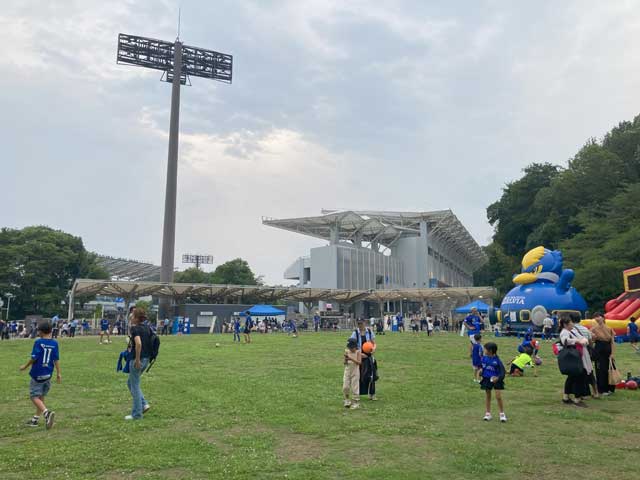
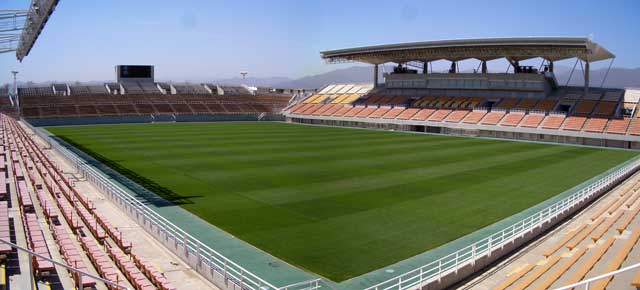
Home ground: Matsumoto Football Stadium (Sunpro Alwin)
Address: 11-14 Yoshino, Matsumoto City, Nagano 399-0002
Capacity: 20,396
When built: 1999
Nearest train station: Murai Station
Nearest bus stop: Matsumoto Stadium
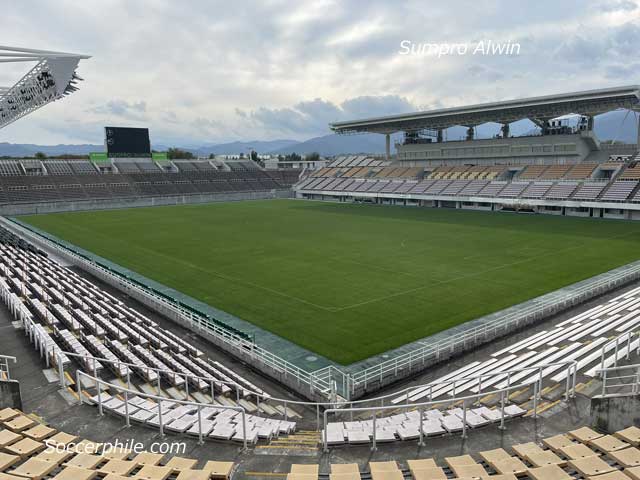
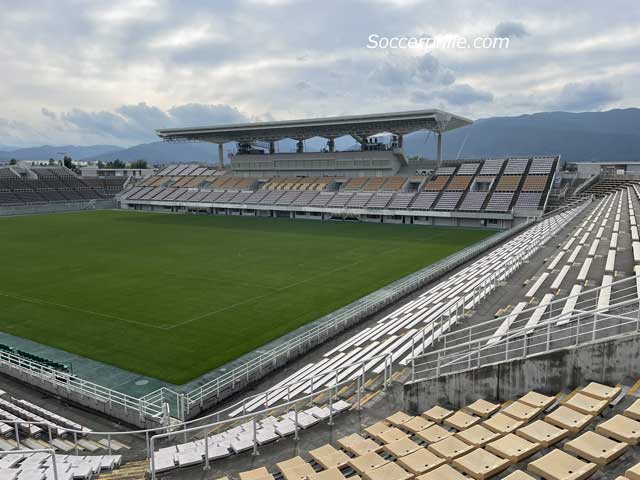
Other useful info: One of the most picturesque venues in Japan, Matsuomoto's home ground is known locally as 'Alwin' as it sits at the base of the windy Japanese Alps.

 K's denki Stadium Mito
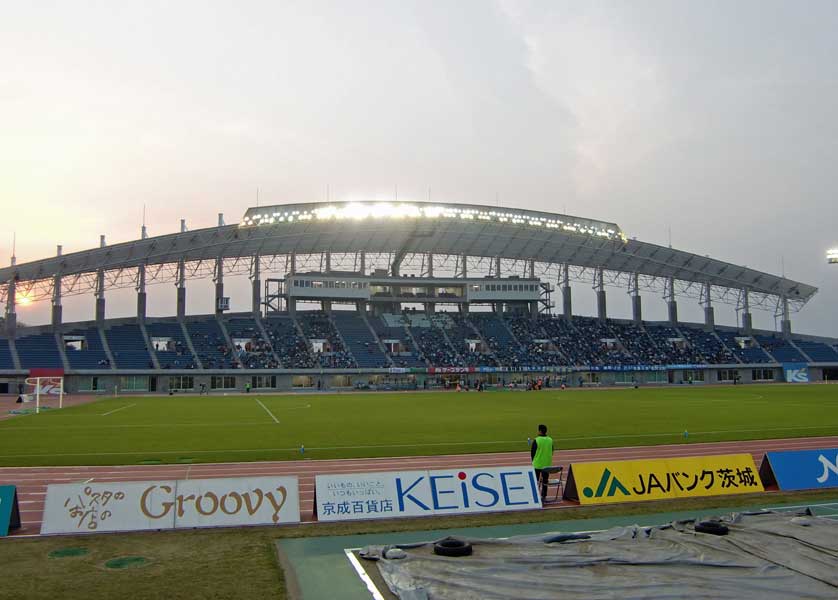
Home ground: K's denki Stadium Mito
Address: 2058-1 Kobukicho, Mito, Ibaraki, 310-0914
Capacity: 12,000 (10,152 for J-League matches)
When built: 1987
Nearest train station: JR Akatsuka Station or Mito Station
Nearest bus stop: Muncipal Stadium
Home ground: Kasamatsu Stadium
Address: 1282-1 Mukoyama, Naka, Ibaraki 311-0102
Capacity: 22,022
When built: 1974
Nearest train station: JR Tokai Station
Nearest bus stop: Kasamatsu Sports Park
Other useful info: Mito Hollyhock had one of the lowest average attendances in the J-League, and the fact that Kasamatsu Stadium is situated so far from Mito City gives a good indication why. In 2009 the club moved to the 10,000-capacity K's denki Stadium Mito (Mito Stadium).
 K's denki Stadium Mito
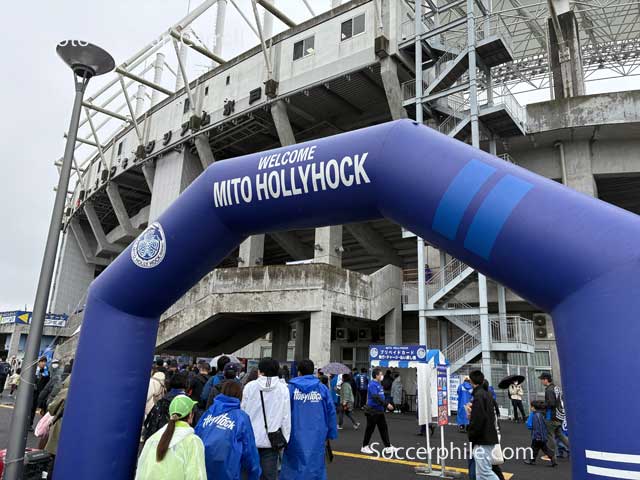 Welcome Mito Hollyhock
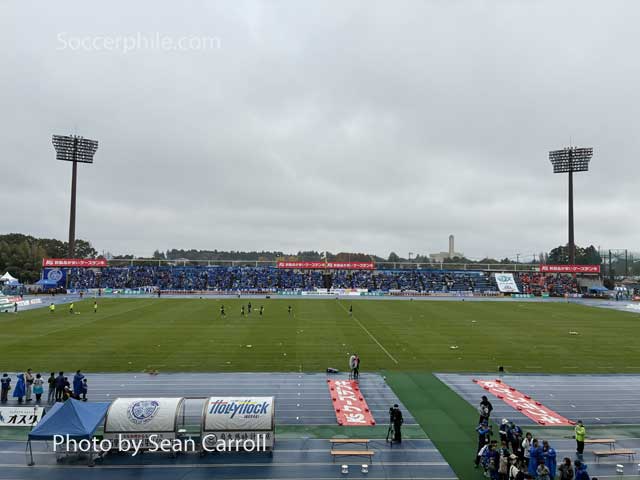 The stadium has a capacity of over 10,000 for J.League games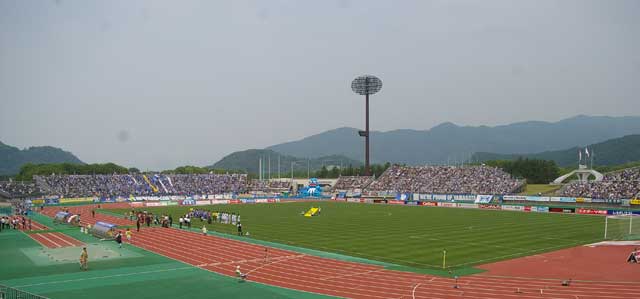
Home ground: Yamagata Park Athletic Stadium
Address: 1-1 Sanno, Tendo City, Yamagata 944-0000
Capacity: 20,315
When built: 1991
Nearest train station: JR Tenri Station
Nearest bus stop: Yamagata Park Koen
Other useful info: The pitch is surrounded by such a wide running track, that it can be difficult to view the action from certain vantage points inside the stadium.
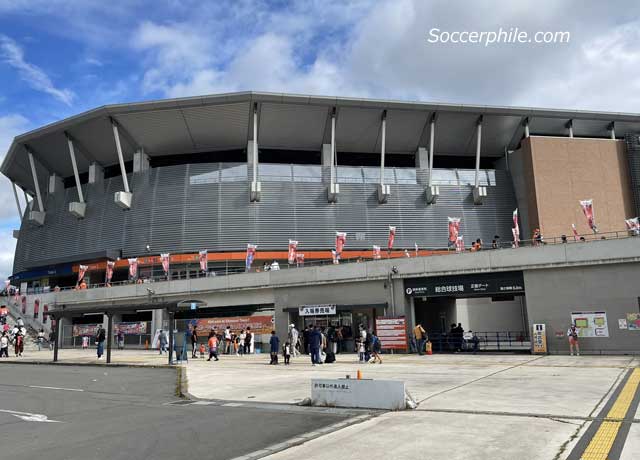


Home ground: Nagano U Stadium, Nagano aka Minami Nagano Sports Park Stadium
Address: 320 Shinonoitofukuji, Nagano, 388-8002
Capacity: 15,515
When built: 1990
Nearest train station: JR Shinonoi Station
Nearest bus stop: Free shuttle bus from Shinonoi Station (about 20 minutes)
Other useful info: The home ground of J3 team AC Nagano Parceiro is known as Nagano U Stadium due to its shape.

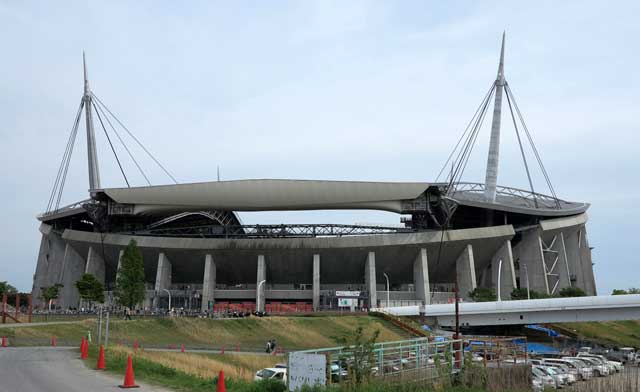

Home ground: Toyota Soccer Stadium
Address: 7-2 Sengoku-cho, Toyota City, Aichi 471-0877
Capacity: 45,000
When built: 2001
Nearest train station: Meitetsu Toyotashi Station
Nearest bus stop: Toyota City Stadium
Other useful info: Toyota Soccer Stadium will host the opening match of the 2006 FIFA Club World Cup. Nagoya Grampus are Gary Lineker's old J-league club back in the 1990s. The team last won the J.League in 2010.
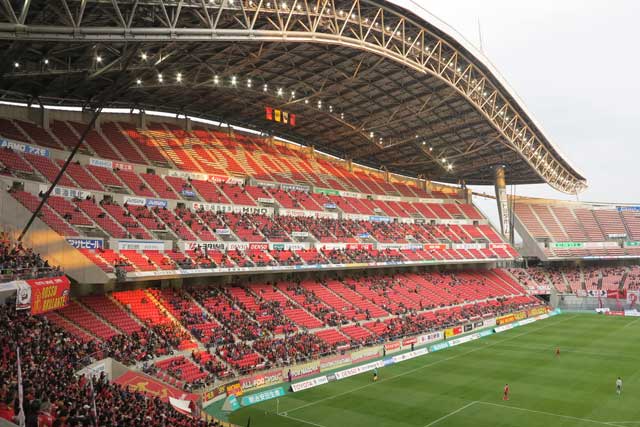
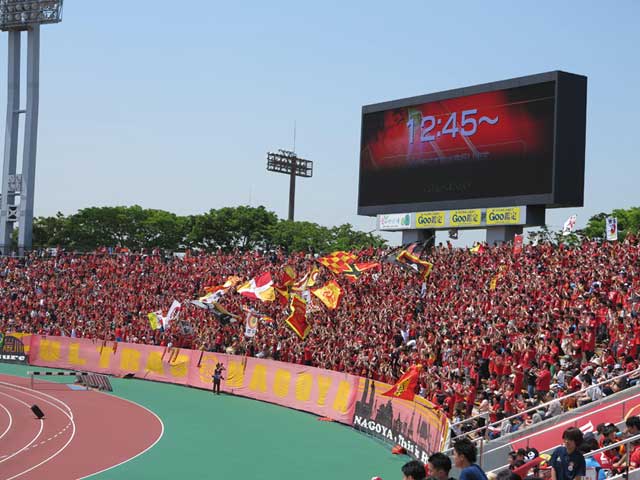
Home ground: Mizuho Athletics Stadium
Address: 5-1 Yamashita-tori Mizuho-ku, Nagoya City, Aichi 467-0062
Capacity: 27,000
When built: 1947
Nearest train station: Mizuho Sports Park Station
Nearest bus stop: Mizuho Ground Bus Stop
Other useful info: One of the oldest grounds in the J-League, the stadium was built close to Nagoya city centre but is being fazed out of use, with the club preferring to play most of their games at the newer Toyota Soccer Stadium. Nagoya Grampus have dropped the "Eight" from their name.
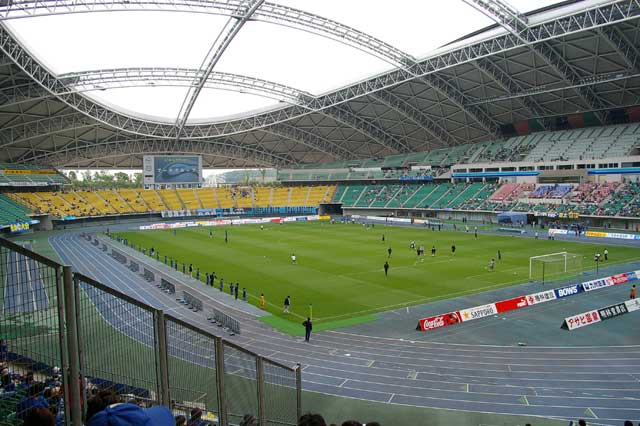

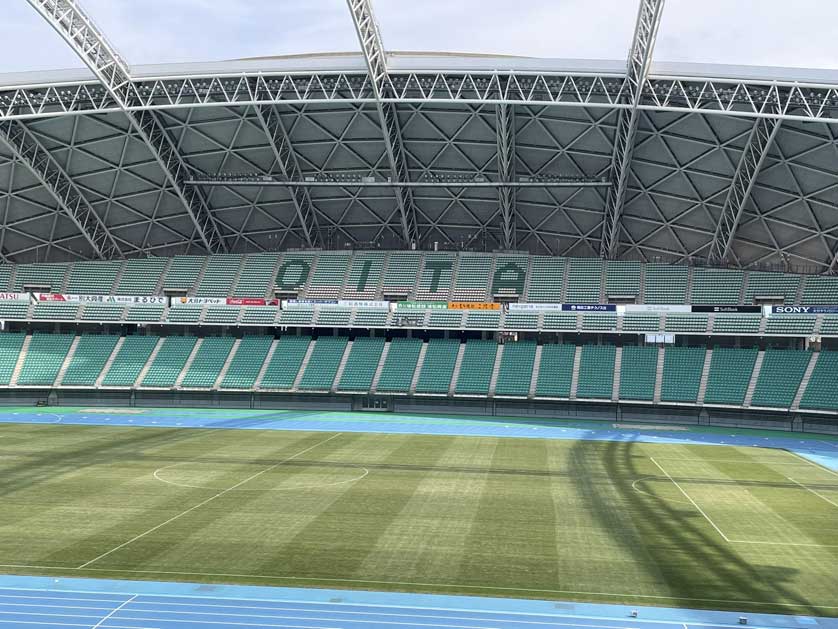
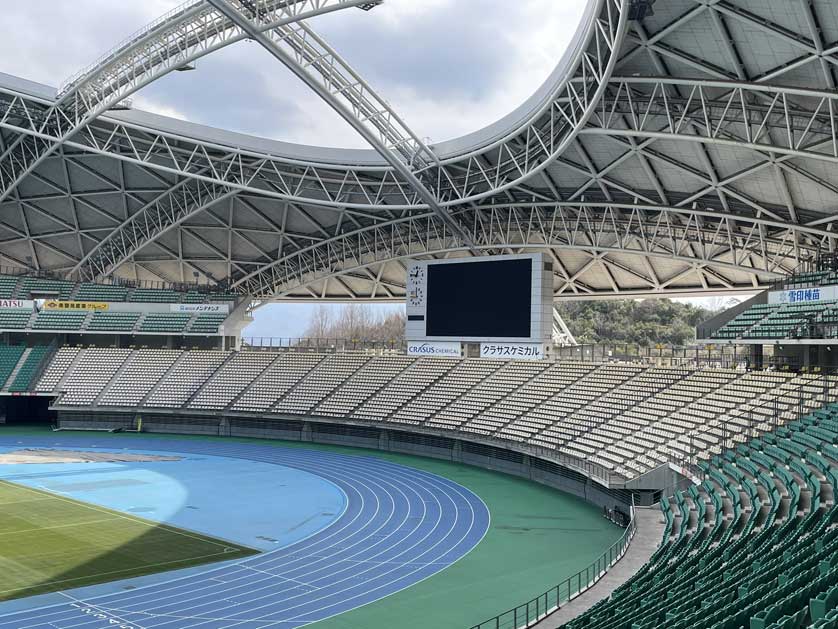
Home ground: Oita 'Big Eye' Stadium
Address: 1351 Yokoo, Oita City, Oita 870-0126
Capacity: 43,000
When built: 2001
Nearest train station: JR Oita Station
Nearest bus stop: Big Eye Higashi
Other useful info: One of the most futuristic stadiums ever built, Oita's 'Big Eye' Stadium features a retractable roof to help deal with Kyushu's unpredictable weather. It was designed by architect Kisho Kurokawa. Kurokawa also designed Toyota Stadium in his home prefecture of Aichi as well as the Saint Petersburg Stadium (Krestovsky Stadium aka Gazprom Arena) in Russia, used for the 2018 World Cup
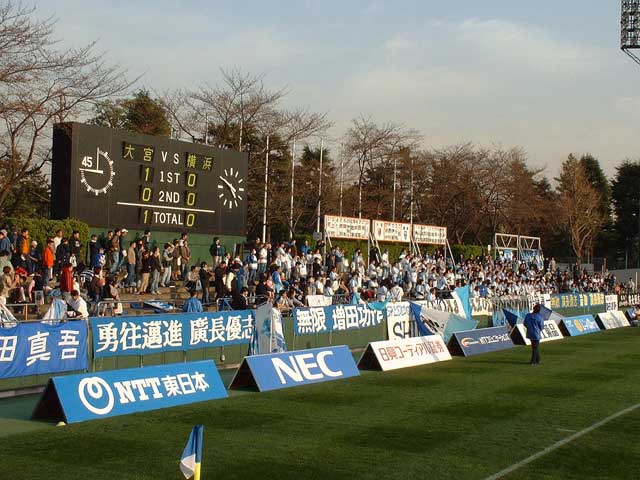 Omiya Park Soccer Stadium as it was then known in 2003
Home ground: Omiya Stadium
Address: 4 Takahana-cho, Omiya-ku, Saitama City, Saitama 330-0803
Capacity: 12,500
When built: 1964
Nearest train station: Omiya Koen
Nearest bus stop: Soccer Jo Mae Bus Stop
Other useful info: Renovations are taking place to upgrade Omiya Stadium throughout the 2006 J-League season, so Omiya Ardija will play the majority of home matches at nearby Komaba Stadium - the spiritual home of rivals Urawa Reds. Omiya Stadium (Omiya Park) has been known as NACK5 Stadium since 2007 for sponsorship reasons.
Home ground: Saitama Soccer Stadium
Address: 500 Nakanoda, Midori-ku, Saitama-City 330-0846
Capacity: 63,700
When built: 2001
Nearest train station: Urawa Bi-en
Nearest bus stop: JR Urawa Station
Other useful info: A 2002 FIFA World Cup venue, Omiya Ardija play occasional matches at Saitama Stadium, particularly the derby against crosstown rivals Urawa Reds.
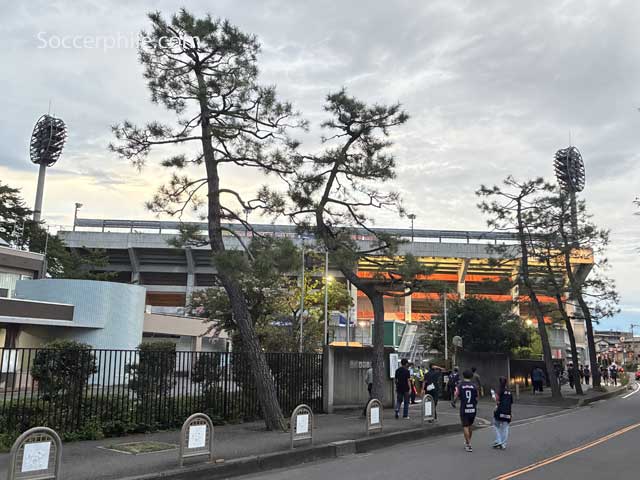 Nack5 Stadium is the home of RB Omiya Ardija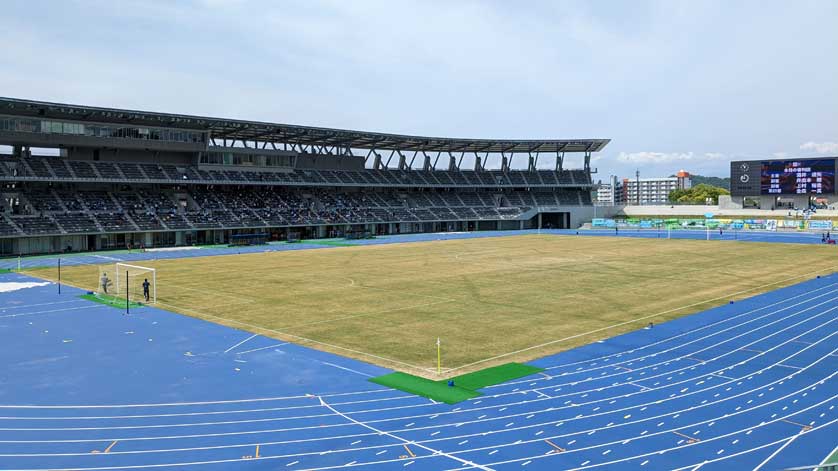
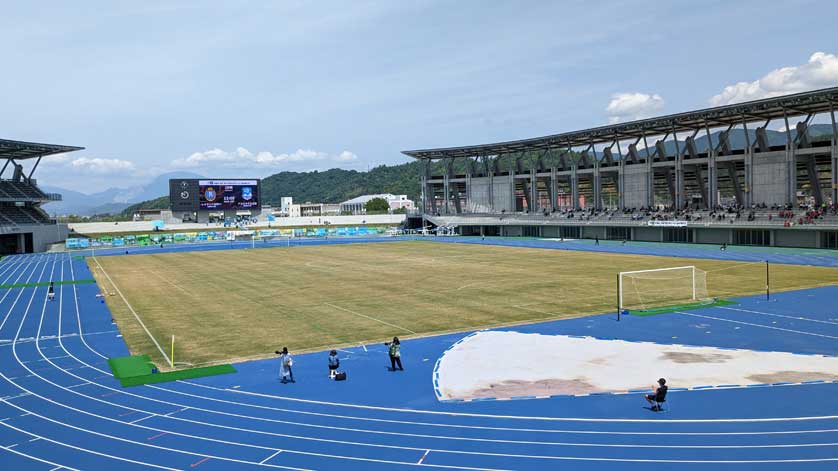
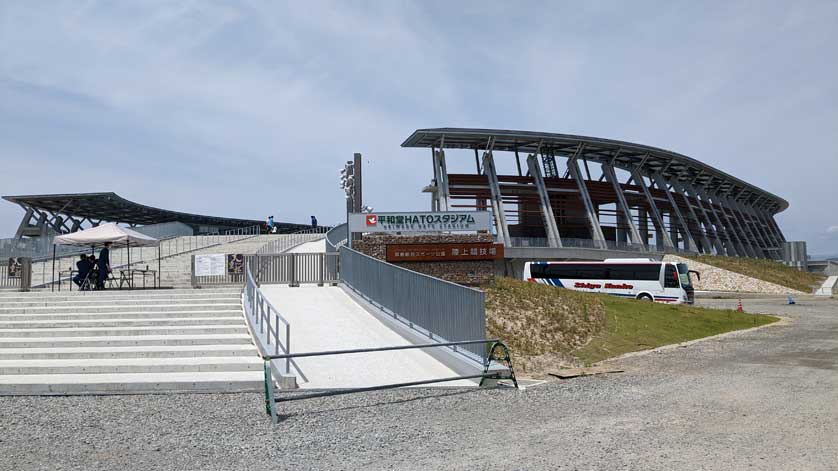
Home ground: Heiwado HATO Stadium
Address: 3028 Matsubaracho, Hikone, Shiga 522-0002
Capacity: 9,000
When built: 2023
Nearest train station: Hikone Station
Nearest bus stop: Matsubaracho
Other useful info: Reilac Shiga FC (formerly MIO Biwako Shiga FC) were promoted to J3 for the 2026 season.
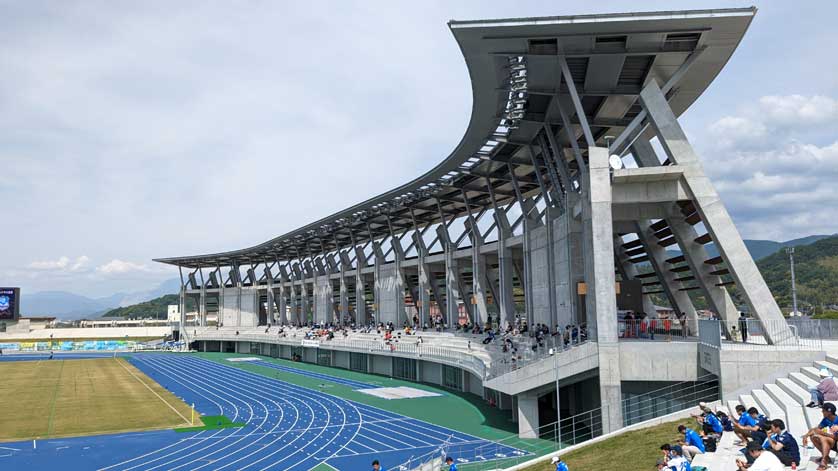
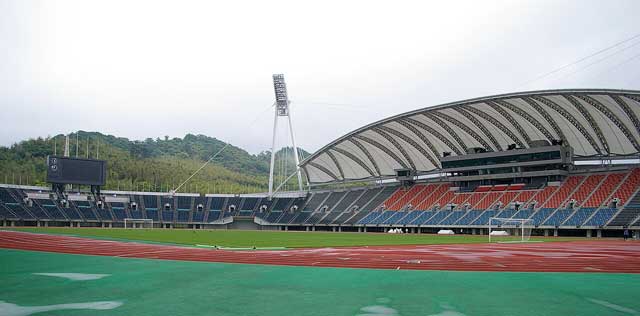
Home ground: KK Wing Stadium
Address: 3-5 3-Chome Tsuyoshigun, Kumamoto City, Kumamoto 862-091
Capacity: 32,000
When built: 1999
Nearest train station: Hikari-no-mori Station
Nearest bus stop: Hikari-no-mori Station
Other useful info: Originally envisaged as a potential World Cup venue, KK Wing Stadium is one of the few venues in Japan best accessed by car. Presently called Egao Kenko Stadium.
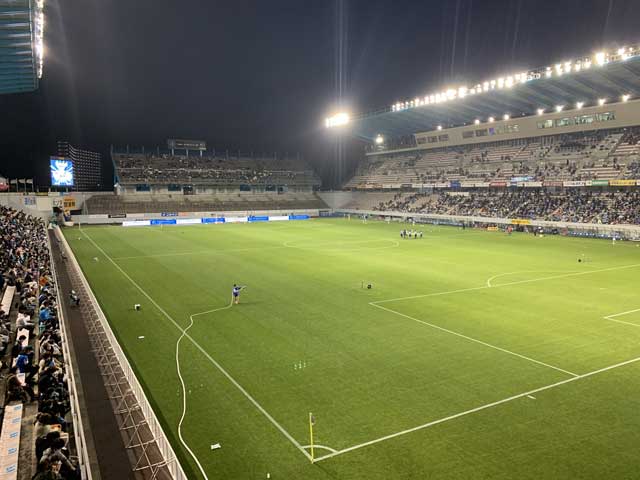

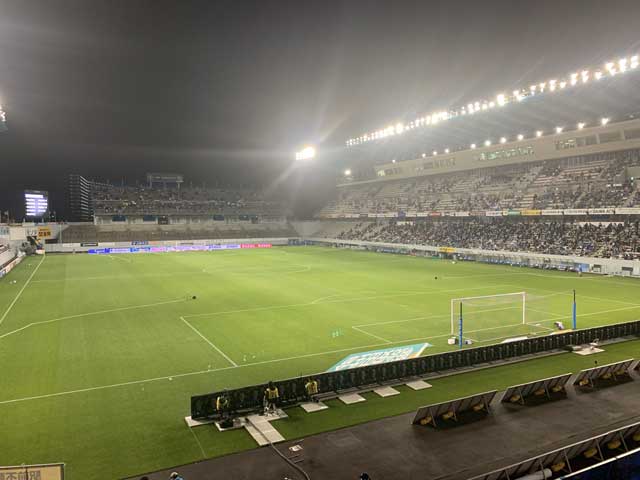 Tosu Stadium in Kyushu
Home ground: Tosu Stadium
Address: 812 Kyo-machi, Tosu City, Saga 841-0034
Capacity: 24,490
When built: 1996
Nearest train station: JR Tosu Station
Nearest bus stop: JR Tosu Station
Other useful info: One of the most picturesque grounds in J2, Sagan Tosu's magnificent Tosu Stadium is one of the most accessible in the league, and lies next to a train station in the centre of the city.
Indeed this stadium feels like a real football stadium, and is something of a mecca for hard-core J-League followers, who make the journey to this attractive town.

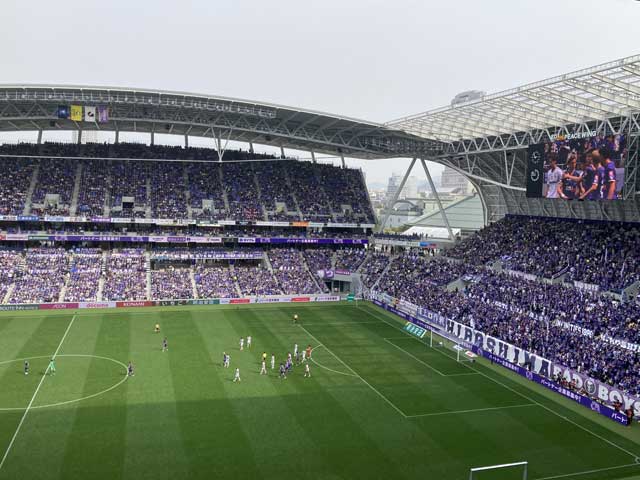
Home ground: Edion Peace Wing Hiroshima
Address: Motomachi, Naka-ku, Hiroshima, 730-0011
Capacity: 28,520
When built: 2024
Nearest train station: Shin-Hakushima Station
Nearest bus stop: Edion Peace Wing Bus Stop
Read more on Edion Peace Wing Hiroshima

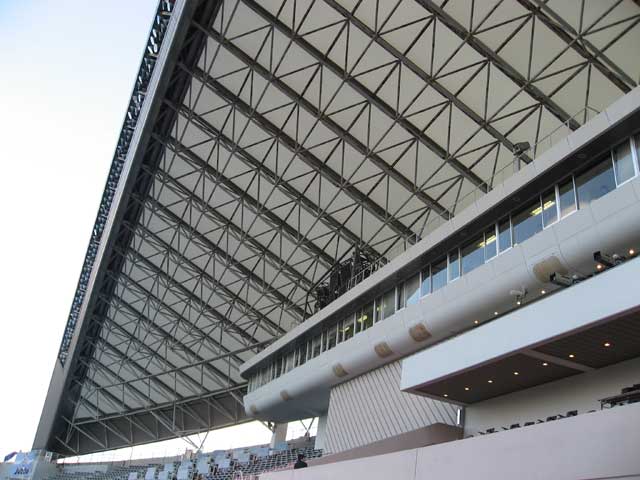
Former Home ground: Hiroshima 'Big Arch' Stadium (EDION Stadium Hiroshima)
Address: 5-1-1 Otsuka-nishi, Asaminami-ku, Hiroshima City, Hiroshima 731-3162
Capacity: 50,000
When built: 1993
Nearest train station: JR Hiroshima Station
Nearest bus stop: Sando University Bus Stop
Other useful info: The distance of the stadium from Hiroshima's city centre makes it difficult for the club to attract large crowds. Sanfrecce will move in 2024 to the new EDION Peace Wing Hiroshima Stadium (see above). Edion is a nationwide electronics retailer.
Read more on Hiroshima Big Arch Stadium
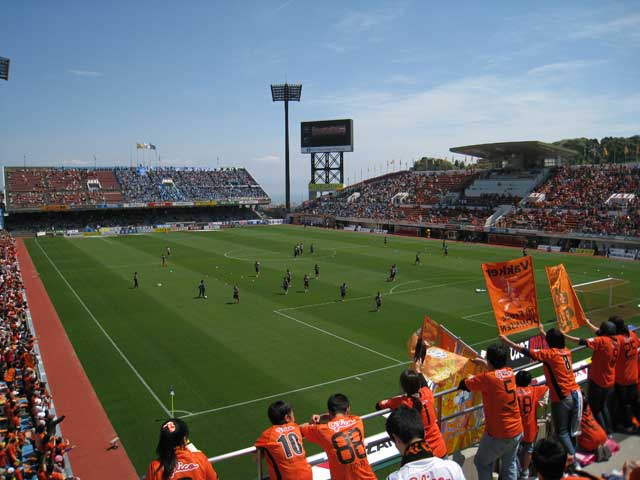
Home ground: Nihondaira Stadium
Address: 3880-1 Otani, Shimizu-muramatsu, Shizuoka City, Shizuoka 424-0926
Capacity: 20,339
When built: 1991
Nearest train station: JR Shimizu Station
Nearest bus stop: Nihondaira Undo Koen Iriguchi
Other useful info: Undoubtedly one of the most picturesque venues in Japan, the roof was designed to cover just three-quarters of the main stand, so as not to obscure the spectacular view of Mt Fuji in the background.

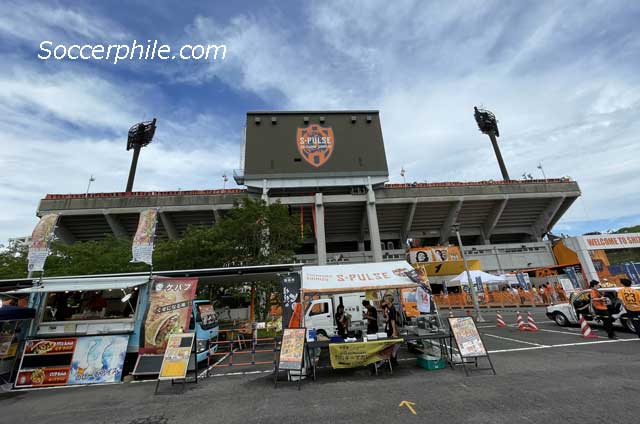
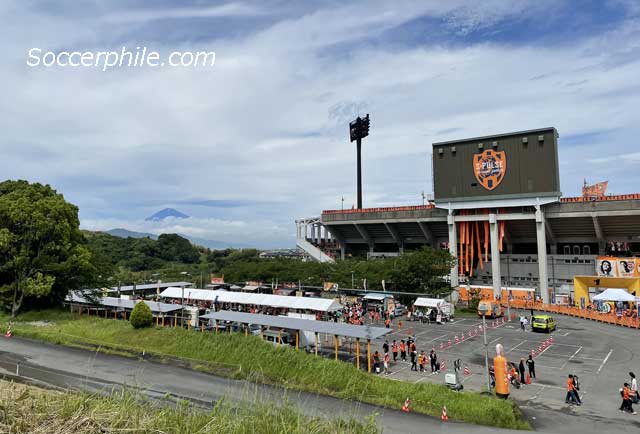
Home ground: Shizuoka 'Ecopa' Stadium
Address: Ogasayama Sports Park, Aino, Fukuroi City
Capacity: 51,349
When built: 2001
Nearest train station: JR Aino Station
Nearest bus stop: Ogasayama Undo Koen
Other useful info: The club generally play the derby against Jubilo Iwata and the home match against Urawa Reds at Ecopa Stadium.

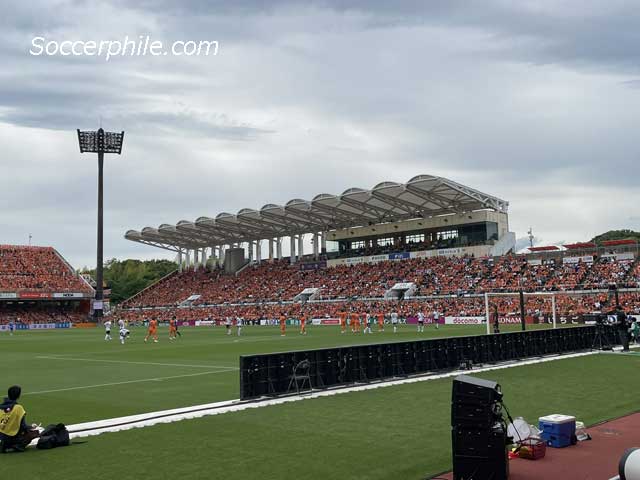
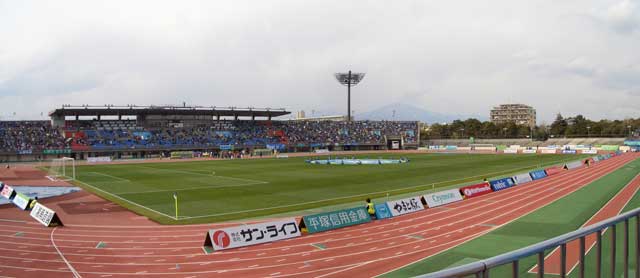
Home ground: Hiratsuka Stadium
Address: 1-1 Ohara, Hiratsuka City, Kanagawa 254-0074
Capacity: 18,500
When built: 1987
Nearest train station: JR Hiratsuka Station
Nearest bus stop: Hiratsuka Koen
Other useful info: The stadium was refurbished in 1998. Presently called Lemon Gas Stadium Hiratsuka.

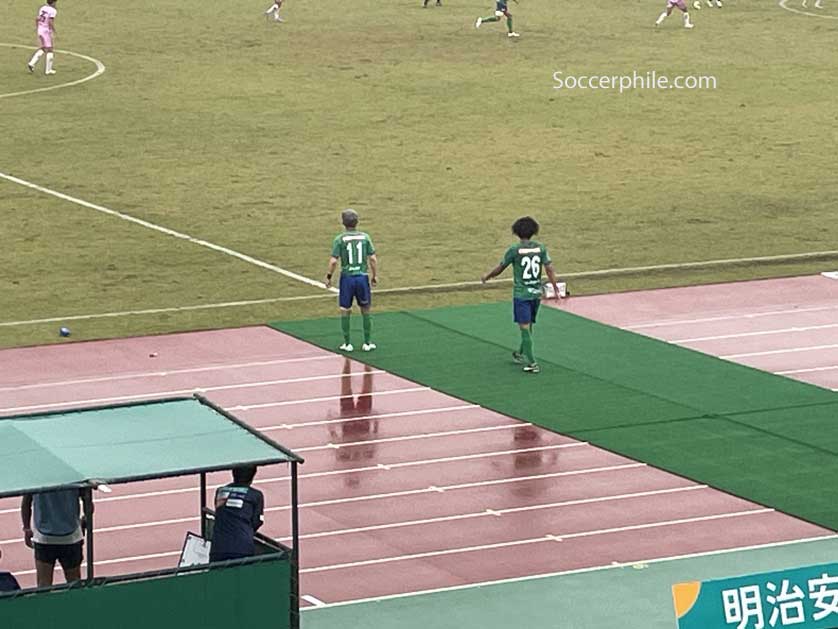
Home ground: Yokkaichi-shi chuo-rikujo kyogi-ba (Yokkaichi City Central Athletic Field)
Address: 1 Chome-3-21 Hinagahigashi, Yokkaichi, Mie 510-0886
Capacity: 7,000 (Main stand 2,500; lawn stands 4,500).
When built: 1968
Nearest train station: Shinsho Station (Kintetsu)
Nearest bus stop: Chuo-ryokuchi koen-mae
Other useful info: Kazu Miura played for the club until the end of the 2025 season aged 58 on loan from Yokohama FC. After the club's relegation to the Tokai League, Kazu moved on again to Fukushima United. The team also played games at Suzuka Rikujo Kyogijo and Suzuka Sports Garden.
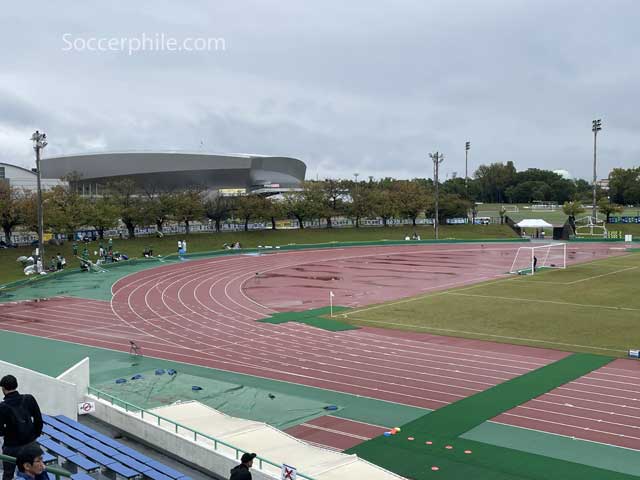
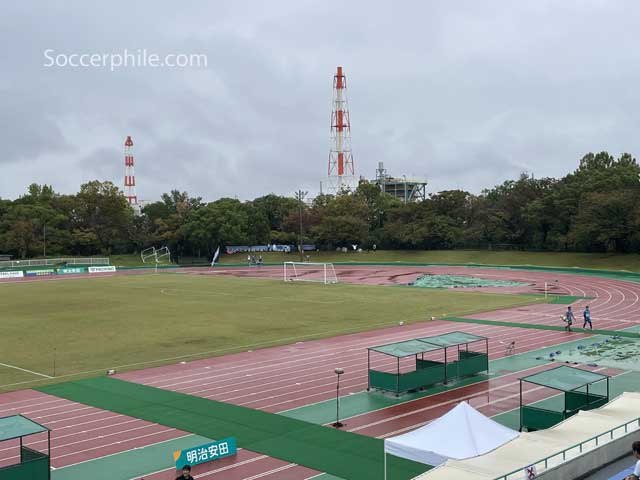
Yokkaichi City Central Athletic Field
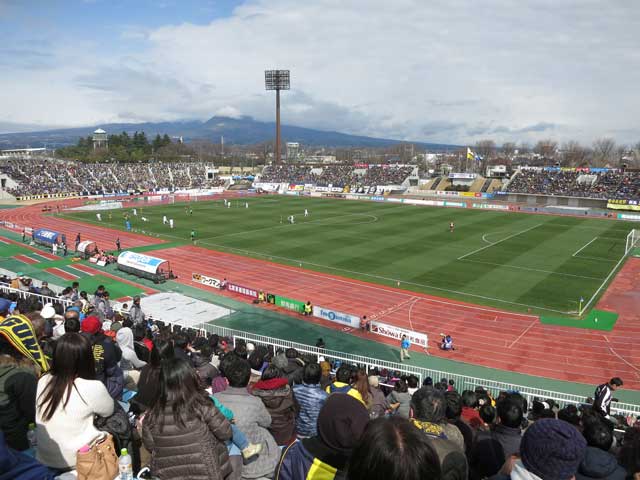
Home ground: Gunma Shikishima Athletic Stadium
Address: 464-28 Kusatsu-cho, Agatsuma-gun, Gunma 377-1711
Capacity: 10,050
When built: 1969
Nearest train station: JR Maebashi Station
Nearest bus stop: JR Maebashi Station
Other useful info: Surrounded by parklands, Gunma Shikishima Athletic Stadium has an old style grass hill - an unusual feature, even in some of Japan's more outdated stadia.
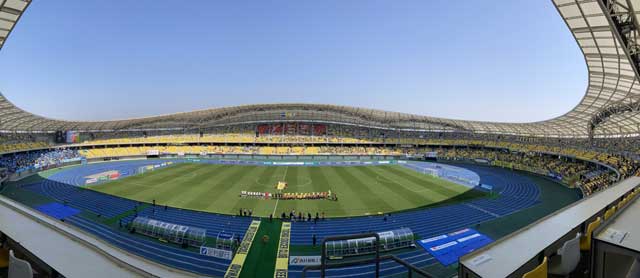 Panorama, Kanseki Stadium, Utsunomiya
Home ground: Kanseki Stadium
Address: 4-1-1 Nishikawata, Utsunomiya, Tochigi 321-0152
Capacity: 25,244
When built: 2020
Nearest train station: Nishikawada Station (East Exit)
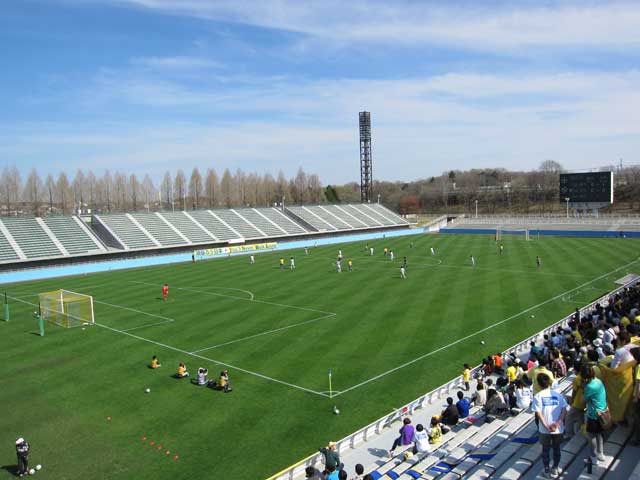
Home ground: Tochigi Green Stadium
Address: 1-15 Sakae-cho, Utsunomiya City, Tochigi 320-0024
Capacity: 18,025
When built: 1993
Nearest train station: Utsunomiya Station
Nearest bus stop: Sano Shintoshi
Other useful info: One of the more colourful venues in the J. League, Tochigi Green Stadium is renowned for the grassy green banks fringing the pitch. Tochigi SC moved to Kanseki Stadium in 2020.
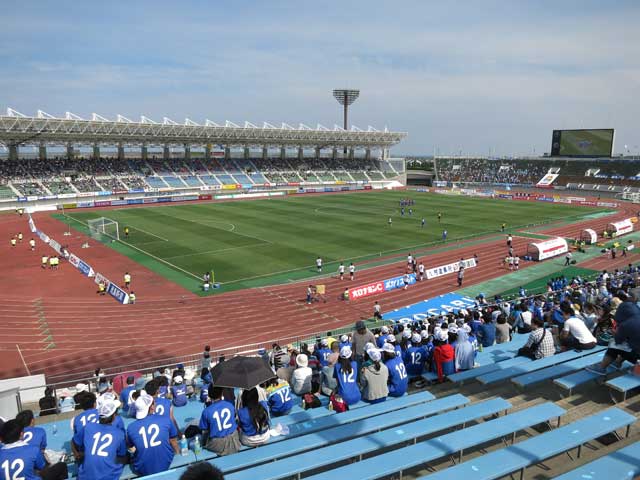
Home ground: Naruto Athletic Stadium (Pocari Sweat Stadium)
Address: 2-22 Hisagodani, Aza, Inubushi, Itano-cho, Itano-gun, Tokushima 779-0108
Capacity: 20,441
When built: 1971
Nearest train station: Tokushima JR Station
Nearest bus stop: Naruto Athletic Stadium
Other useful info: Naruto Athletic Stadium has high raking stands along the sidelines, to provide better views for fans sitting towards the front of those stands, however fans behind the goals are hindered by the size of the athletic track surrounding the pitch.
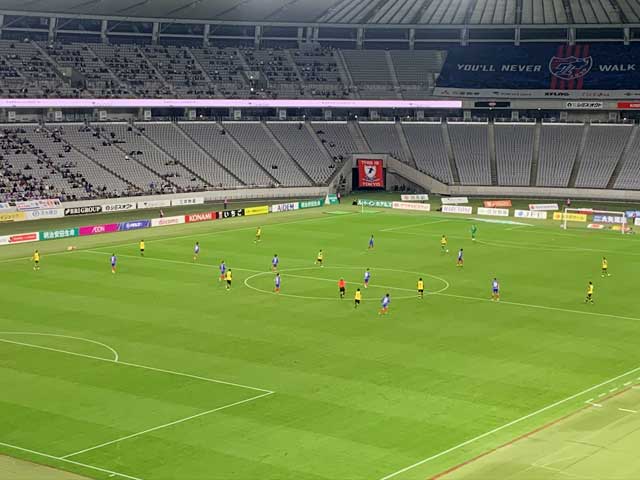
Home ground: Ajinomoto Stadium
Address: 376-3 Nishi-machi, Chofu-shi, Tokyo 182-0032
Capacity: 50,000
When built: 2000
Nearest train station: Tobitakyu Station
Nearest bus stop: Ajinomoto Stadium Minami-guchi
Other useful info: After relocating from their original home town of Kawasaki, Tokyo Verdy now share their Ajinomoto Stadium with more popular cross-town rivals FC Tokyo.
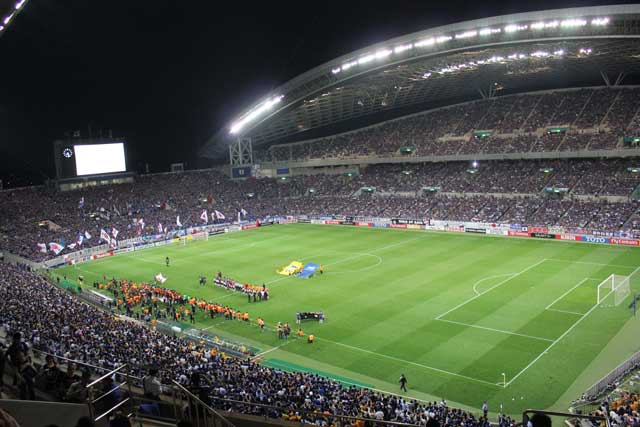
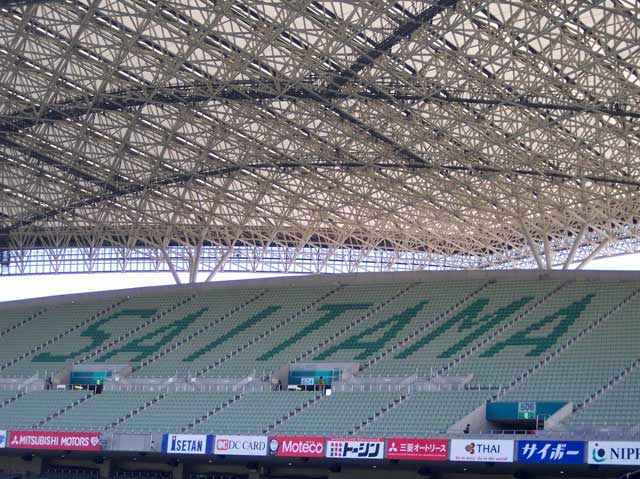
Home ground: Saitama Soccer Stadium
Address: 500 Nakanoda, Midori-ku, Saitama-City 330-0846
Capacity: 63,700
When built: 2001
Nearest train station: Urawa Misono
Nearest bus stop: JR Urawa Station
Other useful info: The 63,700 capacity: Saitama Stadium was built with Urawa's fanatical support in mind, and is often filled to near capacity for the club's J-League matches.
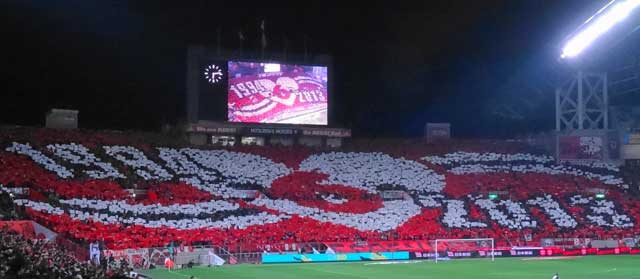
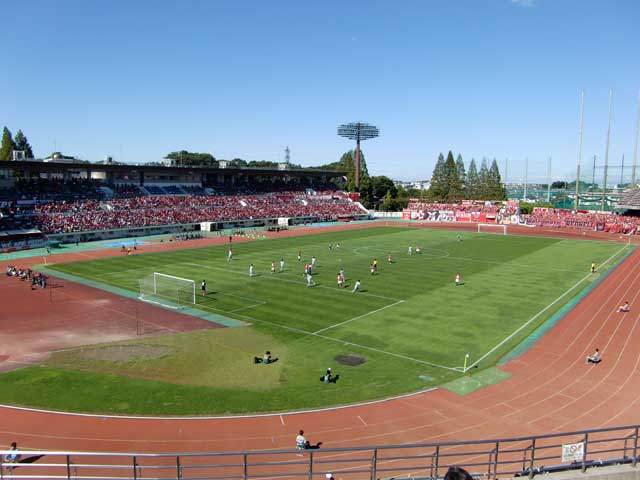
Home ground: Komaba Stadium
Address: 2-1-1 Komaba, Urawa-ku, Saitama City, Saitama 330-0051
Capacity: 21,500
When built: 1967
Nearest train station: JR Minami Urawa Station
Nearest bus stop: Uchu-Kakakukan Iriguchi Bus Stop
Other useful info: Urawa often pack Komaba Stadium during lower profile J-League and Emperor's Cup matches. The ground is home to Urawa Red Diamonds Ladies.
Read more on Saitama Stadium 2002
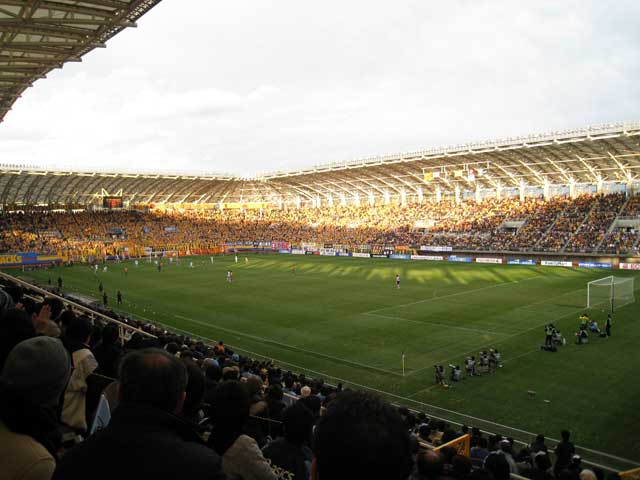
Home ground: Yurtec Sendai Stadium
Address: 78 Yanagi, Nanakita, Izumi-ku, Sendai City, Miyagi 981-3131
Capacity: 19,694
When built: 1997
Nearest train station: Izumi Chuo Subway Station
Nearest bus stop: Izumu Chuo Subway Station
Other useful info: Vegalta Sendai are one of the most popular teams in J2, and Yurtec Sendai Stadium - which is located in the middle of the city, regularly welcomes large crowds.

Home ground: Basic Stadium Toin
Address: 323 Oaza Kitataishiro, Toin-cho, Inabe-gun, Mie 511-0257
Capacity: 5,077
When built: 1992
Nearest train station: Toin Station
Nearest bus stop: Kyogijo
Other useful info: The stadium is the home of Veetien Mie men's and women's teams. The men's team is presently in the JFL. The club was founded as Veertien FC as recently as 2012. The name Veertien means '14' in Dutch and is in honor of the legendary Johan Cruyff.

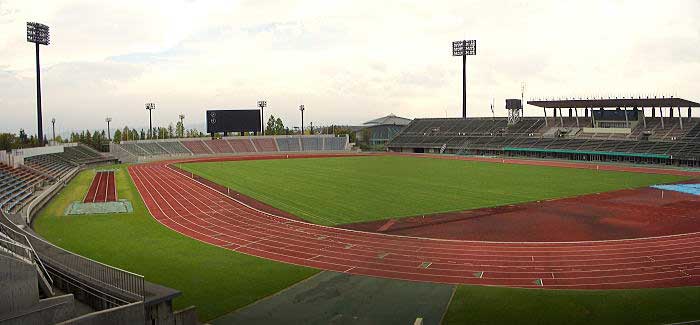
Home ground: Kose Sports Park Stadium
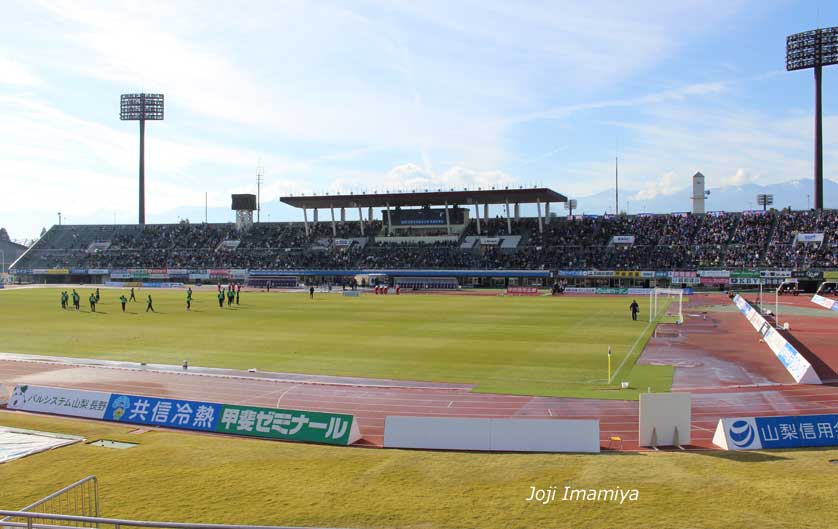
Address: 840 Kose-machi, Kofu City, Yamanashi 400-0836
Capacity: 17,000
When built: 1985
Nearest train station: Minami Kofu Station
Nearest bus stop: Kose Sports Park
Other useful info: The stadium is virtually inaccessible by train, so car or bus are the best way to travel to a match in rural Kofu. Presently known as JIT Recycle Ink Stadium.
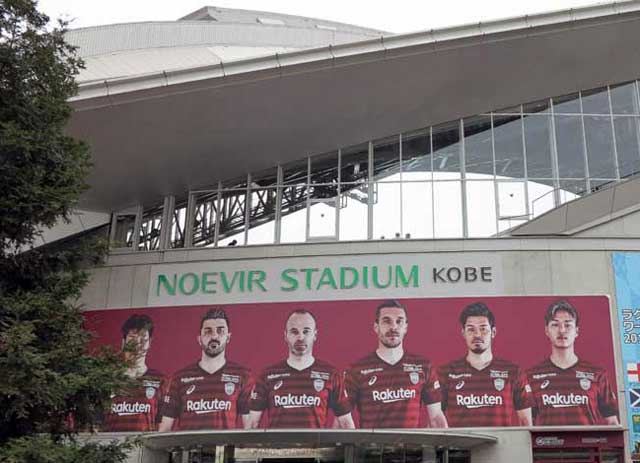
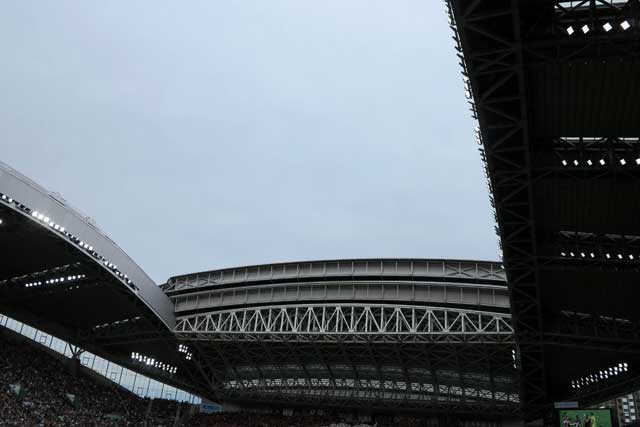
Home ground: Kobe 'Wing' Stadium
Address: 1-2-2 Misaki-cho, Hyogo-ku, Kobe City, Hyogo 652-0855
Capacity: 34,000
When built: 1975
Nearest train station: JR Hyogo Station or Misaki-koen Station on the Kaigan Subway Line
Nearest bus stop: Wada Misaki Station
Other useful info: This 2002 World Cup venue has superceded the deteriorating Kobe Universiade Stadium as the main home of Vissel Kobe, and features a retractable roof to keep out inclement weather.
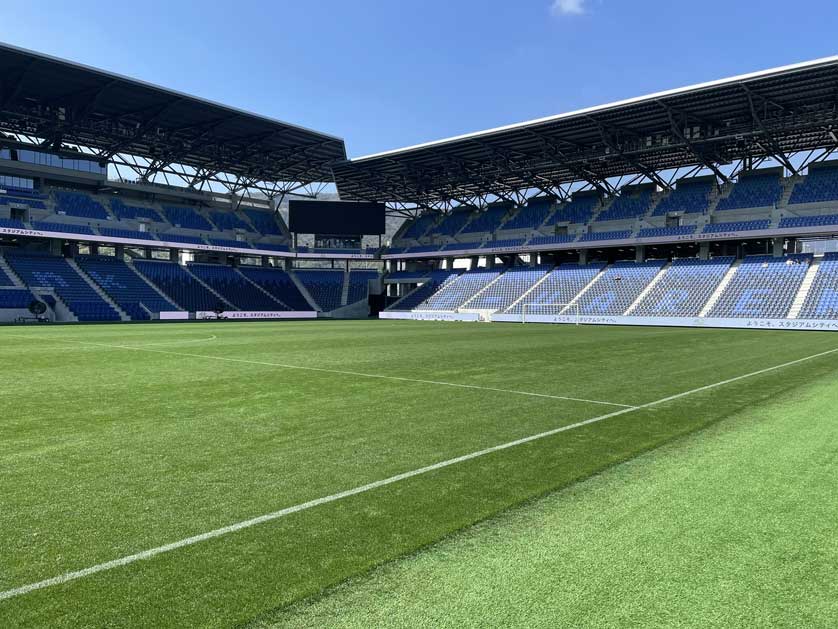
Peace Stadium Connected by SoftBank in Nagasaki, Kyushu, Japan, has been the home of V-Varen Nagasaki since 2024. It has a seating capacity of 20,027. The arena is unique because it is the first in Japan to be incorporated as part of a "Stadium City". The City is a commercialised area that includes hotels, a shopping mall and the HAPPINESS ARENA, a basketball court. Although the opening ceremony for the ground was conducted on the 14th of October, 2024, V-Varen played its first match against fellow Kyushu outfit Oita Trinita eight days before. The arena is a two-tier construction, with the 1st floor (ground floor) to the 3rd at the lower level and the 4th and 5th floors at the upper level. All seats have a cup holder next to them, giving a cinematic feel. Hotel guests at the City will have a 60% chance of watching the game from their windows. For a more unconventional viewing experience, head to the 6th floor to witness the action from the pool, sauna or semi-outdoor bath, though this is only for people who booked a room in the hotel. SoftBank acquired the naming rights, which will last until January 2029.
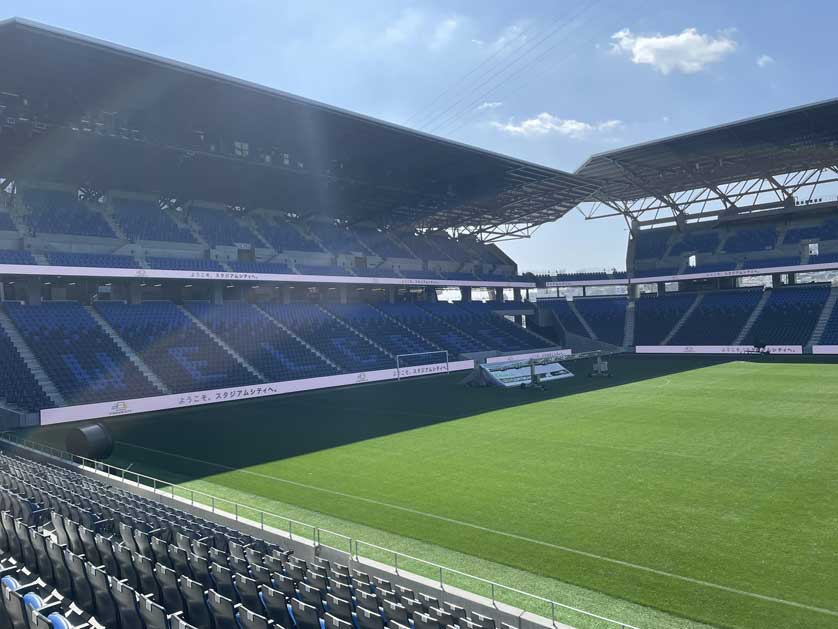
Home ground: Nagasaki Stadium City
Address: 7-1 Saiwaimachi, Nagasaki, 850-0046
Capacity: 22,027
When built: 2024
Nearest train station: JR Nagasaki Station
Nearest tram stop: Stadium City North
Other useful info: V-Varen originally operated using two stadiums, a common practice in the J. League. While Transcosmos Stadium Nagasaki in Isahaya served as their official home, many of their matches were held at Nagasaki Municipal General Recreation Park. From 2015, until the completion of the Peace Stadium, all of V-Varen's home games were played exclusively at Transcosmos (Nagasaki Athletic Stadium). The stadium is a 20-minute walk from Isahaya Station.
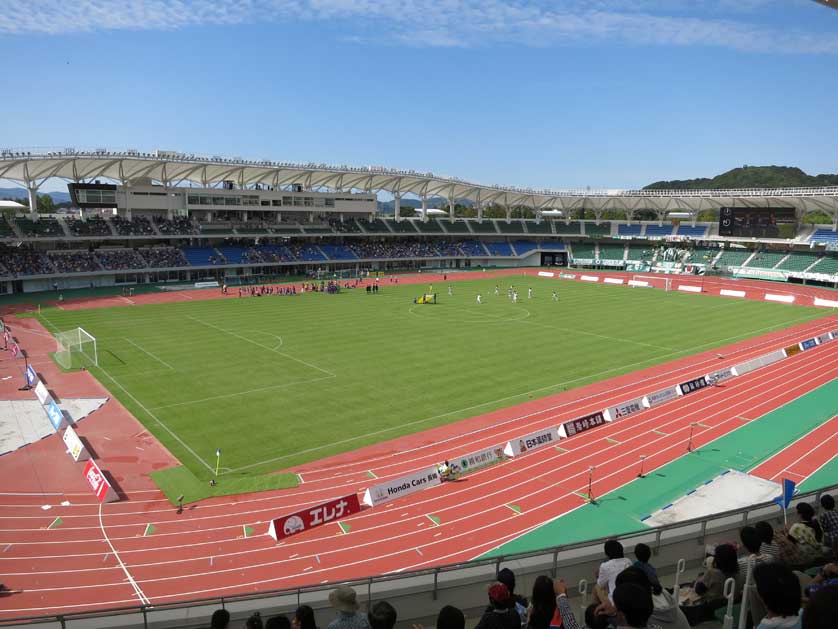 Transcosmos (Nagasaki Athletic Stadium)
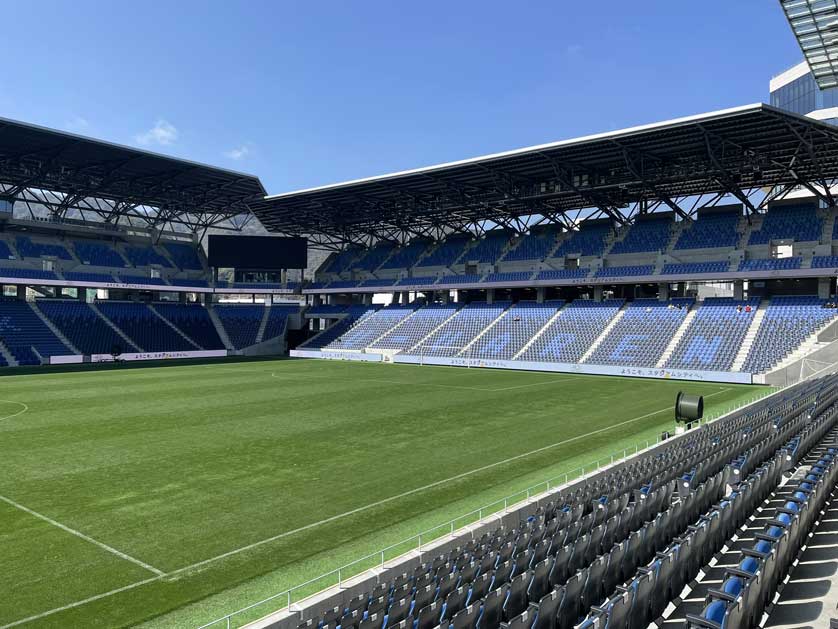 Peace Stadium is the new home of V-Varen Nagaski
Home ground: Musashino Municipal Athletic Stadium
Address: 5-11-20 Kichijoji Kitamachi, Musashino, Tokyo 180-0001
Capacity: 5,000
When built: 1989
Nearest train stations: Kichijoji Station, Mitaka Station
Nearest bus stop: Musashino Shiyakushomae
Other useful info: Home of JFL side Yokogawa Musashino FC.

Musashino Municipal Athletic Stadium
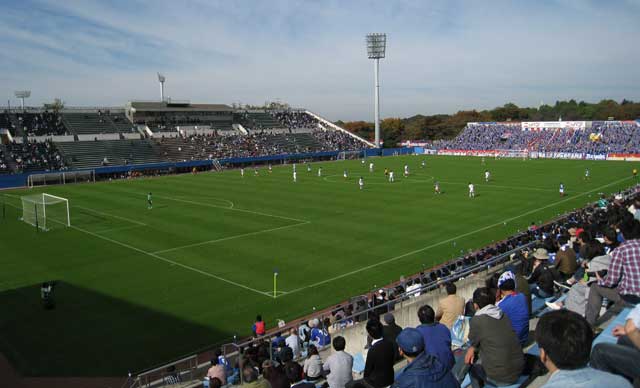
Home ground: Mitsuzawa Stadium
Address: 3-1 Mitsuzawanishi-machi, Kanagawa-ku, Yokohama, Kanagawa 221-0855
Capacity: 15,050
When built: 1955
Nearest train station: JR Yokohama Station
Nearest bus stop: Mitsuzawa Koen Iriguchi
Other useful info: Mitsuzawa Stadium will undoubtedly be packed for Yokohama FC's top-flight debut, which takes place against bitter local rivals Yokohama F. Marinos.
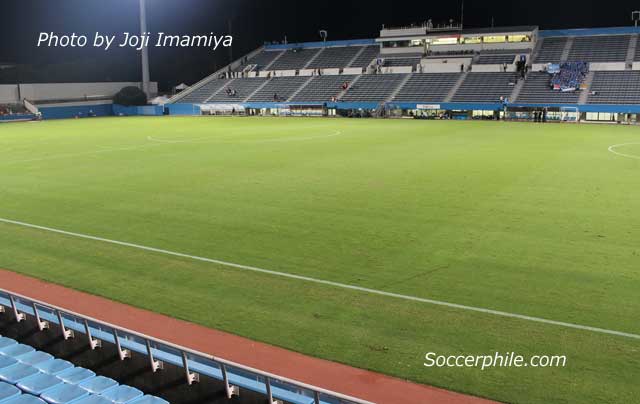
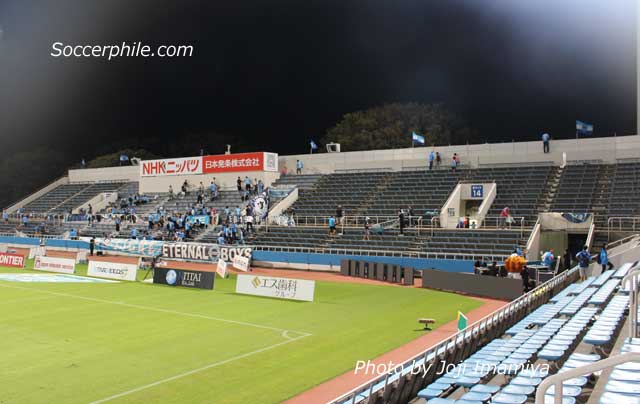
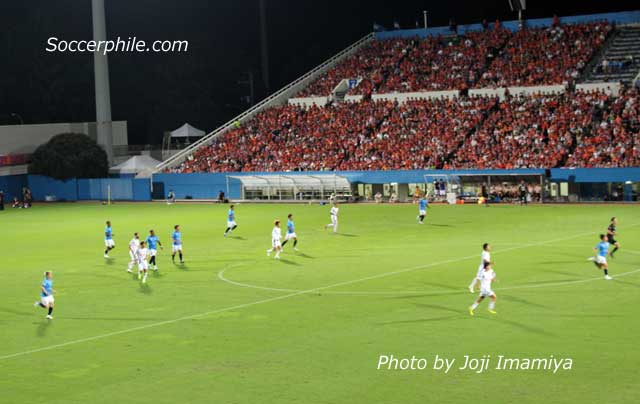
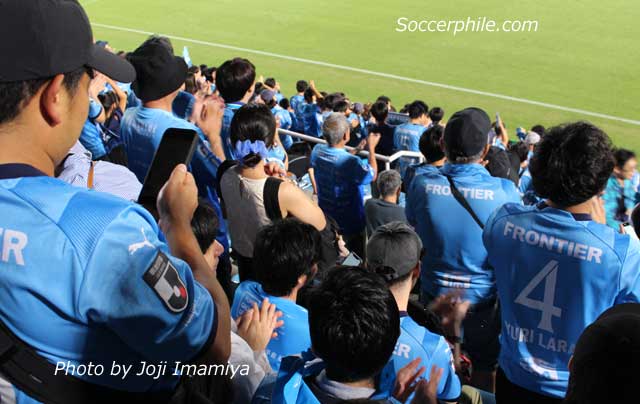
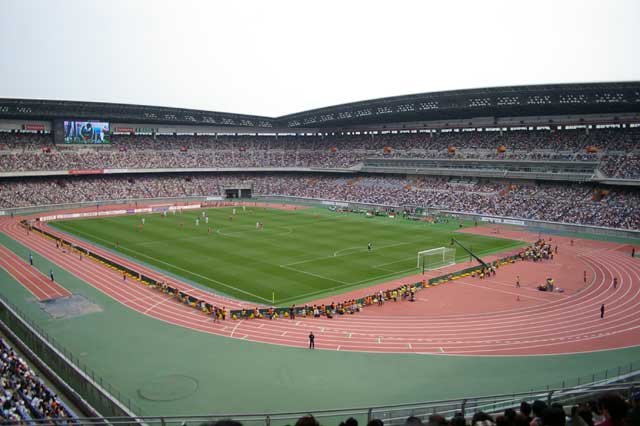
Home ground: Nissan 'International' Stadium
Address: 3300 Kozukue-cho, Kohoku-ku, Yokohama city, Kanagawa 222-0036
Capacity: 72,370
When built: 1997
Nearest train station: Kozukue Station
Nearest bus stop: Nissan Stadium Mae
Other useful info: Venue for the 2002 World Cup Final, this ground features high-tech broadcasting facilities and is also the venue of the 2006 FIFA Club World Cup Final.
Home ground: Mitsuzawa Stadium
Address: 3-1 Mitsuzawanishi-machi, Kanagawa-ku, Yokohama, Kanagawa 221-0855
Capacity: 15,050
When built: 1955
Nearest train station: JR Yokohama Station
Nearest bus stop: Mitsuzawa Koen Iriguchi
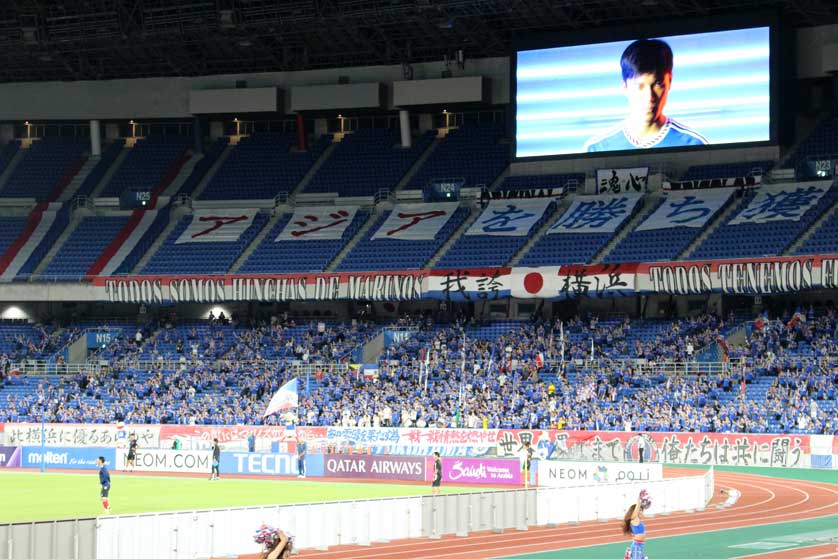
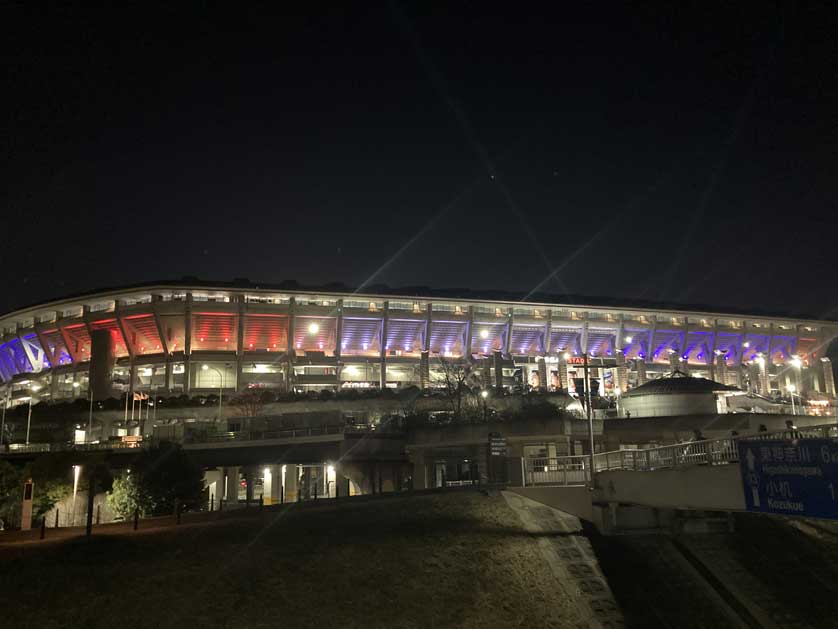
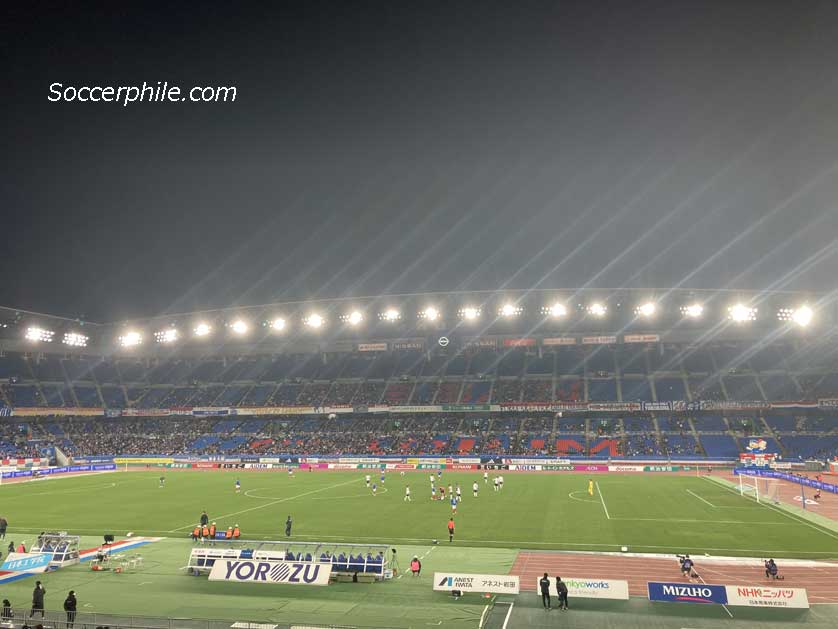
Other useful info: Yokohama F. Marinos rarely use Mitsuzawa Stadium these days, and with crosstown rivals Yokohama FC looking good for promotion from the Second Division, may give the ground up altogether.
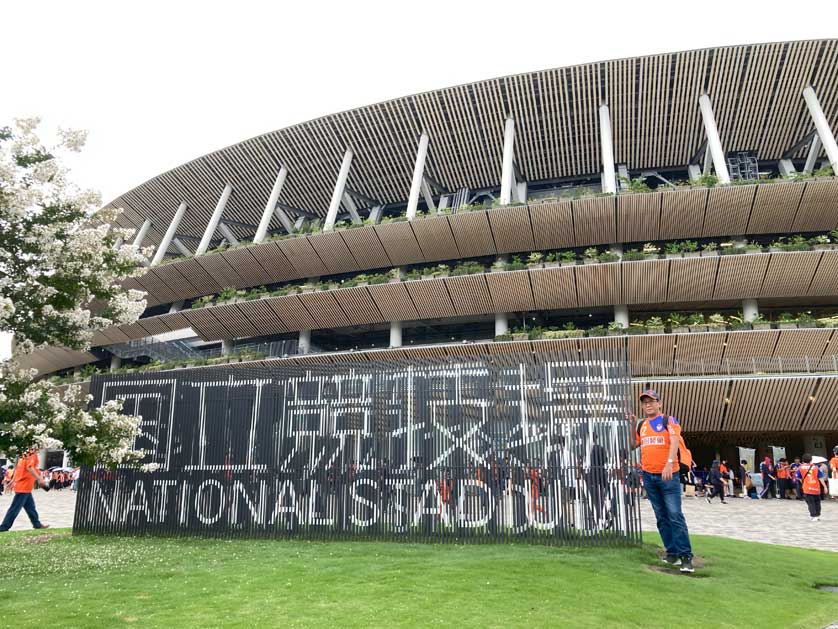 The 'New' Japan National Stadium stages matches of the Japan national teams, the Emperor's Cup final and occasional J,League matches
The 'New' Japan National Stadium (Kokuritsu Kyogijo) was the venue of 2020 Tokyo Olympic and Paralympic games. Since then the stadium hosts international matches of Japan's men and women's national sides, the final of the Emperor's Cup and occasional J.League matches. It replaced the old National Stadium (see below).
Read more on the 'New' Japan National Stadium
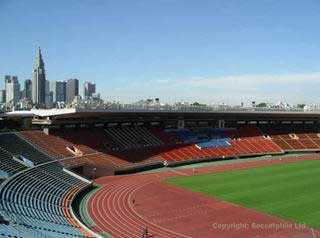
Home ground: Tokyo Kasumigaoka National Stadium
Address: 10-2 Kasumigaoka, Shinjuku-ku, Tokyo 160-0013
Capacity: 56,000
When built: 1958
Nearest train station: Sendagaya Station
Nearest bus stop: Kokuritsu Kyogijo
Other useful info: Built in 1958 for the 1964 Tokyo Olympics, Tokyo National Stadium replaced what was the Meiji Jingu Gaien Athletic Stadium. The National Stadium in Tokyo is not home to any particular J-League club. Many J-League clubs in the vicinity of Tokyo host matches here, however, and the ground is frequently used by the Japan national team. The ground also hosted matches at the FIFA Club World Cup. 5 minutes walk from Sendagaya Station on the JR Chuo/Sobu line. 2 minutes walk from the Kokuritsu-kyougijo on the Toei Oedo line.
The old stadium was demolished in May 2015 to make way for a new National Stadium to host the 2020 Tokyo Olympics. It was designed by architect Kengo Kuma. Timber sourced from all 47 of Japan's prefectures was used in the construction. Sustainability was a key concern and the stadium utilizes solar panels and recycled rain water. Thus, its design emphasizes a harmonious blend with nature, featuring a wooden lattice structure that integrates elements of traditional Japanese architecture with modern engineering techniques, a hallmark of Kuma's architectural ethos.
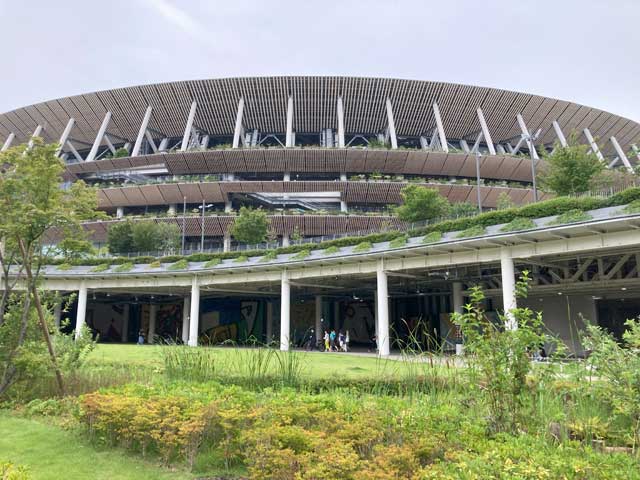 Wood sourced in Japan is a major construction material of the stadium
Top 10 Largest Soccer Stadiums in Japan