
Japan National Stadium, Tokyo

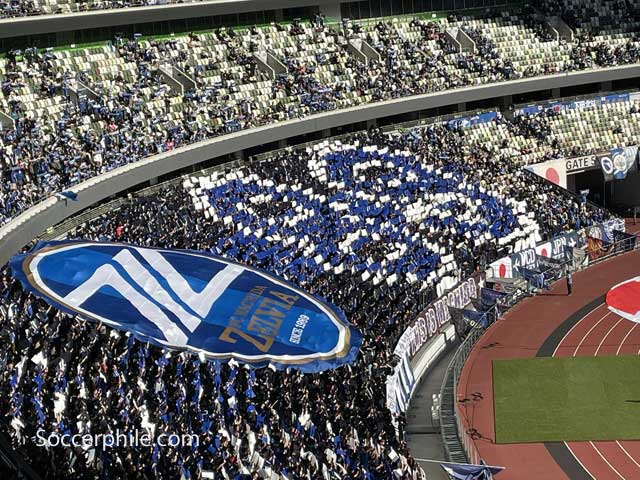
The Japan National Stadium (国立競技場/Kokuritsu Kyōgijō) was the venue of 2020 Tokyo Olympic and Paralympic games. Since then the stadium hosts international matches of Japan's men and women's national sides, the final of the Emperor's Cup and occasional J.League matches.
Tokyo National Stadium officially adopted the name "MUFG Stadium" for sponsorship reasons on January 1, 2026. This came after Mitsubishi UFJ Financial Group (MUFG) signed a five-year naming rights agreement with the stadium's operator.


History & Capacity
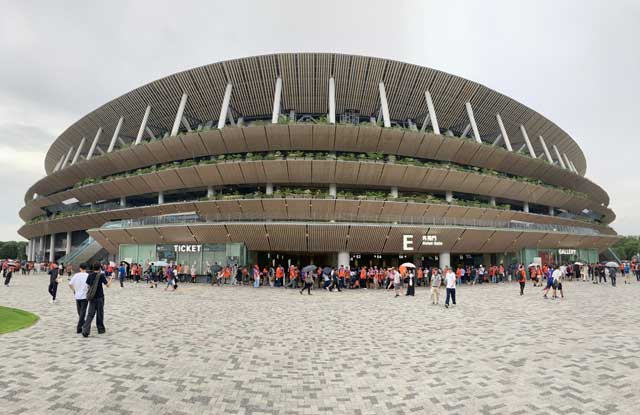
The previous National Stadium was built for the 1964 Tokyo Olympics and was demolished in 2016 to make way for the new structure. The 'New' National Stadium has a capacity of over 68,000 for football matches.
It was designed by the world famous Japanese architect Kengo Kuma. Kuma's works in Japan and overseas include the Nagasaki Prefectural Art Museum, Sanlitun Village in China, the V&A Dundee, Scotland, and the striking, wood and steel Asakusa Culture Tourist Information Center, also in Tokyo.
Timber sourced from all 47 of Japan's prefectures was used in the construction. Sustainability was a key concern and the stadium utilizes solar panels and recycled rain water. Thus, its design emphasizes a harmonious blend with nature, featuring a wooden lattice structure that integrates elements of traditional Japanese architecture with modern engineering techniques, a hallmark of Kuma's architectural ethos.
The 'New' National Stadium was completed in November 2019, with construction costs amounting to approximately $1.4 billion.

Dimensions & Facilties
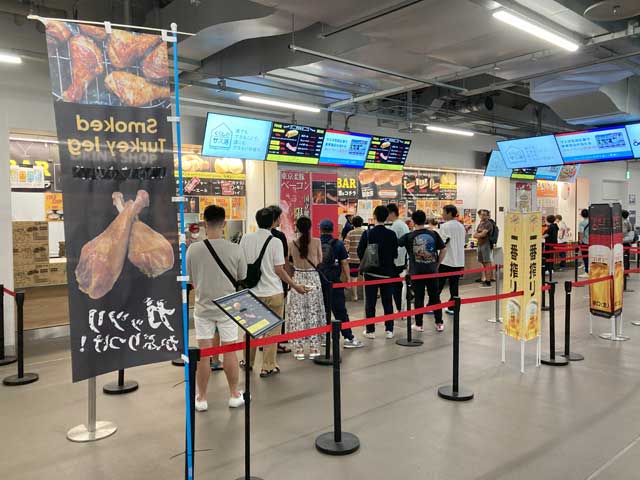
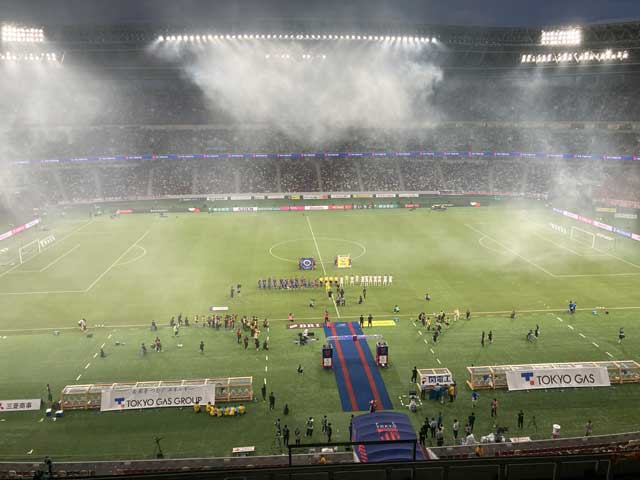
The stadium spans an area of 192,000 square meters and has a seating capacity of around 68,000, which can be expanded to 80,016 for concerts and other large events.
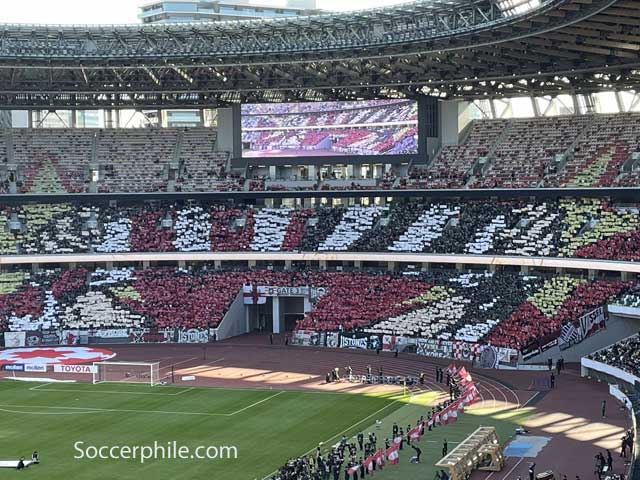
The stadium's roof, supported by a series of large steel trusses, is designed to maximize natural ventilation and sunlight, thereby reducing the need for artificial lighting and air conditioning.
The playing field measures 105 by 68 meters, adhering to international standards for football and athletics. Additionally, the stadium includes state-of-the-art facilities such as an advanced lighting system, a high-definition video screen, and a complex audio system, all contributing to its status as a premier venue for major international sporting events, including the 2020 Summer Olympics and Paralympics.

Access - Getting There
The stadium is located in central Tokyo close to Shinjuku.
From Tokyo Station, take the Chuo Line to Yotsuya Station and then change to the Chuo-Sobu Line to Sendagaya Station from where it is a short walk (23 minutes).
Alternativly take the Keihin-Tohuku Line to Hamamatsucho, then walk 5 minutes to nearby Daimon Station and take the Oedo Line to Kokuritsu-Kyogijo Station (30 minutes).
Another possibilty is to take the Yamanote Line to Akihabara, then the Chuo-Sobu Line to Sendagaya Station (30 minutes).
From Shinjuku Station it is two stops on the Oedo Line to Kokuritsu-Kyogijo Station.
10-1 Kasumigaokamachi, Shinjuku, Tokyo 160-0013
Tel: 03 5843 1300
Nearby Hotels
Tokyo has a vast range of hotel and guesthouse options ranging from luxury 5-star properties to more humble hostels.
If you do wish to stay close to the stadium itself try the 4-star Mitsui Garden Hotel Jingugaien Tokyo Premier.
The pleasant, three-star Nihon Seinenkan Hotel is also fairly close to the stadium.

Nearby Sights
The Shinjuku area is one of Tokyo's most lively entertainment areas and also has lots of green spaces to enjoy, Shinjuku Gyoen and Meiji Shrine chief among them.
Shinjuku Gyoen
The 144-acre Shinjuku Gyoen (Shinjuku Gyoen National Garden) offers landscaped lawns, beautiful cherry blossoms, and tranquil ponds. It was originally the estate of an Edo Period daimyo (feudal lord).

Meiji Memorial Picture Gallery
The Meiji Memorial Picture Gallery aka Meiji Memorial Museum opened in 1926 and displays 80 large paintings, 40 in Japanese style (Nihonga) and 40 in Western style (Yōga). They depict scenes from the Emperor's life and from the period of his rule (1868-1912). It is located within the grounds of Meiji Shrine.
Tokyo Metropolitan Gymnasium
Tokyo Metropolitan Gymnasium (東京体育館) dates from 1954 and has been used as a venue both for the 1964 Summer Olympics and the 2020 Summer Olympics. In 1964 it staged the gymnastics events and at the 2020 Olympics hosted the table tennis competition.

Photos by Japan-based journalist Sean Carroll - author of Between The Lines: Navigating The World of Japanese Football
J.League Stadiums
Tosu Stadium (Ekimae Real Estate Stadium)
Toyota Stadium Aichi Prefecture
©Soccerphile.com


Buy tickets for soccer matches around the world