
Japan Stadiums: K's denki Stadium Mito, Ibaraki Prefecture

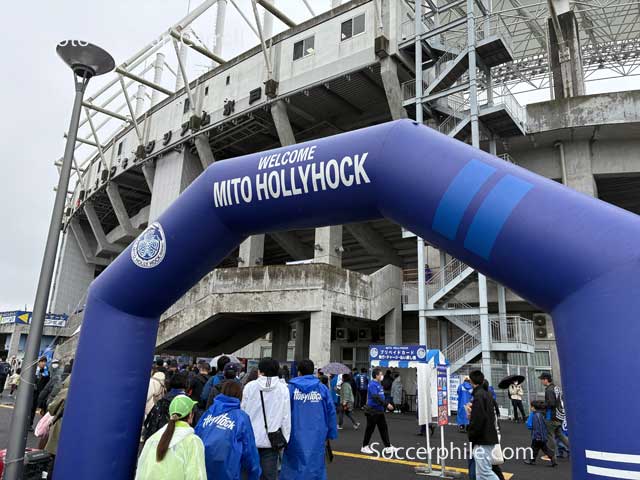
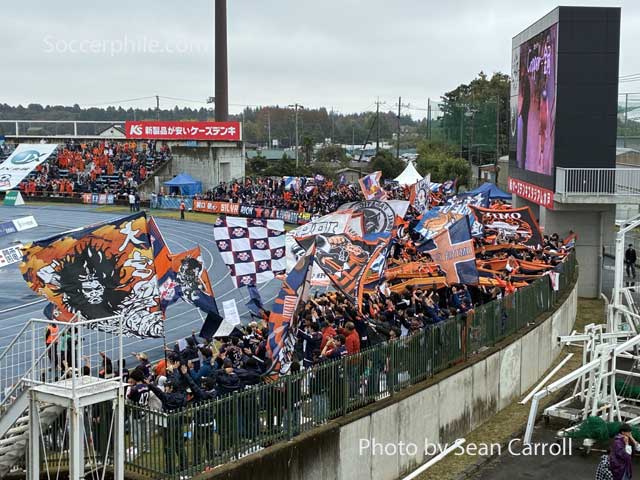
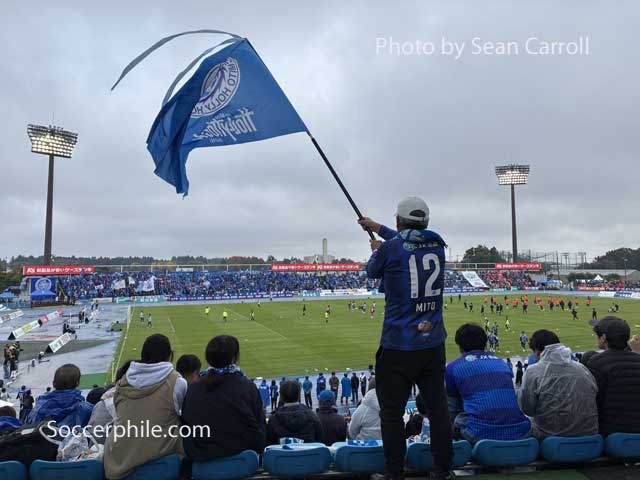
K's denki Stadium Mito (ケーズデンキスタジアム水戸/Ksスタ) in Mito, Ibaraki Prefecture is the home ground of J.League side Mito Hollyhock.
Since 2009 it has been named K's denki Stadium for sponsorship reasons. Previously the arena was called simply Mito Municipal Stadium (水戸市立競技場).
The stadium was damaged in the massive 2011 earthquake and tsunami which hit the Tohoku region of northeastern Japan.
History & Capacity
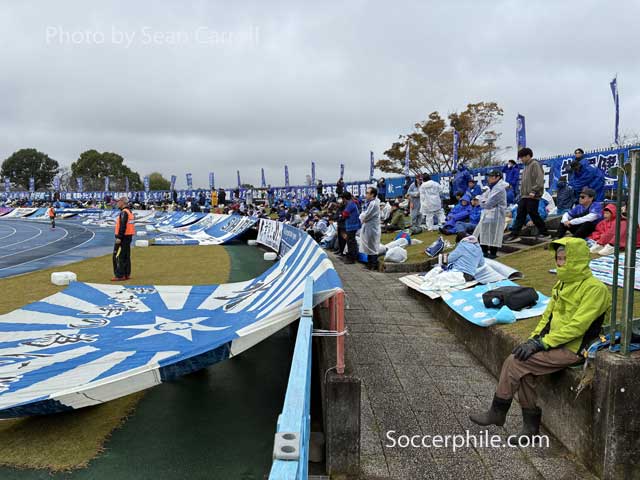
The stadium first opened as an athletics venue with a running track in 1987 and has a capacity of 12,000 (10,152 for J-League matches).
The main stand can accommodate 7,000 spectators, the back stand 3,000 and 2,000 on the lawn stands.
The surface is natural grass; there is one large display video screen and traditional pylon floodlights.
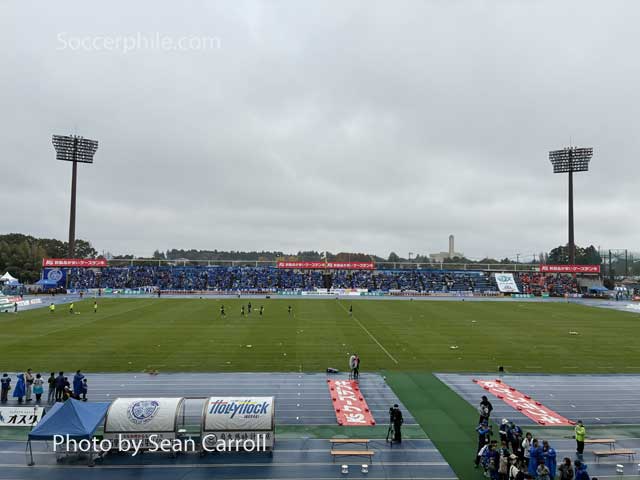
When the stadium opened in 1987, it only had a capacity of approximately 5,000 (seats in the main stand only), less than half of the J.League's required capacity (J1: 15,000+, J2: 10,000+). It also lacked lighting for night games, a scoreboard, a clock, or even a broadcast booth, making it completely inadequate as a J.League venue. Until the ground was redeveloped in 2009 to meet J.League standards, Hollyhock played home games at Kasamatsu Stadium in Naka.
Renovations included the addition of seating in the stands, a larger main stand roof, the installation of large-scale video equipment plus floodlighting.
Since 2011, all Hollyhock home games have been held at K's denki. Plans for further development to bring the stadium up to J1 standards remain stalled, which could be a problem with Hollyhock presently top of J2 in 2025.
Mito Hollyhock
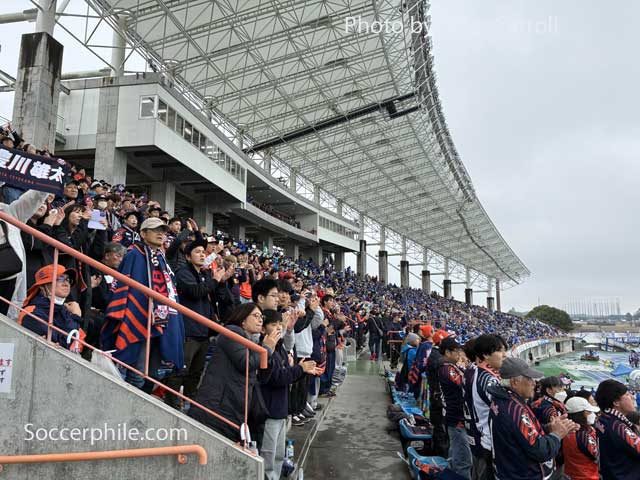
The team in blue, Mito Hollyhock, are nicknamed 'Hollyhock' after the crest of the Tokugawa clan who ruled this area of Japan during the Edo Period. The Mito domain was staunchly conservative and pro-Tokugawa. It held out for some time against anti-Tokugawa forces during the Boshin War (1868-69), which saw Japan change from a largely feudal system of governance to more modern, Westernized institutions.
The club dates back to 1990 and Prima Aseno FC, a team formed by a group of workers at a food factory of Prima Ham in nearby Tsuchiura.
As Prima Ham FC Tsuchiura the team competed in the Japan Football League from 1996, becoming Mito Hollyhock in 1997 after a merger with FC Mito.
The club began participation in J2 in 2000 and has been there ever since with a best finish of 7th in 2019.
The current squad consists of only Japanese players with no foreign additions, somewhat rare in Japanese soccer.
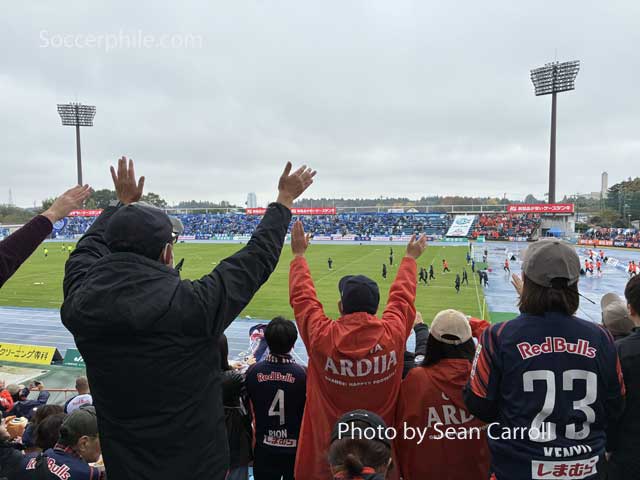
An Ibaraki derby of sorts would see powerhouse Kashima Antlers take on Hollyhock.
German coach Gert Engels who had spells with Kyoto Sanga and Urawa Reds started out in Japan as player/coach of Prima Aseno.

Access - Getting There
The ground is 9.2 km from Mito Station on the JR East Joban Line, the Suigun Line and also the Kashima Rinkai Railway Oarai Kashima Line.
On match days only there are buses to Municipal Stadium from both Mito Station and Akatsuka Station.
On non-match days there are limited bus connections to the ground.
Address: 2058-1 Kobukicho, Mito, Ibaraki, 310-0914
Nearby Hotels
Mito has a modest range of hotel and guesthouse options.
Some options include the 3-star Dormy Inn Mito Hot Spring.
Alternatively, the pleasant, three-star Mito Sannomaru Hotel is close to Mito Station.
Nearby Sights
The historic city of Mito is a pleasant place to linger.
Kairakuen Garden
One of Japan's three great gardens, famous for its plum blossoms in spring, lovely landscapes, and historical significance.
Mito Art Tower
A modern architectural landmark offering contemporary art exhibitions, panoramic views of the city, and a cultural center for visitors.
Ibaraki Prefectural Museum of History
A museum showcasing the region's history, including ancient artifacts, samurai culture, and local folklore.
Kodokan
Once a school for the children of local samurai during the last years of the Tokugawa Period (1603-1868).
Tokiwa Shrine
Tokiwa Jinja (常磐神社) is a Shinto shrine next to the gardens of Kairakuen.

More J.League Stadiums
Sanga Stadium by Kyocera Kyoto
Tosu Stadium (Ekimae Real Estate Stadium)
Toyota Stadium Aichi Prefecture


©Soccerphile.com
Buy tickets for soccer matches around the world