Thatcher never kicked a ball
Sean O'Conor
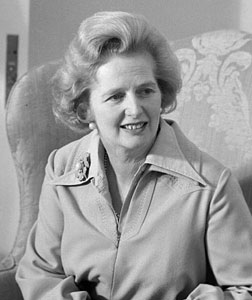
"Don't associate me with that woman" - Sir Alex Ferguson.
Margaret Thatcher's death was announced hours before the Manchester derby.
Normally the death of such a long-serving leader would have merited a minute's silence, but it was hastily announced none would occur.
The fact the Premier League has ruled out any public shows of respect for the Iron Lady this weekend is a comforting reminder English football has not jettisoned its social past completely. The idea of a blue-collar city like Manchester honouring a free-market prophet who closed down its factories was absurd.
From the football world only the Reading and Wigan chairmen, both donors to the Conservative Party, have called for a tribute to be observed in the national sport.
The fact remains soccer and Margaret Thatcher never saw eye to eye, inextricably linked but never united. An abiding memory of this chasm is of her striding across Hampden Park before the 1988 Scottish Cup Final to a cacophony of boos from the stands.
The Iron Lady's tumultuous reign in charge of the U.K. from 1979-1990 coincided with equally volatile times in its domestic football. England's political and footballing cultures were poles apart but equally vibrant, and sparks flew whenever they crossed paths. The era was largely a dark one for football, with supporters dying en masse at Bradford, Heysel and Hillsborough, names etched forever in the memory. And Thatcher, while never accused of being directly responsible for any of those tragedies, was nevertheless assumed to be somewhat complicit in the culture of social neglect which contributed to all three.
But when her spell as Prime Minister started in 1979, English clubs sat on top of the tree. In the first four years of her reign, Nottingham Forest, Liverpool and Aston Villa all won the European Cup.
Yet when the 1985 final in Brussels ended with 39 Juventus fans asphyxiated by a collapsing wall after Liverpool supporters had run amok, a dark age descended. English clubs went into exile from European competition for five seasons, a wilderness from which they took years to recover.
When they returned following Italia '90, Manchester United nudged past Barcelona to take the Cup Winners' Cup, but Villa's 3-2 aggregate loss to Inter in the UEFA Cup revealed the previous superiority English clubs enjoyed had evaporated.
Thatcher's tenure at No.10 coincided, naturally in some minds, with the soaring hooligan problem.
Soccer violence might have had ancient roots – the original 'derby' was a little more than a brawl between two villages in Derbyshire after all, but Britain's fracturing post-industrial society in the 1980s was painfully reflected in its football culture. The big cities, whose 19th century economic booms had given birth to the professional game, were suffering as heavy industries rusted away, and many drew parallels between the abundance of men with no work and a rise in nihilistic violence around the grounds.
A lack of jobs might not have had a direct connection to those idiots going armed to the match, but a wider social breakdown and a coarsening of public discourse fuelled by Maggie's flag-waving patriotism and her clarion, Rupert Murdoch's tabloid The Sun, cannot have been unconnected either.
The similarities between the Union Jack brandishing following the Falklands War in 1982 and the skinheads wrapping themselves in the flag at England matches were too hard to ignore.
Although Thatcher and her ilk tried to pigeon-hole the sport as existing in a vacuum, the truth was football has always been an integral part of society, a concept Thatcher famously said did not even exist.
Soon soccer in England took on political overtones as the Prime Minister, in a change to her party's traditional one-nation ideal, adopted a 'them or us' mentality and thought hooliganism was a mere law and order issue. Her egregious sports minister Colin Moynihanmade it clear soccer's rowdy followers were part of 'the enemy within' when he called them "the effluent tendency" in explicit allusion to the Militant Tendency, a far-left group who had taken hold of Liverpool City Council.
TV pictures of young Englishmen smashing windows and throwing chairs on drunken rampages throughout Europe had insulted Thatcher's patriotism, but her response was confused and ineffective. In the wake of Heysel, that nadir of spectator violence, she hauled a cadre of football administrators and journalists into Downing Street in an effort to find a magic bullet.
According to Ted Croker, the F.A. Chief Executive, Thatcher was more than willing to take the nuclear option and close down English football altogether, in the same way she had simply shut down the mining industry and metropolitan governments which had got in her way.
But Croker, in an unforgettably brave response, looked the Iron Lady in the eye and said, "These people are society's problems and we don't want your hooligans in our sport, Prime Minister."
A leader more famous for dictating than listening found herself once more up against a culture alien to her own. Her small-town Edwardian upbringing and her father's grocery store are often cited as her political genesis, while football had always been a big-city passion, dominated by the industrial metropolises of the Victorian age and their large working-class populations, a world away from Thatcher's origins.
Her home town of Grantham was hardly a football hotbed, with a resolutely amateur team who bobbed around the 7th or 8th tier of English football and currently ply their trade in the Evo-Stick Northern Premier League.
For someone who stressed individual responsibility to stand accused of being complicit in a large-scale behavioural problem was thus a red rag to a bull and Thatcher made sure Croker never received a knighthood when he retired, as had been the norm for F.A. chiefs.
Undaunted by a culture she never fully grasped, Thatcher steamed ahead with an ill-conceived attempt to force all spectators, whether season-ticket holders or casual visitors, to carry official I.D. cards in order to visit a football match. This was unanimously taken as an insult by the well-behaved majority of supporters whose country had only ever demanded its citizens carry identification during wartime.

Luton Town, whose chairman was the ultra-Thatcherite M.P. David Evans, instituted its own blanket ban on away fans anyway, to widespread condemnation and ridicule from the rest of English football. It became a fun challenge to get into Kenilworth Road as an away supporter and several did, mocking the pomposity of the scheme.
Moynihan, a former rowing cox famously labelled by Brian Clough as "the miniature for sport", trumpeted the I.D. scheme around the country masquerading as a Charlton fan (he had no interest in football but was M.P. for nearby Greenwich) until the Taylor Report into the Hillsborough disaster of 1989 killed the half-baked plan for good.
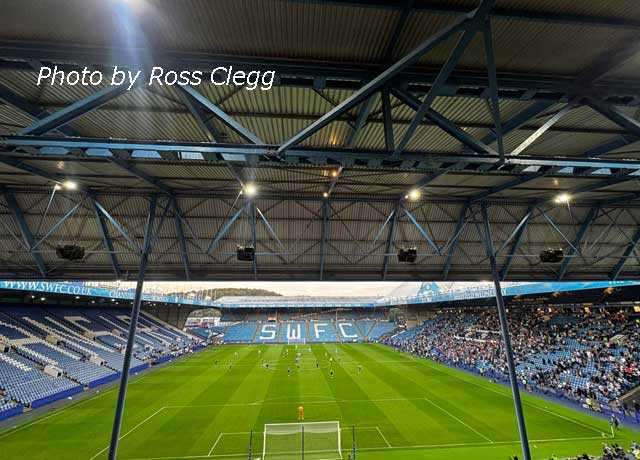
The death of 96 fans in Sheffield traumatised the whole nation for about a week, and should have been a cause for unanimity, but the chasm between the nation's rulers and the sport was again exposed. While the corpses were still being counted, the local Conservative Member of Parliament Irvine Patnick, in collusion with the police, told Thatcher and The Sun that the Liverpool supporters had been responsible for their own deaths by embarking on a drunken rampage.
The Sun splashed a notorious front page 'The Truth' only four days after the carnage claiming Reds fans had stolen from, urinated upon and sexually assaulted their dying colleagues. The fury on Merseyside was immense and sales of The Sun there have never recovered. To add insult to injury, Patnick, unlike Croker, was knighted five years later.
Last year Prime Minister David Cameron apologised and exonerated the Liverpool fans at long last of all blame, echoing an independent enquiry, but the 'Justice for the 96' campaign remains prominent at Anfield in an effort to nail the bent cops who shifted the blame in the first place. Thatcher's apparent complicity has never been forgiven either.
The same police force who were involved in Hillsborough was the one mobilised by Thatcher in the 'Battle of Orgreave' five years earlier against striking miners, a confrontation whose violence shocked the Queen so much she is said to have been furious with her PM.
In a chilling premonition of events at Hillsborough stadium, the tabloid media were fed lines and 95 miners were arrested for rioting, before all charges were dropped and huge damages paid out after what senior lawyer Michael Mansfield called "the biggest frame-up ever". Alas the South Yorkshire Police's culture of fabrication with political backing continued with devastating results. 2012's independent enquiry into Hillsborough found that the force had doctored a jaw-dropping 116 witness statements out of the 164 it had taken on the day.
Thatcher was out of office a year later and had no occasion to cross paths with football again, but the Premier League and its elevation of market values above traditions since 1993 would have been music to her ears. The subsequent hiking up of ticket prices has excluded much of the sport's working-class fan base, a constituency Thatcher never fully trusted. Commercialism and market forces are now everywhere in football and England's top division has become a mega-rich league dominated by imports and owned by a plethora of Russian oligarchs and Arab sheikhs, the natural fruit of her social Darwinism.
She was happy to be photographed, as all Prime Ministers are, with the national team before they set off on another doomed World Cup campaign, but Thatcher never showed any appreciation or knowledge of football and secretly probably despised the people who followed it.
Three British national teams qualified for the 1982 and 1986 World Cups, but none of them had much impact on the domestic sport until England's surge to the semi-final of Italia '90. The confluence of a nation in love once more with football to the tune of Nessun Dorma, the Taylor Report's advocating of all-seated stadia and the F.A. bigwigs being impressed by Italy's modern arenas led to a radical transformation of the domestic game, a process which accelerated when the Premier League began.
Hooliganism would never be cool again. But any change for the better happened despite, not because of Thatcher's designs. Let the record show too that England, Scotland and Northern Ireland almost never made it to Espana'82 as the PM considered withdrawing them in protest at Argentina's inclusion in the competition in the year the junta invaded the Falklands. Like her efforts to persuade British athletes not to travel to the Moscow Olympics, her clumsy attempt to politicise the World Cup failed and none of the home nations met Argentina anyway.
Even the halcyon days of Italia '90 had a fly in the ointment as the risible Moynihan chartered a plane to send dozens of hooligans home from Rimini only to find the Carabinieri rounded up various English speakers and flew them to London. And when Moynihan spied a banner at one game making less than flattering remarks about the Tories' Poll Tax, he petulantly ordered the Italian police not to allow England fans in with any lettering on their flags.
Although football was one English tradition which seemed not to succumb to the radical revolution Thatcher brought to so many areas of life while she was in power, it detached itself from its roots shortly afterwards, increased in popularity and exposure, and sold its soul to the highest bidder. Nothing was immune from the market. As someone who never got tribalism, she would have been happy to see fervent supporters in the 1980s supplanted by the bland consumers who call themselves 'fans' today, loyal customers of commercial brands they used to call clubs.
Even the Iron Lady's most virulent opponents, who averaged 58% of the electorate across three General Elections, gave her the credit of being a conviction politician, with whom at least you knew where you stood.
And we did stand in the eighties, on crumbling terraces behind barbed wire fences in grounds the Taylor Report likened to medieval fortresses. When we scored we jumped around, and swayed in a way the sedate spectators today can only imagine.
As a fan in the '80s, I felt like a member of a secret society and an oppressed minority. I did not mind being treated as a potential thug though, escorted by mounted police from the station to the stadium and routinely locked in after the final whistle for an hour in the away end. I knew no different, though my father compared the militarised experience and meagre attendances unfavourably to happier days as a child amid 70,000+ crowds watching Charlton at The Valley in the 1950s.
Football supporting was a vibrant subculture in Thatcher's reign in a way it is not now, thriving on its contrast to a hand-bagging Prime Minister from a provincial backwater and a different era.
The rise of the fanzines before the internet was a terrific explosion of underground feeling which sprang from the cultural isolation of football in the Thatcher years.
However annoying her interventions into our sport were, the gap between the sport and Thatcherism proved a fertile one.
But maybe the Iron Lady had the last laugh at the Beautiful Game.
© Sean O'Conor & Soccerphile.com
Buy tickets for soccer matches around the world