
Jay DeMerit Interview
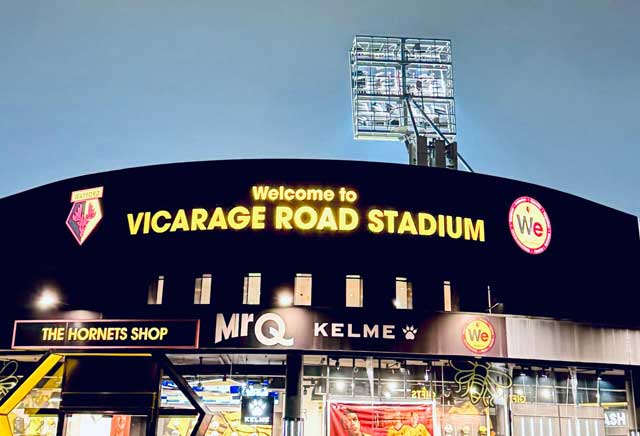
Jay DeMerit grew up in Green Bay, Wisconsin and came to football relatively late, signing professional with Watford aged 25 in 2004 after they had spotted him in a friendly with non-league Northwood. He then spent six seasons at Vicarage Road, becoming club captain and memorably scoring the winning goal in the playoff final that took them to the Premier League.
Called up by his country in 2007, he made 25 appearances for the USA and played at the 2007 Copa America, 2009 Confederations Cup and the 2010 World Cup.
After Watford, he became captain of the nascent Vancouver Whitecaps in Major League Soccer, where he played for four seasons before retiring in 2014. In 2011 a documentary film was made about his story called Rise and Shine, now the name of his foundation for youth soccer and young people's personal development.
Based in Vancouver since 2011, he sat down with Soccerphile to discuss the World Cup coming to his country of birth and his country of residence.

Sean O'Conor
As a former American international who now lives in Canada, you must be excited about the choice of venue for this World Cup
Oh yes. When is the next time we are going to get it? We have to make the most of it. I am in Vancouver and we have seven games. I want to participate in as many ways as I can whether it is in telling stories and sharing my experiences or in creating new cultural ones around the games as well in the stands. In Vancouver I am running events around four of the matches, creating interactive experiences, getting fans from Turkey, Belgium, New Zealand and Qatar together. I want to introduce them to Vancouver. We have great North American culture to showcase and I want to encourage people to get out there and show it to the world and show them that we know soccer. I am working some matches for Fox Soccer and planning to go to around seven games. I am getting my Canada tickets from Jesse Marsch, straight from the source - they are $900!
Are you confident Canada will do well?
I think so. I know Jesse has a really good system and I think he has got them in a really good place. I have been watching them for years. Obviously we have to keep an eye on Alfonso Davies' fitness (he injured his hamstring in May) as is a big inspiration to that team and when he plays they all lift their game. I hope he plays as you need your best players on the field and he is world class. I think their success may be dependent on him. There are young guns too like Ali Ahmed who played at the Whitecaps for a few years who are using this as a spotlight. I think they are the best team in our region right now.

Jesse Marsch got some criticism in England for sounding too positive when coaching Leeds. Was that just a case of being lost in translation?
I know Jesse well. We are both from Wisconsin and I just think that all coaches will have their own philosophies to create the connections. Alex Ferguson was a mythical being and he would lord it around the training ground but he had created a connection with his players and a lore around him. Jesse creates an environment of positivity, of team work and hard work, real relentlessness. But through that comes positivity because if guys are going to run for you for 90 minutes you need to feel positive about it.
That is his philosophy and it works. He was taught by the Germans at Leipzig (as assistant to Ralf Rangnik). His philosophy is based on a high-press German system. I don't really look at teams and countries but I look at the coach and their philosophy and I think that is what is really interesting - how the coaches get the best out of their players.
Aidy Boothroyd at Watford for me was an incredible positive force and he just got everyone to believe in him and Jesse has got that too but some coaches come with a CV and their results just speak for themselves and say here is my system and look, it works.
There is an ego attached to that but if it works and you have won a Champions League then you can be harder on your players. It is kind of like Bill Bellichick (the record Superbowl winning coach) - if you are not part of the system then you are out. It is a systematic approach. The harder-nosed coaches are like, 'this is my system, take it or leave it'.
How do you rate the US National Team's progress under Mauricio Pochettino?
It is all coming down to this in all honesty. He has had a little time to sort things out and he missed some players last summer but now all of those things need to come together. It's judgment time. I think he has got a good squad and has found the right players. Now it is up to them to perform. I don't think they have spent enough time yet as a unit for us to know how they will do in all honesty but we will see. But there are no bad teams anymore so we should be seeing some great games.
They have host nation advantage of course
Yes and you should want that pressure too, that is the point of being the host. I hope the coach and the players are promoting that.
Half the American squad are playing at their first World Cup. Do you remember being in those shoes?
You have all this energy because the world is watching and you are feeling all of this purpose because you have been chosen to represent your country at the biggest sporting tournament. It is easy to get gassed out by that but you have to manage that energy if you are going to get along in the competition. That for us is what we tried to do and talked about. We said, 'Guys this is at least a four-game tournament for us. Get out of the group - that is goal number one.' Once we get out of the group stages then anything can happen and all bets are off. If you think of the energy it takes to get to a fourth game, it takes a lot of management and it is a squad game as well. Every player in the roster plays his part.
How did you feel when you finally started a World Cup finals game?
There is the nervous waiting to see if you are going to be a starter but then there is no better feeling than putting your hand on your heart and representing your country when the national anthem plays. It is impossible to beat that feeling. It was such a privilege to be there and represent everything that I am and that always put me in a good mindset.
I see these families of Brazilians who get picked crying or going ballistic and truly that is what this game is all about. You put all these pieces together every four years and it should be energising for everybody.
And you had come via an unusual route having turned pro at the age of 25
I know I was never really supposed to be there so when you are you don't take anything for granted - the good, the bad and the ugly. I was not a product player, I did not come from a system. I was a player that worked hard in his sleep to get there so those moments were always the best. When you get those opportunities in life it is a special time for sure.
Your first tournament was the 2007 Copa America. What was that like being thrown in to face the likes of Messi and Riquelme?
After that game against Argentina, I was picked along with Riquelme to do the drug testing. He could not speak English and I could not speak Spanish and it was 104 degrees (40C). The pair of us were up there for an hour and half trying to get to the level that we could pee. So me and the best player in the world at the time are sitting there just looking at each other now and again saying 'Good? Yes? No? Too soon'. We would go and drink some water then come back and start again, so funny. In my US National Team games I became accustomed to being thrown in at the deep end!
You then almost won the 2009 Confederations Cup in South Africa
Yes, my real first games were in the Confederations Cup. My first three starts for the National Team at that level were Brazil, Egypt and Italy. We went on to beat Spain and zapped their four-year winning streak and went 2-0 up in the final against Brazil and I was part of all those performances. There was all that 'Who is that Jay DeMerit guy? Where did he come from? But good job. That was the slow burn of my story.
After that you must have thought seriously about being picked for the World Cup
I did yes but then I got this eye infection and I needed a corneal transplant six months before the World Cup and I had a whole other level of pressure. But I made it. I did everything I had to do. I sat in the dark for a month and played with the stitch in my eye for a couple of months and ended up making the team.
Your first game at South Africa 2010 was a 1-1 draw with England in Rustenburg. What do you remember about it?
Wayne Rooney was the only thing I had on my mind and that nagged me. That was my only job. We did it well. He did not have a touch in the box for 75 minutes. It was a good game for us because we shut down one of the best players in the world at the time. My job was very simple for the National Team - win it and give it to somebody else! That was it. That was the job I relished and that I really loved and that was all I did.
I remember you as an excellent interceptor and one who muscled others off the ball
Yes I was a competitor and a disruptor who used his body. I watched this documentary on chi the other day, about life force energy and I realised from watching this expert demonstrating that it was how I used to defend - hit somebody just before he would get to the ball and then he would lean on me and he would not get there. It was cat and mouse but I definitely did that a lot.
Next you played Slovenia and came back from 2-0 down to draw 2-2
We went to 2-2 and should have won it but the locker room after that game that day was feeling good. We had wanted to still be in it against Algeria in our third game and we had given enough to be able to be in it that day. We knew that if we had it all to play for we would be in a good spot. We thought if we won against Algeria we would win our group straight up. That was the goal and everything was still to play for.
You left it pretty late against Algeria, a 91st minute winner from Landon Donovan
We wanted to make sure that all the Americans watching in the bars in Boston and New York and LA had an American ending - that was all written! I had smashed up my tongue and it was getting stitched up afterwards when Bill Clinton rolled in with a cooler full of Budweisers! I could not really talk but just slurped an ice-cold beer - it was awesome.
Then after that euphoria you lost 2-1 to Ghana in the Second Round
They were the only African team left and had the whole of Africa behind them. I remember the stadium atmosphere most. That intensity was great. We held on into extra time though. From a defensive standpoint that is all you can do. Their forwards were so hard to mark but for 93 minutes we did and then Asamoah Gyan got in between Carlos (Bocanegra) and I.
We had a couple of chances at the other end but did not take them and that is football. But it was something we could be proud of, that is for sure.
What about the overall growth of soccer in America since then?
I keep recognising where we are at. We're not lacking awareness and knowledge but we are lacking that deep cultural connection. When I go back to Green Bay kids coming out of high school do not know who I am. We have to make sure that those things are set.
If you are from England you would understand. You look at your club badges and Watford's said 'Est. 1881' and when I looked at the Whitecaps, one of oldest soccer franchises in North American soccer history, it said 'Est. 1974'. So if you think about 90 years of culture and cups you have won and lost then that all helps with building a fabric of belief. That is what we need to create ourselves.
So football will rise in America will through mass collaboration
I totally agree and it is up to all of us to continue trying to share those things we already love about soccer, promote it, write about it etc. I think that is so important. I think we are still believing but our success has to grow with it and then we can talk about winning World Cups. First we have to get to a quarter or a semi and continue to grow the culture in the stands as well as on the field. I think we still have a lot of work to do but we are definitely in a great place. It is a collective effort as always.

Do you have any memories of USA '94 when you were a teenager?
I do. I was in Chicago. I did not go to any games but I remember going to a watch party and I got this triangle flag with the U.S. Soccer symbol on it. I kept it in my room for about a year and I remember looking at it. Those little mementos that can mean a lot and inspire us.
It was my first time thinking 'what is our national team' and what is this big thing we are hosting. It was the first time we got together and watched it. Those cultural moments make the game stick. The US had denim jerseys which were cool too.
How are you getting more people involved around the Canada games?
We are doing events in Vancouver in a station playhouse for fans of all ages, celebrating football culture in general, so you can do a press conference where you choose the coach and do a mock interview, games and quizzes. Then you can do agility tests with the ball while you are at the event, you can do a goal celebration etc and we have food and drink and music so you can do all these cultural things as well as watching the World Cup. For me I want to be a part culturally and socially, talking about my experiences but also meeting other people and other cultures.
And you have long been organising soccer camps in the Rockies
Yes, Captain's Camps - I run them every summer up in Whistler so I get the mountains involved. There is a nature hike. We start with our minds. We have performance coaches that come in the mornings and then we have a mentor of the day - writers, chefs, engineers, animators. I have done 55 of them over the last 15 years and that is what the whole basis of the app RISEXSHINE is about. You watch something and then you engage with it.
Have you always valued the personal development aspect of soccer?
I was a holistic person before I was a professional athlete so that is the basis of how I look at life. I was a creative person first. I have a degree in design and I was a professional designer before I was a professional footballer so I look through a creative lens. Creativity is using the mind to know what you need and thinking on the fly and all those things are really tangible when it comes to being an athlete funnily enough. I could show forwards things that disrupted them and that is creativity. Showing these world class players new looks is the only way that we as defenders win. Being creative is what really helped me against all these really elite players.

Have you maintained ties with Watford?
I do a lot of ambassador stuff for them when I come back and go to the stadium but I am doing a lot with their women's program now too. I will always love that club and what they did for me so I try to reciprocate that as much as possible. That is a relationship I have had for a long time so I don't want to let that one go.
Has your 9 year-old son got the soccer bug?
Yes, he has. We are Whistler kids so his mum bikes and skis half the year but he loves soccer. If he gets serious about it we will have to bring him down to Vancouver.
Bringing my son to his first World Cup game is also a big priority. He is saying he wants to watch the Canadian team more than the US team so he is showing his allegiance already! I was totally cool with that, I said OK buddy no problem…You can't step in the way of somebody's fandom I guess!
© Sean O'Conor & Soccerphile.com
Buy tickets for soccer matches around the world