
Football Stadiums in Vienna, Austria
See a listing of soccer stadiums in Vienna, Austria including history, club details and stadium capacities.
Vienna has a long footballing history, with stadiums ranging from older, historic grounds dating from the early 20th century to more modern, recently-(re)constructed venues. The city is home to several of Austria's best-known clubs, as well as stadiums that host both domestic and international matches.
Find useful facts on public transport to the venues such as the nearest rail and bus stations, accommodation and places to eat and drink in Vienna.
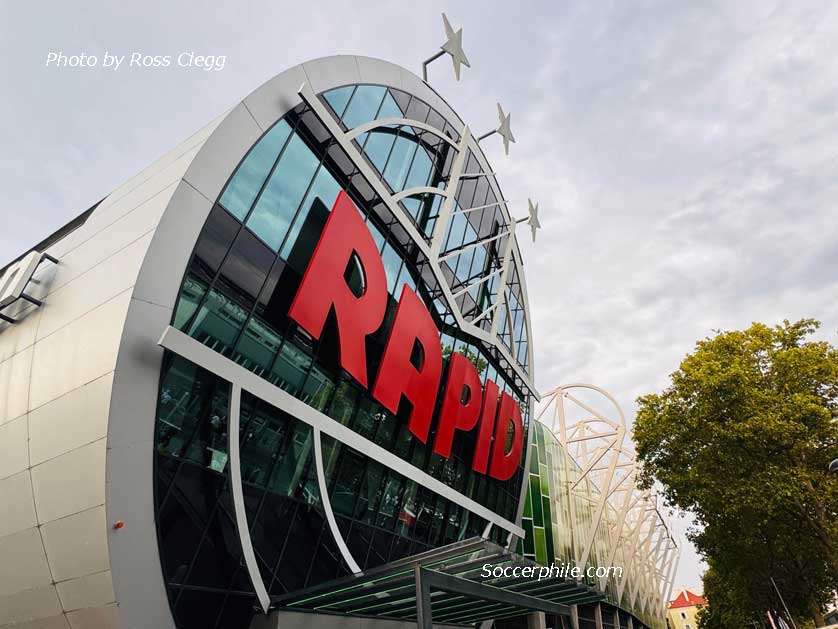
Allianz Stadion
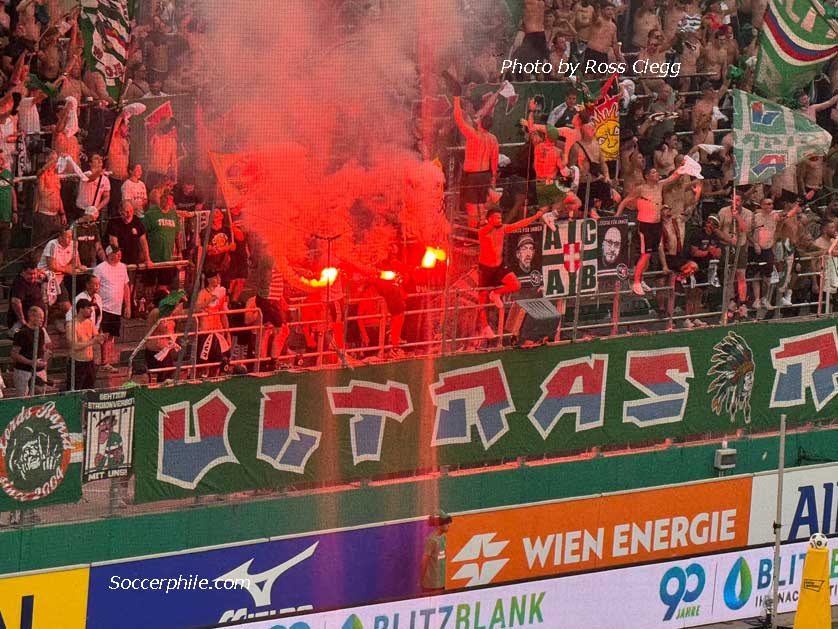
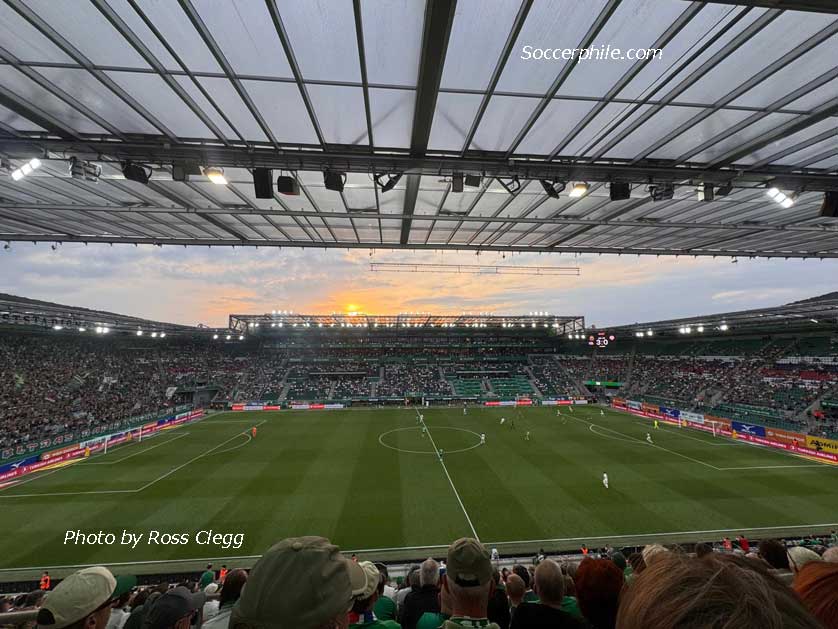
The Allianz Stadion in the Hütteldorf district of Vienna, Austria is the home ground of FK Rapid Wien (Rapid Vienna). It was built on the site of the former 18,500-capacity Gerhard-Hanappi-Stadion (Weststadion) which was Rapid's home from 1977 to 2014.
Gerhard Hanappi played for Rapid from 1950 to 1965 and is regarded as one of their best players ever. After retirement he became an architect and designed the former stadium which was named after him following his death. The ground was not one of Austria's stadiums for Euro 2008 co-hosted with Switzerland.
The 28,600 capacity stadium first opened in 2016. While under construction Rapid played their home games at the Ernst-Happel-Stadion. SK Rapid Wien is one of Austria's most historic and successful football clubs, founded in 1899 and traditionally known for its green-and-white colours. FK Rapid Wien's nickname is the Die Grün-Weißen (The Green-Whites) after the club colors.
The ground is close to the Hütteldorf station on the U4 underground line.
From Vienna Hauptbahnhof take the U1 to Karlsplatz and change to the U4 for Hütteldorf.
Address: Gerhard-Hanappi-Platz 1, 1140 Wien, Austria
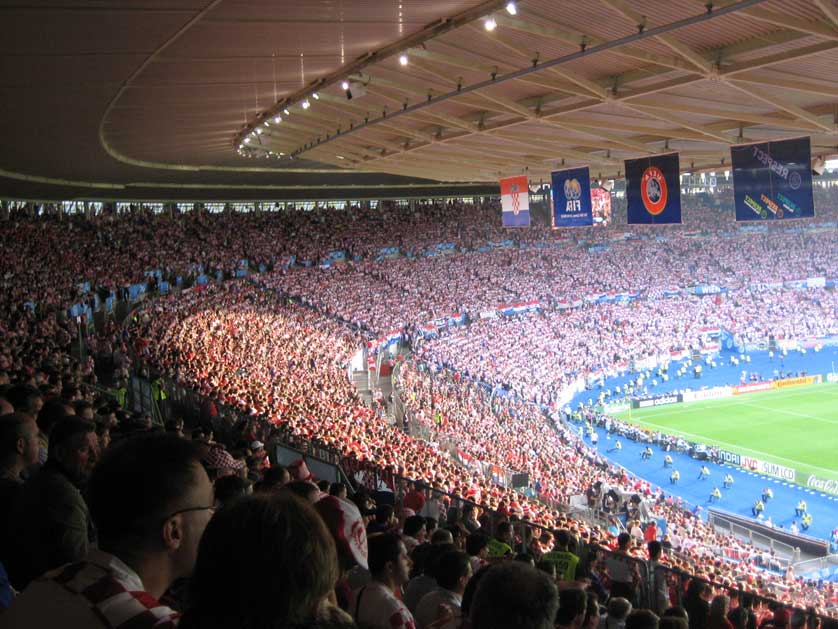
Ernst Happel Stadium
The Ernst Happel Stadium is the largest football stadium in Austria. It is where the Austrian national football team plays, but is rarely used at the club level. Until 1992, the stadium was known as the Prater Stadium (Praterstadion). It was built between 1929 and 1931 for the second Workers' Olympiad, and designed by the German architect Otto Ernst Schweizer. It was renamed in 1992 for Ernst Happel, a great Austrian coach and player. It is also a major venue for other events including concerts.
The stadium is located at A - 1020 Wien, Meiereistraße and is close to the Vienna-Schwechat international airport. Ernst Happel stadium can be reached by tram or bus, and has its own underground station. Take the U2 line to Stadion Station.
Bundesstadion Südstadt
VfB Admira Wacker Mödling began life in 1997 following the merger of VfB Mödling and SCN Admira/Wacker. The team from a southern suburb of Vienna play their home games at the 10,600 capacity Bundesstadion Südstadt (now Datenpol Arena, previously motion_invest Arena). Admira had previously merged with Wacker in 1971. The original Admira were successful in the 1930s and famous for their all black kit and for appearing in Wim Wender's movie The Goalkeeper's Fear of the Penalty.
Their location outside Vienna has lead to a lack of a fanbase and the club was under the Iranian ownership of Majid Pishyar and languishing in the second tier of Austrian football for a period. Pishyar sold the club to Richard Trenkwalder in 2008. Trenkwalder made a number of changes to the club, including changing its name to FC Trenkwalder Admira. The club gained promotion back to the Austrian first division following the 2010-11 season but now (2026-2027) competes in the 2. Liga, the second tier of Austrian football.
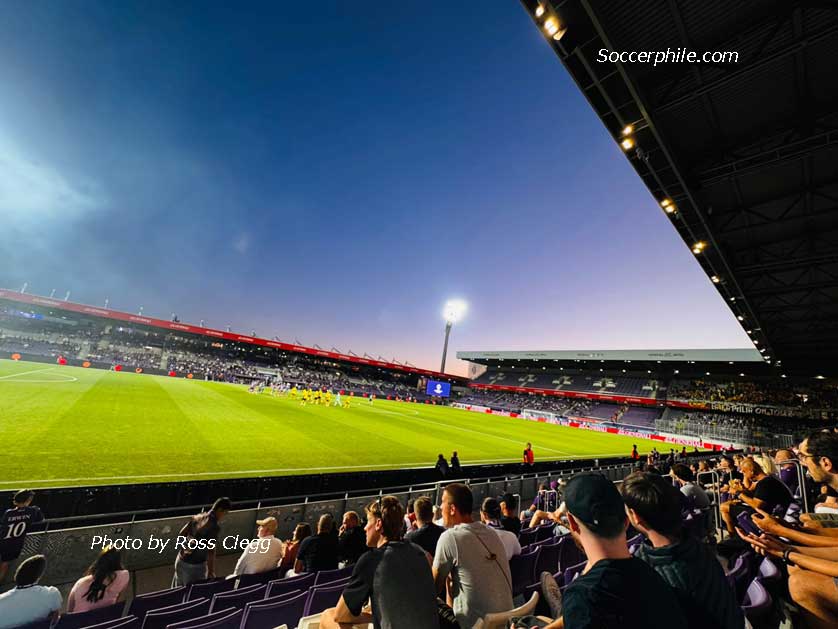
Generali Arena
The Generali Arena (Franz Horr Stadium) is the home ground of FK Austria Wien. It is called Viola Park for UEFA matches.
The 17,500 capacity stadium first opened back in 1925 in the Favoriten district as the České srdce (Czech Heart) Platz, the home of SK Slovan Wien, a club associated with Vienna's immigrant Czech community.
The stadium was badly damaged during the Second World War and subsequently underwent reconstruction, becoming a venue for various sporting activities before eventually being taken over by the Vienna Football Association.
In 1973, FK Austria Wien moved to the ground, establishing what would become its permanent home, and following the death of Vienna Football Association president Franz Horr in 1974, the stadium was renamed the Franz-Horr-Stadion in his honour.
Over the following decades, the ground was progressively modernised, with new stands constructed in 1982, 1987, 1999 and 2008. A major redevelopment between 2016 and 2018 transformed the stadium into a modern 17,500-capacity football arena, officially reopening with a match between Austria Wien and Borussia Dortmund in July 2018.
The ground is close to the Altes Landgut station on the U1 underground line.
Hohe Warte Stadium
First Vienna FC is Austria's oldest club, founded in 1894 by English gardeners working on Baron Rothchild's estate. The team play in yellow shirts and blue shorts (from Rothchild's horse racing colors) at the approximately 5,000 capacity Hohe Warte Stadium. Take U-Bahn Line 4 to Heiligenstadt. After their glory days in the late 1920s "Vienna" now play their football in 2. Liga after a spell in Regionalliga Ost - the third tier of domestic Austrian soccer.
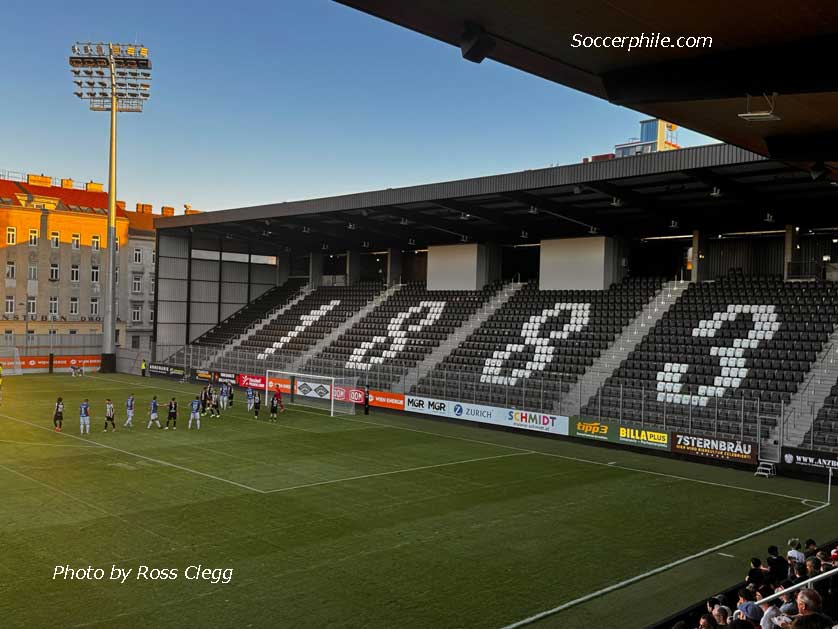
Wiener Sport-Club Platz
Wiener Sport-Club Platz in the Dornbach district is the home ground of Wiener Sport-Club who presently play in the Regionalliga Ost, the third tier of Austrian soccer. The venue dates from 1904 and is the oldest football ground still in use in Austria. Since 2026, the stadium has also been used for home matches of the Austrian women's national football team, the youth national football teams, and the national rugby team. The 5,600 capacity stadium has floodlighting and a grass pitch.
The Sport-Club Platz is a three-sided stadium with a horseshoe-shaped layout that opens to the east. Spectators are situated very close to the pitch, and the ground is located in the middle of a residential area.
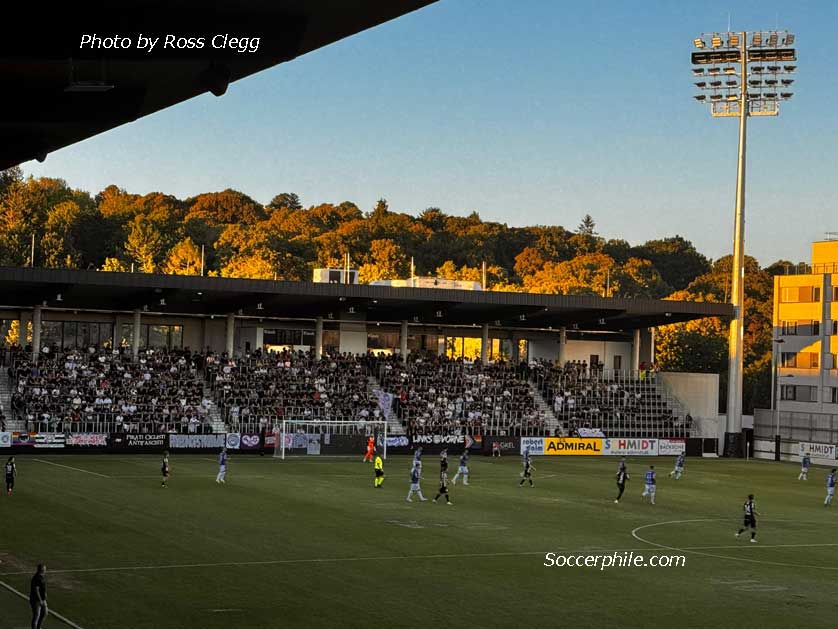
The northern stand is known as the "Cemetery Stand", a name derived from its location opposite Dornbach Cemetery. This standing terrace is traditionally occupied by the fan clubs of Wiener Sport-Club. During international fixtures, it is converted into a seated area, reducing the stadium's capacity by around 1,000. The long western side contains the main stand, with the players' changing rooms situated underneath. At the southern end is the "Black Stand", formerly known as the "Blue Stand", which is used to accommodate visiting supporters when required.
Sport-Club-Platz was one of Austria's stadiums most urgently in need of modernisation. In October 2018, the Vienna City Council approved €6.25 million in funding for its renovation.
The stadium can be reached by the S45 rapid transit line and by tram lines 10, 43 and 2.

The City: Vienna
Vienna is the largest city and capital of Austria with a population in excess of 2 million inhabitants.
The grand city has a long history and is renown for its grand architecture, classical music and rich cultural heritage. At its heart is the historic Innere Stadt, home to the magnificent St Stephen's Cathedral, the Hofburg Imperial Palace and the elegant streets of the old town.
Visitors can explore the magnificent Schönbrunn Palace, the former summer residence of the Habsburgs, and the Belvedere Palace, famous for its impressive Baroque architecture and Gustav Klimt's The Kiss.
Other highlights include the Vienna State Opera, the Kunsthistorisches Museum, the Albertina and the distinctive Hundertwasser House. The city is also known for its traditional coffee houses, Prater amusement park and giant Ferris wheel, while the River Danube and surrounding parks provide attractive opportunities for walking and relaxation.
Vienna Hotels
Vienna offers a a large and varied range of hotel and guesthouse options to suit most budgets.
Some recommendations in Austria's capital city include the Grand Hotel Wien which dates from 1870, and is a 5-star luxury hotel with over 200 rooms.
The Wilde Vienna Fleischmarkt has four stars and is centrally located.
Map of Vienna
Other Stadiums in Austria
Red Bull Arena
The Red Bull Arena is located in Wals-Siezenheim, which is just outside of Salzburg. The stadium is the home ground of Red Bull Salzburg who play in the 12-team Bundesliga, the top tier of Austrian soccer. It is Austria's largest club football stadium.


Tivoli Stadion Tirol (previously Tivoli Neu) in Innsbruck is the home ground of both Wacker Innsbruck and WSG Tirol (from 2019). The ground is part of the The Olympiaworld Innsbruck complex. This includes the renovated Olympic ice hall Olympiahalle, a new ice hall Tiroler Wasserkraft Arena, a sports center called Landessportcenter Tirol, and the stadium itself. The stadium had a capacity of 17,400 when it opened in 2000. For UEFA Euro 2008, its capacity was temporarily increased to 30,000 and is now 17,000. The North Stand is equipped with rail seating, allowing for safe standing.
Wörthersee Stadion
The Wörthersee Stadion, also known as the 28 Black Arena for sponsorship purposes, is a multi-purpose stadium in Klagenfurt. It is the home ground of Austria Klagenfurt and forms part of the Sportpark Klagenfurt complex, which includes several other sporting facilities. The stadium takes its name from the nearby Wörthersee, one of Austria's most famous and scenic lakes.
Stadion Graz-Liebenau
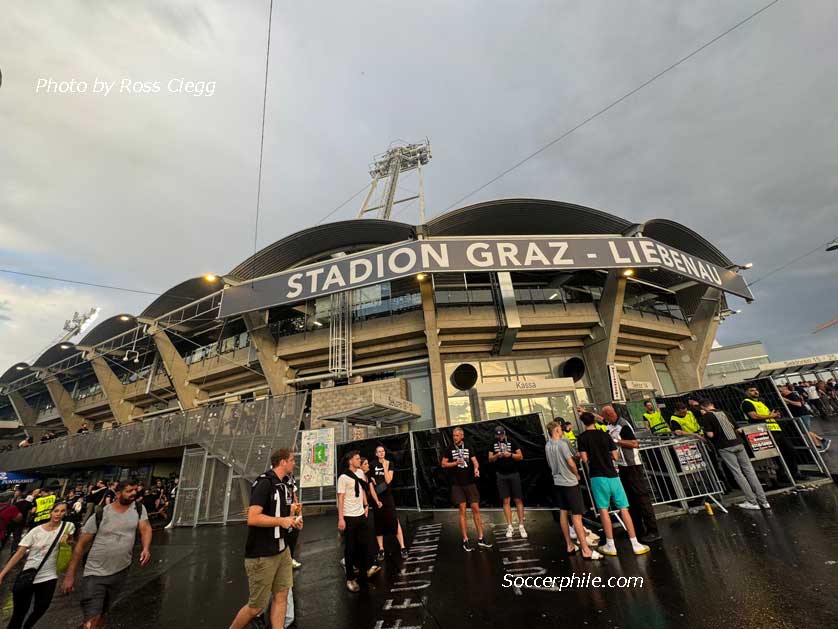
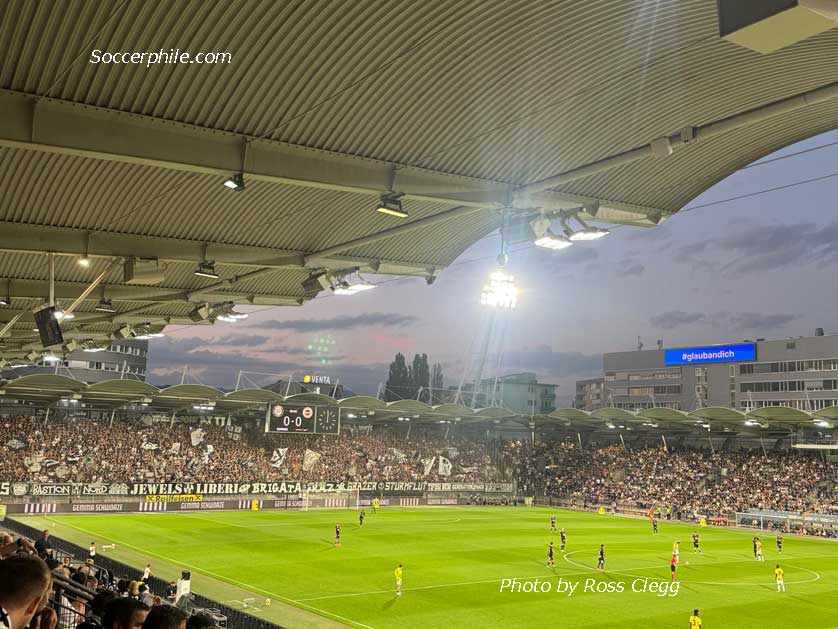
Stadion Graz-Liebenau (previously Arnold Schwarzenegger Stadium, UPC-Arena and Merkur Arena) is the home of rivals SK Sturm Graz and Grazer AK. Located in the Liebenau district of Graz, the present stadium dates from 1997 and has a capacity of 16,364. The first Liebenau Stadium was built before World War II in the late 1920s but fell into disrepair during and after the war and was replaced in the 1950s with a new stadium constructed along with a skating rink and an indoor pool at the site. The football ground was demolished in 1994 to make way for the current arena. Initially named the Arnold Schwarzenegger Stadium after the locally-born Hollywood actor, in 2005, following a heated political dispute over his refusal to stop an execution while Governor of California, Schwarzenegger withdrew the rights to his name, and the city promptly removed it overnight.
The ground has staged various international fixtures including several friendly internationals involving the Austrian national side, an England v Japan pre-World Cup 2010 warm-up and the Austria v Faroe Islands World Cup qualifier in 2009. The forecourt of the stadium was renamed in 2023 to honor Ivica Osim, a legendary player and coach for Sturm Graz. The venue can be reached by tram from the main railway station in the city.
Address: Ivica-Osim-Platz 1 (Stadionplatz 1), A-8041 Graz
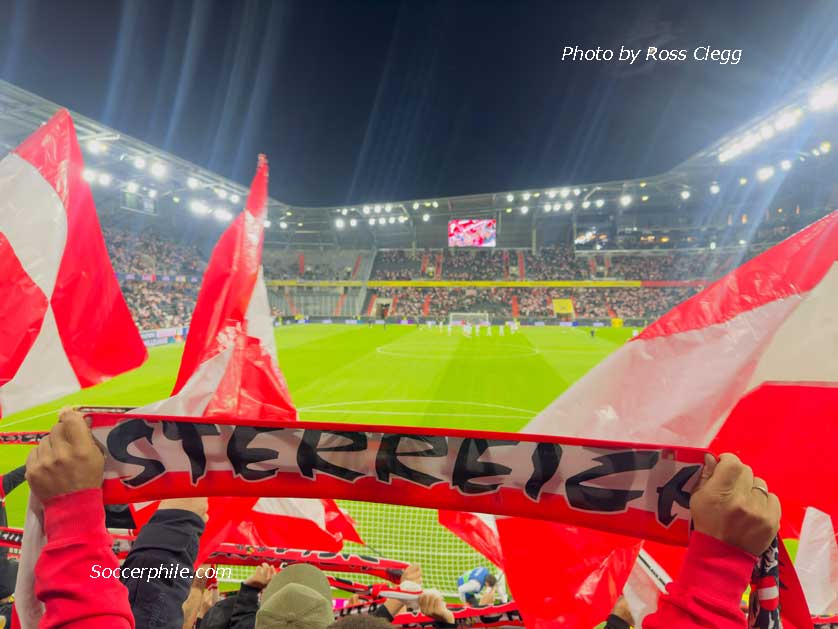
Home to Austrian Bundesliga team Linzer Athletik-Sport-Klub (LASK), the Raiffeisen Arena in Linz, Upper Austria opened in 2023. It was built at a cost of 65 million Euros on the site of the former Linzer Stadion, which was constructed in 1952 and demolished in 2021. It complies with elite UEFA Category 4 standards.
Demolition of the old Linzer Stadion took place between 2021-2023, and construction by PORR Bau GmbH commenced in September 2021, totaling an investment of roughly €65 million to €85 million. During construction of the new stadium the athletics track from the old stadium was removed to bring fans closer to the pitch.
Related
Most Visited Premier League Stadiums
The most visited Premier League Stadiums ranked.
10 Oldest Stadiums in the UK
10 Largest Stadiums in Britain
10 Largest Stadiums in Britain
Football Grounds in Scotland
Football Grounds in Glasgow
Football Grounds in Italy
Non-League Grounds in the UK
London Stadiums
Japan Stadiums
Top 10 Largest Stadiums in Japan
Tokyo Stadiums
Buy tickets for soccer matches around the world