
UK Stadiums: Celtic Park, Glasgow, Scotland

Celtic Park aka Parkhead in the East End of Glasgow is the home of Scottish powerhouse Glasgow Celtic founded in 1888. With a capacity of 60,832, it is the largest football stadium in Scotland and one of largest stadiums in the United Kingdom. The club took up residence at the present site in 1892.
The record attendance at the ground is 83,500, set at an Old Firm derby with Rangers on 1 January 1938.

History
The original stadium was situated a short distance from the current site but was relocated to its present location in 1892. Over the years, the stadium has undergone numerous renovations and expansions to modernize its facilities and accommodate a growing fan base.
The most significant redevelopment occurred in the 1990s when the stadium was transformed into an all-seater venue, in line with safety regulations introduced after the Hillsborough disaster. This redevelopment was led by Fergus McCann, who played a key role in the club's financial revival. The modern Celtic Park featuring three new stands and greatly enhanced amenities was completed in 1998.

Stands
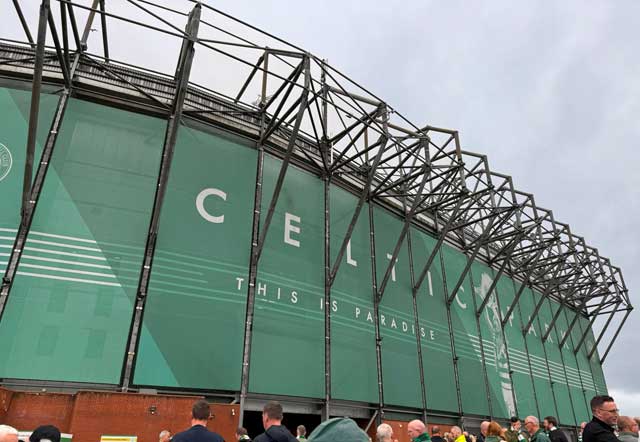
Celtic Park's architecture is a blend of traditional and modern design elements. The stadium's main stand, known as the South Stand, is the oldest part of the structure, retaining bits of its earlier design while incorporating modern facilities. The North, East, and West Stands form a continuous horseshoe around the pitch, creating an impressive, enclosed atmosphere.
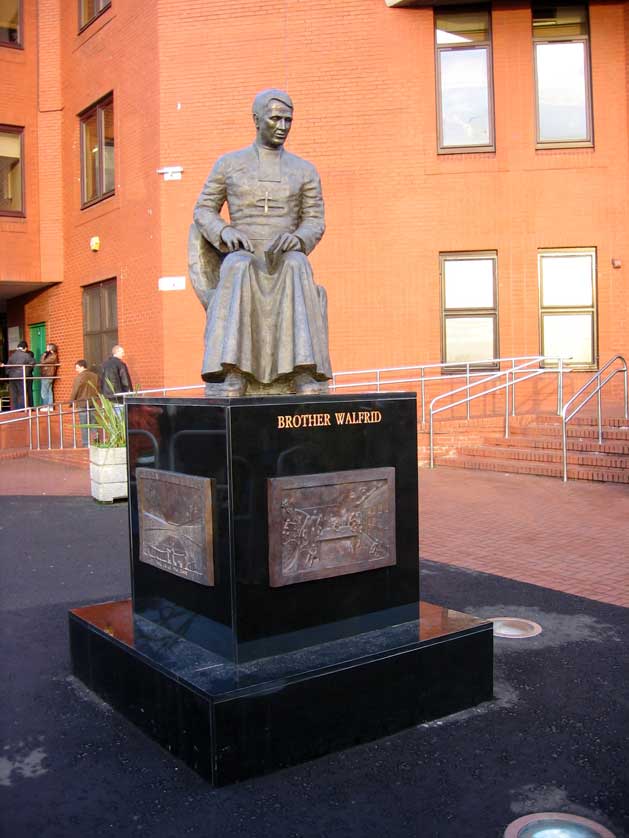
The facade of the stadium is notable for its Celtic-themed artwork and a 3.2-meter-high, bronze statue of Brother Walfrid, the club's founder, located near the entrance. Other statues commemorate manager Jock Stein (1922-1985) and winger Jimmy Johnstone (1944-2006).
The East Stand, often referred to as the "Lisbon Lions Stand," pays homage to the team that won the European Cup in 1967, the first British club to achieve this feat.
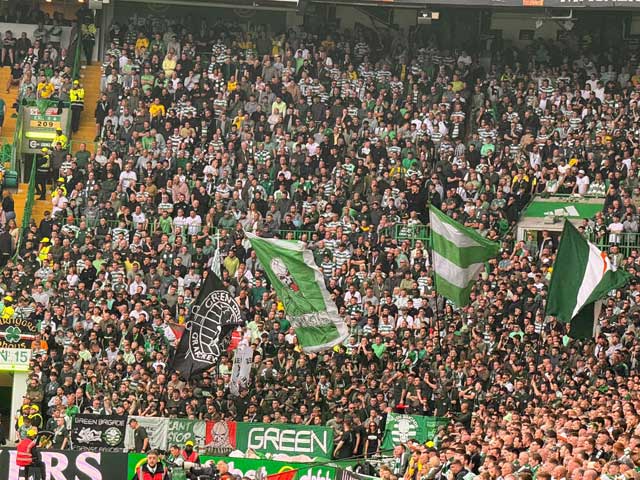
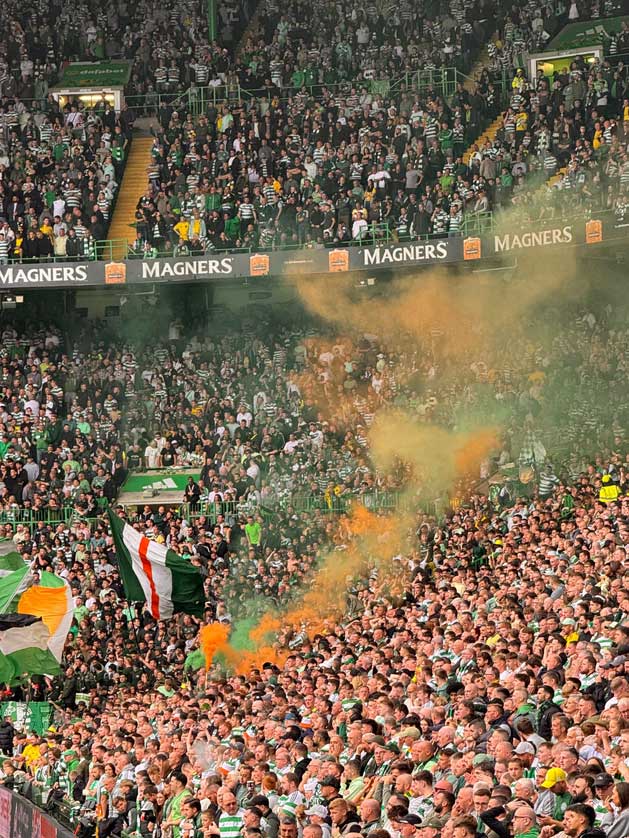
The stadium is renowned for its electric atmosphere, particularly during Old Firm derbies against arch-rivals Rangers. Its "Green Brigade" fan section is famous for vibrant displays and chants that add to the stadium's unique character.
The venue has also hosted numerous non-football events, including concerts by major artists. Additionally, it also served as a venue for the 2014 Commonwealth Games.

Celtic FC
Celtic FC are a powerhouse of football in Scotland. They are nicknamed "The Bhoys," "The Celts" or "The Hoops".
Up until the 2024-2025 season Celtic have been champions of Scotland 54 times and famously became the first British Club to lift the European Cup in Lisbon, Portugal in 1967 beating Inter 2-1.
The team also reached the 1970 European Cup final losing to Holland's Feyenoord and the 2003 UEFA Cup final losing to Porto.
Club Legends
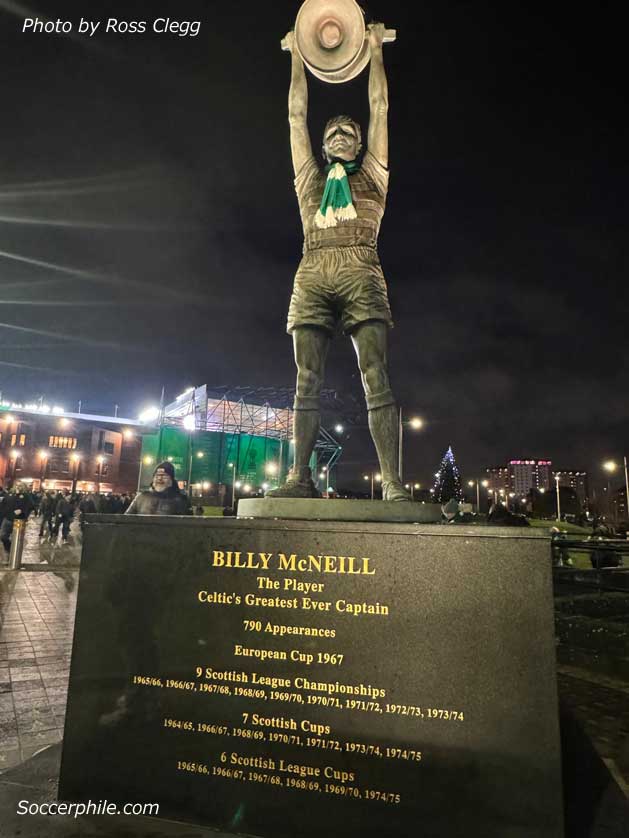
Famous players to have represented the club over the years include Jimmy Johnstone ("Jinky"), regarded as Celtic's greatest-ever player, Billy McNeill, captain of the Lisbon Lions who made a record 790 appearances for Celtic, full back and captain Danny McGrain and striker Bobby Lennox who scored over 300 goals for the club. A statue of Celtic captain Billy McNeill lifting the European Cup in Lisbon in 1967 stands on Celtic Way. It is the work of sculptor John McKenna and was unveiled by McNeill himself accompanied by fellow Lisbon Lions and his grandkids. Manager at the time Ronny Deila and his first-team squad formed a guard of honour on the day for Billy and his fellow Lions.

More recently are Henrik Larsson, arguably Celtic's most celebrated modern striker. From 1997 to 2004, the Swedish legend scored 242 goals in 315 appearances for the club. Before his move to Liverpool, Kenny Dalglish scored 167 goals for Celtic between 1969 and 1977.
In the modern era other club legends include Japanese maestro Shunsuke Nakamura (2005-2009), Bulgarian Stiliyan Petrov (1999-2006), former captain and hard man Scott Brown (2007-2021) and Slovakian Lubomir Moravcik who represented The Hoops between 1998 and 2002. Other fondly remembered Bhoys are south-of-the-border strikers John Hartson and Chris Sutton, keepers Artur Boruc and Fraser Forster, and Scottish trio Kris Commons, Jackie McNamara and Paul Lambert.
Access - Getting To Celtic Park
The nearest train stations are Dalmarnock and Bridgeton, both roughly a 10-15 minute walk from the stadium. Regular services run to these stations from Glasgow Central or Glasgow Queen Street.
Several bus routes serve the area around Celtic Park. The most common services are: Routes 61, 64, and 240 from Glasgow City Centre. Alight at stops on London Road, a short walk from the stadium.
The Glasgow Subway does not directly serve Celtic Park, but you can take it to St. Enoch or Bridge Street stations, then connect via bus or train.
Address: Janefield Street, Glasgow G40 3RE, UK
Accessibility
Celtic Park has two wheelchair user elevated platforms. For fans using the Tommy Burns View, please access the stadium via the Northwest Executive entrance. For supporters using the View 67 platform, the entry point is located at the Southeast corner of the stadium. Those who wish to access the Lisbon Lions upper deck have their access point at Gate 35. Celtic Park is the first in Scotland to install a Changing Places toilet. This can be found in the North Stand concourse next to area 105. The Changing Places toilet is bigger than a standard disabled toilet and includes an adjustable changing bench, a hoist, and enough room for a wheelchair, its user, and carers. The club also have a BSL Interpreter available at Celtic Park for home matches. The football club can arrange for the BSL Interpreter to meet with the supporters pre match and ensure the supporters can enjoy the match day experience.

Nearby Hotels
The city has many fine hotels to choose from. At the top end are the Kimpton Blythswood Square Hotel and the One Devonshire Gardens a Hotel Du Vin. Other recommended places to sat in Scotland's largest city are Dalziell House and the Tartan Lodge. See here for a complete accommodation list of available hotels in Glasgow.
More UK Stadiums
Kirklees Stadium (John Smith's Stadium)
©Soccerphile.com
Buy tickets for soccer matches around the world