
UK Stadiums: Craven Cottage, West London, England
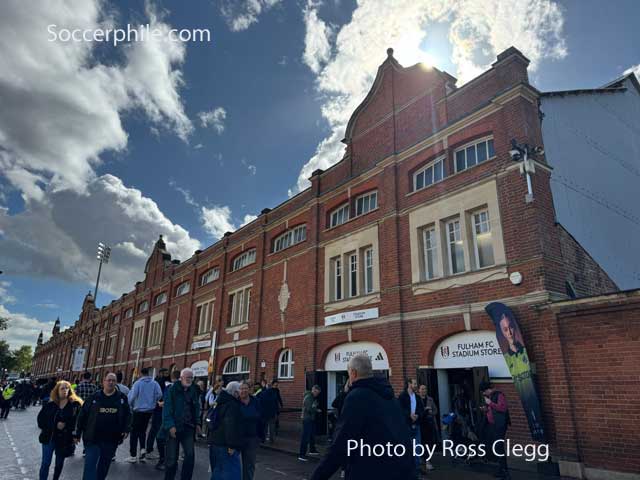
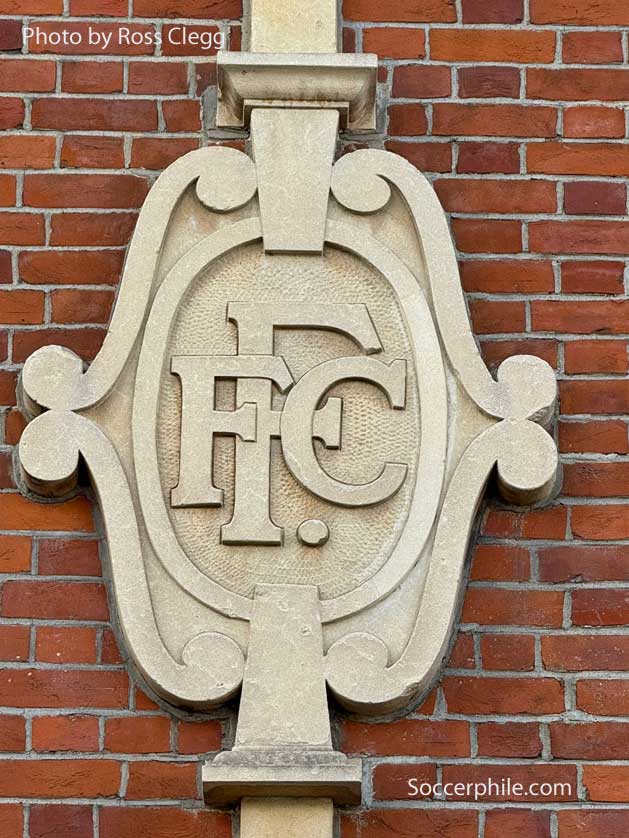
Craven Cottage in Fulham, London, England, is an all-seater stadium with a capacity of 29,589. It has been the home of Fulham FC since 1896. Fulham are nicknamed The Cottagers after their home ground.
Craven Cottage has been the venue for several international friendlies over the years including Australia v Jamaica in 2005, Greece v South Korea in 2007, Mexico v Ghana in 2008, Brazil v Ghana in 2011 and more recently USA v Colombia in 2014 and Colombia v Australia in 2018.
Stadium Stands
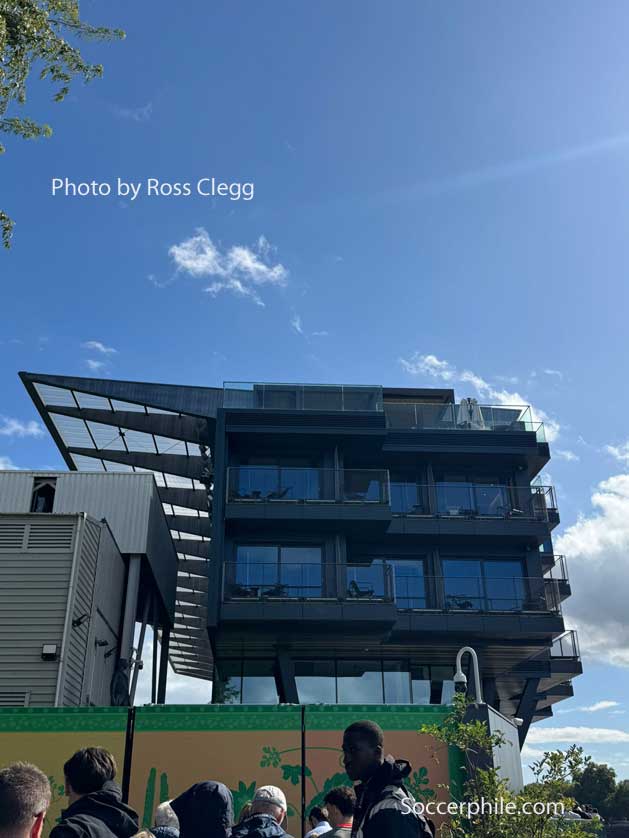
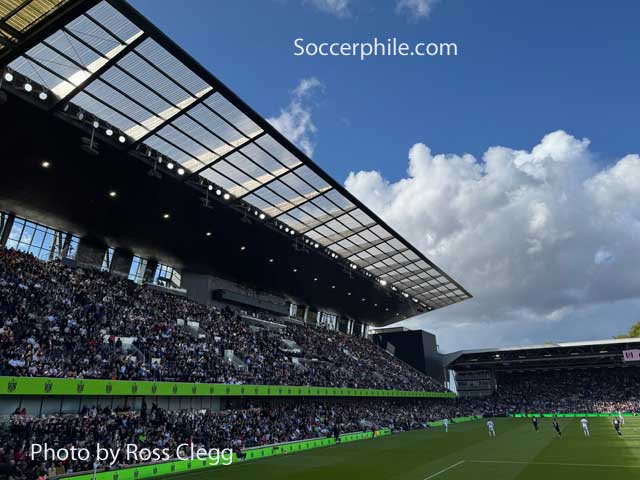
The four stands are the Johnny Haynes Stand (renamed from the Stevenage Road Stand), the Hammersmith End, the Putney End, and the Riverside Stand.
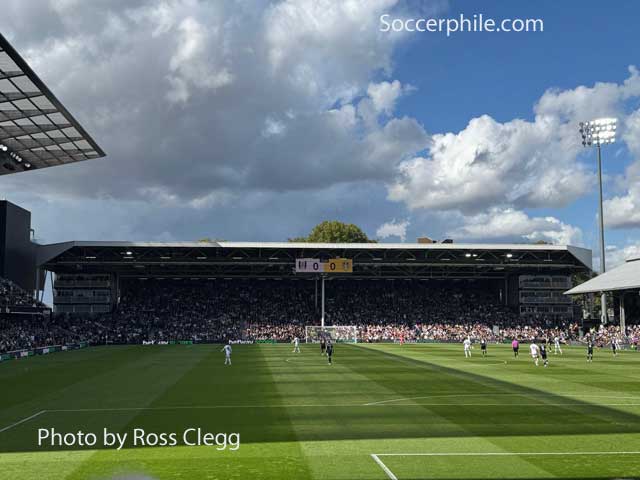
The Johnny Haynes Stand is the oldest and a historic, listed stand, while the Riverside Stand is a newer development with views over the adjacent River Thames. The Putney End accommodates both home and away fans, with the Hammersmith End known for its atmospheric support.
Early History
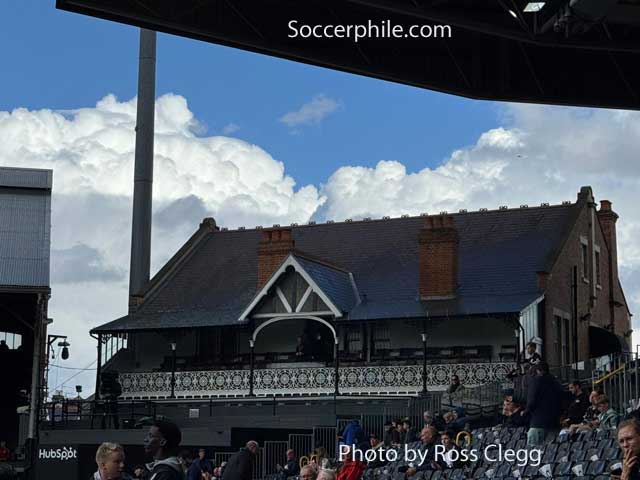
The ground is one of the oldest stadiums in English football. Indeed, Fulham FC, founded in 1879, are London's oldest professional football club. The architect Archibald Leitch, who came to prominence for his work on Ibrox in Glasgow, designed the pavilion (the present-day 'Cottage') and the Stevenage Road Stand in 1905. Both are Grade II listed buildings.
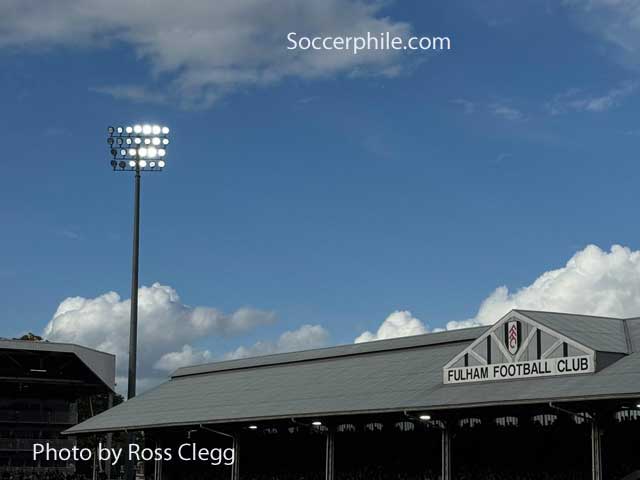
Further developments to the ground had to wait until after World War II. In 1962, Fulham became the last team in the First Division to install floodlights. Around the same time, an electronic scoreboard was added to the Riverside Terrace, accompanied by flagpoles displaying the flags of all other First Division clubs. After the sale of Alan Mullery to Tottenham Hotspur in 1964 for £72,500, a roof was constructed over the Hammersmith End at a cost of approximately £42,500.
Following the Hillsborough disaster in 1989 and the publication of the Taylor Report, Fulham's inaction over converting the ground to an all-seater stadium led to a period of exile from 2002 at Loftus Road, home of local West London rivals QPR. Fulham only returned to Craven Cottage for the 2004-05 season.
The stadium's picturesque location by the River Thames adds to its character, making it one of the most beloved and atmospheric venues in the British game.

Club Icons
Fulham FC has been home to several notable footballers throughout its history, with many making a significant impact both at the club and in the wider footballing world.
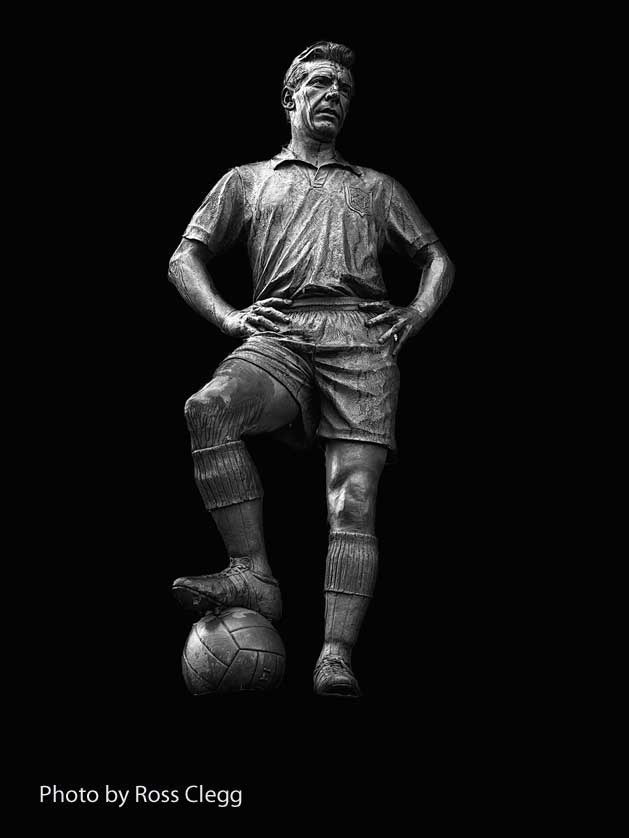
One of the most famous is Johnny Haynes, often referred to as "Mr. Fulham," who played for the club from 1952 to 1970 and captained the England national team. His vision, passing ability, and leadership made him one of the best midfielders of his era. A statue of the great man stands outside the ground in front of the stand that bears his name.
Jimmy Hill is closely associated with Fulham FC, both as a player and later as managing director and then chairman. As chairman of the Professional Footballers' Association, Hill played a key role in the abolition of the maximum wage. This landmark decision, made by the Football League in 1961, resulted in Fulham teammate Johnny Haynes becoming the first player to earn £100 a week. As chairman, Hill helped form the consortium that saved the club when property speculators tried to merge the Whites with Queens Park Rangers in 1987.
Another legendary figure is Bobby Moore, widely regarded as one of the greatest defenders in football history, who played for Fulham between 1973 and 1977 after his iconic World Cup-winning days with England and time at West Ham United.
Gordon Davies, Fulham's all-time leading goal scorer, also earned legendary status, netting 154 goals during his time at the club. More recently, players like Clint Dempsey, an American international known for his dynamic play and crucial goals, have become fan favorites, while Mark Schwarzer, a dependable goalkeeper, played a key role in the club's rise to the Premier League and its subsequent European adventures under Roy Hodgson when the club reached the final of the Europa League in 2010. Other names from that team included Paul Konchesky, Aaron Hughes, Dickson Etuhu, Damien Duff, Bobby Zamora, Zoltan Gera, Simon Davies and captain Danny Murphy.
Managers
The club have employed some colorful managers over the years beginning with Harry Bradshaw from 1904 to 1909. Following in his footsteps have been such men as Bobby Robson (1968), Alec Stock (1972-1976), Malcolm Macdonald (1980-1984), Ray Harford (1984-1986), Ray Lewington, Ray Wilkins, Kevin Keegan, Paul Bracewell, Jean Tigana, Chris Coleman, Lawrie Sanchez, Roy Hodgson (2007-2010), Mark Hughes , Martin Jol, René Meulensteen, Felix Magath, Kit Symons, Slaviša Jokanović, Claudio Ranieri (2018-2019), Scott Parker (2019-2021) and presently Marco Silva.
Club Miscellaneous
The Cottagers have an impressive collection of celebrity supporters, including including actors Margot Robbie, Hugh Grant, and Daniel Radcliffe, as well as singer Lily Allen. DJ David Hamilton used to work the P.A. system at Craven Cottage.
The Fulham mascot is Billy the Badger.
Major Honours
Domestic Competitions
Football League Second Division (now Championship): Champions (2): 1949-50, 2000-01
Football League Third Division (now League One): Champions (1): 1931-32
FA Cup: Runners-up (2): 1974, 2010
Football League Cup (EFL Cup): Runners-up (1): 1975
FA Charity Shield: Runners-up (1): 1975
European Competitions
Intertoto Cup: Winners (1): 2002
Europa League: Runners-up (1): 2010
Accessibility
Craven Cottage is accessible for wheelchair users on matchdays, with designated wheelchair bays available in all four stands via ramps or lifts, along with accessible toilets and easy-access seating options.
Disabled match tickets (including those for wheelchair accessible areas) must be booked by contacting the Club's Ticket Office, in person or by telephone on 0203 871 0810.
There is an accessible toilet located close to each wheelchair accessible area.
Induction loops are fitted at the Ticket Office, fixed concourse catering units and in the main reception at Craven Cottage.
Access - Getting There
Putney Bridge on the District Line of the London Underground is the nearest tube station, a 10 to 20 minute walk to the stadium.
Hammersmith on the Hammersmith & City Line / Circle Line and Piccadilly Line / District Line is a 30 minute walk away.
The closest mainline railway station to Craven Cottage is Putney, located on Putney High Street, south of the River Thames.
By bus
From Kingston-upon-Thames Bus Station: Take the number 85 or C4 bus to Putney Bridge. The stadium is a 10-15 minute walk from the bridge. From Hammersmith: Take the 220 bus along Fulham Palace Road. From Putney: Take either the 74, 424, or 220 bus to Fulham Palace Road.
You can even arrive by boat at Fulham Pier.
Address: Stevenage Road, Fulham, London SW6 6HH

Nearby Hotels
If you wish to stay in this part of London there are several options. The Captain Cook Inn is reasonably close as is the 4-star ibis London Earls Court.
See here for a complete listing of hotel accommodation in London.
More UK Stadiums
Kirklees Stadium (John Smith's Stadium)
©Soccerphile.com
Buy tickets for soccer matches around the world