
The world's sport has to deal with the world's crisis
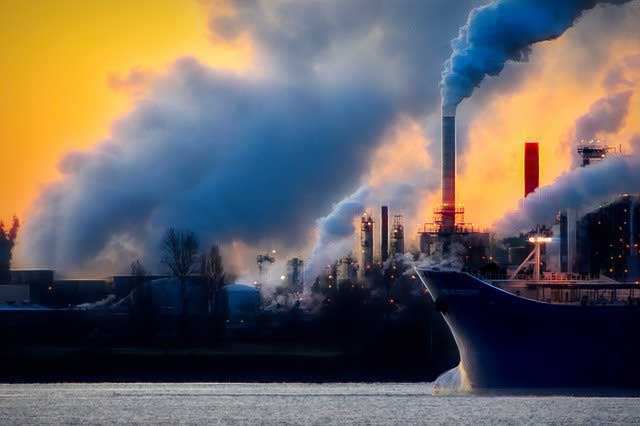
Fast forward to 2050.
The African Cup of Nations has been moved to Europe because droughts there have made grass pitches a thing of the past.
The only problem is, some of the replacement host cities - Amsterdam, Bordeaux, Lisbon, London and Valencia, have recently slipped underwater due to rising sea levels.
Alarmist? NASA, the United Nations and other bodies have come to the conclusion that global temperatures will rise by up to 2.5C by 2050, leading to large-scale climate change.
In November 2021, COP26 in Glasgow laid the dangers out starkly - extreme weather events could become the norm leading to a deadly domino effect of droughts, floods, food and water shortages, poor air, infectious diseases, disrupted supply chains, forced migrations and international conflicts.
If we do not tackle carbon emissions now then mother nature will surely let us know about it. Global days of extreme heat compared to 1990 levels are projected to increase by between 42% and 70% by 2050.

The predictions collected by news organisation Climate Central are sobering. In thirty years, Europe's four largest ports - Rotterdam, Antwerp, Hamburg and Bremen will be at risk of flooding at any time.
Unless it transfers its competitions to the Moon, FIFA cannot escape the inconvenient truth on Earth because no industry is immune.
The EU's European Environment Agency has predicted a one-metre rise in sea levels by mid-century, threatening English clubs with low-lying or riverside locations - Blackpool, Carlisle, Fulham, Middlesbrough, Southampton and Sunderland could all be in the drink. In fact, up to a third of the 92 professional clubs could experience regular flooding by then.
By 2050, the Irish, Scottish and Welsh capitals could be inundated too, while Belgian and Dutch football may need to be replaced by water polo.
The global picture appears truly grim.
The rise of soccer as a major sport in the USA following the 2026 World Cup will be put on ice as scorching summers have made it impossible to play stateside. Further north in Canada, mild winters have made the national sport of ice hockey a purely indoor pursuit.
Those of us who remember the last American World Cup in 1994 will recall the absurdity of early kick-off times scheduled for the benefit of European television. Jack Charlton's Ireland roasted in sweaty Orlando against the Netherlands for instance at noon. Mexico '86 was little better, with venues like Monterrey clocking in around 35 Celsius most days.
If FIFA tries the same trick in 2026 some players might collapse with heat exhaustion. So far there has been no indication the World Cup organisers are planning for a sauna and later starts for the players' benefit. But four years ago America gave it a huge warning.
On the 6th of July 2018, nine days before the World Cup final in Moscow, Los Angeles recorded a temperature of over 47 Celsius. Denver, another 2026 candidate city, clocked in at 41 degrees Celsius on the 28th of June, again within the time frame of FIFA's summer tournament.
Down Under, Australia's dream of hosting the World Cup by 2050 might never happen as the smoke from bush fires, which disrupted the Australian Open in 2020, could repeatedly choke their coastal cities.
High altitude South American cities like Bogota or La Paz will suffer from more floods but should still be playable, but lower level ones like Buenos Aires and Rio, two huge hotbeds of football, may not be.
Africa will have yet more droughts and food shortages, with all the social and political knock-ons for the world to deal with.
Perhaps the future is not a grass sport outdoors but artificial turf and air conditioning, as pioneered in 1970s America.
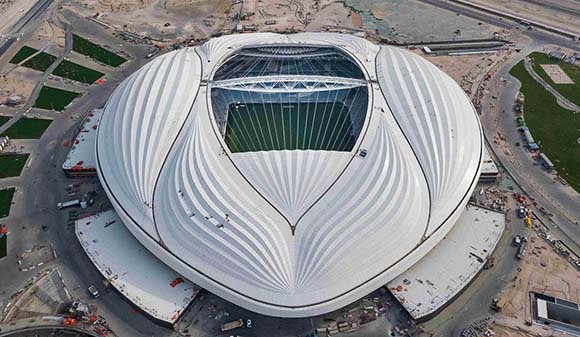
Qatar 2022
Suddenly the decision to host Qatar 2022 in the winter does not look so crazy. Speaking of winter, half of the previous hosts of the Winter Olympics are on course to not have enough snowfall by 2050 to be able to host them again.
Asia will feel the heat too.
As with soccer's unconquered lands of America and Australia, the changing climate will postpone the long-awaited football revolutions in China and India for the foreseeable future too. Droughts and floods will disrupt their nascent leagues, despite their economies having advanced to first and second in the world by mid-century.
According to the World Meteorological Organisation, extreme weather events like the typhoon which interrupted the 2019 Rugby World Cup in Japan have already increased five-fold over the past 50 years. Scientists now predict a further rise of extreme weather of between 300% and 400% by 2050.
A 1.3 rise in temperatures in the next 30 years appears the best-case scenario for the Earth, but the worst-case foresees a rise of 2.5 degrees. If the thermometer rises 1.5C, the maximum COP26 is aiming for, food production will fall by a fifth while over half the world's population will experience at least a month of water shortages.
The big picture looks so unremittingly bleak, it is high time for football to get its boots on. If it has any sense it will go green as soon as possible because otherwise it might not be around for much longer.
Global sport, according to the esteemed soccer-sociology historian David Goldblatt, is responsible for 0.6% - 0.8% of global emissions, so football eliminating its own pollution alone cannot save the planet. But it certainly can, as Voltaire urged, cultivate its own garden, since every little helps.
All of football, from FIFA down to individual fans and players, must now begin assessing its contribution to the biggest challenge facing humanity.
It has begun to respond. FIFA has signed up the United Nations Sports for Climate Action initiative to make the sport carbon neutral by 2040, which although not binding, is at least a start.
Qatar 2022, for all the criticism levelled at it, has at least pledged to be the first ever carbon neutral tournament by offsetting all its emissions and recycling its stadia.
In the Premier League, Liverpool and Tottenham are the greenest clubs according to the UN-backed Sport Positive Summit, and last September Spurs hosted the first net zero match, at home to Chelsea.
Tottenham have pledged to reach net zero in emissions by 2040. Already they boast organic gardens to provide team food, a matchday coach which uses biofuel and their playing shirts are recycled. That is better than nothing
Liverpool is aiming to reduce their many flights' huge carbon footprints by using a greener fuel for their jets. Not to be outdone, Manchester City is gunning for net zero by 2030, ten years before Spurs.
All that is a start but must be built on and sustained so as not to remain mere greenwashing.

EFL Green Clubs
Beyond the top flight, the rest of England's professional divisions have a scheme running called EFL Green Clubs which is promoting environmental ideas.
League Two Forest Green Rovers are leading the way - energy generated from solar and wind power alone, organic grass mowed by a solar-powered lawn mower, a park and ride scheme for supporters, a playing kit made from recycled bamboo, vegan-only food and sponsorship from a green energy company.
In 2018 they won an award for going carbon neutral from the United Nations who named them "the greenest football club in the world." If little Forest Green can do it then why not richer clubs?
This all requires a sea-change in mentality of course but the little Gloucestershire side has proved that football going green is not impossible. Evolution is the alternative to demise.
Sponsors
Yet it would help if the game's administrators led by example. Oil and gas companies, car manufacturers and airlines remain major sponsors of big football events in 2022, which sends the wrong message for an industry trying to eschew the use of fossil fuels:
Qatar Airways and Hyundai/Kia are Tier 1 commercial partners for FIFA and Russian giant Gazprom is a big UEFA sponsor. Enterprise Rent-a-Car, Qatar Airways and Volkswagen are other supporters of European football's governing body.
This year's Africa Cup of Nations had TotalEnergies, another fossil fuel giant, as a major backer while south of the equator, CONMEBOL's high table of sponsors includes motor giant Ford and Bridgestone tyres.
Gaz-guzzling adverts are everywhere in the sport. England's Football Association counts Emirates Airlines and Continental Tyres among its sponsors.
The Premier League has oil company Castrol as one of its key partners, three clubs (Aston Villa, Everton and Norwich) wear shirts adorned by car companies and two (Arsenal and Manchester City advertise airlines. Nine more rely on online gambling sponsors and two on cryptocurrencies, which are notoriously energy-hungry.
Adidas, another eternal FIFA and UEFA partner, must go through a mountain of acrylic and polyester every year, materials which take at least a couple of centuries to biodegrade while emitting greenhouse gases in the process. Rivals Nike is a UEFA Women's sponsor.
Green energy and sustainable transport companies could in theory step in to replace these sponsors but that is much easier said than done given the sums of money involved.
Instead of aiming for a World Cup every two years and ever more congested fixture lists, the world's most popular sport needs to quit the rat race.
Fewer games would clearly be better for the environment, especially fewer ones which entail air travel. The next World Cup but one hardly sets a good example - a 48-nation competition which extends across three large countries.
At least the Qatar 2022 venues are no further than 72 km apart and the air conditioning will not be on full blast in December.
When it began the 19th century, football was a winter sport so as not to compete with the already-established cricket, which requires a good summer playing surface.
But going forward it might make more sense for it to be played around the summer in Europe, providing the outdoor sun is not too strong, because in winter the heating will be switched on and fields could be flooded. When the sun shines, people are also more likely to use bicycles.

Travel to Stadia
If football really wants to go green, it has to address how its fans travel to the stadia. 60-80% of the Qatar World Cup's carbon footprint for instance will be composed of visiting supporters getting to and from the Middle East. In 2018, Bundesliga side Wolfsburg discovered 60% of their carbon footprint came from their fans driving to and from the stadium; it is the Volkswagen club after all.
When there are 100,000 individuals travelling to the Camp Nou every other week, the air could do without 200,000 individual car journeys. Luckily many already take the metro. Mass transit, walking and cycling must be the way forward for all clubs.
It cannot cost that much to build cycle paths and bike parking and domestic fans should certainly be financially incentivised to take public transport to matches with free travel tickets, as happens now at big tournaments and certain clubs.
When it comes to new stadia, the out of town model must go. Reading's Madejski for example is the wrong type of arena - sited a long way from the town centre and railway station, but smack next to a motorway. With perhaps the exception of American fans weaned on tailgate parties in vast stadium car parks, football supporters much prefer the city centre venues for the atmosphere anyway.
Big clubs certainly have the money to invest in local transport links but invariably, as in the case of Arsenal and Tottenham's new stadia, they weasel out of contributing. The Gunners' Emirates (another airline) stadium is very well situated for the London Underground, but the closest station shuts on match days because the club would not pay for its upgrade.
If a new stadium can only be built on land far from a centre of population, then there must be public transport and safe cycling facilities as a condition of construction.
Carbon Footprint
Each division could start by setting carbon footprint requirements for its members' licences, ensuring they invest in renewable energies in and around their grounds as well as investment in fossil fuel-free transport options.
Awash with millions, football clubs can also afford to think beyond the stadium. Euro 2012 offset some of its carbon emissions by tree-planting and Southampton for instance have paid for 3,000 saplings to be planted in their locality as well as in the Amazon basin.
"We are about more than football," confirmed Gareth Southgate, explaining how the England team had a duty to be role models for younger fans and embrace social challenges beyond the field.
Scaling the green mountain is daunting but not impossible. Football is a hugely wealthy and massively popular industry after all. It has the ability to tackle major issues.
And what could be more of an issue right now for the world than the fate of the planet? Like it or not, the status quo is just not an option anymore. Climate change is the defining issue of our lives.
Since football is a sport played on grass it is now time for it to go truly green, before the final whistle blows.
Club World Cup & Rising Temperatures
Australian A-League Heat Policy
The major challenges of heat, humidity and travel facing the 48 teams in North America.
© Sean O'Conor & Soccerphile
Buy tickets for soccer matches around the world