
Barcelona - A Haunted Club - From founder's suicide to manager's illness
Ozren Podnar
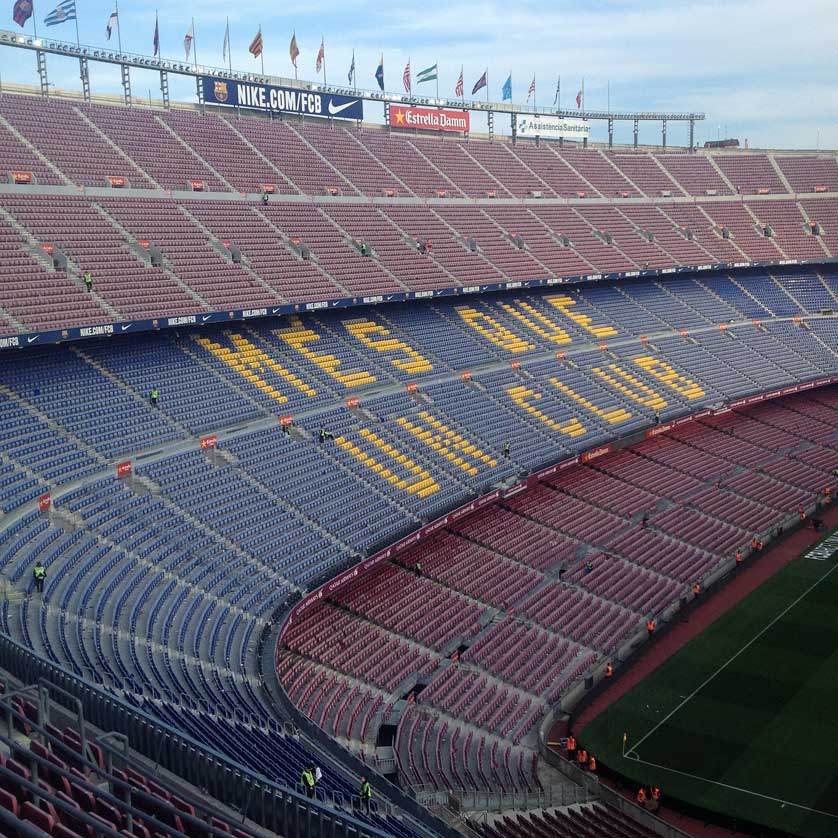
Barcelona are famed for their packed trophy room and attractive play, but they have suffered a fair share of misfortunes in their 113 years of history.
A third relapse of parotid gland cancer in mid-July forced manager Tito Vilanova to resign from his job, prompting Barcelona to search for his successor halfway through the preparations for the new season.
Vilanova's illness is but another chapter in a long sequence of tragedies afflicting the club in the past 90 years. The first man to taste Barca's curse was the club's founder, the Swiss Hans "Joan" Gamper.
It was mostly thanks to his efforts that the club built Les Corts stadium with a capacity of 20,000 in the early twenties. However, the stadium was to became the venue for expressing Catalan nationalism. On June 24 1925 the Spanish national anthem was jeered before the friendly between Barcelona and a Royal Navy XI, while the British anthem was cheered. The incident angered the dictator Miguel Primo de Rivera, who ordered the stadium closed for six months and Gamper expelled from Spain.
Gamper resigned from his post and ventured into business only to suffer bankruptcy in the Great Depression of 1929. Heavily indebted and depressed, the founder of FC Barcelona commited suicide in the summer 1930.

Martyrdom of Josep Sunyol
Always opposed to right-wing policies from Madrid, Barca saw the beginning of the Spanish Civil War in 1936 as one of the symbols of the ill-fated and short-lived Republic. This affiliation proved fatal to then chairman Josep Sunyol, a renowned left-wing activist and a Catalan nationalist. During a trip away from Barcelona, the soldiers of Francisco Franco recognized him and shot him on the spot.
During the war, many Catalan players emigrated in order to save their skins, but those who stayed witnessed the bombing of Barcelona in 1938, which destroyed the club's headquarters.
Even though the war ended with a resounding victory for Franco's fascist army, Barcelona were allowed to operate normally and continued to win trophies until 1953, when the Generalisimo discovered his love for soccer.
Persuaded by his old comrade and political ally Santiago Bernabeu, Franco chose Real Madrid as the sporting symbol of his Spain and helped the club carry out the key purchase of their history. Thanks to elements in Franco's regime, the Argentine superstar Alfredo di Stefano was prevented from joining Barcelona and was rerouted to Real Madrid instead.
With Di Stefano, the Lionel Messi of his generation, Real would become nearly untouchable in both Spain and Europe, relegating Barcelona to also-rans for a better part of the next quarter of a century.
Infected, hacked and exported
Everything was supposed to change in 1982, when Diego Maradona signed from Boca Juniors. Shockingly, the Argentine missed three months in his first season due to hepatitis, and three and a half months in the second season with a broken ankle, consequence of a savage tackle by the notorious hacker Andoni Goikoetxea. An unsettled Maradona was offloaded to Napoli after just two years at Camp Nou.
Without Maradona, but with Bernd Schuster, Barcelona reached only their second Champions League finals in 1986. Never had a finalist been more strongly fancied to win than Barca, as the match was to be played "at home" in Seville against the underdogs of Steaua. And no final had a more unlikely outcome, since the Romanian keeper Helmuth Duckadam saved all four Barcelona's strikes from the spot in the shootout after 120 goalless minutes.
The arrival of club legend Johan Cruijff as coach in 1988 would spawn the Dream Team and many happy moments, including a first Champions League in 1992. Then disaster struck in 2000, when the brilliant chairman Josep Lluis Nunez would resign due to old age. Unfortunately, the elections were won by Joan Gaspart, the culprit for the club's darkest era in recent history.
For starters, Gaspart failed to keep Luis Figo, snatched by Real Madrid amid the chaos at Camp Nou. In the following three years, Gaspart would spend 200 millions euros on a dozen internationals, only one of whom (Javier Saviola) proved worth the cost. He would also raise salaries for a number of players and hire four coaches for a total of zero titles.
The worst deal in history
Joan Laporta brought a spectacular improvement with respect to Gaspart until he irrationally bought Zlatan Ibrahimovic from Inter for 49.5 million euros plus Samuel Eto'o in one of the craziest transfers on record. Eto'o would immediately win the triple crown at Inter and later become the highest paid footballer in history at Anzhi Mahachkala, while Barca would release Zlatan to Milan in a hurry for one third of his purchase price.
Poor luck returned to Barca in 2011 in shape of illnesses. In March Eric Abidal was diagnosed with liver cancer, which led to two surgeries including a transplant and a combined 18 months of rehabilitation.
Shortly before Tito Vilanova resigned because of a new bout of disease, it was reported that the Spanish Revenue authorities had uncovered an intricate scheme whereby Leo Messi and his father Jorge evaded millions of euros worth of taxes. Although the recent developments suggest a deal will be made between the Messis and the taxman, the scandal could yet mentally exhaust and distract the world's best player.
Still, all these setbacks will look trivial if Catalonia declares independence and the Spanish Football Federation (RFEF) bans Barcelona from playing in the Primera Division. In such a case, the blaugranes could be doomed to a less-than-glamorous independent Catalan league, which would spell the end of the great Barcelona we love and respect.
Former Honved and Barca star Sandor Kocsis, 1954 World Cup top scorer, also committed suicide. Beleaguered by leukemia, stomach cancer and depression, the Hungarian jumped to his death from a hospital window in 1979.

Spanish Soccer Scene
Spanish Players in the English Premiership
Buy tickets for soccer matches around the world