
Is it end of empire time for Barcelona?
Sean O'Conor
''It's impossible to keep up the same level of play for 12 months but it is true that we have played three or four bad games and that is serious because Barcelona always has to win." - FC Barcelona defender Gerard Pique.
Three losses on the trot for the world's best team - what is going on?
Was not this Barcelona supposed to go down as one of the great club dynasties, on a par with the Real Madrid of the 1950s, Liverpool of the '70s & '80s or Milan of the '90s? Has their reign in Spain come to an abrupt end?
The pro-Real press in Spain certainly say so. Marca and AS, its two biggest soccer dailies, have been wallowing in three straight defeats for the seemingly invincible blaugrana.
"Madrid reign again" was the predictably triumphalist headline in AS after the La Liga win for Real over their great rivals.
But even national El Pais could not resist sticking the knife in. "No soul, no football and no Messi," it stated bluntly. "Today they are in ruins." Colleague Tomas Roncero spoke of "divine justice" playing its part, addingly acidly, "Madrid danced on Barcelona's tomb."

El Clasico
Much of Spain divides into Barca or Real camps for the clasicos, which in recent years have become national get-togethers as Spanish football has conquered the world at both club and international level.
The shimmering success of Barcelona has irked the legions of Real supporters, who are quick to remind you their club has bagged three times as many Champions Cups as their Catalan rivals, who arrived late to the party at Wembley in 1992, a full 36 years after Real's first European crown.
If the 2-0 defeat by Milan at San Siro in the Champions League was a shock to the system, then Real's embarrassingly one-sided Copa del Rey 3-1 win at the Camp Nou had everyone wondering if this was more than just a hiccup. A 2-1 defeat at the Santiago Bernabeu a few days later confirmed the crack in the dream team has become more of a fault line.
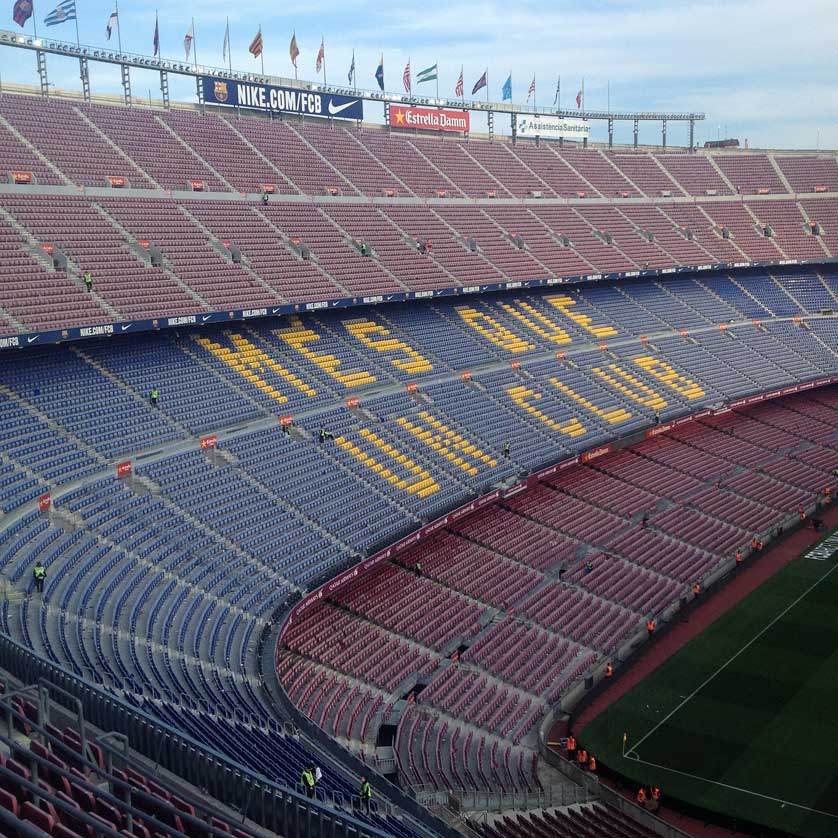
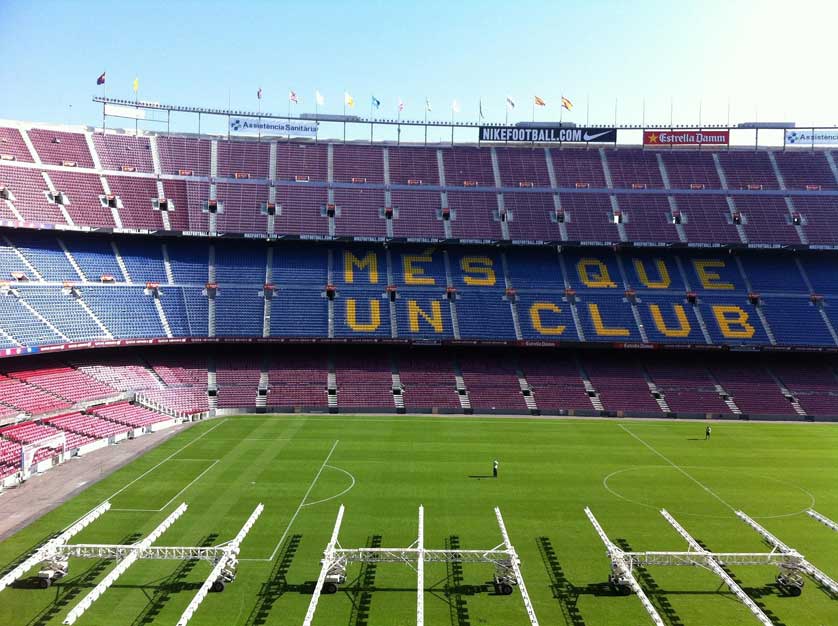
Barcelona might sit 11 points clear (of Atletico Madrid) in La Liga, but with elimination from Europe on the cards while arch-rivals Real march on after beating Manchester United away from home, another league crown will not sate the insatiable demands of the 170,000 Camp Nou members. This after all, is 'more than a club', and this feels like a crisis.
The Spanish Cup exit was the most disturbing of the three losses, not only because losing at home is not something you see FCB do every day, but because the manner of their surrender was so shocking. The wizard Lionel Messi was anonymous while Cristiano Ronaldo, long in his shadow, merely shone.
Captain Carlos Puyol showed his age and was left floundering on his backside in one Real attack, while the normally reliable Gerard Pique looked shaky trying to hold the defensive line. Barça as a whole were disjointed, their familiar flows of passing stuttering, their washing waves of attack strangely stifled, all tiki but no taka.

Possession Not All
Barca enjoyed 63% of possession but never looked likely to score until Jordi Alba bundled in a consolation with a minute to play and the tie long lost.
In the gloom of the countless Catalan post-mortems, more credit should have gone to Jose Mourinho's simple game-plan, which worked a treat. Real kept a tight shape and held their lines of defence like a Saxon shield-wall.
Banking on being breached at least once at the Camp Nou, they had planned for the turnovers and counter-attacking opportunities, where Ronaldo's acceleration could run riot with the opposition full-backs out of position and open grass ahead of him. The Madeiran terrorised Barça's hastily retreating back-line with his pace and outshot their entire team.
By now Real are well aware of Barcelona's flicks and tricks and with the cultural struggle between Spain's two great cities as a perennial motivational backdrop, Mourinho more than anyone has been putting in the hours trying to crack the blaugrana code.
Milan seemed to have found the combination too. They restricted Barça to only one shot on target at San Siro, pressed high up the field and massed in the lines between defence and midfield to cut out Barca's devastating passing angles. They scored on the counter and from a set-piece, the best ways to pierce the Catalan armour.
Barcelona-based soccer daily Mundo Deportivo polled its readers for their explanation for the malaise. A third cited the main reason as the enforced absence of coach Tito Vilanova, recovering from cancer treatment in December, while a fifth thought defensive fragility and an overreliance on Messi was to blame.
90% of readers of Sport, the other blaugrana-cheering newspaper, considered the current situation is a bona fide crisis, with an identical number calling for a last-minute tactical revolution to overturn the tie against Milan at the Camp Nou.
As with Avram Grant at Chelsea a few years ago, a relatively inexperienced man, Jordi Roura, has found himself in charge of one of Europe's top teams by accident rather than design. Roura's plausible, yet inadequate explanation for the sudden loss of form was that his squad was at the bottom of one of the season's physical cycles, but that he expected them to peak again in March.
It all looked so rosy not long ago. Under Pep Guardiola, Barca lived in the land of milk and honey, bagging three league wins, two Champions Leagues and forging a team widely considered to be one the greatest of all time, if not the greatest.
But citing exhaustion, he quit last summer aged only 41 for a year-long sabbatical in New York. When he announced his return from the USA, it was to take up the reins at Bayern Munich, the club who on and off the field most resemble his beloved Barca. The Bavarians not only have a famous youth system, established power and a 'mes que un club' regional identity, when it comes to passing they are second only to Barcelona in European football, according to the stats.
Pep's Magic Boots
Who can possibly fill Pep's magic boots remains a frustrating riddle in Catalonia. Guardiola's achievements were magnificent, but doing too much too soon took a toll on their author.
Perhaps it is not just the manager. The team have noticeably not been pressing as ferociously as they used to, Cesc Fabregas' role often seems unclear, Andres Iniesta appears less effective in the wider role he has been playing, while Messi has been drifting out of matches, echoing his Argentina performances.
What was perhaps the best-ever football team a couple of years ago could well be on the wane. Everyone's powers diminish as they get older, so the pressure is on the Barcelona factory to channel the young guns into the side before the entire project crumbles and, worst of all for the blaugrana, Real take their place at the top of Europe.
Barcelona's recent prowess coincided with the ascent of the Spanish national team, playing similar tactics and involving much of the same personnel. It has been a golden age, but it might be over much sooner than expected.
Spanish Soccer Scene
Spanish Players in the English Premiership
Buy tickets for soccer matches around the world