
Football Stadiums in Spain
Spain is home to some iconic football stadiums known around the world such as Camp Nou, home to Barcelona, and the Santiago Bernabéu, the home stadium of Real Madrid. As the country gears up to co-host World Cup 2030, with Portugal and Morocco, both these stadiums and others are being renovated and upgraded.
See a listing of football club grounds in Spain including history, club details and stadium capacities.
Find useful facts on public transport to the stadiums, the essential getting there and getting away, accommodation plus nearby bars and restaurants.
Top 10 largest stadiums in Spain
The top 10 largest stadiums in Spain are Camp Nou (Barcelona), the Bernabéu (Madrid), Metropolitano (Madrid), La Cartuja (Sevilla), Benito Villamarín (Sevilla), Lluís Companys (Barcelona), San Mamés (Bilbao), *Mestella (Valencia), Ramón Sánchez Pizjuán (Sevilla) and Anoeta (San Sebastian).

Bernabéu
Bernabéu (previously Estadio Real Madrid Club de Fútbol and Estadio Santiago Bernabéu) is home to Spanish giants Real Madrid, the stadium has undergone recent renovations, including the addition of a retractable roof and pitch, plus state-of-the-art technology enhancing its status as one of Europe's premier football venues. The ground now has a capacity of 85,000 after it reopened in 2023 making it one of the largest stadiums in Europe. The original stadium opened in 1947. The nearest metro station is Santiago Bernabéu on Line 10 of the Madrid metro.

Camp Nou
Home to FC Barcelona, Camp Nou (officially Spotify Camp Nou for sponsorship reasons) will be the largest stadium in Europe following renovations at the ground with an expected capacity of 105,000. While the renovations were taking place Barcelona played their home games at the Lluís Companys Olympic Stadium during the 2023-2024 and 2024-2025 seasons. The original ground opened in 1957. The nearest metro stations to the stadium are Palau Reial, Les Corts or Collblanc.
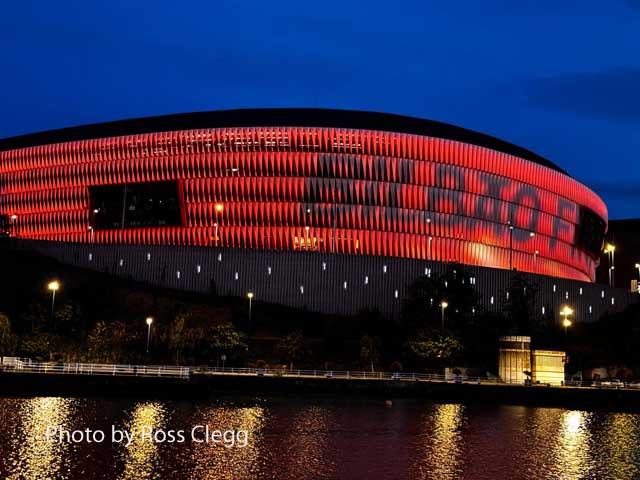
San Mamés Stadium
San Mamés Stadium (Estadio de San Mamés) is the home ground of LaLiga side Athletic Bilbao. Designed by the IDOM architecture firm, the modern stadium preserves the spirit of the old San Mamés ground while offering state-of-the-art facilities and a striking design. It was awarded the World's Best New Stadium (2015) by the World Architecture Festival. The stadium was selected to host UEFA Euro 2020 matches but was replaced by La Cartuja in Seville due to the higher rates of Coronavirus in the Basque country. The stadium has hosted concerts, rugby games and the 2015 Copa del Rey Final, and is often praised for its intense atmosphere. The ground was the venue for the 2025 Europa League Final between Manchester United and Tottenham Hotspur. The San Mamés station serves both metro lines 1 and 2, providing direct access to the stadium.

La Cartuja
La Cartuja is a soccer stadium in Sevilla, southern Spain. The 70,000 capacity stadium in Seville is the 4th largest stadium in Spain (after Camp Nou, Santiago Bernabéu and Atlético Madrid's Metropolitano). It has been used for international matches, multiple finals of the Copa del Rey, the 2003 UEFA Cup final between Celtic and Porto and is also a venue arena for the 2030 World Cup. The C2 Cercanías commuter line connects Sevilla-Santa Justa station to Estadio Olímpico station (Juan Bautista Muñoz), located a short walk from the stadium. Bus lines 36 and C2 serve the stadium from various points in the city. In the 2025-2026 season the ground is hosting Real Betis while the Estadio Benito Villamarín is renovated.

Ramon Sanchez-Pizjuan
Ramon Sanchez-Pizjuan Stadium (Estadio Ramón Sánchez-Pizjuán) is the home ground of LaLiga side Sevilla FC. The 42,700 capacity stadium in Seville was built between 1955 and 1958 and opened in 1958 with a friendly against Jaén. The stadium has also been subsequently renovated in 1996 and 2017. Originally the stadium had a capacity of over 70,000 but this was reduced to an all-seater capacity of 42,700 in the renovations of the 1990s. Like the home of Boca Juniors in Argentina, the ground has the nickname of "La Bombonera." The nearest Seville metro station to the ground is Nervión, just a short stroll away. The Gran Plaza station is also convenient.

Estadio Benito Villamarín
Real Betis Balompié play their home games at the over 50,000 capacity Estadio Benito Villamarín. The stadium has gradually been developed since 1929. The Estadio Benito Villamarín lies on Avenida la Palmera south of the historic city center of Sevilla and not far from Plaza de Espana. Access to the stadium is fairly straight forward by either bus or taxi. Walking would take about 45 minutes from the cathedral area.
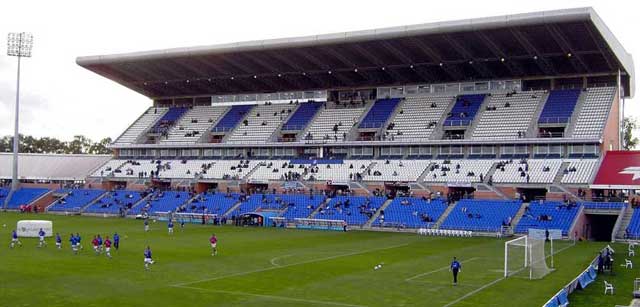
Nuevo Colombino Stadium
Nuevo Colombino Stadium (Estadio Nuevo Colombino) is the home ground of Spanish football side Recreativo de Huelva. The 21,670 capacity multi-purpose stadium in Huelva opened in 2001. It replaced the aging, 13,000 capacity Estadio Colombino. Besides the home games of Recreativo, the stadium has hosted a European Championship Qualifying match between the Spanish national team and Belarus (3-0) in 2014 and a friendly international between Spain and Mexico in 2001 to inaugurate the ground. The very first match at the new stadium was a friendly against English visitors Newcastle United a few days before. The ground consists of four covered stands - North, South, East and West. It is less than 30 minutes on foot from Huelva railway station.

La Rosaleda Stadium
La Rosaleda Stadium (Estadio La Rosaleda) is the home ground of Malaga CF. The 30,044 capacity stadium in Malaga opened in 1941 with a match between CD Málaga and AD Ferroviaria. The official inauguration was later that year in a match between CD Málaga and Sevilla FC. The stadium has also been subsequently renovated most recently in 2006. La Rosaleda staged three matches at the 1982 World Cup in Spain - Scotland and New Zealand v the Soviet Union and Scotland v New Zealand. It has also hosted various European matches when the home team competed in the Champions League and Europa League. The ground has also been used for a number of music concerts. The stadium is north of the centro historico (old town) and easily accessible by public transportation, including buses and trains. It is situated relatively close to Málaga's city center, making it convenient for both local and visiting fans.

Nuevo Mirandilla
Nuevo Mirandilla (Estadio Nuevo Ramón de Carranza) is the home ground of LaLiga side Cádiz CF. The 25,033 capacity stadium in Cádiz, Andalusia, southern Spain opened in 1953 as Estadio Ramón de Carranza. The opening game at the stadium was a 0-4 loss to Barcelona. The stadium has been subsequently rebuilt on two occasions in 1984 and again between 2003 and 2013. Only the main stand (Tribuna) has a roof. The ground is a stone's throw from the beach and the sea.


Riyadh Air Metropolitano Stadium
Metropolitano Stadium (Estadio Metropolitano) or the Riyadh Air Metropolitano Stadium for sponsorship reasons has been the home ground of Atlético Madrid since 2017. It replaced the aging Estadio Vicente Calderón, which was subsequently demolished. The ground has a current capacity of 70,692. The stadium staged the 2019 UEFA Champions League final and will host the 2027 UEFA Champions League final. It is one of the host venues for the 2030 World Cup. The nearest metro station is Estadio Metropolitano on Line 7 of the Madrid metro.

Mestalla
The Mestalla is the home stadium of Valencia CF and with a capacity of 49,430 is in the top 10 largest stadiums in Spain. Having opened in 1923, it is also the oldest stadium in Spain. In addition, Mestalla is one of the steepest stadiums in the world and the steepest in Europe. It hosted matches at the 1982 World Cup as well as 10 Copa del Rey finals. The nearest station is Aragó on lines 5 and 7 of the Metrovalencia. *When the Nou Mestella is finally completed to replace the old stadium it is projected to have a 70,000 capacity with a completion date of 2027 in the pipeline.

RCDE Stadium
RCDE Stadium, aka Estadi Cornellà-El Prat and Stage Front Stadium for sponsorship reasons, is the 10th largest venue in Spain with a capacity of 40,500. It is the home ground of RCD Espanyol in Barcelona. Opened in 2009, the 40,500 capacity arena is one of the largest grounds in Spain and a prospective venue for World Cup 2030. The nearest station is Cornellà Riera on the Barcelona metro.

Reale Arena
Anoeta Stadium (Estadio de Anoeta) presently known as the Reale Arena for sponsorship purposes opened in 1993. It is the home stadium of Real Sociedad and has a capacity of 40,000. The nearest metro station is Anoeta Station.
Estadio de la Cerámica
Estadio de la Cerámica, (El Madrigal) is the home ground of Villarreal CF. The stadium has 23,008 seats and opened in 1923. Floodlighting at the ground dates from as late as 1973.

Estadio de Gran Canaria
Located in Las Palmas on the island of Gran Canaria, the Estadio de Gran Canaria is the home ground of UD Las Palmas. The 32,400-capacity stadium opened in 2003. The running track was removed in renovations in 2014.

Estadio Municipal de Riazor
The 32,490-capacity Estadio Municipal de Riazor in A Coruña, Galicia, northwest Spain is the home of Deportivo de La Coruña. For sponsorship reasons the venue is known as Estadio Abanca-Riazor. The ground staged matches at the 1982 World Cup and is earmarked for World Cup 2030, too.

La Romareda
La Romareda opened in 1957 and was the 33,608-capacity home stadium of Real Zaragoza in northeastern Spain. The ground had been renovated on several occasions before the old stadium was demolished in October 2024. A new 43,110 seat Nueva Romareda stadium is to be built between 2025-2027 in preparation for the 2030 World Cup. The old ground hosted 3 matches at the 1982 World Cup. Zaragoza presently play at the temporary 20,000 capacity Ibercaja Stadium in Zaragoza - "the first modular and demountable stadium in Spanish football." (TheStadiumBusiness.com)


Campo de Fútbol de Vallecas
The Campo de Fútbol de Vallecas (originally Nuevo Estadio de Vallecas and previously Estadio Teresa Rivero) is renowned as a raw, fiercely working-class ground, with a capacity of just 14,708 - making it one of the smallest stadiums in La Liga. The stadium has only three main stands, while a huge brick wall behind one goal is overlooked by the balconies of nearby apartment blocks. It is equally famous for its intense, anti-establishment fan culture and hostile atmosphere. Fans sit exceptionally close to the pitch, creating a wall of noise that feels far more intimidating than modern arenas. In July 2026, the Madrid regional administration revoked Rayo Vallecano's lease of the stadium after an audit revealed serious shortcomings in safety, maintenance, and sanitation across the facilities forcing the club to play its 'home' fixtures at other stadiums until the problems were fixed. Players have labeled the pitch "unplayable" with no hot waters in the showers and poor hygiene. The same scenario also occurred in 2018 when the stadium, which opened in 1976, was closed for a period. Vallecano's first 'home' game of the 202-27 season against Alaves was played at Leganes' Butarque Stadium.

Butarque Stadium
The 14,500-capacity Estadio Municipal de Butarque, home of CD Leganés opened in 1998. It is known for its intimate, almost "boutique" atmosphere, quirky fan traditions - including the famous inflatable cucumber - and its strong underdog identity. With its compact design and passionate local support, it is regarded as one of the coziest and most atmospheric community grounds in Spanish professional football. Fans are nicknamed pepineros (cucumber growers) and famously wave inflatable cucumbers during matches owing to Leganés' agricultural history. The ground takes its name from Nuestra Señora de Butarque, the local patron saint of Leganés and is known as Ontime Butarque for sponsorship reasons.
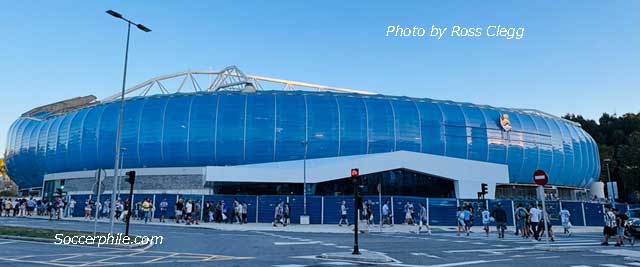

Estadio de Anoeta
The 40,000-capacity Estadio de Anoeta (Anoeta Stadium) in San Sebastián is the home ground of Real Sociedad. It was previously the Reale Arena for sponsorship purposes until 2025. The stadium opened in 1993 and is a potential venue for the 2030 World Cup. Redevelopment work which began in 2017 removed the running track and saw the construction of a new south end stand. Access: Anoeta is the nearest railway station. Buses 17, 24, 26, 28, and 37 are also convenient.


Estadi Mallorca Son Moix
The Estadi Mallorca Son Moix outside Palma is the largest stadium in the Balearic Islands and is home to RCD Mallorca. The ground officially opened in June 1999 to host the 1999 Summer Universiade before RCD Mallorca moved in as its permanent tenant. The stadium underwent a massive, multi-phase renovation from 2022 to 2024. This major overhaul completely restructured the seating bowl, removing the running track. The now 25,736-capacity arena officially reopened with a LaLiga match against Celta Vigo. Previous sponsorship names were Ono Estadi (2006-2010); Iberostar Estadi (2010-2017); Visit Mallorca Estadi (2020-2022).
Related
Most Visited Premier League Stadiums
The most visited Premier League Stadiums ranked.
10 Oldest Stadiums in the UK
10 Largest Stadiums in Britain
10 Largest Stadiums in Britain
Football Grounds in Scotland
Non-League Grounds in the UK
Football Grounds in London
Football Grounds in France
Athens Stadiums
Japan Stadiums
Top 10 Largest Stadiums in Japan

Spain Soccer
Spanish Players in the English Premiership
Morbo - The Story of Spanish Football
Buy tickets for soccer matches around the world