
TUCHEL THE MIRACLE WORKER MADE A MIGHTY BLUNDER, SO ENGLAND MISS THEIR CHANCE AGAIN
"To every man upon this earth
Death cometh soon or late.
And how can man die better
Than facing fearful odds,
For the ashes of his fathers,
And the temples of his gods?"
- Horatius, Thomas MaCauley, 184
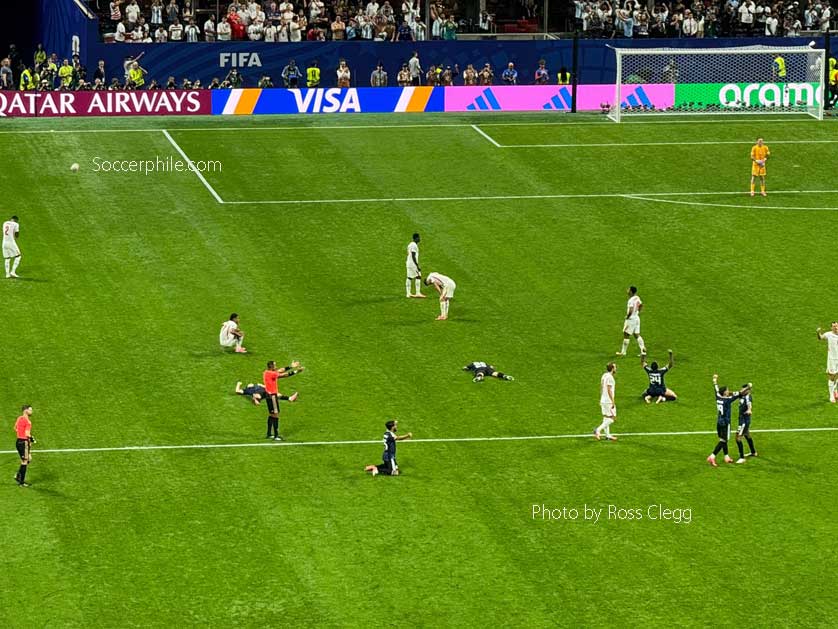
And so England joined the list of 47 disappointed, angry and defeated nations at the 2026 World Cup. Argentina or Spain will join them in the losers' enclosure on Sunday night when midweek elation will turn into weekend deflation.
As MaCauley wrote in his famous poem, it is OK to lose as long as you leave all guns blazing. In that way you die immortal because history will forgive you for not being a coward. The English like a heroic failure, from Lord Nelson dying at Trafalgar to the Charge of the Light Brigade, Captain Scott at the South Pole, The Battle of the Somme and the escape from Dunkirk, all revered today as if they were triumphs.
But on Wednesday in Atlanta, home of the Braves baseball team, England exited football's premier competition without showing courage or a desire to honour their sacred heritage as the inventors of football.
But let us first get this in perspective. A semi-final finish, losing by a single goal, is not a disastrous World Cup. 2026 was worse for Brazil, Colombia, Portugal and triple hosts Canada, Mexico and the USA, all of whom went out in the Round of 16. It was even more humiliating for recent powerhouses Croatia and traditional giants Germany and the Netherlands, all of whom lost in the Round of 32, while the nadir was reached by four-times winner Italy, who did not even qualify.
England probably expects too much but given its population, football heritage and having the richest league with the best coaches and players, there is something glaring about the fact that the Three Lions have not won anything since the days of black and white television. And they have never won the Euros, unlike the usual suspects France, Germany, Italy and Spain, plus Czechoslovakia, Denmark, Greece, the Netherlands and Portugal.
1966 has become a millstone. Every England coach brings a different philosophy and a different approach but all since Alf Ramsey have failed on the biggest stages, prompting another round of soul-searching without answers.
Thomas Tuchel, a steely winner at club level, was hired specifically to change the safety-first approach under Gareth Southgate and go for teams' jugulars at key moments in big games, but after taking the lead against Argentina, he inexplicably chose fear over fortitude in a volte-face no-one had seen coming.
After England scored, Tuchel brought on three defenders, the polar opposite of what the nation was expecting. As the white shirts retreated into a 5-4-1 shape, they surrendered 88% of possession and invited an Argentine barrage, hoping desperately that the clock would tick down to 90 minutes. What timidity. England was going to the World Cup final until the 85th minute when Enzo Fernandez, scandalously unmarked beyond the D, picked his spot and rifled past Jordan Pickford. It was the least Argentina deserved.
Lionel Messi, in his first game against England at the age of 39, had found empty yards of grass in which to orchestrate. The Albiceleste swapped their blue shirts for tiger skins and tore into the Three Lions, hitting the English woodwork and drawing saves from Pickford before inevitably, they found the net twice in the closing minutes.
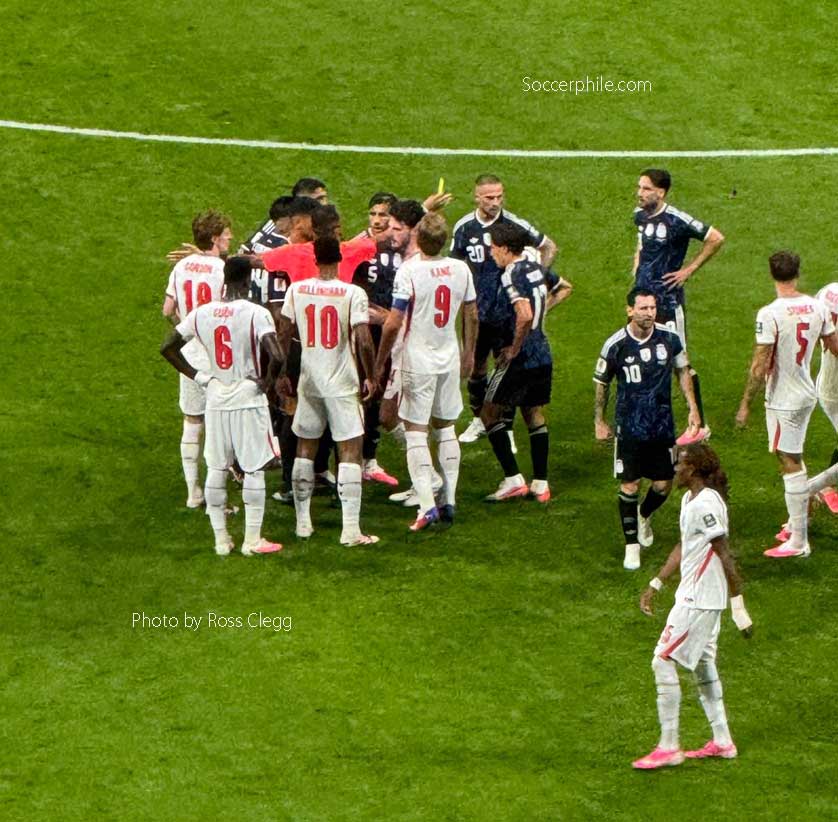
While many fans have lamented England's lack of dribblers or holding midfielders when they were most needed, most of the blame has fallen on Tuchel. His changes left England without an escape from the late Argentine surge. Both Albiceleste centre backs were on yellow cards and would have been wary of English counter-attacks. But none came their way as there was no one to hold onto the ball or take it upfield.
When Tuchel did bring on attackers in the shape of Marcus Rashford and Ivan Toney in the 95th minute, it was too little too late. Midfielder Kobbie Mainoo remained strangely unused, as did skilful attackers Eberechi Eze, Bukayo Saka and Ollie Watkins.
Once Argentina equalised, it was clear England had no realistic prospect of keeping them at bay, let alone scoring again as they were under the cosh with no outlet. Just as Fernandez scored unchallenged, Lautaro Martinez inserted himself between two centre backs to head in unopposed. It was a coup de grâce to spare England 30 minutes of further embarrassment.
It reminded me of the notorious Italia '90 semi final in Naples when Italy took the lead before retreating and inviting a similar siege, but ended up losing. "Fear ate the Italian soul" as the great sportswriter Brian Glanville wrote.
But England is not the country of catenaccio. Its martial spirit is its footballing muse, as David Winner observed in his book Those Feet - A Sensual History of English Football. The Englishman does not defend his trench but rather goes over the top into no-man's-land, chanting Onward Christian Soldiers.
Has our mentality now changed from one of force to one of fear? Gareth Southgate made England a safety-first outfit and brought unparalleled success, if not trophies, but Tuchel was supposed to have binned that approach, which appeared to have run its course after Euro 2024. Perhaps with the prize of a World Cup final so tantalisingly close for the first time in 60 years, the team just nervously froze instead of carrying on fighting.
Moving upfield and passing out from defence instead of just clearing carried risks of course, but the fans would have preferred to have lost that way. At the same time, the more likely winners of the whole thing were playing in the other semi-final, between France and Spain.
Nevertheless, what is for sure is that England missed another golden chance as Argentina were losing and were there for the taking. Reaching their first World Cup final since 1966 would at least have helped psychologically , even if they had gone on to lose to Spain again. Fabio Capello, who was there in Atlanta, famously thought the badge weighed too heavily upon his players. That and the ghost of '66 which needs exorcising. The bigger picture since 2018 is of a revived England, a team that reaches semi-finals and finals, but the Three Lions still need that silverware in their hands to feel good again.
Only days before the disaster in Atlanta, the Bayeux Tapestry returned to England for the first time in almost a thousand years. Its finale shows the 14th of October 1066 on Senlac Hill in Sussex, where the Anglo-Saxon army of Harold II were massed together in a shield-wall formation, desperately defending an onslaught from the invading Norman army.
Late in the day the English sensed victory, broke formation and chased after their foe, but the move failed as the Normans regrouped and repelled their counter-attack, before charging back up the hill to finish off the remaining Saxons, including King Harold.
It was a historic defeat for the English, but at least they died trying to win the day.
© Sean O'Conor, Soccerphile
Buy tickets for soccer matches around the world