
Jurgen Klopp: Liverpool's Manager Is Leaving But His Legend Is Assured
Sean O'Conor

"It's not so important what people think when you come in. It's much more important what people think when you leave." - Jürgen Klopp.
The turn of the year is a traditional time for managers to lose their jobs.
The sack race reaps its annual toll of coaches whose clubs are marooned in the nether regions of the table, as well as those managers perceived as underachieving or having lost the proverbial dressing room.
But when your team is top of the Premier League, in the League Cup final and still in the FA Cup and Europa League, your chances of getting fired or quitting would normally be close to zero.
Thus it was the mother of all surprises when Jürgen Klopp announced he would be leaving Liverpool at the end of the season and had informed his employers as such back in November last year.
Heavy Metal Football
The German cited exhaustion as the reason. "I realised my resources are not endless," he revealed. "We're not young rabbits anymore and we don't jump as high as we did."
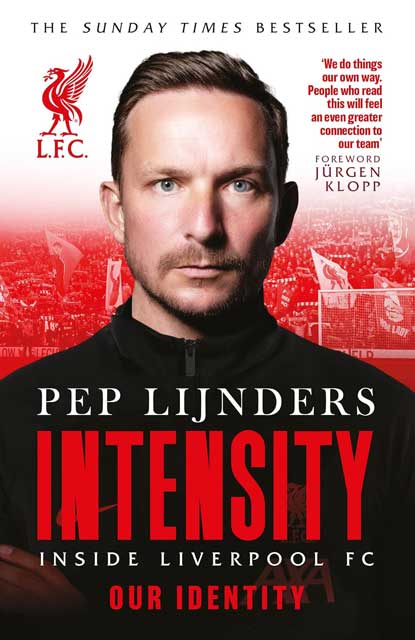
The title of the book about Klopp's Liverpool by his assistant manager Pep Lijnders, Intensity, sounds more pertinent than ever.
'Heavy metal' was the phrase Klopp had used a few years ago to describe his sides' high intensity playing style, in contrast to what he called the 'orchestra' of Arsene Wenger's Arsenal, a mantle now taken up by his current rival, Pep Guardiola's Manchester City.
Red noise has indeed reverberated around Europe for the past seven years, but the news that he was quitting while ahead was Klopp's loudest kerrang of all.
That in itself is still a smart move, leaving his adoring followers hungry with unblemished memories. Wenger, by contrast, stayed too long in his dream job and had managed to turn many of his worshippers against him by the end of his reign.
Klopp hid his Anfield escape remarkably well, given his regular chest-thumping to the crowd and ever-ebullient interactions with the press. But deep down he must have decided a while ago, probably during the long and disappointing slog of last season, that he could not refill his fuel tank of inspiration and as a result, his Anfield dream was time-limited.
This season's impressive renaissance which has seen Liverpool sail to the top of the Premier League has not apparently persuaded him to have any second thoughts.
No Regrets
"I still think it's the right thing to do," Klopp said. "I don't take these things lightly. I'm convinced it's right. I have no regrets."
To be sure, it is better to leave at the top of your game than as a faded great unable to recapture the old magic, and his choice must be understandable given the pressures of top club management, but it still seems a little odd given how well the Reds are doing this season.
One would have thought this resounding bounce back from their lacklustre 2022-'23 campaign, which ended without silverware or Champions League qualification, would have rejuvenated the manager as much as it has the players and fans.
Klopp's public admission of feeling he is a spent force who needs to step down are just not chiming with his team's table-topping form. Nevertheless, his mind seems made up:
"It's not that I want to leave," he told Rio Ferdinand this week, "it's more or less that I have to. If I cannot be the guy who pushes the team to the Champions League or stuff like that, why should I do the job?"
Shankly & Dalglish
Klopp's announcement brought back memories of other legendary Anfield managers in similar circumstances. Bill Shankly decided to quit in 1974 having just won the F.A. Cup and Kenny Dalglish resigned while top of the league and as reigning manager of the year after winning a third league title.
After the initial shock of Dalglish's resignation had subsided, we realised the man had maintained a brave face throughout the gruelling trauma of the Hillsborough tragedy and his private life revealed a mental and physical struggle largely hidden to the general public.
If Dalglish concealed his demons so well that the public were worshipping a superficial image, perhaps the same is true of Klopp. He might be on our screens and radios every week, but none of us can live inside his head. He had his personal reasons so who are we to argue?
What is also remarkable is that Liverpool FC had kept this news firmly under wraps since November in an extraordinary feat of secrecy given how many people were in the know.
Klopp's whole backroom team, including Lijnders, are also leaving Merseyside in the summer so the potential for a leak was immense. LFC can certainly keep a secret better than any government.
Aged 56, Klopp is two decades younger than Crystal Palace's Roy Hodgson and eight years younger than Real Madrid's Carlo Ancelotti, which does make it appear a premature end to an illustrious career, if indeed this is the last job of his footballing life.
Who knows whether he will return to club management, or even be tempted to coach his native Germany, who have been underperforming for some time.
He lasted nine years on Merseyside, two more than he served as coach of Borussia Dortmund, where his gegenpressing (closing down high up the pitch) made him famous beyond the Bundesliga as one of Europe's most exciting young coaches, but his Liverpool reign finishes some years short of Wenger's 21 years at Arsenal or Alex Ferguson's 26 at Old Trafford.
But Klopp does depart as the top flight's longest-serving boss and throughout the four divisions his tenure is only topped in 2024 by two managers in League Two.
He is also only three years older than Pep Guardiola, who having won all that needed to be won at Manchester City, must also be considering his future as we speak.
After the bombshell dropped a week ago, the Reds caught fire, netting nine goals in their next two games, implying all at Anfield Road are determined to give their leader the best farewell they can, cheering the gaffer out the building in a blaze of glory.
Injury depleted, they lost the third match away to rivals Arsenal, who produced a high-octane gegenpressing straight out of Klopp's playbook.
If Liverpool win the Premier League, Klopp, enveloped in a tsunami of love, may well pause and rethink his exit, with the added temptation of having another crack at the Champions League.
But right now he will leave in May as a Liverpool legend. Klopp has ensured his place in the Anfield annals for his recapture of the title after a 30-year drought, as well as for his 2019 Champions League win, the Reds' first for 14 years.
Record
Before that season, it should not be forgotten that Klopp was more of a finalist than a winner with Liverpool, losing a Champions League, Europa League and League Cup final and finishing second in the league. Once 2019 unlocked the doors to the trophy cabinet however, the silverware has just tumbled out.
Going into this season he has bagged seven trophies for the Reds, behind the ten of Dalglish and Shankly but far short of the 19 of Bob Paisley.
Shanks, who reigned at Anfield from 1959 to 1974, remains the iconic Reds boss because his working-class soul was vocal while Paisley's was quiet. He founded the Boot Room which became a trophy factory, so not for nothing is the Liverpool supporters union called the Spirit of Shankly.
He emphasised the importance of connecting with the fans from the start, forging a spiritual bond which transcends on-field success or failure. Shankly left Liverpool fifty years ago and died in 1981 but his ghost still inhabits Anfield today.
In the film Gladiator, Oliver Reed's wizened old warrior Proximo reveals to Russell Crowe's Maximus the secret of success as a professional sportsman:
"I wasn't the best because I killed quickly," he tells the aspiring swordsman. "I was the best because the crowd loved me - win the crowd!"
Klopp knew this too when he arrived on Merseyside, projecting confidence, joy and an infectious likeability, a package not lost on the satirical British puppet show Spitting Image.
At his first press conference in England he landed with aplomb, emphasising his desire to have fun as an elite manager in what is usually a thankless toil devoid of tranquillity. He made the reporters guffaw, contrasting Jose Mourinho's self-proclamation as 'The Special One', by telling them, "I am the normal one."
Then he was pictured all smiles enjoying a beer with his wife on his first night in Liverpool, imagining what adventures would come. He just seemed a perfect fit from the off.
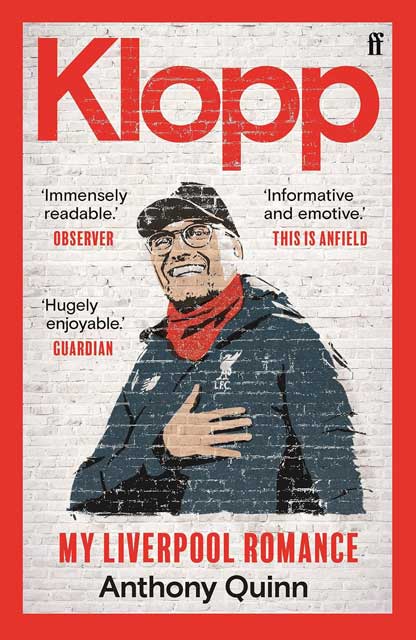
Novelist Anthony Quinn penned a delightful hymn to the Reds' manager in his 2021 book Klopp - My Liverpool Romance, explaining what for him made the German the truly special one:
"His sense of humour. His boundless geniality. His off-the-cuff smartness. His ability to inspire and command. His obsessive tactical nous. His amazing set of teeth…what a lucky time it is to be a Liverpool fan."
Mention The Germans
Despite sharing a common Anglo-Saxon heritage, Germans have long been considered in England to be fundamentally different psychologically, and are frequently derided as being dour and humourless puritans.
This cultural stereotype was famously inflated by a 1975 episode of the popular sitcom Fawlty Towers, entitled The Germans, in which the prejudiced hotelier Basil ends up insulting his Teutonic guests for having no sense of humour when he tries to talk about the Second World War, before trying to cheer them up by goose-stepping and doing an impression of Adolf Hitler.
Liverpudlian comedian Freddie Starr, who died in 2019, also did Hitler impressions while another famous Scouse comic Stan Boardman, now aged 86, has made Nazi jokes a staple of his act too.
Liverpool had good reasons to mention the war, as its docks and residential areas suffered intensive bombing between 1940 and '41 with thousands killed or made homeless.
In addition, between 1939 and 1941, up to 5,000 Germans resident in Britain were interned in an unsanitary prison camp in the Liverpool district of Huyton, an area which would later spawn footballers Peter Reid, Steven Gerrard and Joey Barton.
But like German football stars Bert Trautmann (who was interned in Huyton) and Jurgen Klinsmann who found fame in England before him, Klopp helped wipe these tears away and turned scowls to smiles by forging new perceptions of his country, winning hearts and minds with his personal charm.
Klopp's radiant glow spread beyond Anfield. In the 2016 UK referendum, 58% of Liverpool voted to stay in the European Union, bucking the national trend. Much of that was probably down to the port city's historical openness to the wider world and co-operative tradition, as embodied by Shankly's definition of socialism as,
"Everyone working for each other, everyone having a share of the rewards: It's the way I see football, the way I see life."
Liverpool FC's forays into European football in the 1970s and '80s had forged a mental link between its fans and the continent, bringing new youth fashions to Britain in the process. When it won the European Cup in 2005 after a 21 year absence it was with a Spaniard, Rafael Benitez, at the helm.
But one wonders how many wavering voters in this football-mad city were swayed at the time of the Brexit vote by having a German in charge of Liverpool and a Dutchman (Ronald Koeman) in charge of Everton, both espousing continental co-operation.
While he may not have grown up amid the Scottish coal fields, Klopp certainly channelled Shankly when he gave The Guardian his views on Britain leaving the European Union,
"History has always shown us that when we stay together we can sort out problems," he said. "When we split we start fighting. There was not one time in history when division creates success. So for me Brexit still makes no sense…OK that can happen, but then come on, let's sit together again."
His politics also struck the right note in a city fallen on hard times where the Labour party traditionally cleans up. "I am on the left of course," he told biographer Rapahel Honigstein, "I believe in the welfare state..if I am doing well, I want others to do well too."
During the COVID pandemic, Klopp had enough clout on Merseyside to speak out in favour of vaccines, urging locals to get the jabs precisely because Scousers are people who care about others.
Faith
It is also tempting to perceive Klopp's spiritual roots in the Black Forest, growing up with a Catholic father and a Protestant mother, as an ideal preparation for life in England's most ecclesiastically divided city, whose two cathedrals float like battleships on the skyline above the river Mersey.
Like football, religion matters on the Mersey. Liverpool's Anglican cathedral is the UK's largest church, while Liverpool's Catholic one would have been even grander with the world's largest dome had World War II not intervened, leaving only the gigantic crypt completed.
Quinn made this observation in his book about Klopp and Christianity:
"Perhaps it is the mixture of these two religious heritages that helped forge the son, the Protestant side being rational, orderly and hard-working, the Catholic devotional, romantic, partisan."
Klopp himself keeps his relationship with God largely in the background, but it is a driving force in his famously ebullient character, which he has credited several times:
"The most important point is that this lust for life is actually concerned with my faith," he said."I am a Christian and so I see life as a gift."
The cities of Mainz, Dortmund and Liverpool have been the lucky recipients of this present.
Football is often called a religion of course and fans' devotion a modern form of the sacred, so the parallels are clear when there is an inspiring prophet conducting a weekly service.
When Klopp spoke of being defeated for most of his life but working hard for a final moment of glory it feels like he could be a Lutheran preaching the Christian message of ultimate redemption through resurrection:
"We all fall and we fail and we fall down constantly," he said. "I am used to losing big. My whole life was like this. I cannot say I am a natural born winner. Losing a top European final is not in my top ten of the worst things that can happen in life because you realise the next day I am still alive and still healthy so you can go again."
Klopp's belief in football as feeling channels the Catholic side of his upbringing and his statement that, "The best football is always about expression of emotion," chimed perfectly with England's most famously effusive city.
Paisley might have won more trophies but Liverpool fans felt most kinship with the emotive Shankly as they do with Klopp, less so with the bookish Roy Hodgson or somewhat aloof Benitez.
Whoever succeeds Klopp as the next Reds manager should tap quickly into the spirit of Shankly in order to succeed. Emotionally and as an emblem of an independent regional identity, Liverpool, like FC Barcelona, is much more than a club.
We should not forget that Klopp also made Liverpool the best of the big clubs to watch, reminding us of the entertainment responsibility professional sport has, with a more attractive style of football than Guardiola's possession-based domination of space or Mourinho's neutralising of the opposition.
He has cited Arrigo Sacchi's 1990s Milan, via his Mainz coach Wolfgang Frank, as his tactical genesis. The rapid closing down of opponents in their defensive third coupled to fleet-footed raiders swinging in crosses for skilful forwards to finish will be his tactical epitaph, or as he called it, "heavy metal football."
"For 23 years now I think I have mentioned counterpressing 50 times a week," he explained. "In a football game you want to be dominant as often as you can." While not an advocate of possession above all (the Spanish school), Klopp is clear that you need the ball to win, so winning it back after losing it is his priority.
While everyone in the team works as one to get the ball and use it, positions have been fluid in Klopp's Liverpool, with Mohamed Salah near impossible for opponents to mark or pin down in the final third and Trent Alexander-Arnold morphing between full back, wing back, winger and central midfielder, a symptom of what Klopp calls his "organised chaos."
Under Klopp, Salah, Sadio Mane and Roberto Firmino became English football's most-feared attacking trident, one to compare to Barcelona's MSN or Real Madrid's BBC, but none of them could be described as traditional strikers.
Salah in particular has stood out for his silky feet and sharp shooting, a Muslim hero in Christian Europe and a standard-bearer for Middle Eastern and North African football.
It is extraordinary to think Chelsea bought him from Basel but only played him 13 times before offloading him to Fiorentina and then Roma, while at Liverpool he has scored more than 150 goals and been the Premier League's top scorer, Player of the Season and the author of a catalogue of spectacular goals, including the one which won the 2018 FIFA Puskas Award.

Transfers
Klopp's transfer policy has been fairly razor sharp while other clubs have squandered millions. Brazilian goalkeeper Alisson Becker, imperious Dutch centre back Virgil Van Dijk and Salah were top-drawer acquisitions, forming a solid spine to the team. Andy Robertson, the flying Scottish full back, was a steal from Hull for only £8 million.
The seminal Anfield days and nights under Klopp are too many. Overturning a 3-0 deficit to Barcelona in the 2019 Champions League semi final was certainly one which lives long in the memory.
Coming down from 3-1 against Borussia Dortmund to win 4-3 in the Europa League in 2016 was another, as was a 7-0 mauling of Manchester United last year. Twin knockouts of Guardiola's Manchester City, 3-0 in 2018 and 3-1 in 2019 were landmarks too.
Settle down for a Liverpool home game under Klopp and you are sure to be in for a treat of attacking football and passion from the bench as well as on the fields and in the stands. Kloppa's castle has been a fortress and a palace of magic in a wonderfully memorable reign.
"Fighting football, not serenity football, that is what I like," Klopp said back in 2021.
Three years later, the warrior is weary and is handing back his weapons, his place in Valhalla assured.
"Whilst you love football, it is a hard, relentless task which goes on and on like a river. There is no time for stopping and resting," said Shankly as he left Anfield half a century ago.
As an ex-Liverpool manager, the Stuttgart-born man will surely be treated better by his club than Shankly was. Maybe they will even rename the home end The Klopp.
The rest of us are left feeling honoured that English football was graced for around a decade with the presence of another Anfield legend.
Danke schön Jürgen.
Liverpool Related
Buy tickets for soccer matches around the world