
The Premier League & Brexit: Can't Live Without EU?
Sean O'Conor
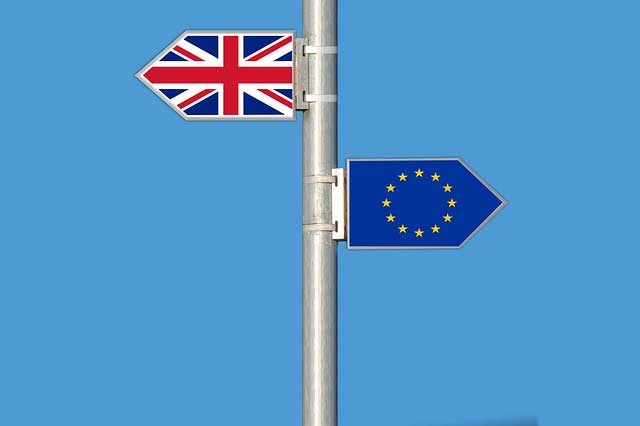
Europe's major league has just left Europe.
Well not exactly, but England's first division is now in uncertain waters.
The United Kingdom left the European Union at the end of January, symbolically confirming Britain as an island off the coast of its continent, all set to sail away in a different direction.
But England's biggest football league is Europe's too, in stark contrast to the 'Little Englander' mentality which has gained so much traction since a referendum on EU membership was announced back in 2015.
Visit the training ground of any EPL team today and you will witness a Tower of Babel and a myriad of ethnicities. English football in 2020 is a cosmopolitan carnival and a multicultural success story amid a land emotionally lukewarm about globalisation, despite having done so much to engender it for centuries.
Coincidentally, the Premier League was born in the same month and year as the European Union.
In February 1992, Europe's nations decided to take international cooperation to the next level and become a governing entity while the clubs of the old First Division broke away from the Football League, in cahoots with the Football Association and Sky TV, to form the Premiership.
The two have grown up together and cross-fertilised. The EPL has benefited particularly from one of the tenets of the Treaty of Maastricht which entrenched European political union.
Freedom of movement for EU citizens amid its 28 member states has allowed England's top flight, buoyed by TV money, to recruit the best players and managers from the continent without the need for cumbersome work permits or visas.
The rush of the top Euro talent to Blighty has led to the best from other continents coming here too, creating the richest and most diverse football league in the world.
Opening Britain's borders to continental labour has also let English football metamorphose out of its traditional Anglo-Celtic character into an international one.
Training methods and professional practices have evolved remarkably. English clubs big and small now pass the ball out from the back Barcelona-style, mirabile dictu, instead of lumping it skyward in an effort to win the second ball.
In the late 1980's, direct football was the fashion here, with proponents like Watford, Wimbledon, Sheffield United and Cambridge United playing the percentages instead of the passes.
The battering ram centre-forward or target man is now no more the norm, nor are one-footed fullbacks or towering centre backs who never dribble but prefer to launch it.
In the 1980's, English formations seemed so stuck on 4-4-2 that Bobby Robson's use of Mark Wright as a sweeper at Italia '90 seemed positively groundbreaking.
But now a team playing a long ball game in the top flight is as unthinkable as footballers scoffing steak and chips pre-match before downing pints afterwards.
While the EU has existed, European ideas have truly conquered English football.
To be fair, the revolution began slightly earlier, perhaps most precisely in the summer of 1996 when Arsene Wenger swapped Nagoya Grampus Eight in Japan for Arsenal.
It is worth recalling how seismic the changes have been. Few Europeans plied their trade here before 1992 as the best players flocked to the higher salaries of Italy or Spain.
But there is no chance today of England's best player leaving these shores, as talismanic skipper Kevin Keegan did when he swapped Liverpool for Hamburger S.V. in 1977, or as Gary Lineker did in 1986 when he left Everton for Barcelona after bagging the Golden Boot at Mexico '86.
Equally, the list of great European players who have worked in England since the EPL was born is dazzling and includes Dennis Bergkamp, Eric Cantona, Jurgen Klinsmann, Peter Schmeichel, Eden Hazard, Thierry Henry, Fernando Torres, Virgil Van Dijk and Gianfranco Zola. Oh and a Portuguese kid called Cristiano Ronaldo.
The alumni list of European managers who have shone in England thanks to free movement is equally impressive and features Pep Guardiola, Jurgen Klopp, Carlo Ancelotti, Guus Hiddink, Rafael Benitez, Gerard Houllier, Claudio Ranieri and Jose Mourinho as well as Wenger, the most European of them all.
According to the website MyFootballFacts, a total of 2,262 overseas players have been active in the Premier League since its inception and when considering the above roll of honour, who can say Freedom of Movement has been bad for English football?
Well, some folk do.
The knock-on effect of TV money on wages has it is true priced out many fans and the arrival of so many foreigners has meant young English players enjoy fewer chances at the big clubs.
One had to sympathise when England manager Gareth Southgate lamented the fact he had barely a third of the top division's players to select from, but then the following summer his proteges won fourth place at Russia 2018.
That was the first time the national team had reached the World Cup semi-final since 1990 and England sides have also won trophies at U17 and U19 level in recent years.
It is hard to measure, but it feels like the Three Lions in 2020 has one of the best crops of youngsters it has had for years despite, or perhaps because of the Premier League.
The TV windfall helped the Football Association build their long dreamed for St George's Park training complex, English clubs contested both last season's UEFA Champions League final and the Europa League final while Liverpool have just collected the FIFA Club World Cup, all of which suggests the domestic game is in pretty good health.
Yet last season, Arsenal's English players were on the field for only 6% of total minutes played and Chelsea's for 7%.
Liverpool and Manchester City's English cadre came in at 22%, Tottenham at 32%, Manchester United at 34%, and the most 'English' team in the top flight was Burnley at 72%.
An average of 28% of Premier League squad players in 2020 are EU imports - and that total excludes those from the Republic of Ireland or dual nationals who represent countries from other continents.
Wolves come top with a squad of 49% EU imports, 1% ahead of Manchester City in second and Arsenal in third on 41%. Burnley comes lowest on 8% with Sheffield United close by on 10%.
How should we interpret those figures? Empirically it appears that a club's wealth and having a European coach are strong factors in EU player recruitment.
Maybe the fewer Englishmen at work in the top flight today are merely the cream of the crop and have been immeasurably improved by competing alongside the best in the world instead of journeymen compatriots. If the National Team's current form is anything to go by, we certainly should not feel worried.
There are other nationalities as well as Europeans in the Premier League - notably Argentinians, Brazilians and various Africans, but EU nations are the top four and seven of the top ten countries for player imports.
Whether this free flow of footballing talent which has transformed English football continues after the end of the Brexit transition period in 2021 is thus the big question.
Mass immigration was the elephant in the room in the run-up to the 2016 referendum but do the British include immigrant footballers in their thoughts about undesirable foreigners?
Since the U.K. Government insists it will end its participation in all aspects of EU law including the Four Freedoms (movement of people, goods, capital and establishing businesses), then on that basis the football flow will slow too.
Political plans are vague beyond an expressed desire for an Australian-style points system of immigration but if in future European footballers and managers will have to seek work permits like non-European ones do at present, then the flood will become a trickle.
At present non-EU footballers must have played in 75% of their nation's competitive internationals over the previous two years and come from a nation in the top 70 of the FIFA World Rankings in order to get a work permit. Appeals can be made but there is no guarantee of success.
One study claims that if such criteria were applied to EU players, then half of all those who have played in the Premier League would not have been eligible.
16-18 year olds can also move freely between clubs in EU member states, a situation teams like Arsenal, Chelsea and Manchester City have made the most of, but what will happen to that facility in 2021? Nobody knows for sure.
At a managerial level, England in 2020 also has the most cosmopolitan league. 18 of La Liga's coaches are Spanish, 17 of Serie A's are Italian, 14 of Ligue 1's are French and 11 of the Bundesliga's are German, but only nine of the Premier League's are English.
It will be clearer by the end of this year if or how English football will change when the UK's Transition Period finishes, so judgement is best reserved until then.
Will the UK government really try to hinder one of the nation's greatest overseas brands with red tape? Anything could happen while Brexit remains more a word than reality.
The most continental league has officially left the continent on the back of its home nation, but having risen to the top of the world in parallel with its EU membership, it is hard to see it leaving Europe, Brexit or no Brexit.
What is for sure is that the Three Lions will stay in UEFA and like any nation in the world, England will remain a prisoner of geography.
© Sean O'Conor & Soccerphile
Buy tickets for soccer matches around the world