
UK Stadiums: Tynecastle Park, Edinburgh, Scotland

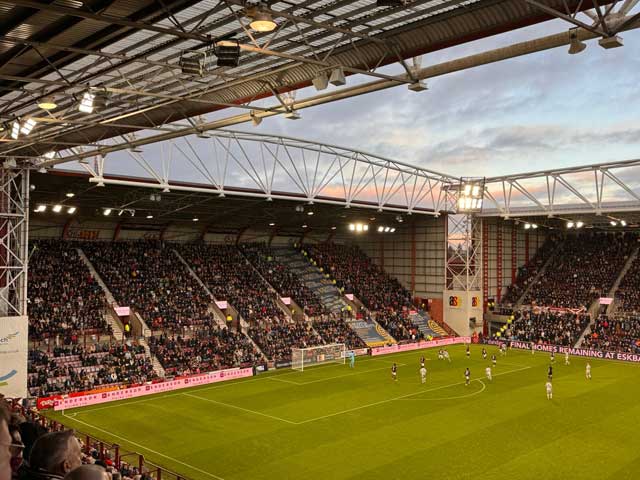
Tynecastle Park aka Tynecastle or Tynecastle Stadium in the Gorgie area of Edinburgh is the home of Heart of Midlothian (Hearts) founded in 1874. With a capacity of 19,852, it is the 6th largest football stadium in Scotland. Hearts have been in residence at the present site since 1886.
The record attendance at the ground is 53,396 for a Scottish Cup tie against Rangers in 1932.

History
Tynecastle replaced the club's earlier grounds and quickly became a focal point for Hearts fans. The original stadium was rudimentary, with basic spectator facilities, but it served as the foundation for future development.
In the early 20th century, Tynecastle underwent significant changes to accommodate larger crowds. By the 1910s, it featured a main stand designed by renowned Scottish architect Archibald Leitch, whose work is iconic in British football. The ground hosted several high-profile matches, including Scottish Cup ties and national team fixtures.
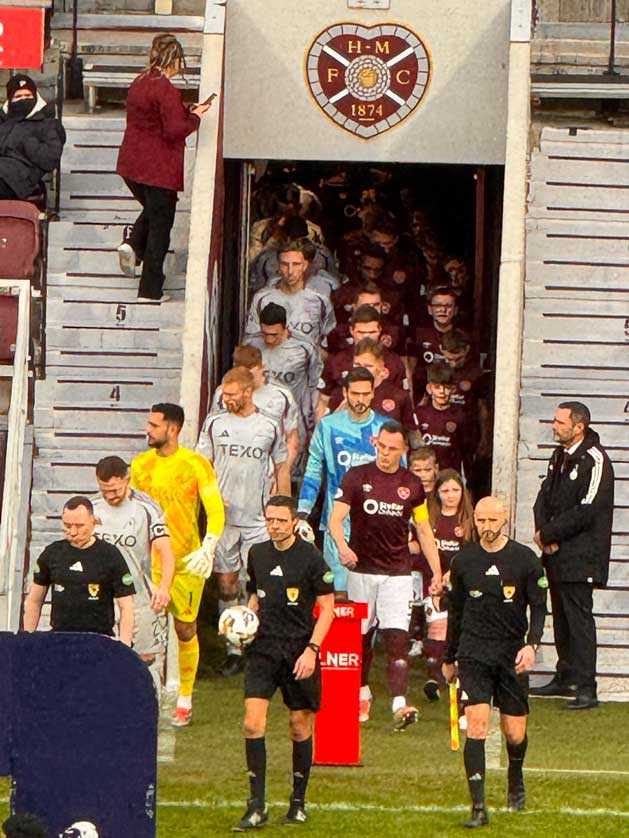
Following the Taylor Report in the wake of the Hillsborough disaster in England, Tynecastle was modernized to meet safety standards. The stadium was converted into an all-seater venue by 1994, with the construction of three new stands: the Wheatfield, Gorgie, and Roseburn stands. This redevelopment significantly enhanced the comfort and safety of spectators while preserving the ground's traditional atmosphere.
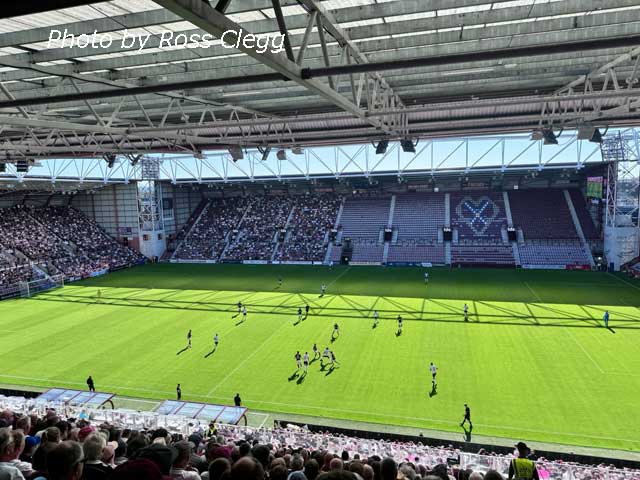
Stands
In 2017, the main stand, now called the Main Stand, was rebuilt to increase capacity and improve facilities. This expansion raised the stadium's capacity to approximately 19,852 and introduced modern amenities, including upgraded hospitality areas and improved accessibility.
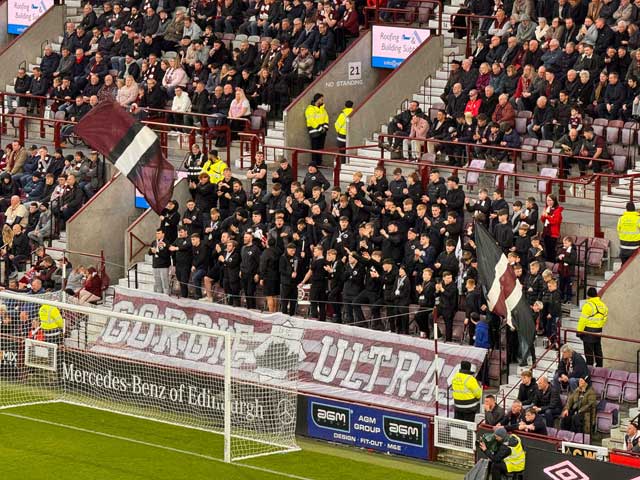
The other stands are the Wheatfield Stand, Gorgie Stand, and Roseburn Stand constructed during the 1990s modernization. They have a uniform design with steep seating arrangements, ensuring excellent views from all angles.
Hearts
Hearts are a well established football team in Scotland and one of the big two in the Scottish capital of Edinburgh along with rivals Hibs. They are nicknamed "Hearts," "The Jam Tarts" or "The Jambos".
Up until the 2024-2025 season Hearts have been champions of Scotland 4 times including a league and cup double in 1959-60, the only club outside of the Glasgow Old Firm to achieve this.
Hearts have lifted the Scottish Cup 8 times most recently in 2012 with a 5-1 victory over Hibernian, their Edinburgh rivals. They were beaten finalists in 2019, 2020 and 2022.
Players
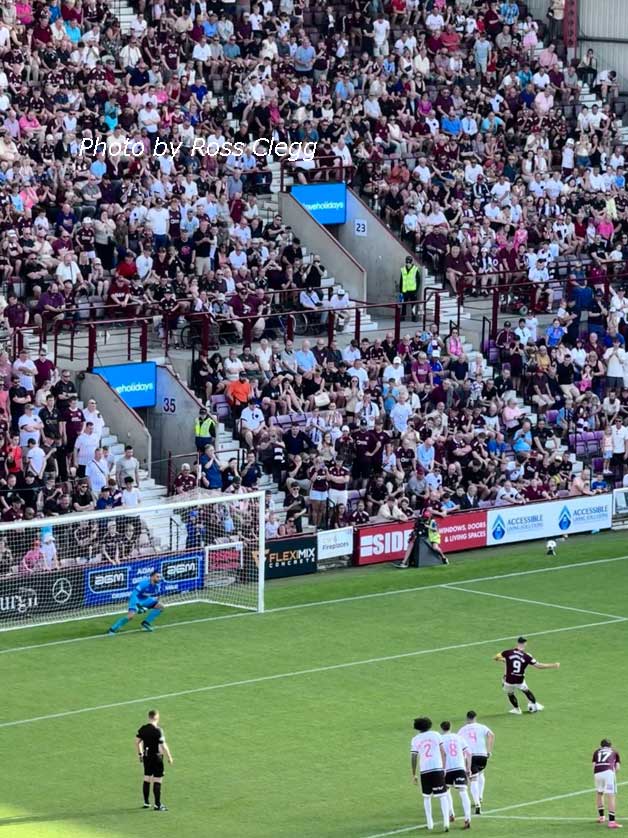
Famous players to have represented the club over the years include Dave Mackay (1953-1959) who is regarded as one of the greatest players in Hearts' history. Mackay was a key part of the club's golden era in the 1950s. A tough yet skillful wing-half, he helped Hearts win two Scottish league titles, a Scottish Cup, and a League Cup before moving to Tottenham Hotspur, where he also achieved legendary status.
John Robertson is the club's all-time leading goalscorer with over 200 goals for the club in two spells.
Defender James Jefferies made over 300 competitive appearances for the club and also managed the team in two spells.
Gary Mackay holds the record for the most competitive appearances for the club, with 640.
Vladimir Romanov
The Vladimir Romanov years at Hearts from 2005-2013, were a tumultuous and controversial period in the club's history, marked by dramatic highs and deep uncertainties, and certainly deserve a mention here. Lithuanian/Russian businessman Vladimir Romanov became the majority shareholder in 2005, promising to challenge the dominance of Scottish football's big two, Celtic and Rangers. Early on, his tenure brought success, including a second-place finish in the Scottish Premier League in 2005-06 and a memorable Scottish Cup victory in 2006. However, Romanov's ownership was overshadowed by erratic decision-making, frequent managerial changes, and accusations of interference in team affairs. Financial mismanagement also loomed large, with the club accruing massive debts under his stewardship. By 2013, Hearts entered administration, and Romanov's control came to an end, leaving a legacy of unfulfilled promises and a fanbase both relieved and scarred by his controversial reign.
Access - Getting To Tynecastle Park
The stadium is in the West End of Edinburgh close to Murrayfield rugby ground. The nearest train station is Haymarket Station, one stop from Waverley. From Haymarket it is a 20-minute walk along Dalry Road.
Several bus routes serve the area around Tynecastle Park from Haymarket Station. These include routes 2, 3, 25, 33 and 44. Allow about 10 minutes for the journey.
Address: McLeod Street, Edinburgh EH11 2NL, UK

Nearby Hotels
Recommended places to stay in the center of Edinburgh include The Bonham, the Radisson Blu Hotel Edinburgh, and the Apex Grassmarket Hotel. A nearby hotel for both Tynecastle and Murrayfield is Tynecastle Park Hotel.
The Ardmillan Hotel is a cheaper, 2-star option also within easy walking distance of the stadium.
See here for a complete listing of hotel accommodation in Edinburgh.
More UK Stadiums
Kirklees Stadium (John Smith's Stadium)
©Soccerphile.com
Buy tickets for soccer matches around the world