
Poland City Guides: Warsaw
Warsaw

- Warsaw is Poland's capital city
- Completely rebuilt since World War II
- Huge, sprawling city on the Vistula River
- Poland's most lively city
- Situated on the Berlin-Moscow road
- Old Town reconstructed post World War II
- Population of 1,700,000
Warsaw, (or Warszawa, "va-sha-va") a little east of the center of Poland, is the Polish capital city. Warsaw is a city of about 1.7 million people, making it the ninth biggest city in Europe. Warsaw is also one of Europe's greenest cities, with almost a quarter of its area devoted to greenery, most of it in the form of parks, of which there are over eighty. The Vistula River runs through Warsaw.
Welcome to Warsaw, the vibrant capital of Poland, where history meets modernity in a blend of tradition and innovation. As the largest city in the country, Warsaw pulsates with energy, offering visitors a captivating journey through time and culture. From its meticulously reconstructed Old Town, a UNESCO World Heritage Site, to its towering skyscrapers dotting the skyline, Warsaw enchants with its diverse architectural landscape. Dive into its rich past at the Warsaw Uprising Museum or marvel at the grandeur of the Royal Castle, then indulge in the city's thriving culinary scene or explore its dynamic arts and nightlife. In Warsaw, every corner tells a story, inviting you to uncover the spirit of Poland's resilient capital.

History
The first mentions of Warsaw in history are in the fourteenth century, and Warsaw remained central to Polish life since that time. Warsaw remained prosperous during the 18th century: a catastrophic century for the rest of Poland, and was the site of Europe's first ever constitution in 1791. In the 19th century, Warsaw was little more than a provincial center on the outskirts of the Russian empire. After Poland was liberated from Russian rule in 1918, Warsaw became the capital of newly independent Poland.
German occupation of Poland during World War Two led to the almost complete destruction of Warsaw by 1945. Warsaw's post-War reconstruction was a massive labor of love and dedication that almost completely restored to the Old City area of Warsaw its former charm. Such was the success of this restoration that Warsaw's Old City was made a UNESCO World Heritage Site in 1980.
The best known part of Warsaw is is the west bank of the Vistula River, around Warszawa Centralna Station. This is the central borough of Śródmieście with its Old Town (Stare Miasto) and New Town (Nowe Miasto). The whole area is pedestrianized, and many of its streets, tree-lined, sometimes gently sloping, have a somewhat bucolic atmosphere. Keep an eye out for the horse-drawn tram and carriages ready to take you around the area



Things to Do In Warsaw
Warsaw Old City
Warsaw Old City (or Old Town) is just south of the New Town, and faces the west bank of the Vistula River. The Old City is one of Warsaw's most charming areas, with a large number of cafes and restaurants, and open-air art galleries, to complement its beautiful architectural heritage.
The 16th century Upland Gate (Brama Wyzynna) is the entrance to the Dluga Targ square area and was once the main gate to the city. The Flemish artist, Willem van den Block later added the coats of arms of Prussia (unicorns), Poland (angels) and Gdansk (lions) in 1586. Upland Gate now holds the Amber Museum. The attached Prison Tower used to house the city's torture chambers - the Torture House.
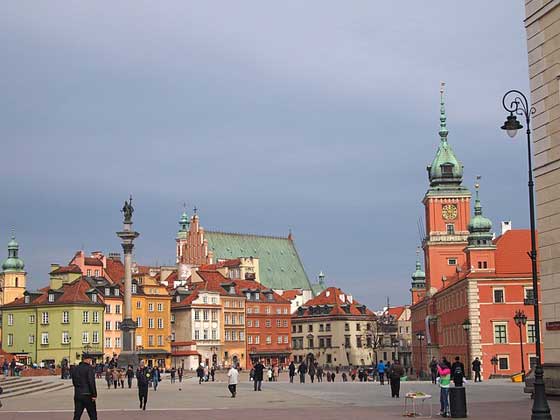
The Royal Castle in Warsaw (Zamek Królewski w Warszawie) in Castle Square (Plac Zamkowy) is a recommended spot to begin your exploration of the Old Town. The plaza in front of the Castle features the 60 meter high Zygmunt Tower, crowned with a statue of the 16th century King Zygmunt III Vasa.
The red and brown Royal Castle was built by Zygmunt in the 1590s, when he made Warsaw the capital (from Cracow). The Royal Castle is Italian in design. The timepiece in its clock tower dates from 1622. The interior of the Royal Castle in Warsaw is sumptuous, with different rooms in various styles, and housing numerous dazzling works of art.
At the bottom of the slope in front of the castle facing the river are the beautifully restored Kubicki's Arcades: a gracefully vaulted all-brick structure, 195m long, which is a setting for exhibitions, and includes a restaurant. Next door to the Royal Castle is the mid-17th century Roccoco-style Copper-Roof Palace, (copper being a rarely encountered material at that time) led up to by a grand enclosed courtyard. Across from the Royal Castle is the neoclassical St. Anne's Church (Kościół św. Anny), with its fresco-rich interior.
Back on the Royal Castle side and just behind it is Archcathedral of St. John in Warsaw Archikatedra św. Jana w Warszawie), the only archcathedral in Warsaw, and a UNESCO site of cultural significance - worth a look in for its huge, Gothic, awe-inspiring interior, especially its elaborate Rococo Chapel of the Immaculate Conception.
Just beyond St. John's Archcathedral is the Old Town Market Place (or Old Town Square) (Rynek Starego Miasta) - the heart of Warsaw's Old Town. The Old Town Market Place features quaint old houses built in the 17th century, in the earthy and pastel tones typical of old Warsaw, when the square was Warsaw's prime piece of real estate. These once-affluent old dwellings now interconnect to form the Historical Museum of Warsaw where you can view craftspeople at work and get a taste of how life used to be lived in Warsaw. It is lined with outdoor cafes to relax in.
In the center of the square is the sensuous, sword-wielding Mermaid (or, Syrenka). A little further on is the huge, redbrick Warsaw Barbican (Barbakan Warszawski) : a remnant of the wall and other fortifications that protected Warsaw, built in 1540, but made virtually obsolete soon thereafter by advances in artillery technology. About 100m along from the Barbican, away from the river, you can stroll along the old city ramparts and visit the Monument to the Little Insurgent in Warsaw (Pomnik Małego Powstańca), a poignant reminder of the child soldiers who helped resist occupation in World War II.

Warsaw New City
Walking from the Barbican along Freta Street, you are now in the Warsaw New Town (or New City) - actually hardly any newer than the Old Town, with a history going back to the 1400s. Like the Old Town, all its major historical buildings and monuments were meticulously reconstructed after World War Two.
The first sight you will come to on your right is St. Hyacinth's Church Warsaw (Kościół św. Jacka), a church built together with Warsaw's biggest monastery, the Dominican Convent, in 1639 in beautiful faux-Gothic style. St. Hyacinth's Church is worth visiting for its beautiful vaulted ceiling and the ornate Baroque tomb of the courtier, Adam Kotowski, who had the church's St. Dominic Chapel built.
Walk for another minute and you get to the Maria Skłodowska-Curie Museum (Muzeum Marii Skłodowska-Curie), with a statue out front of Curie (1867-1934), who discovered radioactivity. Half a kilometer west down Swietojerska Street from the Maria Skłodowska-Curie Museum, you can see the stunningly modern Supreme Court of Poland (Sąd Najwyższy Polska). Check out how it creates a modern-day mirrored archway over Plac Krasinskich, as well as the three huge gossamer-clad caryatids - banished to the back of the building by church and army prudery! The evocative Monument to the Warsaw Uprising is on the corner of Plac Krasinskich and Druga. Across the road is Krasinski Palace (now part of the Polish National Library), and behind it the big, beautiful Krasinski Gardens.
Back at the Maria Skłodowska-Curie Museum it is only another 100 m up the road to the New Town Market Square (Rynek Nowego Miasta), a square in name rather than shape, with a well in the middle and dominated by the domed Church of St. Kazimierz (Warszawski Kościół św. Kazimierza, originally built in 1692 but reconstructed after the war.
About 200 m further up Przyrynek Street is the Church of the Visitation of the Virgin Mary (Kosciol Nawiedzenia Najswietszej Marii Panny), a large brick chuch that is the oldest of the churches in the New Town, built in the early 15th century, looking over the Vistula valley and said to occupy ground that was sacred in pre-Christian times.
Check out the statue of the shackled Walerian Lukasinski on the church grounds: a 19th century nationalist army officer imprisoned by the Russians. Down by the banks of the river is Warsaw New City's newest attraction, the Multimedia Warsaw Fountain Park: a stylishly laid out, high-tech fountain installation that, since May 2011, has been wowing the crowds every Saturday with spectacular displays that memorably bring together light, sound, and water.
Across the river from the Fountain Park is Warsaw Zoo (Warszawskie Zoo), which features not only animals in natural park-like surroundings, but some unforgettable animal sculptures, too. Just south of the Zoo is the towering, twin-spired Cathedral of St. Michael the Archangel and St. Florian the Martyr (Katedra Swietego Michala Archaniola i Swietego Floriana), quintessentially Polish in architectural style.
The Royal Route
The Royal Route (Trakt Krolewski) is the area south of the Old Town, named after the approximately twenty palaces and churches it is home to. From the Old Town walk down Krakowskie Przedmieskie - probably Warsaw's most picturesque street - to the majestic Presidential Palace (Palac Prezydencki) the official residence of the president of the republic, about 500m down Krakowskie Przedmiescie Avenue from the Royal Castle.
From the Royal Castle, take the other street, Senatorska, about 500m to get to the gargantuan Warsaw Grand Theater (Teatr Wielki w Warszawie). Just to the south-west of the Warsaw Grand Theater are the Saxon Gardens (Ogród Saski), English-style in inspiration, opened in 1727 as Poland's first public gardens. The Saxon Gardens house the World War I Tomb of the Unknown Soldier.
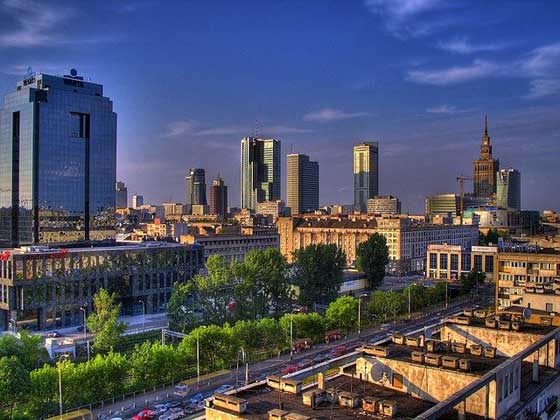
About 500m south of the Saxon Gardens, down Marszalkowska Street, is the Palace of Culture and Science (Palac Kultury i Nauki) was a gift from the Soviet Union to Poland in the 1950s and is bombastically monumental. Among other things, it houses the Museum of Technology in Warsaw.
Back on Krakowskie Przedmieskie, a couple of minutes' walk further down on the same side of the street as the Presidential Palace is Poland's preeminent university, the University of Warsaw (Uniwersytet Warszawski). On the other side of Krakowskie Przedmiescie, 100 m down, is the historically significant Church of the Holy Cross (Bazylika Swietego Krzyza w Warszawie), which contains, amongst other things, the heart of Frederic Chopin in an urn.
About one kilometer south of here (the street changes name to Nowy Swiat), and a little down al. Jerozolimskie, is the National Museum in Warsaw (Muzeum Narodowe w Warszawie) (closed until spring 2012 for refurbishment).
Back on Nowy Swiat (which then changes name to Wiejska), about 1 km down, is the semi-circular, somewhat art deco, Polish Parliament Building (Sejm). Just a little west of, and parallel to, Nowy Swiat is Aleje Ujazdowskie Street in Warsaw, well worth a stroll down for its charm and elegance.

Around Warsaw
Lazienki Palace (Pałac Na Wyspie) (i.e. "Palace on the Water") is part of the huge Royal Baths garden complex further south in Warsaw's Praga district, full of elegant buildings, sculptures and landscapes. Royals Baths includes an Old Orangery and a Temple to Diana.
For a taste of classical 17th century splendor, visit Wilanow Palace (Palac w Wilanowie) further south. Kampinos Forest is another attraction within easy reach of Warsaw.
Nightlife & Entertainment In Warsaw
There is a variety of bars, clubs, pubs and restaurants in Warsaw with the best places to eat on Nowy Swiat and south of Al Jerozolimskie. For cheaper fare search out one of Warsaw's milk bars offering traditional Polish food.
Warsaw Shopping
Warsaw has all the shopping facilities and brands a capital city can be expected to have, from the big international names to fascinating little stores hidden away in backstreets. Warsaw also has a number of interesting markets including a camera market at Gielda Foto, an antiques market at Bazar na Kole and Hala Mirowska, now a modern supermarket but with a number of traditional stalls.


Warsaw Tourist Offices
There are tourist offices at the airport and Warsaw Central Station and another in the Palace of Culture and Science, pl. Defilad 1 (enter from Emilii Plater Street, between Kongresowa Hall and the Museum of Technology)
Tel. +48 22 194 31. Visitors can purchase a Warsaw Tourist Card valid for 1 or 3 days which provides free public transport and reductions on museums and galleries.
Getting To Warsaw
Air
Warsaw Frederic Chopin Airport (IATA: WAW, ICAO: EPWA) is 10km (six miles) south of the center of Warsaw. There are taxis, an airport train to the main railway station, or municipal bus lines #175 and #188, and nightly #N32. There are also long-distance buses to many Polish destinations direct from the airport. Local and highway bus stops are situated in front of the Arrivals Hall.
Warsaw Frederic Chopin Airport
Ulica Zwirki i Wigury 1, 00 906
Warsaw
Tel: (022) 650 4220
There are domestic flights from Warsaw Frederic Chopin Airport to Gdansk, Katowice, Krakow, Poznan, Szczecin and Wroclaw as well as international flights with major and budget carriers to New York, Amsterdam, Athens, Barcelona, Brussels, Bucharest, Donetsk, Hamburg, Dublin, Faro, Geneva, Heathrow, Istanbul, Kaliningrad, Kiev, Liverpool, Lvov, Madrid, Odessa, Prague, Minsk, Moscow, Riga, Rome, St. Petersburg, Luton, Frankfurt, Munich, Dusseldorf, Helsinki, Copenhagen, Vienna, Paris, Zurich and a growing number of other European destinations.
Rail
Warsaw has three main railway stations, but the one most recommended is Warsaw Central (Warszawa Centralna). From Warsaw, the train journey to Gdansk is around 4 and a half hours. Trains to Krakow range from 2 hours 45 minutes for the fastest express to 5 hours for normal trains. To Poznan trains take from just under 3 hours to 4 hours. Wroclaw is a 5-6 and a half hour trek depending on your train type.
Bus/Car
There are four highways leading to Warsaw: the E30, E67, E77, and E372. There are highway buses from Warsaw to many other towns and cities in Poland.
Getting Around Warsaw
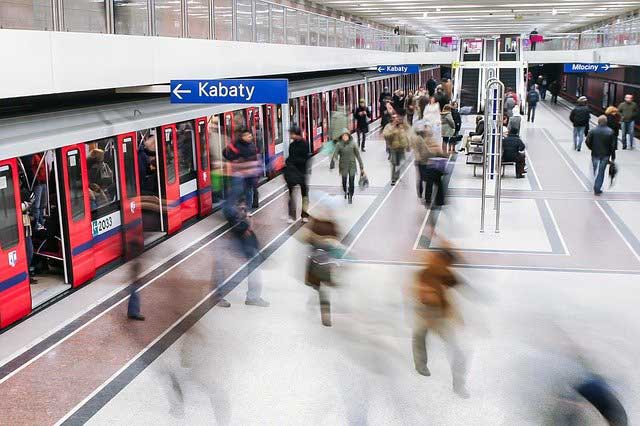
Warsaw has a single north-south-running subway line, with 21 stations, that closes about half past midnight except on Friday and Saturday when it closes at about 3 a.m. Construction is underway for a second line.
The easiest way to travel around Warsaw is by tram or bus, both of which have numerous lines. A special feature of travel within Warsaw is that a bus or tram ticket is good also for the trains.
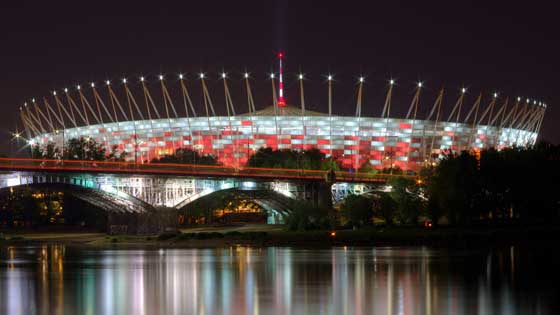
The National Stadium in Warsaw is situated on the east bank of the Wisla River in the Praga district of the city. The nearest stations to the National Stadium are mainline Warszawa Stadion and the metro station (Stadion) to be built on a new second line of the Warsaw metro, connecting the National Stadium to the city centre.
Accommodation in Warsaw
Hotels in Warsaw Poland - find and book hotels in Warsaw & the rest of Poland with Booking.com
Search Hotels in Warsaw Poland - compare and book hotels in Poland's major cities including Warsaw with Agoda.
Hostels & budget hotels in Poland - low cost accommodation in Poland with Booking.com.
Recommended Hotels in Warsaw
The Radisson BLU Centre Hotel is situated close to Warsaw Central Station and offers superior rooms close to the city's attractions and amenities.
Eating
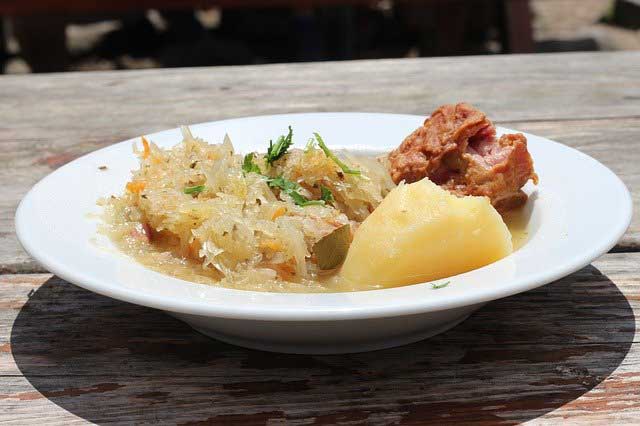
Warsaw has a wide range of Polish and international restaurants which are the best, and most expensive, in Poland. List your restaurant here. Contact Us
Drinking
There are a multitude of places to enjoy an excellent Polish beer and local vodka in Warsaw, which is the liveliest of Polish cities as far as a night out is concerned. Contact Us
Cafes, Bars & Internet Cafes
List your cafe, bar or internet cafe in Warsaw here for FREE! Contact Us
Weather in Warsaw
Warsaw's weather can be extreme with cold winters and hot summers. High temperatures in June and July average about 20° C (68 Fahrenheit).
Trams in Poland
Books on Poland & Polish Culture
Buy tickets for soccer matches around the world