
GERMANY'S SUMMER FAIRY TALE AT EURO 2024
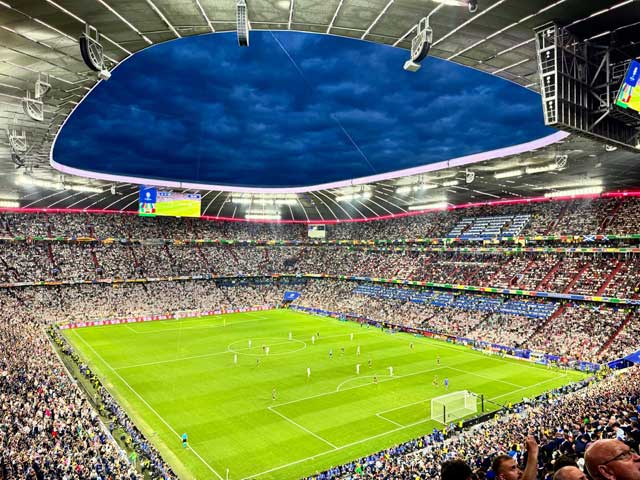
"It was a dark and stormy night at the Westfalenstadion in Dortmund.
Germany were playing Denmark in the Round of 16 when the sky went black. Thunder suddenly pounded the heavens, lightning electrified the skies of the Ruhr and a biblical deluge poured down from on high, sending the footballers scurrying from the field of play.
After mother nature had reminded us who was boss for half an hour, Euro 2024 resumed, Kai Havertz and Jamal Musiala scored, and the hosts took another step on their yellow brick road to the final.'
"Wir fahren nach Berlin" (We're on the road to Berlin) goes the German fans' chant, along with, "Oh wie ist das schön, sowas hat man lange nicht gesehen" (Oh it's so beautiful, you haven't seen anything like that in a long time.)
If you are a fan of Der Mannschaft, that sentiment rings true. Germany has endured a decade of hurt since winning the World Cup in 2014. But now, on home soil, they are entering ein Sommermärchen, a summer fairy tale.
This is the word of the hour in the land of the Brothers Grimm, the foster fathers of our favourite fairy tales.
Everywhere you read of the host nation's journey at Euro 2024, Sommermärchen pops up. It is a compound word, in which the German language excels, coined soon after the 2006 World Cup, where the Mannschaft's cup run had animated a country with a painful past into an unexpected flush of patriotism.
It only lasted a month or so, but the sun shone throughout the dream, hence a summer fairy tale.
Expectations of a home win back then had been as low as they are this summer, but an unfancied eleven coached by Jürgen Klinsmann ended up finishing third in the world, bringing a summer of love and pride to a nation of 84 million people in the process.
"Deutschland. Ein Sommermärchen' (Germany - a Summer's Tale) was the title of a film about the 2006 World Cup, which became the country's most successful documentary ever. Its title was a deliberate reversal of "Deutschland. Ein Wintermärchen' (Germany - a Winter's Tale), an autobiographical poem by Heinrich Heine penned in 1843, describing an expat's melancholic journey through his homeland.

Heinrich Heine
Although best-known in Germany for his poetry, the Jewish-born Heine also wrote essays and travel writing and ominously foresaw his country's tragic 20th century, when almost a hundred years before the Nazis arrived, he penned a line for the ages, now etched into the Berlin pavement:
"Where they burn books they will ultimately burn people as well."
He also has a station named after him on the capital's U-Bahn.
Heine used the term Wintermärchen for his poem because the Märchen, the fairy tale, lives deep inside the German psyche. While magical stories, myths and legends are universal, some going back to the Bronze Age at least, much of the Western fairy tale canon comes from a pair of German siblings in the 19th century who decided to scribble down the stories the locals told them.
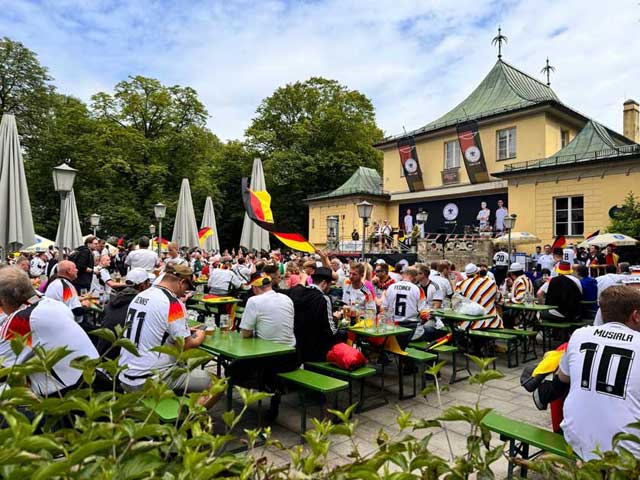
The Brothers Grimm
Jacob and Wilhelm Grimm, who grew up near Frankfurt, had been fuelled by a desire to preserve their homeland's oral traditions for patriotic purposes - Napoleon's forces had invaded in 1805 and imposed French law and culture, leaving many Germans feeling their own identity was under threat.
The Brothers Grimm thus painstakingly transcribed over 200 of the folk tales of their native land, published their collections between 1812 and 1857 and in doing so ensured stories like Cinderella, Sleeping Beauty and Snow White would be world-famous forever.
Many of the Grimm tales like Hansel and Gretel and Red Riding Hood take place in dark or impenetrable forests, which also hold a special place in Germany's imagination.
The nation's most famous street is Berlin's Unter den Linden - under the lime trees. It was amid the Teutoberg forest of North Rhine-Westphalia in 9AD that Germanic tribes inflicted the Romans' greatest defeat, an event sacred to German nationalist movements from the 19th century onwards.
In the great German medieval poem The Song of the Nibelungs, as well as in the romantic poetry, fiction and music of the 18th and 19th centuries, the dark wood looms large. In World War II, the highest German military award was the Knight's Cross with oak leaves and not for nothing is the German Green Party Europe's largest today.
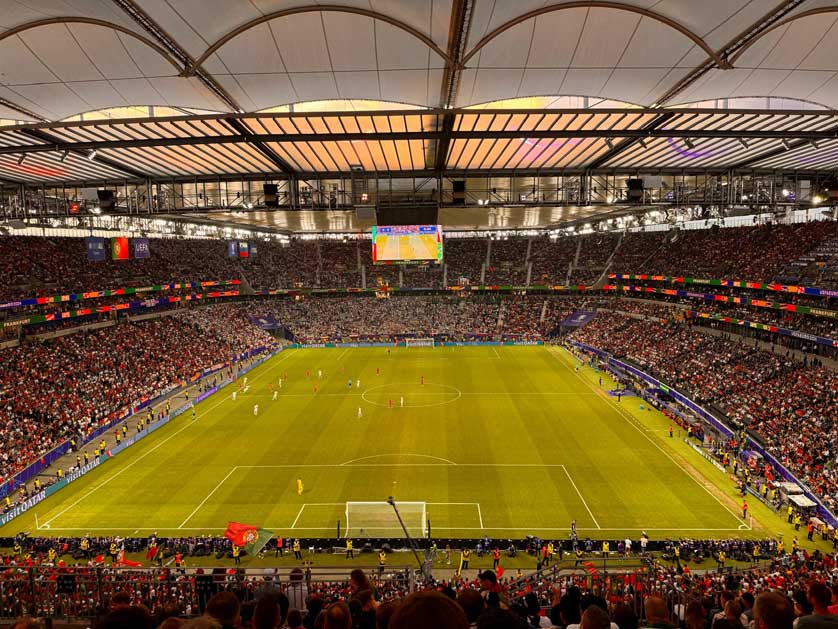
And so it is tempting to see Frankfurt's Euro 2024 stadium the Waldstadion - the forest stadium, set amongst trees, as a woodland theatre of dreams for legends to be written. I remember approaching it on a woodland walk during the 2005 Confederations Cup and feeling thrilled by the storm of blossoms blowing through the early summer air.
Coincidentally the Brothers Grimm grew up in Hanau, about 25 km away and made sure the forests of their youth featured heavily in their collected tales.
In the following century, the German-speaking Swiss psychoanalyst Carl Jung published pioneering interpretations of the tales, claiming they revolved around core human characters he called archetypes, and in doing so revealed the human soul more than any other type of story.
So to live a Sommermärchen is not only to have a pure human experience but also to tap into the German subconscious and a national identity brewed by the Grimms and others, a cultural movement which by 1871 had transformed dozens of states into a single nation.
In the 20th century, German identity would be perverted and twisted into something ugly, about which Heine again seemed eerily prescient.
In 1835, he wrote of an inevitable German darkness on the horizon:
"When you hear a crash such as never before has been heard in the world's history," he wrote, "then you know that the German thunderbolt has fallen at last…A play will be performed in Germany which will make the French Revolution look like an innocent idyll."
Building a new identity from the ruins of World War II has been a long process and Germany is still playing catch-up to other countries, but football, although no panacea, has as the most popular pastime, been a national emollient and unifier along the way.
World Cup 1954
West Germany winning the World Cup in 1954 was an important step in the healing process, the first time Germans could smile in a long time and a poignant experience as most of their prisoners of war had finally come home after traumatic years in exile.
The 3-2 win over the Mighty Magyars, Puskas et al, the world's best football team, was forever known as The Miracle of Bern, endowing it with magical status.
Twenty years after the Fifties fairy tale, they experienced another one against the then best team on the planet. After defeating the total football of Johann Cruyff and the Netherlands in 1974, Germany's pop star captain Franz Beckenbauer lifted the gleaming new FIFA World Cup in Munich, soothing memories of the blood-stained Olympic Games in the same city two years earlier.
The death of Beckenbauer earlier this year was a landmark. Not only was he Germany's greatest football man, a World Cup winning player and manager and later administrator, his fame made him Germany's biggest post-war cultural figure.
World Cup 2006
As a united nation Germany won the World Cup for the first time in 1990 and then in 2014 with two exceptional teams, but it was while hosting it in 2006 when German patriotism really resurfaced in public, even if the football ended up a bit disappointing after a semi-final defeat by Italy. Not all stories end happily ever after.
The real German fairy tale that year was what happened off the pitch, in the streets across the country. The Weltmeisterchaft or WM (World Cup) produced the unexpected sight of mostly young Germans in the streets singing their national anthem and waving their flag with pride, cautiously at first and then more confidently as the team progressed.
What was normal for every other nationality had never felt comfortable for the country that had cautiously rebuilt itself after 1945, bearing a global burden of shame. At the 1954 World Cup final for instance, the German national anthem was played in public for the first time in nine years.
While the two previous World Cup wins had produced celebrations on the nights in question, the public flag-waving had gone underground again afterwards until 2006, when it resurfaced during the group stages for the first time.
Memories of that summer fairy tale linger on. Kai Wegner, the Mayor of Berlin, said earlier this year that for him 2006 outranks 2014, when Germany won the cup:
"Of course we were all pleased when Germany won the World Cup," he said, "but looking back on 2006, that euphoria, that atmosphere, the sense of togetherness of the whole country getting behind the national team was much more wonderful than the actual World Cup win."
Time is a healer and the wartime generation were no longer the majority by then. The 2006 Summer fairy tale was a happy experience for everyone who was there but the novelty of seeing so many Schwarz-Rot-Gold (black, red, gold) flags on display also produced a lot of debate and soul-searching.
Could the nation which swore never to be nationalistic again be taking the first steps back towards those dark days? There was nothing concrete to suggest any darkness was returning. The relaxed and happy atmosphere of a collective memory being forged that summer won the day.
Euro 2024
Come 2024 and it feels a lot like 2006, with the flag-waving crowds in the fan parks. In terms of the messaging, Germany is dropping love bombs everywhere again, even if in its domestic politics, extremism appears to be on the rise with the anti-immigrant AfD party polling as high as 22% this year.
With a sluggish economy for some time now in Europe's largest nation, the need to dream this summer is clear.
"Now we have a bad mood in Germany, political-wise and economic-wise," explained former Germany star Oliver Bierhoff, "so hopefully football can help to bring back fun and happiness."
When they last hosted the World Cup, Germany chose a logo of three smiling faces with the slogan "The World as a Guest Amongst Friends', and as mascots, a cuddly lion called Goleo and a talking football named Pille.

Euro 2024's mascot is a teddy bear named Albärt, the logo is a rainbow flag with more colours than a non-binary banner, the slogan is "United by Football' with a sub-heading of "United at the Heart of Europe', and the official ball is called "Love for Football'. We get the message.
18 years on from the 2006 World Cup, the new summer fairy tale is penned by a young Bavarian called Julian Nagelsmann. Four chapters in, the heroes are still alive and daring to dream of a happy ever after.
The first chapter in Group A was explosive - a 5-1 thrashing of a luckless Scotland in Munich by a Mannschaft in cruise control, the next one a fairly quick read of a 2-0 win over Hungary, although the third chapter needed the brave knight Niklas Füllkrug to save the day with a late-late equaliser.
Then came the electric storm and rain-soaked vanquishing of the Danes. Undefeated after four challenges, Germany continues its quest for silverware.
A Sommermärchen can drown out all the noise with sweet music for a while, as it did for the hosts of France "98, but the idea that a nation can truly be "united by football' is ultimately wishful thinking.
In his 2024 book Played in Germany, author Kit Holden wrote,
"In 2006 it was easy to conclude that the World Cup was reshaping society. Yet as society's divisions deepened in the 2010s, football was powerless to stop the rot."
Maybe we do assign superpowers to an international football tournament when in reality it is just a summer fairy tale.
But a story can be enough. For the Brothers Grimm, the point of recording and spreading all the Märchen was less to extract moral lessons or universal truths, as Jung thought, but rather to bring the German people together in camaraderie and solidarity.
In the great German children's book The Neverending Story by Michael Ende, the enemy of the land of imagination Fantastica is a shapeless entity called The Nothing. Now which would you prefer, if only for a month?
Like Germany, let us all enjoy the magical story of the Euros while it lasts.
Sean O'Conor
Euro 2024 Host Cities & Stadiums

Buy tickets for soccer matches around the world