Euro 2024 Stadiums in Germany
10 stadiums will be used for Euro 2024 in Germany.
Nine of the stadiums for World Cup 2006 will be used again at Euro 2024.
The Euro 2024 stadiums are Berlin, Cologne, Dortmund, Frankfurt, Gelsenkirchen, Hamburg, Leipzig, Munich and Stuttgart. Düsseldorf, which was not used in 2006 is the tenth venue.
Hanover, Nuremberg and Kaiserslautern, host cities in 2006, will not stage games at Euro 2024.
See our guide to the Euro 2024 host cities.

Olympiastadion, Berlin
The Olympiastadion in Berlin is an iconic sports venue in the German capital. It was originally built for the 1936 Summer Olympics, which were held in Berlin during the Nazi era. Designed by architect Werner March, the stadium was intended to showcase Nazi Germany's prowess and grandeur. Its imposing architecture and capacity to hold over 100,000 spectators made it one of the largest stadiums of its time.
The stadium's most distinctive feature is its sweeping, symmetrical design, characterized by its curved stands and imposing stone columns. The centerpiece is the Maifeld, a vast field surrounded by stone seating tiers. The Marathon Gate and the Olympic Bell are also notable features of the stadium.
Despite its controversial origins, the Olympia Stadion has since become a symbol of sporting excellence and resilience. After World War II, it underwent extensive renovations and has hosted numerous significant events, including the 2006 FIFA World Cup final. Today, it serves as the home stadium for Hertha BSC, a top-tier German football club.
To get there take the S-Bahn to Olympiastadion station on the S5 or S7 lines. Alternatively, Olympiastadion station on the U2 line.
Hotels in Berlin - Booking.com

RheinEnergieStadion, Cologne
RheinEnergieStadion in Cologne (Köln) was originally known as the Müngersdorfer Stadion and will be known as Cologne Stadium for Euro 2024. It was built between 1923 and 1924 and has undergone several renovations and expansions since then. The stadium has been home to the football club 1. FC Köln (Cologne) since its opening.
In 2004, the stadium underwent a major modernization project, which included significant architectural changes and the addition of modern amenities. As a result of this renovation, the stadium was renamed the RheinEnergieStadion after its main sponsor, RheinEnergie AG, a local energy company.
The RheinEnergieStadion has a seating capacity of around 50,000 spectators for football matches, and it can accommodate larger crowds for concerts and other events. Its design features a mix of covered and open seating sections, with modern facilities for both spectators and players.
Apart from hosting football matches, the stadium has also been used for various other events, including concerts, festivals, and corporate functions. Its central location in Cologne, along with its versatile facilities, makes it a popular venue for both sporting and entertainment events in the region.
From the Dom or Hauptbahnhof take lines 16, 17, 18 or 19, change at Neumarkt then Line 1 of the Cologne Stadtbahn towards Junkersdorf and Weiden West and get off at Rheinenergiestadion.
Hotels in Cologne - Booking.com
Westfalenstadion, Dortmund
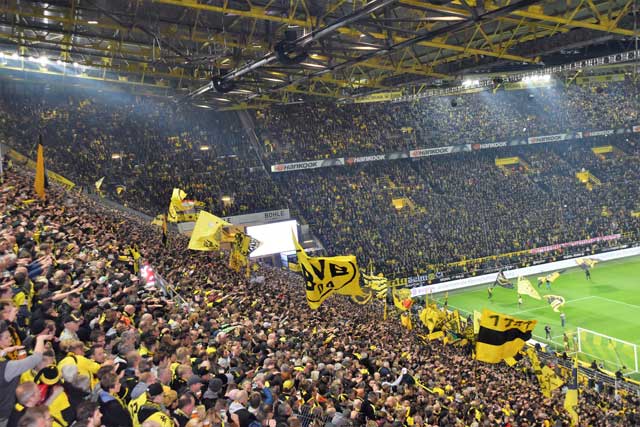
Westfalenstadion (BVB Stadion Dortmund for Euro 2024) in Dortmund is one of the most famous football stadiums in Germany. Home to Borussia Dortmund, one of Germany's most successful and popular football clubs, the stadium is renowned for its vibrant atmosphere and passionate supporters.
The stadium was opened in 1974 and was originally called the "Westfalenstadion" after the Westphalia region where Dortmund is located. It is now known as Signal Iduna Park for sponsorship reasons. Over the years, it has undergone several renovations and expansions to increase its capacity and modernize its facilities.
The stadium has a seating capacity of over 81,000 spectators, making it the largest football stadium in Germany in terms of seating capacity and the one of the largest stadiums in Europe.
One of the most striking features of the Westfalenstadion is its electric atmosphere during matches. The "Yellow Wall" (Gelbe Wand) is the south stand of the stadium, which is entirely made up of standing terrace areas and is packed with passionate fans clad in the team's yellow and black colors. This stand alone can accommodate over 25,000 spectators and is known for creating a cacophony of noise and energy, especially during important matches.
In addition to hosting Borussia Dortmund's home matches in the Bundesliga and European competitions, the Westfalenstadion has been the venue for various international matches, including UEFA European Championship matches and the 2006 FIFA World Cup. It has also been used for concerts and other events.
The stadium boasts modern facilities, including VIP lounges, restaurants, and conference rooms. Its design allows for excellent sight lines from virtually every seat, enhancing the matchday experience for spectators.
Hotels in Dortmund - Booking.com
Merkur Spiel-Arena Düsseldorf
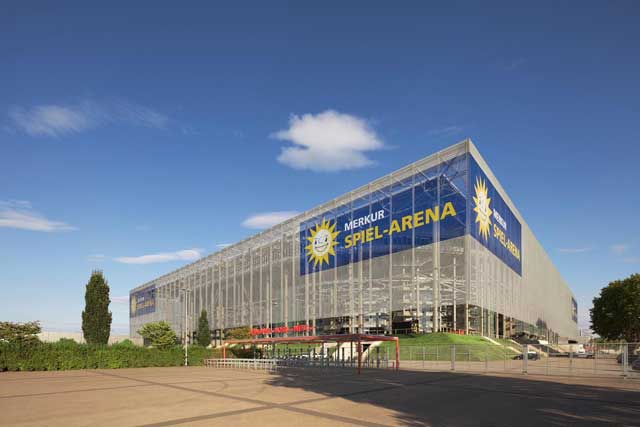
Merkur Spiel-Arena (Düsseldorf Arena for Euro 2024) is the home ground of Bundesliga side Fortuna Düsseldorf. The 54,600 capacity stadium in Düsseldorf opened in 2004. It replaced the aging, 54,000 capacity Rheinstadion, which was demolished in 2002. Built between 2002 and 2004 the stadium officially opened in 2004.
Merkur Spiel-Arena has hosted international friendlies featuring host nation Germany as well as teams from other countries such as the USA v Japan friendly here in 2022. During Euro 2024, the stadium will be called "Düsseldorf Arena". The stadium boasts a retractable roof and under soil heating, allowing the stadium to host a variety of events beyond football matches, including concerts, conferences, and other big sporting events such as boxing, handball and American football.
The ground was renamed Merkur Spiel-Arena in 2018 following a sponsorship deal with Merkur, a German gambling company. Prior to that, it was known as Esprit Arena due to a sponsorship agreement with the fashion brand Esprit. The capacity can be expanded to accommodate up to 66,500 spectators for concerts and other events.
The stadium is situated in Düsseldorf's Stockum district in the north of the city, located not far the Düsseldorf's international airport and exhibition center. Merkur Spiel-Arena/Messe Nord station is adjacent to the ground and is about 20 minutes from the main station on U78.
Dusseldorf International Airport, one of the three biggest commercial airports in Germany, is 12 minutes from the city centre via the S-Bahn urban railway system (S-Bahn trains #7 & #21).
Hotels in Dusseldorf - Booking.com

Waldstadion, Frankfurt
Waldstadion in Frankfurt officially known as the Deutsche Bank Park due to sponsorship reasons, is a prominent multi-purpose stadium southwest of the city center. It serves as the home stadium for Eintracht Frankfurt, one of the country's top football clubs.
The stadium was originally constructed in 1925 and has undergone several renovations and expansions over the years. It was initially known as Waldstadion due to its location in the Frankfurt City Forest (Frankfurter Stadtwald). In 2005, it was renamed Commerzbank-Arena after a sponsorship deal with Commerzbank, and later Deutsche Bank Park after another sponsorship agreement.
The stadium has a seating capacity of around 51,500 spectators for football matches. It is a UEFA Category 4 stadium, meeting the standards for hosting international matches and competitions.
The stadium's design features a mix of modern and traditional elements. It has a bowl-shaped seating arrangement with covered stands, providing spectators with good views of the action on the pitch. The exterior facade incorporates elements of glass and steel, giving it a contemporary aesthetic.
The Waldstadion is equipped with modern facilities to enhance the matchday experience for fans. These include VIP lounges, hospitality suites, restaurants, and conference rooms. The stadium also has ample parking space for visitors.
In addition to hosting Eintracht Frankfurt's home matches in the Bundesliga and European competitions, the Waldstadion has been the venue for various international matches, including FIFA World Cup and UEFA European Championship matches. It has also hosted concerts, cultural events, and corporate functions.
Situated in the heart of Frankfurt, the stadium (called Frankfurt Arena for Euro 2024) is easily accessible by public transportation.
Hotels in Frankfurt - Booking.com

Arena AufSchalke, Gelsenkirchen
The Arena AufSchalke in Gelsenkirchen officially known as the Veltins-Arena due to sponsorship reasons, is the home stadium of FC Schalke 04, one of the Bundesliga's most well-known football clubs, now fallen on hard times.
The stadium was opened in 2001 and was originally known as the Arena AufSchalke. It was renamed the Veltins-Arena in 2005 after a sponsorship agreement with the Veltins brewery. The stadium was built to replace the club's previous home ground, the Parkstadion.
The ground is renowned for its innovative design and state-of-the-art facilities. It features a retractable roof and a retractable pitch, making it one of the most versatile stadiums in Europe. The stadium's exterior is characterized by its glass facade, which allows natural light to illuminate the interior.
The stadium has a seating capacity of around 62,000 spectators for football matches, making it one of the largest football stadiums in Germany. It is also capable of accommodating larger crowds for concerts and other events.
Hotels in Gelsenkirchen - Booking.com
Volksparkstadion, Hamburg
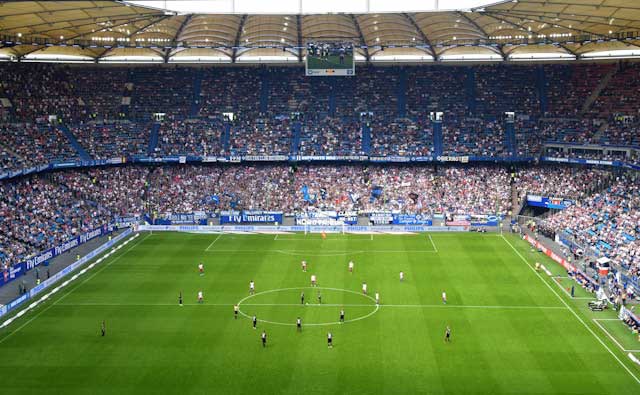
Volksparkstadion, in the Baltic port city of Hamburg is the home stadium of Hamburger SV. The multi-purpose stadium is known as the Imtech Arena for sponsorship reasons. The stadium was originally opened in 1953, though has undergone various refurbishments since then. It was initially known as the Volksparkstadion due to its location in the Volkspark (People's Park) in Hamburg. In 2010, it was renamed the Imtech Arena after a sponsorship agreement with Imtech, a technical services provider.
The Volksparkstadion features a modern design with a distinctive roof structure that covers the stands, providing shelter for spectators in inclement weather. The stadium's exterior is characterized by its distinctive red brick facade. The stadium has a seating capacity of around 57,000 spectators for football matches. Situated in the Bahrenfeld district of Hamburg, the stadium is easily accessible by public transport, namely S-Bahn from the main station (about 35 minutes).
Hotels in Hamburg - Booking.com

Red Bull Arena, Leipzig
Red Bull Arena (Leipzig Stadium for Euro 2024) in the eastern city of Leipzig is the home ground of RB Leipzig. The stadium was originally opened in 2004 as the Zentralstadion (Central Stadium) and served as one of the venues for the 2006 FIFA World Cup.
It underwent extensive renovations and expansions in 2009 after being acquired by Red Bull GmbH, the parent company of RB Leipzig. The stadium was subsequently renamed the Red Bull Arena.
The ground features a modern design with a distinctive exterior facade characterized by its steel and glass elements. Its interior offers excellent sight lines from virtually every seat. The stadium has a seating capacity of around 42,959 spectators for matches. From Leipzig's main station the journey is under 30 minutes by bus or tram.
Hotels in Leipzig - Booking.com


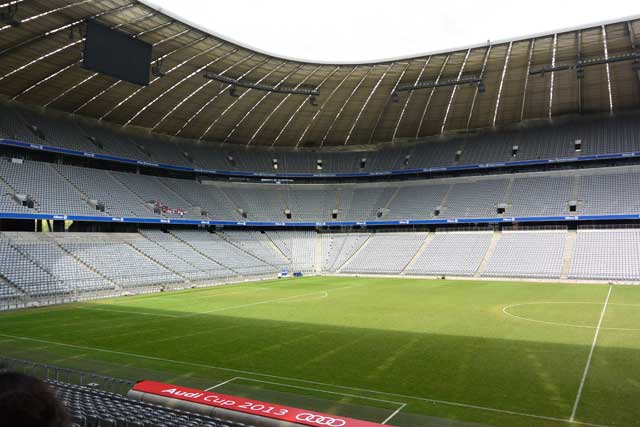
Allianz Arena, Munich
The Allianz Arena in Munich, Bavaria opened in 2005 as one of the venues for the 2006 FIFA World Cup. It replaced the former Olympiastadion as the home ground of Bayern Munich and from 2005 to 2017 was also the home of TSV 1860 Munich. 1860 now play at the much smaller Grünwalder Stadion.
Designed by Swiss architecture firm Herzog & de Meuron, the Allianz Arena is known for its outer shell composed of inflated ETFE plastic panels. These panels can be illuminated in various colors, allowing the stadium to change its appearance.
The stadium has a seating capacity of approximately 75,000 spectators for football matches, making it the third-largest stadium in Germany for international games after the Westfalenstadion in Dortmund and Berlin's Olympiastadion. For Euro 2024 it will be known as Munich Football Arena.
Hotels in Munich - Booking.com
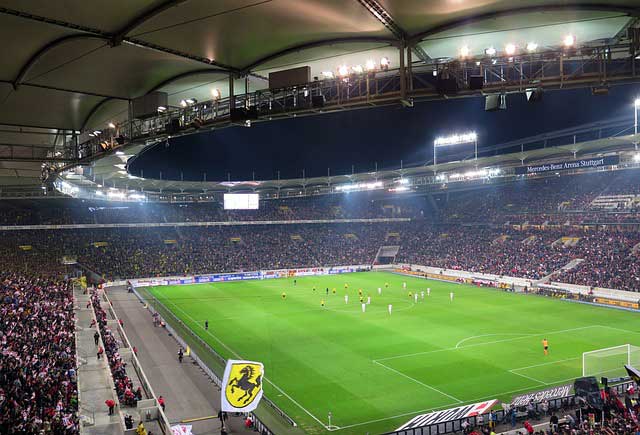
MHPArena, Stuttgart
The MHPArena (formerly the Mercedes-Benz Arena until 2023) in Stuttgart was originally opened in 1933 under the name "Neckarstadion" due to its location near the Neckar River. It has undergone several renovations, refurbishments and expansions over the years.
In 2008, the stadium was renamed the Mercedes-Benz Arena after a sponsorship agreement with Mercedes-Benz, the major German automotive manufacturer based in the city. From July 2023 the stadium is known as the MHPArena in a joint venture between Porsche, another major German car manufacturer based in the city, and the UK-based MHP consultancy group. For Euro 2024 it will be known as Stuttgart Arena.
The stadium has a seating capacity of around 60,449 spectators and is home to VfB Stuttgart of the Bundesliga. Situated in the Bad Cannstatt district of Stuttgart, the stadium is easily accessible by public transport using the U-Bahn, S-Bahn or bus.
The Mercedes-Benz Museum is close to the ground as well as a Mercedes factory and the company's HQ.
Hotels in Stuttgart - Booking.com
Euro 2024 Stadiums Map

Buy tickets for soccer matches around the world
©Soccerphile.com