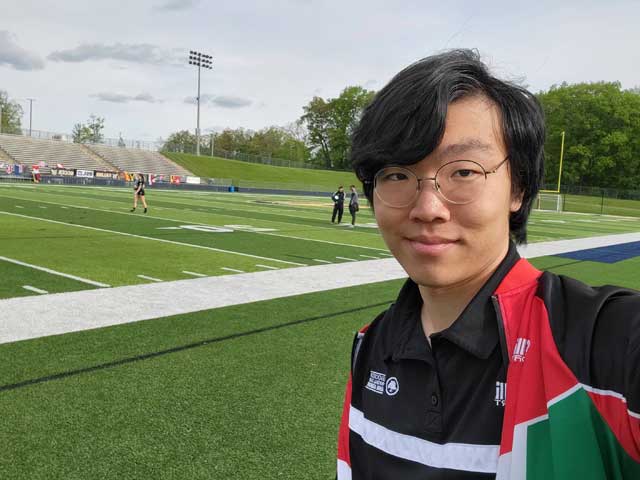
Interview with - Jinseong Kim - K-League Expert
South Korean football continues to rise with the national side being one of the most consistent in Asia. Korean soccer and its fans, like K-Pop, have become almost a form of global soft power.
South Korean players and managers, both male and female, are making their mark all around the world.
For some, the start was the 2002 World Cup which was jointly held in Japan and South Korea which really showed the potential of South Korean football and the enthusiasm for the game across the Asia Pacific.
South Korea reached the semi-final and lost to Germany though they impressed the world with their energy and attacking vigour. This new found confidence manifested itself into a new mindset and attitude which has seen South Korean clubs and both the men's and women's teams set standards across the continent.
In the Asian Champions League, South Korean teams have always fared well with teams like Pohang Steelers, Seongnam, Jeonbuk Hyundai Motors, Ulsan Hyundai consistently reaching the final or becoming champions of Asia on a regular basis.
There have been some trail blazing players in the past who have given Korean and Asian players the role-models whose paths and journeys they hope to emulate.
These legends include the likes of Cha Bum-kun who played for Darmstadt, Eintracht Frankfurt and Bayer Leverkusen in the seventies and eighties; his son, Cha Du-Ri who played for Eintracht Frankfurt, Mainz,TuS Koblenz, SC Freiburg, Celtic and Fortuna Düsseldorf and FC Seoul. Then of course, was Park Ji Sung who starred for Manchester United and the likes of Lee Dong Guk who persisted and persisted despite many set-backs.
In the female game, Cho So-hyun (Spurs), Lee Geum-min (Brighton & Hove Albion) and Ji So-yun (once of Chelsea) have been pioneers of the female game.
For discerning football fans there are South Korean players and coaches who are also making a huge impact across the globe. For example, the Malaysian coach, Kim Pan Gon and the Indonesian coach, Shin Tae-yong, are also both South Korean.
The rise and constant development of the Korean game has been positively influenced by the emergence of the K-League. South Korean football has always been consistently good, though in the last two decades, both club and country have truly been making a global impact.
South Korean teams are always amongst the finalists or the semi finalists of the continent's top competition. In terms of regional dominance, South Korea has always competed well against neighbours Japan and teams like Saudi Arabia and Australia. Experts have stated this has been down to constantly developing youth players, good coaching and plain old self-confidence and drive.
In an exclusive interview, Jinseong Kim, a K-League expert, gave his insights into the K-League and how it has positively impacted the growth of the beautiful game in the Asia Pacific.
Since the modern version of the K-League began, which teams have been the most successful?
"The mid 1990s is when K-League went through a process of modernization by implementing the European home-and-away model and turning fully professional. From then and to early 2000s, Seongnam Ilhwa Chunma (now Seongnam FC) dominated the league, collecting seven league trophies from 1993 to 2006. Ironically, they failed to attract many fans due to lack of marketing. Suwon Samsung, Busan Daewoo Royals (now Busan IPark), and Ulsan Hyundai were also in their prime during the period. Recently, Jeonbuk Hyundai has risen as the most successful club with the most honours achieved in the past decade. The last five seasons ended with the Motors lifting the title. In terms of popularity, despite their home being located in a rural part of Korea, their average attendance is behind only FC Seoul, placed in second (2019). But because of the incident which I'll mention later, JB is not highly appreciated by supporters of other clubs. Ulsan Hyundai is another successful side, ending the past three seasons in second place."
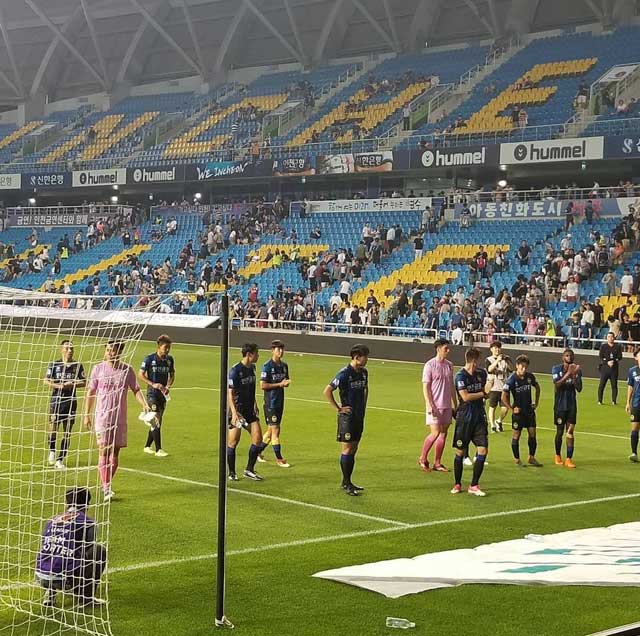
What type of ownership model do K-League clubs follow? Are the clubs owned by private individuals or by large conglomerates?
"Among the twelve K-League 1 clubs, six (Jeju United, Suwon Samsung, FC Seoul, Pohang Steelers, Jeonbuk Hyundai, and Ulsan Hyundai) are owned by private companies (SK Energy, Samsung, GS, POSCO, Hyundai Motors, Hyundai Heavy Industries, respectively).
Five teams (Daegu FC, Gangwon FC, Incheon United, Seongnam FC, and Suwon FC) are owned by the city/province government. It is very similar with the ownership structure of Tai Po, Yuen Long, and many other city/state owned clubs in HK. The remaining club, Gimcheon Sangmu, is a military team and owned by the military. When it comes to the K-League 2, only four out of 11 (Seoul E-Land, Jeonnam Dragons, Daejeon Hana Citizen, and Busan Ipark) are owned by private enterprises. The other seven teams are government-owned. The city owned, so-called 'Citizen Club' in Korea, is the most common ownership model."
Through the years, how have K-League clubs attracted fans to games or has a fan base built up organically?
"I hate to admit it, but the K-League isn't the most supported professional sport in Korea as professional baseball tops professional soccer in popularity. But in recent three years, K-League has shown a steady increase in average attendance and the size of the fan base. The starting point was the 2018 World Cup in Russia. Although Korea got eliminated at the group stage, the historic 2-0 win over Germany in the final game was enough to draw fans back into the stadium. To keep them engaged, the league started to invest in social media platforms. K-League, both league and teams, are very active in social media, especially on Instagram. One very distinct and eventful marketing strategy that stood out recently is 'mascot election.'

Adopting a similar event happening in the J.League, mascots of each team created their separate social media page and communicated with fans through the platform. This strategy to focus on new media is very effective, in my opinion, especially during this pandemic.
Who are the greatest players and managers to have graced the K-League?
"It's really hard to pick a limited list of players since numerous talented players and managers appear in my mind. To pick the three best players in the league history, I would say Kim Byung-ji, Lee Dong-gook, and Dejan Damjanovic. Kim Byung-ji is a former Korean international goalkeeper who participated in multiple World Cups. Although he wasn't always the first-choice goalie in the national team, it is often argued that he was the best goalkeeper in K-League history. Kim holds the most appearances (706 games), most clean sheets (229 games) and the oldest player (45y 5m 15d) record. Lee Dong-gook and Dejan Damjanovic are the top two on the all-time goal scorer table, with 228 and 198 goals respectively. Dejan is surely the best foreign player of all time in the K-League.
The best manager, I would say, is Valery Nepomnyashchy. He is from Russia (former Soviet Union) and managed Bucheon SK (now Jeju United) from 1995 to 1998. He isn't the one who lifted the most trophies or managed in the K-League for a long time. He isn't also very popular to modern K-League fans because of the period when he was active. But the reason why I, and many other fans, rate him as the best manager of all time is because of his tactical evolution. He implemented passing-based tactics and emphasised the importance of team building. His philosophy wasn't something that could be seen in many of the existing managers in the league. Many players who played under him work as managers even today."
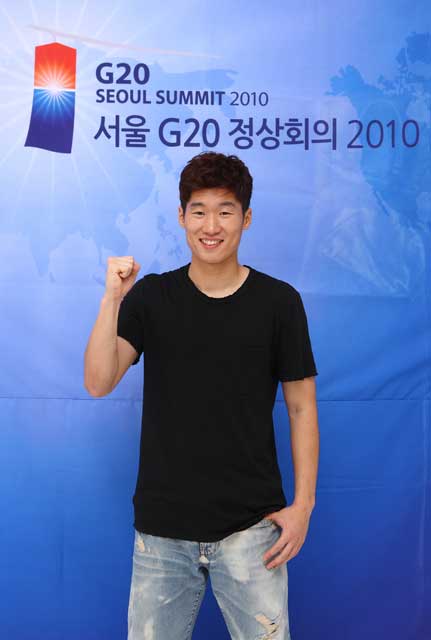
The South Korean National Teams (Men's and Women's) have always been consistently good in recent decades though are now competitive on the global stage. Is this success directly correlated to the rise of the K-League?
"I would say so, as I personally believe a strong national team comes from a well-structured domestic league, especially the youth system. In the past decade, many K-League teams have invested in their youth program and enhanced the quality of infrastructure. Current stars in the national team, such as Son Heung-min, Hwang Hee-chan, and Kim Min-jae, are all products of domestic youth programs, despite Son and Hwang never playing professionally in the league. Thinking of national teams like the Philippines and HK where they heavily rely on naturalised players, I believe Korea is getting on the right track, by focusing on developing the youth system."
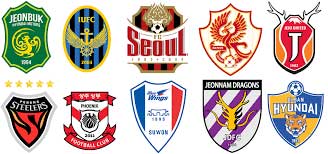
Does the K-League have a team which everyone supports across South Korea (like say Juventus in Italy) and a team which are hugely unpopular (like RB Leipzig in the German Bundesliga)?
"There's no team that is supported widely across the league, in my opinion. Unpopular teams are 'not hated' but I guess it is different from being liked by everyone. Among the popular teams, I would say Pohang Steelers is the most appreciated because of its rich history, well-equipped infrastructure, and the talented coach. There are many 'unpopular' teams in thleague due to the location and general popularity of the league, so changing the story to notorious, infamous clubs, Jeonbuk Hyundai is the most hated club by fans. Jeonbuk was involved in a match-fixing scandal in 2016 as it was reported that they bribed referees in the 2013 season. The reason for being hated the most, despite the fact they weren't the only club involved in match-fixing, is because 1) they were the most successful, 2) they didn't receive enough penalty from the league unlike Juventus (nine-point deduction, fine of 100m won) and 3) of a few fans justifying the bribe."
Thank you!
For more on Jinseong Kim, please visit: wfootballjs.info
Buy tickets for soccer matches around the world