
From Foster Care To Footballer: Soccerphile speaks to Mark Bright
Sean O'Conor
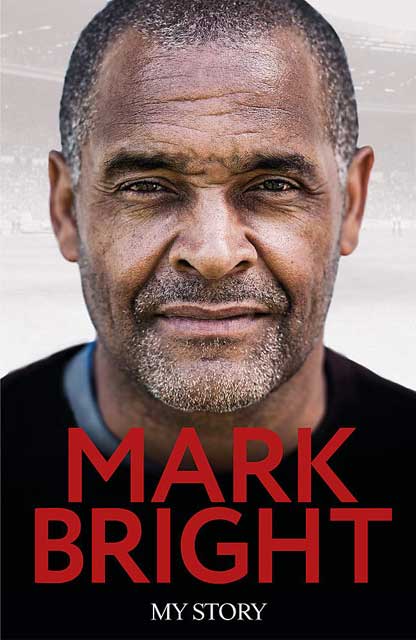
Mark Bright is a familiar face today as a BBC football pundit but as a player was best known for his iconic 'Wright & Bright' strike partnership with Ian Wright at Crystal Palace.
While he never won a major trophy or an England cap, the Stoke-born striker did help Palace and Charlton to promotions, played in League and FA Cup finals and was a reliable goalscorer for Sheffield Wednesday, Leicester and Port Vale across an 18-year career.
Since hanging up his boots, the affable and talkative Bright has sustained a successful media career and in his newly-released autobiography From Foster Care to Footballer, he opens up for the first time about his life.
While celebrating the highs of his footballing career, he also charts the lows of an absent father, a childhood spent in care, a failed marriage and the inevitable brushes with racism.
Moments of loss and introspection are interspersed with the joys of being a professional footballer and some wonderful anecdotes from his playing days.
His love for his son Isaiah shines through and we are left with a picture of a thoughtful ex-footballer who has lived a full life and has stories to tell.
Soccerphile spoke to Mark Bright in London this week.
Why did you write your autobiography?
I thought this was the right time to do this because a lot of footballers around my age like Cyrille Regis or younger ones like Ugo Ehiogu have died and I just thought if I don't tell my story for my son, then I might never.
I hope he can learn how tough it has been for his dad and how I feel I have made his life that much easier. It is hard to sit down with a teenager and explain that those things you want in life, you have to work hard to get.
My book really has been me saying, 'I did not have the worst upbringing in the world, and I did not have the best, but you have to make a go of what you have in life'.
Your early years saw you move from home to home and that often damages children
I was reading the social services records and it said, "Mark does not seem too perturbed by the whole process. Unlike his brother who asks questions, he just wants to get on with it and play football."
My brother used to cry sometimes at night and when I asked him what was wrong, he just said, "Nothing." Maybe because he was a bit older he understood better than me what it was like being moved around so much. I don't remember thinking it wasn't normal.
How two people can have the same upbringing and experiences and only one struggles to hold down relationships for instance, I don't have the answer to that. All siblings are similar but different at the same time.
Did I ever think something was badly wrong with my life and I should have been living with my parents, no I don't recall feeling that. I just got on with it. Sometimes you just have to fight, be strong and mentally tough.
You understandably speak harshly of your Gambian father for abandoning the family.
But since he died you have got involved in charity work in the Gambia. Has that been a way of coming to terms with him?
I was still curious to discover that bit of my heritage. People just assume if you are black in this country with an English-sounding name then you have West Indian origins and they always sound surprised when I tell them mine are African.
So knowing my father was from there I did some research on the Gambia and booked a holiday. It was a discovery journey really.
The day after arriving there were some guys at the hotel in Banjul selling a safari. I said I'll go on it but could you also find out for me if there is anyone with my name living here? Half an hour later they came back and said, "Yes we have found your uncle."
So I went to his house and met him and his extended family. Amazing really, on the second day I was there sitting in Banjul talking about my family history with long-lost relatives.
We made up a family tree and I was so happy from that first trip I promised myself I would come back as much as I could. I have taken my son and my brother Phil wants to come on my next trip there. I try to go back once a year as I sponsor eight kids from a school out there.
I just got a Facebook message from the first child who said she is about to go to university so I am really pleased.
The Gambia is a unique place, a lovely and safe country and it has been great to get to know the family, whatever my father was like.
There is a lot of love for your son which comes out of the book. Did having an absent father yourself make you want to be the opposite?
When I separated from Isaiah's mum it was a big wrench for me because I felt like history was repeating itself. When it was inevitable that Michelle and I were breaking up, I felt really bad.
After separating I would still go to the house to read Isaiah stories but then leave. It was difficult. Anybody who has broken up knows that there are no winners in divorce. But Michelle has been a really nice person and a great mum. She has had another kid but he is nice and we all get on.
I did not mention it in the book but I visited this lady who was a guru who had been recommended to me and she convinced me it was nobody's fault and that you can still be a good dad from a distance.
Since we split up I have been an active dad and stayed in touch. I take Isaiah to lunch and spend Saturdays with him. I would rather be with him than with my mates.
I think he is quite mature as he has been around adults a lot with me, going to football. I did not want to treat him like I was treated when I was young so I took him everywhere with me. He has been a big part of my life and that is the only way it should be.
He never puts the phone down or gets out of the car without saying "I love you dad".
You had a long playing career. What was your key to staying at the top?
I thought if I could extend my career, it would make me feel better. I never thought what if I had tried a bit harder, what if I had come into training a bit earlier, although I did not drink alcohol at all for several of the last few seasons actually.
A lot of the boys used to have fish and chips on the bus on the way back from matches but I brought two Tupperware boxes I had kept in the fridge - one for the pasta and one for the sauce! I used to bung them in the microwave and the other lads would be looking at me.
But I had read what the American athletes were doing, that alcohol was bad for you etc and all this was before any of the new ideas like warming down post-match had come in. After coming home from games I used to put my tracksuit on, go across to the park, have a stretch and do a couple of laps before having another shower.
I spoke to Steve Cram to see what he was doing as a runner to look after himself so I learned about how to repair muscles, get the right amount of protein etc. I was doing loads of that stuff when I was playing.
Inevitably as a black player you met racism as well. How did you cope?
It was not easy. I knew that as a black kid I could not kick back in the way the other kids did or look at the coach in a certain way because I thought you know what, they will just get rid of you.
In my youth team there was just Mark Chamberlain and myself who were black so I thought don't rock the boat and just toe the line. That is what a lot of people my age and older knew they had to do or else they would lose their job.
Those days are over now because we have a bit more equality.
You were in the second wave of black English players so was it a big thing that others like Laurie Cunningham had already lit the way?
Absolutely. I played with Laurie at Leicester and I used to love him. He represented everything that was great. He was skilful, he was eloquent, he was bilingual, he was stylish. He had played for Real Madrid for crying out loud!
He had a little boy with Silvia his Spanish wife who came over for the funeral and came up and spoke to me. I remember asking him "Is your mum here?" and he said, "No it is too painful for her."
I just loved Laurie, I loved him. I remember taking him out to dinner at Leicester and bombarding him with questions about his life. His was the first generation to make it, him and Cyrille Regis, Brendan Batson, a guy called Ces Podd at Bradford. There were so many in that period - Ricky Hill, Brian Stein, I could just go on an on.
I remember being at Leicester, whom I had only just joined from Port Vale and when we played Watford, John Barnes came across and spoke to me and the fact he knew my name, I was just so impressed.
I thought I would take his example and go up to every black player I meet and ask how they are doing because we have a common goal, so I did.
Half the England squad is black now but where are the managers?
I don't have the answer to that. Do I think we should have the Rooney Rule like in America? Yes.
I know at England they are trying to get black coaches into the set-up. There is Chris Powell on the bench with Gareth now. I have known Gareth since he was a youngster at Palace and he wants to do the right things.
Things have changed. You saw what happened in Bulgaria, it was the white players who read it and thought let's support the black players and get to half time. It was not always that way.
Megan Rapinoe, whom I have never met but really admire said, "If you are not appalled by racism then you are part of the problem." She also said she could never know what a black player feels, but she knows what is right and what is wrong.
Did you ever want to be a manager?
I took my coaching badges and Chris Waddle asked me if I wanted to be his assistant when he was taking his first job but at that stage I did not think it was for me. If I had I would like to have thought that I would have had a chance at Palace at some level like U-16 or U-18 to get my foot on the ladder.
Your story is an inspiring one. There are many life lessons to be had from football.
There are and I am not trying to solve any major problems with this book or setting the bar for anybody else. I am what I call an ordinary person. In the book I tell the story of Mr Arkle at school ridiculing my dreams because he thought I was just ordinary and in a way he was right, but I did go on to achieve them.
I have been very lucky, very lucky. This has been my life and what I chose to do. But sport did make it easier.
When we moved to new schools and tried to make new friends, because we were good at football they liked us. When the bigger, tougher kids picked teams at lunchtime for games, it made things easier because they wanted us on their side.
Sport is also a communicator. You can get a Spanish, an English, a French, a German and an Italian footballer together on the pitch with no common language but they all understand the game. Sport will always break down barriers and give us life skills.
Last year Harry Redknapp won 'I'm a Celebrity' and we can all laugh at that but he has managed groups of people all his life, people from different backgrounds and families. He won that jungle thing because he managed everybody. He made himself popular, told great stories and was a great raconteur.
When you are a coach of a team you have to make people feel good and comfortable, when they are down you pull them up, when they are doing really well you might need to pull them back a little bit so they keep their feet on the ground. These are all things we call management.
We all use people skills in everyday life. We are all reporters, presenters and actors. If there is someone in the office we don't quite like, you still say hello to them, you smile at them because you have to manage to get on and do what you have to do. We all do it.
Do you have any regrets from your career?
I could have been a bit luckier in that I could have got an England cap but I played in an era with very good strikers - Shearer, Wright, Ferdinand, Lineker, Mark Hateley and Alan Smith - there were so many. Could I have just got one cap like John Fashanu - probably, if things had fallen into place at the right time.
You have also gone down in history as the first to score at the new Wembley
It was just a charity match. Graeme Le Saux flicked it over the top for me and Phil Tufnell of all people was in goal. I hit it quickly, it went in and God knows how many interviews I did after that match and have done for the last 20 years about it.
The Premier League started when I was 30 so I am oldest-born player to have scored 50 goals in it but more people ask me about that goal. I still get radio stations calling me up from all over the world who want to talk about it.
You were really a complete striker, good at all the forward skills
There was a man who lived a few doors away in Stanfield when I was in care and he had been in touch with my brother. He taught us to play a game called Kerby which we played with both feet chipping the balls onto the kerbs, which taught me to use my left foot as much as my right. I think that most of my skills I learnt on the street.
But I always had athletic ability. I remember a coach telling me "You head it so well for someone so young" and when I was at Leicester I lost a little bit of pace from a hamstring injury but I was still strong all through the 90 minutes. I was always a good strong player.
You call Crystal Palace 'home' at the end of the book
I think we players all have a club where unless you have won the league and move to another top team, you feel that was your heyday. I had a great time at Sheffield Wednesday and feel I would be doing them an injustice by saying they were not my favourite club.
But Crystal Palace turned my life and my career around after I had been feeling sorry for myself at Leicester. Everything fell into place and there was such a good bond amongst all of us. Wrighty and I were as John Pemberton said "a team within a team".
Palace got put on the map because that side of the late 1980s - '89, '90 and '91 were such good years: We got promoted, reached the FA Cup final, the League Cup final, won the ZDS trophy and finished third in the league. That is about as good as it gets. I was more than happy with that.
So being back at Palace today I would like to play a part in keeping it in the Premier League and help the youngsters have a career in the game.
Looking back now, what do you make of your life?
My past shaped my future. It made me and I am proud of the person I am. If anything should happen to me I would like to think that I have made the best of the opportunities that were available to me.
I do not see myself as extraordinary by any means. I just coped because I had a certain type of personality - I was driven.
When you look back on your life and wonder if you have achieved what you had wanted to, then I think most people say no. But I look at my career in football and say I could not have been any better.
What one piece of advice would you give to a younger person?
We are all dealt a hand of cards in life so work with that hand. Those are the cards you have got; go out and play with them.
My Story: From Foster Care to Footballer by Mark Bright is published by Constable on 7 November in hardback, £20.
© Sean O'Conor & Soccerphile.com
Buy tickets for soccer matches around the world