Gwangju (Kwangju) 광주

- Gwangju's population - 1.2 million.
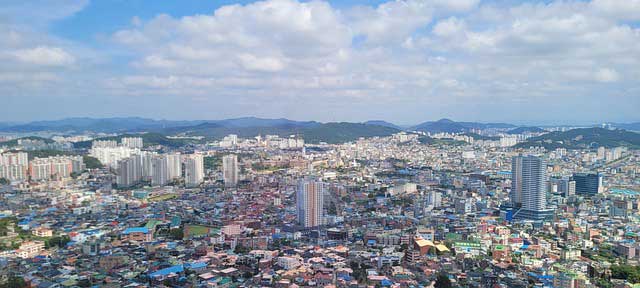
- a modern urban sprawl famous for its pro-democracy riots in 1980.
- the city has a reputation as an artistic center (cuisine, music, handicrafts, calligraphy & new media).
- hosts a biannual arts festival.
- Korea's 6th largest city.
- annual kimchi festival in October and reputation for great food.
Things to see and do in Gwangju
Gwangju is the administrative capital of Jeollanam province in the south west of the country. The center of this sprawling metropolis for visitors is Geunnamno near the May 18th Democratic Plaza. The tourist information center (Tel: 062 226 1050) is here along with the International Center, Art Street and a number of hotels. Art Street has a collection of art shops and studios selling both traditional and contemporary art. Nearby Shopping Street offers some excellent boutiques and designer stores.
Gwangju's museums are clustered on the northern edge of the city and include the National Museum (Tel: 062 570 7000), Gwangju Art Museum (Tel: 062 222 3574) and the Gwangju Folk Museum. Buses #29, #48, #63, #84, #85, #95 run out to the National Museum.
The riverside Yangdong Market has had a facelift in recent years and the river here is pleasantly lit at night.
The 1980 Massacre memorial and May 18th National Cemetery is located north of the city center and the Exhibition Hall documents the events of the student uprising and massacre with a series of gruesome photographs. The other 5-18 Memorial Park is in the Sangmu area to the west. From the three-storey pagoda here there are fine views over the city.
In the Mt. Mudeung area is the Uijae Museum of Korean Art dedicated to life and work of poet and calligrapher Ho Baeknyon (1991-1977). Bus #1187, the height of Mt. Mudeung in meters, runs out to the mountain.
Mokpo, an hour by bus from Gwangju, was the venue for South Korea's Formula One races from 2010-2013. Many visitors to the race stay in Gwangju and there are a number of good hotels to choose from including the Holiday Inn Gwangju, the Ramada Plaza Gwangju, and the Hiddink Tourist Hotel, named after South Korea's Dutch coach at the 2002 World Cup.
Other attractions in and around the city include the Asia Culture Complex, Daeing Night Art Market, Sajik Park Observatory and the pleasant campuses of Chosun and Chonnam universities.
Festivals in Gwangju
Gwangju plays host to a number of festivals throughout the year. These include the Gwangju Chungjang Festival in October, the Gwangju World Kimchi Festival in autumn, and the Toechon Tomato Festival held in June.
Nightlife & Eating Out in Gwangju
Chung Jang Ro street for wining and dining in Gwangju.
Gwangju Transport
Gwangju's new 20 km, 20-station metro system runs east-west from Pyeongdong to Nokdong but does not connect with the train station or the city's main bus station. Gwangju's airport is 11 km west of the city on the subway line and has flights to Seoul and Jeju. By train, Gwangju connects to Seoul via Yongsan Station by KTX express (2 hours, 20 minutes to 3 hours). Bus #17 connects the bus and train stations in around 20 minutes.
Gwangju World Cup Stadium
Tel: (062) 224 4652 more Gwangju stadium info
The 42,880 seat Gwangju World Cup Stadium has two gigantic shell-like curving roofs. 7 km by shuttle from the city center.
Accommodation - Hotels in Gwangju
Some recommended places to stay in the city include the four-star hotel Holiday Inn Gwangju, the five-star Ramada Plaza by Wyndham Gwangju with three restaurants and a fitness center and the three-star Dubai Hotel close to Memorial Park.
Book Hotel Accommodation in Korea
Hotels in Korea - Booking.com
Hotels in Seoul - Booking.com
South Korea Hotels - Agoda
Seoul Hotels - Agoda
Find Hotels in Daegu - Agoda
Hotels in Busan - Agoda
Book Daegu Hotels - Booking.com
Incheon Hotels - Agoda
Book Incheon Hotels - Booking.com
Pyeongchang Hotels - Agoda
Suwon Hotels - Agoda
Search Suwon Hotels - Booking.com
Ulsan Hotels - Agoda
Uncover Ulsan Hotels - Booking.com