

Rising Sons - 新しい景色へ
Joji Imamiya
Japan vowed to reach new heights in Qatar 2022 by winning a first-round World Cup knockout match for the first time in their history, avenging the ghosts of 2002, 2010, and 2018.
It could not have started any better. Takuma Asano's brilliant yet bizarre winner in the 83rd minute against Germany at the Khalifa International Stadium, also the stage of 2011 Asia Cup glory, sparked mass celebrations across the party towns of Shibuya in Tokyo and Dotonbori in Osaka.
The initial plan in Group E was to scrape a point against either the Germans or the Spanish and beat Costa Rica. The last twenty minutes saw some of the best football we have ever seen from the Samurai Blue, accomplished thanks to a tactical masterstroke from three-time J.League winner Hajime Moriyasu.

Japan v Germany
Seeing Japan's midfield run ragged in the first half, the coach switched to a back three with Takehiro Tomiyasu coming on at the expense of Real Sociedad wunderkind Takefusa Kubo.
Moriyasu ordered his players to contest 1 v 1 duels across the pitch in a high-risk game, hoping to be the harassers instead. In attacking areas, each player had specific roles. Maeda Daizen of Celtic and Asano were used as chasing bulls, expendable goods that were to be replaced after the hour mark. The likes of Junya Ito, Doan, and mainly, Kaoru Mitoma, Japan's secret weapon, had the unenviable task of carrying the ball from midfield to the attacking third. The sharp and pacey Japanese side eventually took advantage of the bewildered-looking Dortmund pair of Niklas Süle and Nico Schlotterbeck.
Except, of course, it was not a masterstroke. This team had no distinctive tactical identity. The identity was down to the players themselves.

Spain v Japan
They decided the tactics beforehand, notably Daichi Kamada, who witnessed his energetic Frankfurt team overpowering a lethargic Barcelona in the Europa League, and suggested a similar scheme against Spain [1].
The relentless Japanese pressing eventually bore fruit when Unai Simon, famed for his skills on the ball, gifted a goal to Doan, and as Ao Tanaka completed the turnaround, the job for Japan became clear-cut.
As Spain slowly lost their penetration and cutting edge, it was clear that Japan would emerge victors.

Costa Rica v Japan
Against Costa Rica, however, there was no one to press and initiate counterattacks. Reminiscent of the ugly 1-0 wins versus Oman, Vietnam, and China in qualifying, Japan were bereft of ideas at the Ahmed bin Ali Stadium.
Costa Rica's back five had an easy task of marshalling the dribblers Doan and Yuki Soma. There was no combination play nor clinical finishing to kill off the stubborn Central Americans. In the 81st minute, Keysher Fuller pounced on a nonchalant Maya Yoshida pass to score the only goal. The performance was so typical of Moriyasu at his lowest.
Croatia v Japan
Then came the Croatians, renowned for their resilience and cleverness, who had the beating of Japan in mental fortitude. Despite conceding the first goal, Croatia saw the match as a 120-minute affair and did not panic under any circumstances.
Japan's trial-and-error approach with its wingers did not have the desired effect. Takumi Minamino, so uncharacteristically out of sorts at AS Monaco, failed to change the narrative. On the left flank, Mitoma's threat was snuffed out by Josip Juranović.
Unlike Germany and Spain, Croatia worked out a plan on how to stop the Japanese, instead of simply focusing on their own game. As the game dragged on to a walking pace, Croatia dictated the tempo, at times challenging the height of the centre-backs by lumping in long throws and looping crosses into the muscular Bruno Petković.
Defeat at this stage is all too familiar for fans. The dramatic loss to Belgium in 2018 was disappointing but brought a sense of accomplishment in equal measure. With only two months to go before the tournament, Bosnian Vahid Halilhodžić was sacked (he has suffered the same fate with Morocco and Ivory Coast) and replaced by Akira Nishino.
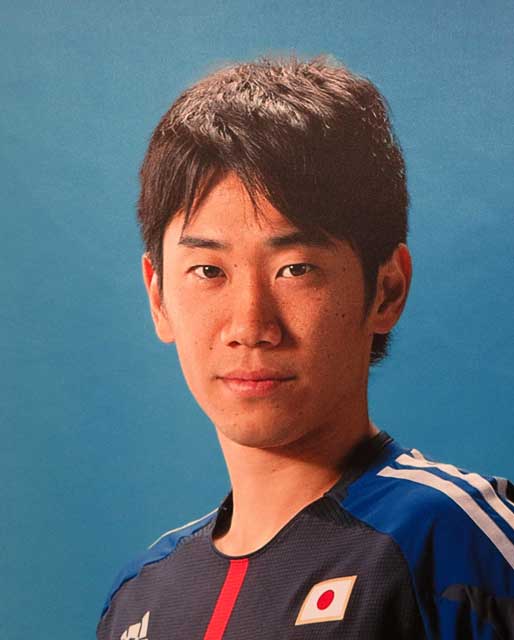
Aware of the short-term battle ahead, Nishino maximized his squad by squeezing the best out of the veterans such as Makoto Hasebe, Shinji Kagawa, and Takashi Inui. All of Halilhodžić's three-year plans were thrown out of the window for a utilitarian approach.
For Qatar 2022, Japan could not rely on such excuses. By the time Moriyasu was appointed, he had been one of the most successful managers that the J. League had ever seen, certainly by modern standards.
Three league titles and a third-place finish in the 2015 FIFA Club World Cup were unprecedented. However, as they kicked off their final qualifying round with a tame 0-1 home loss versus Oman, the alarm bells started ringing. After another reversal in Saudi Arabia, it was clear that some of the young talents such as Doan, Kamada, and Kubo were stifled as a result of a lack of tactical cohesion in the final third.
Then there is the press which analyzes on a game-by-game basis. There is no constant narrative around Moriyasu's Japan, except for the bleak feeling that something bad is going to happen at some stage.
Based on the play, wins against Germany and Spain were well earned, but it was described as a "miracle", completely skewing the view of the average fan (or 「にわか」, as they would be coined during the tournament).
The blissful ignorance of the Japanese public can be attributed to many factors; Covid, the requirement for a DAZN subscription to watch games, and the scarcity of excitement in qualifying.
Games against Saudi Arabia and Australia used to be big affairs, in front of the TV screen with the whole household.
But as football became protracted and catered for individual consumption, the passion subsided. To keep its sports popularity duopoly with baseball, the JFA have a difficult task ahead. Continuing the growth of the domestic league, where it is labelled as a retirement home for past Spanish stars, is a good place to start.
The Future
Before World Cup 2026 begins, Japan would ideally like to have a transparent tactical identity, whether it be a possession-based game or otherwise. The hardcore Japanese fans will hope to see that the process takes precedence over results.
The journey begins with the 2023 Asia Cup, where Japan have been the dominant force since the turn of the millennium.
China initially won the rights to host, but a zero-Covid policy allowed Qatar to swoop in. It will be the second tournament in the Gulf state in twelve years. Hoping to emulate the success of 2011, could the magnificent volley of Tadanari Lee be the inspiration for another continental trophy? Only time will tell.

Articles on the Samurai Blue
Now or Never For Japan in South Africa
World Cup Korea/Japan 2002 - relive all the best from a great tournament.