
Japan Stadiums: JFE Harenokuni Stadium, Okayama Prefecture

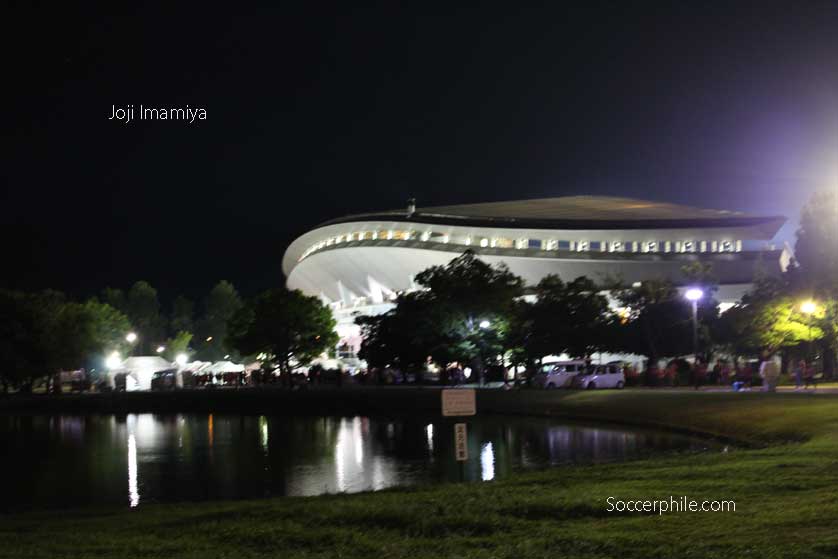
JFE Harenokuni Stadium (JFE晴れの国スタジアム) is a multi-purpose stadium in Okayama City, Okayama Prefecture, western Japan. For sponsorship reasons it has been known as JFE Harenokuni Stadium since February 2025.
Before that the stadium has been called Momotaro Stadium (2003-2010), Kanko Stadium (2010-2015) and City Light Stadium (2015-2025).
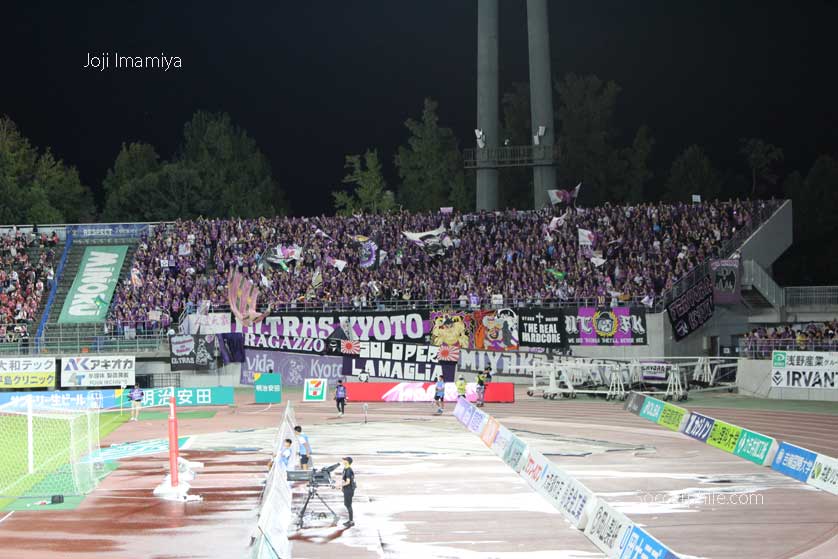
The venue is the home ground of J.League club Fagiano Okayama and also hosts both athletics meets and some rugby union matches.

History & Capacity
The stadium has an athletics circuit around the natural grass playing surface. It has one partially covered main stand, floodlights and opened back in 1957.
The ground was most-recently renovated in 2001.

The arena has a total capacity of 20,000 people, seated in the partially-covered main stand and the uncovered facing stand. It is part of the larger Okayama Prefectural Tsushima Sports Park which also includes a martial arts arena (Budokan), the SHIGETO Arena Okayama and the archeological site of the Tsushima Ruins which contains traces of Yayoi Period (approximately 300 BCE to 250 CE) settlement.
In front of the stadium's main entrance stands a bronze statue of Kinuye Hitomi, a female track and field athlete from Okayama Prefecture (winner of the silver medal in the women's 800m at the 1928 Amsterdam Olympics). Nearby is another bronze statue of Yuko Arimori, also from Okayama Prefecture (a medalist in the women's marathon at two consecutive Olympic Games in 1992 and 1996).

Fagiano Okayama
Fagiano Okayama presently compete in the J.League, the top tier of football in Japan.
The club originally formed in 1975 as the River Free Kickers (RFK) before rebranding in 2003 with the goal of bringing a J.League team to the region.
The new club experienced a rapid rise through the Japanese football pyramid, winning regional leagues and entering the Japan Football League (JFL) in 2007 before making its official J2 League debut in 2009. After establishing itself as a consistent competitor - including a narrow J1 promotion playoff loss to Cerezo Osaka in 2016 - the club capped off two decades of continuous development by securing its historic, first-ever promotion to the top-tier J1 League in December, 2024, with a 2-0 playoff victory over Vegalta Sendai.
Reflecting its regional roots, the name Fagiano means "pheasant" in Italian, honoring Okayama's official prefectural bird and its famous role in the local Momotaro legend.

Derbies
Fagiano has regional rivalries with both Kamatamare Sanuki and Sanfrecce Hiroshima. The rivalry with Kamatamare Sanuki, known as the Setouchi Derby, stems from the clubs' proximity across the Seto Inland Sea and is fueled by regional pride and strong supporter interest. Fagiano's matches against Sanfrecce Hiroshima are known as the Chūgoku Derby, representing competition between adjacent Okayama and Hiroshima prefectures.

Notable Players
Some notable players associated with Fagiano Okayama include Daiki Iwamasa, the former Kashima Antlers star and Japan international who played for the club from 2015 to 2016, and Shingo Akamine, a veteran J.League striker who represented Okayama from 2016 to 2020 before returning as a youth coach. Ryunosuke Sato, a promising midfielder on loan from FC Tokyo, also made an impact during his stint, while German goalkeeper Svend Brodersen and Argentine forward Nicolás Orsini, who played for the club from 2016 to 2018, are among the other notable international players to have represented Fagiano.

Access - Getting There
The closest stations are Hokaiin on the Tsuyama Line and Okayama Station. Okayama Station is a major transportation hub in western Japan, served by the Sanyō Shinkansen, which connects Okayama with cities including Osaka, Kobe, Nagoya, Tokyo, Hiroshima, and Hakata.
It is also served by several JR lines, including the Sanyō Main, Seto-Ōhashi, Hakubi, Tsuyama, Kibi, and Akō lines, providing connections across Okayama Prefecture and to Shikoku.
Just outside the station, the Okayama Electric Tramway offers convenient access to the city centre via its Higashiyama and Seikibashi lines.
The nearest bus stop is Okayama University of Science and there are buses here from Okayama Station.
Address: 2-1-11 Izumino, Kita-ku, Okayama 700-0985
Accessibility
JFE Harenokuni Stadium (Okayama Prefectural Ground Athletic Stadium) provides a range of accessibility features, including 134 designated wheelchair spaces, four accessible ramps, two elevators, and 12 multi-functional barrier-free restrooms. Accessible parking is also available, although spaces must be reserved in advance through the club or venue management.

Nearby Hotels
Okayama has a good range of hotel accommodation. See a listing of hotels in Okayama City.
As a major travel interchange and a tourist destination in its own right, Okayama's hotels can fill up quickly. If everywhere is full, try nearby Fukuyama. See a listing of accommodation options in Fukuyama.
Some recommendations include Hotel Vessel, a 3-star property at Fukuyama Station.
The Toyoko Inn Okayama eki Nishi guchi Migi is another business hotel at Okayama Station.

More J.League Stadiums
Sanga Stadium by Kyocera Kyoto
Tosu Stadium (Ekimae Real Estate Stadium)
Toyota Stadium Aichi Prefecture
Yokkaichi City Central Athletic Field

©Soccerphile.com
Buy tickets for soccer matches around the world