
UK Stadiums: Cardiff City Stadium, Cardiff, Wales
Joji Imamiya

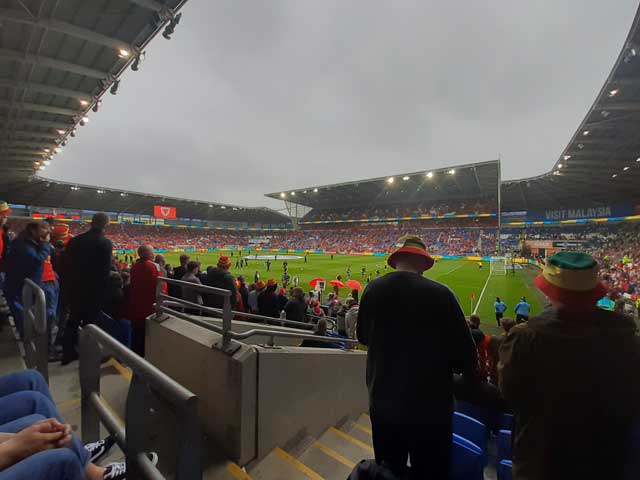
Cardiff City Stadium in Cardiff, Wales, is a 33,280-seater stadium. It is the home of Cardiff City Football Club and the Wales national football team. The stadium replaced Ninian Park as Cardiff City's home in 2009. It is the second largest stadium in Wales after the Millennium Stadium, also in Cardiff. Cardiff City Stadium opened with a friendly between Cardiff City (nicknamed the Bluebirds) and Celtic.
Construction & Stands
Plans for a new stadium were conceived by then-owner Sam Hammam. Hammam is a Lebanese businessman who gained notoriety for his spell as Wimbledon F.C. chairman and then Cardiff City. Hamman received approval from Lord Mayor Russell Goodway for the construction of a new stadium.
The development could have started as early as 2005. But the Bluebirds had accumulated £30 million in debt and were forced to sell captain Graham Kavanagh to Wigan Athletic.
In 2006, Asda confirmed they would be the lead retailer of the new development, accelerating momentum.
The stadium was completed in May 2009. Rumours surfaced that Laing O'Rourke, the construction company in charge of the building process, had been involved with legal action. Therefore, it took longer than expected to finish. The delay can be attributed to adverse weather conditions in the summer of 2007.
The stadium has four designated stands: The Canton, the Ninian, Grandstand and the Family Stand.
Safe standing is installed at the Canton stand. For fans looking for standing options, head to the independent barriers across all seven bays of the back five rows. It is important to note fans who misuse this facility could face future entry bans.

History
Cardiff City initially went by the name of Riverside A.F.C. to keep the players of the Riverside Cricket Club healthy during the winter months. They played local friendlies in their first season at Sophia Gardens. Riverside requested a name change when King Edward VII granted Cardiff city status in 1905. However, it was only in 1908 that they had permission, as the leagues they were competing in beforehand were deemed too insignificant.
1910 was a momentous year for the club, as Cardiff now had its stadium in Ninian Park and officially became a professional outfit.
1921-22
Cardiff gained access to the top flight (in English football) for the first time in 1921-22. The Bluebirds remained there for eight consecutive seasons. The highlight came in 1923-24, a season where Huddersfield clinched the championship at the expense of Cardiff by the metric of goal averages. The margin of 0.024 is the narrowest a team has ever lost a title in English top-flight history. Striker Len Davies would have intense nightmares with his penalty miss on the final day at St Andrews, where Cardiff drew 0-0 with Birmingham City.
The first campaign in the top flight for Cardiff post-World War II came in 1952-53, thanks to the exceptional managerial nous of Englishman Cyril Spiers. They occupied the First Division for five years, often fighting to avoid relegation.
The Welsh club's 1962 demotion from the top flight proved catastrophic, not returning to the same division until 2013 when the Bluebirds, or rather the Red Dragons, won the EFL Championship under the ownership of Malaysian businessman Vincent Tan.

Hamman & Tan
The successes of Cardiff this century are chiefly funded by the charismatic owners Hammam and Tan. Hammam was eager to link club identity with Welsh nationalism to garner more support. At one point, he flirted with changing the kit colours to red, white and green following the Welsh flag, but the Lebanese decided not to switch. Hamman remodelled the facilities, and Cardiff's fans felt a real upward trajectory when QPR were defeated in the 2003 Football League Second Division playoff final and gained second-division status. Substitute Andy Campbell was the hero at the Millennium Stadium, playing in their home city.
The Bluebirds entered the Championship playoffs for three seasons straight from 2009-10 but failed promotion each time. They were at their closest in 2010, facing Blackpool at the new Wembley Stadium in the final. The game played out at a frantic pace, with all five goals coming in the first half. Journeyman Brett Ormerod scored the decisive winner. Ian Holloway, who was in the QPR dugout in the 2003 playoff final, got revenge as The Tangerines boss.
Cardiff were subsequently outplayed by Reading in 2011 and West Ham the following year in the playoff semis.
Going Red
Still, it was clear promotion was a problem of time, not of possibility. With a new red jersey introduced for the 2012-13 campaign, Cardiff became a force to be reckoned with under Malky Mackay. It was a squad known for its defensive solidity, as City comfortably won the division despite no player reaching double figures in league goals.
Following promotion, Cardiff were outlandish in their spending. Throughout the season, the club signed players such as Gary Medel, Wilfried Zaha and Steven Caulker, but the squad's lack of Premier League experience was exposed badly. To steady the ship, Vincent Tan hired Ole Gunnar Solskjær in a surprising decision in early January 2014. But the Norwegian could only muster three wins in the league before Cardiff bowed out with a whimper.
Solskjaer remained in charge for the 2014-15 season, but a sluggish start led to the former Manchester United star being replaced by Russell Slade, who joined from Leyton Orient. It was also the season Cardiff reverted to their blue strips.

In the following seasons, the Bluebirds had stabilized just below the playoff zone. But Tan was ambitious and pursued Neil Warnock, a master of promoting unheralded Championship sides into the Premier League.
Wolves made all the headlines in the 2017-18 Championship for their dominant displays, but Cardiff quietly took care of business. Similar to the team managed by Mackay, Warnock's squad consisted of extremely reliable players. Names such as Sean Morrison, Aron Gunnarsson and Sol Bamba were favourites of the veteran manager.
Back in the Premier League
Back in the Premier League after a four-year hiatus, Cardiff gave a better go in comparison to their previous season at this level, but their efforts went unrewarded. Fans would bemoan their misfortune, especially on matchday 31 versus Chelsea, where Cesar Azpilicueta grabbed an equalizer from a clear offside position. The London club would go on to win the match 2-1.
On 21 January 2019, focus rightly shifted away from the pitch when Argentinian striker and new signing Emiliano Sala died after a Piper Malibu aircraft travelling from Nantes to Wales went missing. Calls for an extensive search were made by his compatriots Lionel Messi, Diego Maradona and President Mauricio Macri, but to no avail. In late February, ex-football agent Willie McKay accused Cardiff City of abandoning Sala by not providing adequate transportation. His son Mark, negotiating the deal on behalf of Nantes, echoed his father's sentiment.
Cardiff had the opportunity to bounce back from relegation straight away in the 2020 Championship playoffs but were overrun by an energetic Fulham team, losing out 2-3 on aggregate.
Cardiff are currently involved in an intense Championship relegation scrap, just above the drop zone, a scrap they won and the team remain in the Championship for the 2026-2027 season.

Domestic Cups in the Modern Day
The Welsh side have a strong track record in domestic cups in the 21st century. Cardiff had a spectacular 2008 FA Cup run culminating in the final against Premier League outfit Portsmouth. They started the competition against Chasetown, the lowest-ranked side ever to reach the third round. From the fifth round onwards, they never failed to keep a clean sheet and qualified for the final after edging Barnsley in a 1-0 win. The Bluebirds during this season had the privilege of being able to count on the experience of Jimmy Floyd Hasselbaink up top and Peter Enckelman between the sticks. However, it was Portsmouth's very own veteran striker Nwankwo Kanu who had the last laugh. The 0-1 loss meant the 1927 FA Cup remains Cardiff's only win of this famous trophy.
2012 League Cup
The 2012 League Cup was also a wild ride for City supporters. Cardiff required extra time in their first three rounds until they met fellow Championship side Burnley. After overcoming the Clarets and then Blackburn, they headed to Selhurst Park to play Crystal Palace in the first leg of the semi-final. Eagles' centre-back Anthony Gardner scored the only goal to give Palace the advantage, but he cancelled out his effort by putting the ball into his own net in the return leg. Although Cardiff were in the ascendancy in much of the second leg, Palace weathered the storm and took the game to penalties. Goalkeeper Tom Heaton was the Cardiff hero as he saved two spot-kicks, securing a place at Wembley for a monumental clash against Liverpool.
After an enthralling 120 minutes of cup final football ending 2-2, the Bluebirds had to go through the torment of a penalty shootout again. Cardiff were ahead at one stage after Steven Gerrard and Charlie Adam missed their kicks. But Gerrard was relieved as his cousin Anthony became the fall guy for Cardiff when his decisive penalty was off target and gave Kenny Dalglish his only trophy as Liverpool boss in his second term.

Europe
Cardiff have participated in only one European competition: the Cup Winners' Cup. Their best performance was in 1967-68, upsetting the applecart by beating Torpedo Moscow in the quarter-finals and facing German giants Hamburger SV. Cardiff earned a very credible 1-1 draw in Germany in the first leg and returned home with confidence. In the second leg, however, with legendary striker Uwe Seeler back from an absence, HSV defeated City with a narrow 3-2 win.
The Bluebirds secured a famous win in 1971 in Ninian Park against Real Madrid at the quarter-final stage, but Los Blancos eased to a 2-0 victory at the Bernabeu in the return match, and Cardiff were eliminated.
Players
Peter Whittingham was an ever-present in Cardiff's midfield for a decade. Having failed to leave a mark at Aston Villa, he joined the club for about £350,000. Whittingham often dominated the midfield battles in the EFL Championship with his elegant passing and p anache. In February 2016, he became Cardiff's all-time top goalscorer in English league competitions after recording a brace against Brighton and Hove Albion. The arrival of Neil Warnock spelt the end of Whittingham at Cardiff, moving to Blackburn Rovers, his final club, in 2017. At age 35, Whittingham was confirmed dead after an accidental fall at a pub in Barry. Following the event, City retired the number seven to commemorate his legacy.
John Toshack, profiled in our Swansea Stadium guide, formed one of the most lethal striking partnerships in Cardiff's history with the Bristolian Brian Clark. Toshack signed for his hometown club as a 16-year-old for a contract worth £12 a week. Although City were willing to sell Toshack to Fulham for £70,000 in 1967, he refused the transfer as he felt he was too inexperienced to play top-flight football. Several days after scoring his 100th goal in all competitions against Nantes in the Cup Winners' Cup, the promising striker would make the step up to play for Liverpool.
Fred Keenor
The player that deserves the "greatest" tag is undoubtedly Fred Keenor. The defender had a life-altering moment when he suffered from a severe shrapnel wound when he fought in the Battle of the Somme. Overcoming the looming potential of early retirement, Keenor became part of Cardiff's greatest era in the 1920s. Under his leadership, City became the first Welsh team to qualify for the FA Cup final in 1925, but Sheffield United got the better of them with a 1-0 scoreline. Cardiff would get their hands on the trophy by defeating Arsenal two years later. In November 2012, a statue of Keenor holding the FA Cup trophy was unveiled at Gate 3 of the Cardiff City Stadium.

Wales National Team
It is difficult to determine if the Cardiff City Stadium has been a happy hunting ground for the Wales national football team. One of their most painful memories came in the 2018 World Cup qualifier against the Republic of Ireland in Group D on the final matchday. In a win-or-bust match for both sides, a James McClean effort secured the away side a playoff at Wales' expense.
Wales found themselves in a similar situation for qualification for Qatar 2022. This time Dragons' opponents were Ukraine, a team still in shellshock following Russia's invasion of its territory.
In what was potentially the most emotionally charged match the arena has seen so far, Wales gained the lead in the first half after Andriy Yarmolenko diverted a whipped Gareth Bale free-kick into his own net. Ukraine huffed and puffed for an equalizer, but Wales organized superbly in a defence marshalled by Ben Davies. The game ended 1-0, with the Welsh earning a right to play in a World Cup for the first time in 64 years.
Wales also qualified for Euro 2016 a tournament at which they excelled reaching the semifinals. The team avoided defeat in all their qualifiers at Cardiff City Stadium.
Access - Getting To Cardiff City Stadium
The stadium is friendly to train users, as it is only a five-minute walk from Ninian Park railway station to the arena. From Grangetown station, it takes 16 minutes on foot, but the path is simple as fans only need to walk straight through Sloper Road.
The Cardiff Bus service (number 95) from the Central Station to Barry Island has Cardiff City Stadium as one of its stops.
For supporters coming by car, exit the M4 at Junction 33 and follow the A4232 towards Cardiff/Barry. Take the exit onto the B4267, which is signposted for Cardiff City Stadium. The stadium car parks are usually closed thirty minutes before kick-off.
If visitors are in a hurry, a taxi service from the city centre to the venue costs roughly seven to ten pounds.
Planning is crucial in getting to the stadium as tickets are usually not on sale on matchdays.
Away fans are directed to enter the venue via gate 12. Safe standing is now legal within the stand after a policy change.
For disabled supporters enjoying the away day experience, contact Ben Jones, the club's Disability Access Officer. Contact Ben via: ben.jones@cardiffcityfc.co.uk
Address: Leckwith Road, Cardiff CF11 8AZ, UK

Nearby Hotels
The are dozens of hotels in and around Cardiff which cater to every budget. These range from backpacker accommodation as cheap as £10 per night to luxury accommodation such as the Royal Hotel Cardiff.
The voco St. David's Cardiff is located on the waterfront of Cardiff Bay. It offers stunning views, modern rooms, and a spa for relaxation.
The Hilton Cardiff provides comfortable rooms and amenities like a fitness center, on-site restaurant, and bar. It's conveniently located near popular attractions and shopping areas.
Radisson Blu Hotel, Cardiff near Cardiff Castle, offers stylish rooms, a bar, and a grill restaurant. It's within walking distance of the city's major attractions, shopping areas, and entertainment venues.
The four-star Mercure Cardiff Holland House Hotel & Spa features spacious rooms, a fitness center, an indoor pool, and a spa. It's located a short walk from Cardiff's city center.
Park Plaza Cardiff offers modern rooms, a restaurant, a bar, and a fitness center. It's close to Cardiff Castle and the Millennium Stadium.
Future Inn Cardiff Bay provides comfortable and spacious rooms, a restaurant, and free parking. It's located in Cardiff Bay, close to attractions like the Wales Millennium Centre.
See here for a complete listing of hotel accommodation in Cardiff.
More UK Stadiums
Kirklees Stadium (John Smith's Stadium)
©Soccerphile.com
Buy tickets for soccer matches around the world