
World Stadiums: Parc des Princes, Paris, France

Joji Imamiya
Parc des Princes, in Paris, France, has been the home of Paris Saint-Germain Football Club since 1974. It has a seating capacity of 47,929 spectators. It was also home to Paris FC for three seasons and has hosted multiple important football and rugby matches. It was the venue for the final of Euro 1984, where France, inspired by the brilliance of Michel Platini, overcame Spain 2-0.
Before the current iteration, the location of Parc des Princes was in the 16th arrondissement of Paris, the area frequented by the French royal family before the revolution, hence the name. The velodrome had an enormous track around the pitch, unsurprising considering the director of the stadium was Henri Desgrange, a former racing cyclist. Desgrange was also the founder of cycling magazine L'Auto, the predecessor to L'Équipe. The French national football team first played here against Switzerland in 1905, a 1-0 win. Parc des Princes also has a long history of international rugby, with the first fixture being France versus New Zealand in 1906.
In anticipation of the 1924 Summer Olympics, the arena was expanded to 20,000 capacity, but events took place in the larger Stade Olympique Yves-du-Manoir.

Stadium
Henri Desgrange was an ambitious businessman and professional cyclist. With his business partner Victor Goddet, they reconstructed the Parc in a modern venue holding 38,000. It hosted three 1938 World Cup matches, but FIFA handed the major games to Yves-du-Manoir.
After the Liberation of Paris following the defeat of Nazi Germany in World War II, football became fashionable again. Stade français-Red Star and Racing Paris used the ground regularly, while mega sporting events such as Tour de France, the first-ever European Cup final and the 1954 Rugby League World Cup final were also held at the venue.
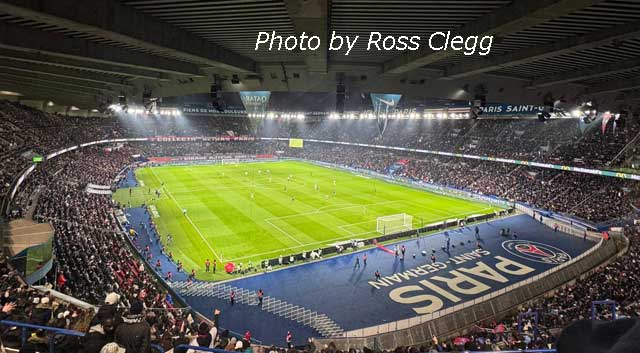
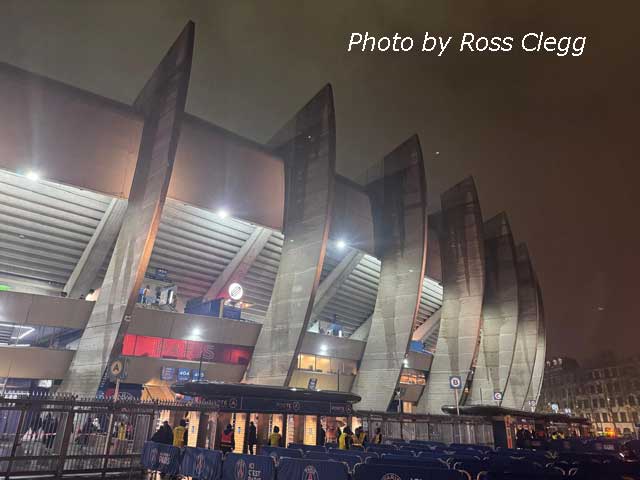
The Parc that we all know today was inaugurated in 1972 and conceived by architects Roger Taillibert and the Iranian Siavash Teimouri. It is a legally protected site of French architecture. For lighting, Taillibert decided to integrate 172 floodlights into the roof.
Ahead of France 98', Stade de France was opened, created as the future of French sports. Since 1998, the French national football team have only participated in two matches at the Parc. However, it was used as a venue for World Cup '98, Euro 2016 and the final of the football section of the Olympics in 2024 (men and women).
Qatar Sports Investments (QSI) has stated that to push PSG into the elite of football, an expansion to 60,000 is necessary.
Many icons of popular music have performed at Parc des Princes, including Michael Jackson, David Bowie and Bruce Springsteen. Johnny Hallyday is the musician with the most concerts, seven in total.
Stands
The stands behind the goals are named the Auteuil on one side and the Boulogne on the other.
If your seat is at the Auteuil, find gates I and H. To go through the Boulogne, look for gates P, O and V.
Spaces for wheelchair users are at the Paris stand. VIP customers will be served at the Borelli, named after the legendary ex-president.
To watch from the Paris stand, use gates G, F, E, D, C, B and A. To enter the Borelli, go through gates N, M, L, K and J. Television cameras are located at this end.
Between the Borelli and the Auteuil is Le Deck, catered for a group setting. It provides a "convivial" space, according to PSG's homepage.

Qatar Sports Investments
Qatar Sports Investments, or QSI for short, is a shareholding organization operated by the government of Qatar. Its chairman is Nasser Al-Khelaifi, a businessman and former professional tennis player. QSI is a subsidiary of Qatar Investment Authority, a state-run sovereign wealth fund. The organization purchased PSG in 2011, drastically altering the fortunes of PSG overnight. Al-Khelaifi has served as chairman of QSI since 2011 and is also CEO of beIN Media Group. In 2022, QSI also acquired a 21% share of SC Braga in Portugal for €80 million.
History
Paris Saint-Germain were founded in 1970 after a merger of Paris FC and Stade Saint-Germain. After their colours, PSG are nicknamed Les Rouge-et-Bleu, or the Red and Blues.
Enterprising businessmen Guy Crescent, Pierre-Étienne Guyot and Henri Patrelle wanted an elite team in Paris. After meeting Santiago Bernanbeu of Real Madrid, they launched a subscription campaign to generate funds for the merger of Paris FC and Stade Saint-Germain. It was the first time such a thing had happened in France. For the first three years, the club adopted a fan-owned system and had 20,000 members. The cost was about 25 to 40 francs to become an annual member. Accruing sizable debt, PSG's finances were rescued by the arrival of fashion designer Daniel Hechter. Hechter was a dubious character, however, as in 1978, he was banned for life within football for operating a ticketing scheme at the Parc des Princes. His replacement, Francis Borelli also left the club in disgrace after leaving PSG on the brink of insolvency. The French Football Federation (FFF) forced Borelli to resign in 1991.
1990s
Loyal PSG fans are nostalgic for the 90s when Canal+ took ownership. During the decade, PSG won one Ligue 1, three Coupe de France, and the 1996 UEFA Cup Winners' Cup, defeating Rapid Wien in a slender win. With journalist Michel Denisot sitting as president, PSG convinced distinguished Portuguese manager Artur Jorge to take the job in 1991. Jorge had brought FC Porto the European Cup for the first time in their history in 1987. Brazilian technicians such as Ricardo and Valdo joined, but the star of the show was no doubt George Weah, winner of the Ballon d'Or whilst playing for AC Milan in 1995.
The state of affairs was terrible in the 2000s, as the "PSG Banlieue" project, as it was called, failed to take off despite the signings of Nicolas Anelka, Peter Luccin and Stéphane Dalmat. Long-time sponsor Canal+ was repeating the financial failures from the past, as the debts incurred became insurmountable, receiving heavy criticism from supporters. Club legend Luis Fernandez was let go as coach and replaced by Vahid Halilhodžić, who made a name as Algeria and Japan manager.
Star names such as Pauleta and Ronaldinho came through the door and claimed some trophies, but the spark from the previous decade had long gone. Olympique Lyonnais' era of dominance denied any chance of PSG recovering to domestic glory, never mind Europe.

2007-08 Season
2007-08 was particularly harrowing. After losing heavily to Caen on matchday 34, president Alain Cayzac resigned. With four games remaining, PSG sat 18th, three points adrift of safety. The relegation scrap went down to the final matchday, away at Sochaux. Amara Diané scored both goals in a 2-1 victory, cementing his legacy as a cult hero. The season did end with a flourish, however, getting the better of RC Lens in the final of the Coupe de la Ligue.
PSG were solidifying themselves at mid-table under the leadership of manager Antoine Kombouaré when the Qataris came knocking. Nasser Al-Khelaifi showed the footballing world he meant business from the word go, hiring Leonardo as sporting director. The Qatari ownership spent big money on Kevin Gameiro, Maxwell, Javier Pastore and Blaise Matuidi. With signings like these, the 2011-12 Ligue 1 looked already in the bag. But, enter Montpellier's fairytale. Outstanding performances from Olivier Giroud, Younes Belhanda and centre-back Hilton were enough to clinch the title with a three-point margin.

2012-13 Season
To ensure no such embarrassment would repeat itself in 2012-13, the Parisiens acquired Thiago Silva and Zlatan Ibrahimovic, a purchase that changed the perception of the club and its intentions. With Carlo Ancelotti at the helm, there was no trouble winning the league this time. Since that campaign, PSG have failed to attain Ligue 1 on only two occasions, in 2016-17 and 2020-21. However, unlike Montpellier's victory, these are seen as less of a humiliation, as Monaco and Lille had freakish seasons performing at the highest level.

Neymar
The world of football was in awe when Neymar signed for PSG from Barcelona in the 2017 summer transfer window. The 220 million euros fee dwarfed all previous transfers, reshaping the footballing landscape. Much of the inflated transfer fees we see today can be attributed to the Brazilian's move. Kylian Mbappe, then a teenager, joined in the same summer and formed the terrifying trio composed of him, Neymar and Edinson Cavani. There were no challengers in the domestic league, but PSG bowed out at the Round of 16 stage in the Champions League, frustrating supporters.

2021
PSG looked like they were entering a new level in the summer of 2021 when Lionel Messi made a shock transfer to the club. Sergio Ramos, Gianluigi Donnarumma and Georginio Wijnaldum were added along with Messi, all costing little or no money. The new front-three of Messi, Neymar and Kylian Mbappe had Paris fans dreaming of an all-conquering side. But Real Madrid gave them a reality check in the Champions League, and soon ex-player Mauricio Pochettino was out the door.
Mbappe was the last of the famous front-three to leave, transferring to Real Madrid in the summer of 2024. Mbappe's many come-and-get-me pleas over the past few years before the transfer suggest huge investments into the club cannot buy pedigree. The truly elite footballers would want to experience playing for the biggest teams in Spain, England or Italy.
Since his departure, manager Luis Enrique has assembled a coherent squad. Ex-Wolves flop Vitinha has developed into one of Europe's best midfielders, while Ousmane Dembele has also become much more lethal in front of goal.

Marseille Rivalry
The games against Olympique de Marseille (or OM), dubbed Le Classique, only became heated after Canal+ acquired PSG. After Marseille owner Bernard Tapie's transgressions came to light, FFF planned on handing the league title to Paris, but the club hierarchy refused, citing fear of decreasing Canal subscriptions. The 1992-93 Ligue 1 trophy was therefore unattributed. Canal+ was so fearful of retribution from Marseille that they had resigned from participating in the following Champions League campaign, meaning Monaco became France's representative.
Similar to the Milan rivalry, many players have donned the shirts of both clubs. Jocelyn Angloma's transfer from Paris to Marseille attracted many headlines in the 90s. Arguably, the most controversial in this century is that of Albanian Lorik Cana, a PSG academy graduate adored by fans. When manager Laurent Fournier declared the midfielder was unwanted in his team, Cana sought refuge in Marseille, stating he was now with 'the club of my heart'. In the same period, Modeste M'bami also betrayed Paris, while Peguy Luyindula went the other way.
But it is Marseille who currently claim the bragging rights in this regard. Argentine defender Gabriel Heinze assured he would never be with a team other than Paris whilst playing in France. But after featuring for Man United and Real Madrid, he disregarded his promise and crossed the French divide, signing for OM in 2009.
As of February 2025, PSG have a better record, defeating OM on 51 occasions, while Marseille have claimed 34 wins.
No player has ever scored a hat-trick in this fixture.
Europe
PSG's greatest Champions League campaign pre-QSI was in 1994-95. They topped their group containing Bayern Munich with a 100% record and eliminated Barcelona in a famous quarter-final tie. A star-studded AC Milan, managed by Fabio Capello, showed their class in the semis, winning 3-0 on aggregate.
The 1996 Cup Winners' Cup win will live long in the memory, with defender Bruno Ngotty scoring the only goal. They reached the final again the following year, but a Barcelona team that included Ronaldo Fenomeno edged the Parisians out.
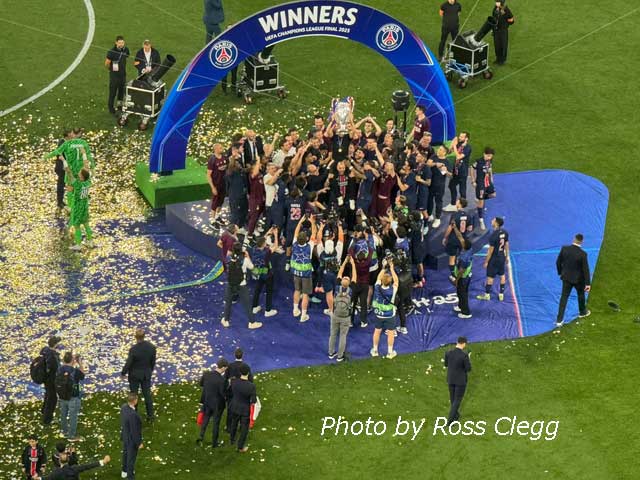
Post-Qatari investment, PSG have become a regular fixture in Europe's top competition, but are yet to attain the 'ol Big Ears. Their most famous humiliation occurred in 2017, allowing Barcelona to recover from a 4-0 first-leg deficit. Sergi Roberto's goal in injury time at the Camp Nou capped the famous "remontada", a term that has become part of the football lexicon.
PSG qualified for the 2020 Champions League final, but opponents Bayern were favourites after brutalizing Tottenham, Chelsea and Barcelona en route. The match was a tight affair, as Manuel Neuer was kept busy throughout. But Bayern's superiority told in the second half when Joshua Kimmich's delicate cross was met by Kingsley Coman, a Paris native. Neymar and co. were in tears, but manager Thomas Tuchel quickly avenged the ghosts by winning the trophy with Chelsea the following year.
Cult Heroes
Numerous famous names have played for the club, but some are more appreciated than others, with many coming from the pre-QSI era. One of them is Brazilian fantasista Raí, a player bought from Sao Paulo. Raí was instrumental in their famous Cup Winners' Cup campaign, scoring two crucial goals in a tie against Parma, having trailed 0-1 from the first leg. In 1998, he was on the scoresheet in the final of Coupe de France and Coupe de la Ligue, where PSG emerged victorious in both. Raí was captain of the seleçao in the group stage of USA 94', but Bebeto and Romario took centre stage in the knockouts and condemned him to the bench.
Jay-Jay Okocha was signed for a fee of £14 million, a record for an African player. The Nigerian already had experience in the German and Turkish leagues and often produced mesmerizing performances. He served as a mentor to Ronaldinho.
David Ginola is a true fan favourite. He won the hearts of the Paris faithful with his silky touch and elegant dribbling. Despite admitting he supported Marseille as a boy, it did no harm to his reputation. In his second full season, 1993-94, Ginola was the club's top scorer as PSG won their second league title. Luis Fernandez was appointed the following year but could not match their excellence as Nantes were crowned champions. PSG advanced to the semi-finals of the Champions League, defeating Johan Cruyff's Barcelona on the way. Ginola was particularly impressive in the tie.

One of the most significant matches in French football history took place in November 1993 at the Parc des Princes, with Ginola at the heart of the controversy. The stage was set for the 1994 World Cup qualifier between Les Blues and Bulgaria. The home side only needed a draw while Bulgaria were out unless they secured victory. With the score tied with seconds remaining, France won a free-kick in the Bulgaria half near the corner flag. Instead of time wasting, Ginola opted to deliver a ball into the box which was picked up by the opposition defense. In a blink of an eye, Emil Kostadinov's shot blitzed past Bernard Lama in the French goal, cueing deafening silence. The 1-2 loss meant France would miss two World Cups in a row, but Bulgaria used this match as a springboard for their greatest-ever international tournament, finishing fourth.
Ginola was used as a scapegoat by the media, with Eric Cantona also coming under heavy criticism. Neither player's international career ever recovered, but both became legends in English football. Ginola never returned to France after he departed PSG and played for four English teams, excelling at Spurs and Newcastle.
As some fell to the wayside after this heartbreak, some became prominent members of the great France 98' squad, chiefly Laurent Blanc, Marcel Desailly and Didier Deschamps. The disaster at the Parc forced FFF to take drastic measures, focusing on player development, with the Clairefontaine academy becoming the envy of many major powers in international football.

Fans
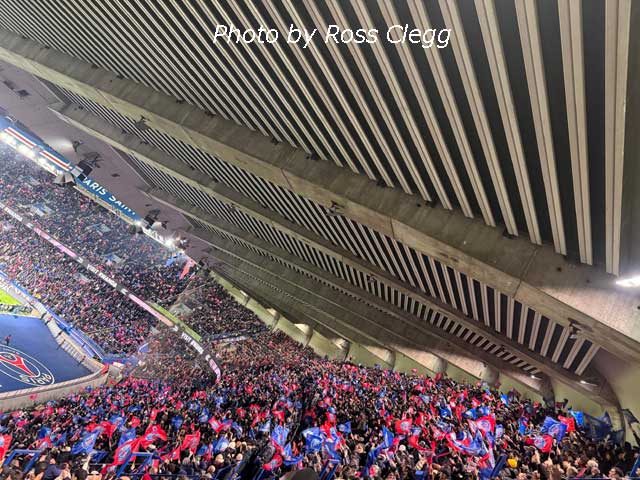
PSG are the most popular team in France. The club can count ex-president Nicolas Sarkozy as one of their fans, and he has been a crucial figure in modern PSG history. It is said that Sarkozy was present at many meetings when French football brokered the deal with the Qataris during their takeover negotiations and gave assurances through Michel Platini and UEFA that Qatar would host a World Cup shortly.
To improve the matchday atmosphere, PSG offered cheap seats in the K section of the Borelli stand. As a result, Kop K was formed, but ticket prices were increased and moved to the Boulogne stand, creating the Kop of Boulogne in 1978.
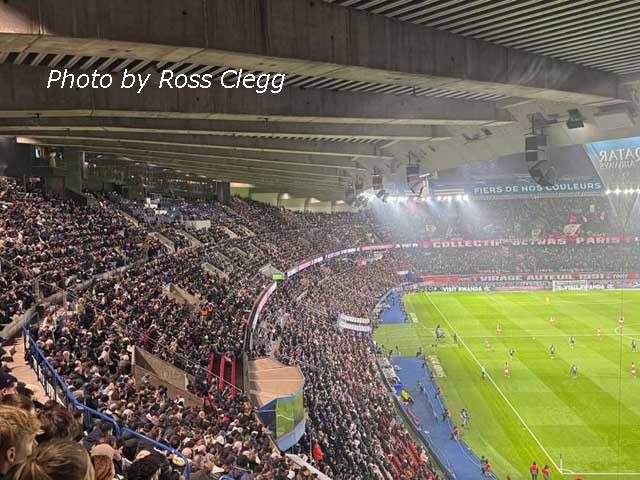
In the 1990s, the Virage Auteuil and Supras Auteuilultra ultra groups were established. However, the rivalry between the two came to a head in 2010 before a home match against Marseille when a Boulogne member Yann Lorence was murdered in a scuffle. Club president Robin Leproux took action, exiling all violent elements in what was known as Plan Leproux. In 2016, to reignite the matchday atmosphere, PSG allowed the ultras back in with the formation of Collectif Ultras Paris (CUP). CUP is the only ultra association officially recognized by PSG today.
Kits
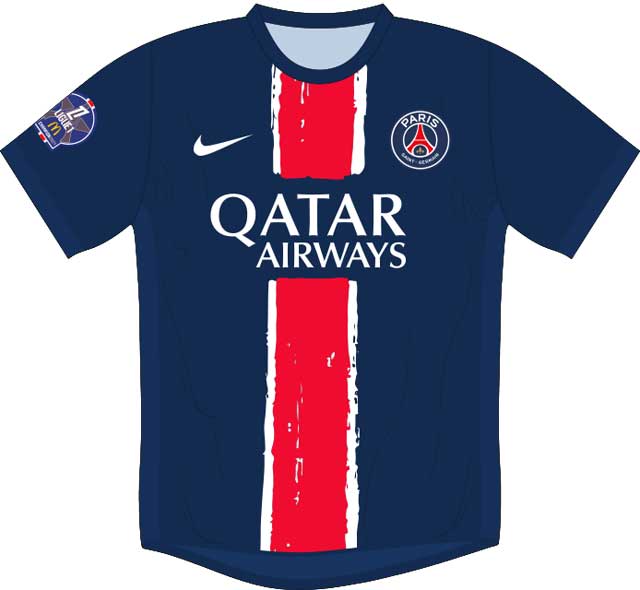
Paris Saint-Germain have a base colour of red, blue and white. The white represents the commune of Saint-Germain-en-Laye. The link between the club and fashion is strong, especially after Daniel Hechter became president in 1973. The blue shirt with a red vertical stripe, now the traditional home design, aka the "Hechter Shirt", has since become iconic. The shirt debuted against Red Star in the second tier, the first match at Parc des Princes for the club. Although rumours were that the design was based on Ajax's strip, Hechter has stated that the inspiration came from the Ford Mustang.

Access - Getting There
There are two ways to get to the stadium on the metro. One is via Porte de Saint-Cloud on Line 9, and the other via Porte d'Auteuil on Line 10.
To get to the arena from the Arc de Triomphe, take Line 6 to Trocadero and change trains there.
When using the bus, Lines 22, 62 and 72 are useful for Porte de Saint-Cloud and Lines 32 and 52 are recommended for Porte d'Auteuil.
It is generally a bad idea to get to the Parc by car, as there are no designated parking spaces, and visitors will encounter many security checkpoints.
The Stadium Tour is available during school holidays, every weekend from 10 a.m. to 5 p.m. (with the last tour starting at 5 p.m.), and on Fridays. It may also be open on matchdays.
The ground is across the street from the Stade Jean-Bouin - making them the two closest football stadiums in France just 30 meters apart.
Address: 24 Rue du Commandant Guilbaud, 75016 Paris, France
Nearby Hotels
Paris has hundreds of hotels to choose from. Close to the stadium is the Hotel Boileau or try the more upmarket Molitor Hotel & Spa Paris MGallery Collection.
Some other options include the 4-star Courtyard by Marriott Paris Creteil, the 3-star B&B Hotel Paris Créteil, the 3-star ibis Paris Porte d'Italie and the 4-star Novotel Paris 13 Porte d'Italie.
See a list of hotels in Paris.

More World Stadiums
Fenerbahce Sukru Saracoglu Stadium
Prince Faisal Bin Fahd Stadium
©Soccerphile.com
Buy tickets for soccer matches around the world