
Asian Cup: The Legacy
Paul Williams

With the AFC Asian Cup almost at an end, discussion now turns to the legacy the tournament will leave.Invariably when these discussions take place they focus on physical infrastructure - stadiums, training facilities and the like.
While this tournament won't leave any new stadiums, there has been over $1m directly invested by the Local Organising Committee in local facilities, mostly in pitch improvements and lighting upgrades that will be left to local clubs and associations once the road show leaves town.
However, the one lasting legacy from the tournament should be increased linkages between the A-League and Asia in the form of the 3+1 (or 4+1) rule.
There has been increased discussion in recent weeks and months regarding the FFA's proposal to decrease the number of foreign players from five to four, a proposal that is being fiercely resisted by the club owners.
The logical compromise is to keep it at five, but introduce a +1.
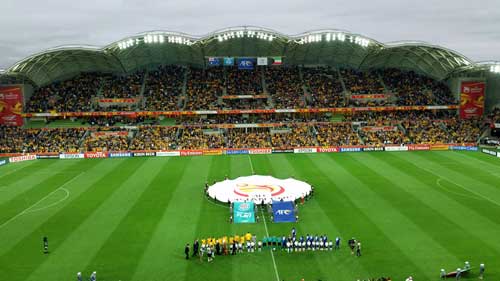
For those unaware, the +1 allows each team to sign one extra foreign player above the quota of four, provided they are from an AFC member nation. It actively encourages movement of players within Asia, and as a result we've seen countless Australians move to the continent and in recent years an increasing number of Korean and Japanese players move to either South East Asia or West Asia.
Most AFC member nations have adopted the rule for their domestic leagues, but Australia remains stubborn in its refusal to adopt the regulation.
Over the last two and a half weeks we have seen firsthand the talent that is on our doorstep, and there's even more from nations who haven't qualified, particularly in South East Asia - our home within the Asian continent.
So far A-League clubs, a few exceptions aside, have proven reluctant to scout and sign Asian players. I suspect that there's a perception that they're not good enough. Clubs would rather stick to the tried and true method of recruiting players from Europe or South America.
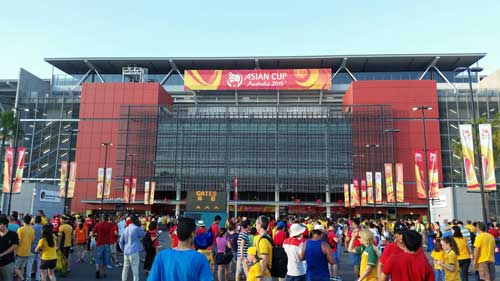
What we need to do is think outside the square and look at ways we can improve our relations with our northern neighbours. If it's driven by mandatory regulation in the early stages, so be it.
The JFA and J.League are increasing their work in South East Asia and making great inroads in the process. As one of the most developed nations in South East Asia we should be doing more within our own region.
We need to be creative in our thinking.
What I'd like to see is a scholarship provided by each club to develop players from South East Asia. Have one scholarship spot available at each club in their Youth League squad for a young talent from South East Asia, let's say a 16-17-18 year-old.
Introduce them into the A-League system, allow them to experience a professional set-up in a developed country that can allow them to grow as footballers and people. Provide them with two years of development and then make a call at the end of the two years. If they're good enough and get offered a professional contract, the club is granted a salary cap exemption and the player doesn't count towards the foreign player quota.
This will encourage clubs to put in the time, resources and effort into developing the player and the A-League will benefit with young, exciting talent from SE Asia. Over a 10 year cycle think of the number of players that could benefit and the benefits for football in South East Asia.
It might not be a perfect system, nothing ever is when you're trying to manufacture an outcome, but it is this kind of outside-of-the-box thinking that we need.
With just five days of the AFC Asian Cup remaining, now is the time to start having this discussion and start thinking about what legacy we want this fantastic tournament to leave.
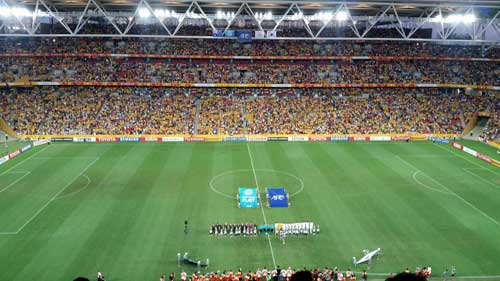
Asian Cup
The Asian Cup is the Asian Football Confederation's premier international tournament and is now held every four years.
The 2015 Asian Cup takes place in Australia.
The winner of the Asian Cup takes part in the Confederations Cup.
Buy tickets for soccer matches around the world