
Sven-Goran Eriksson
Sean O'Conor
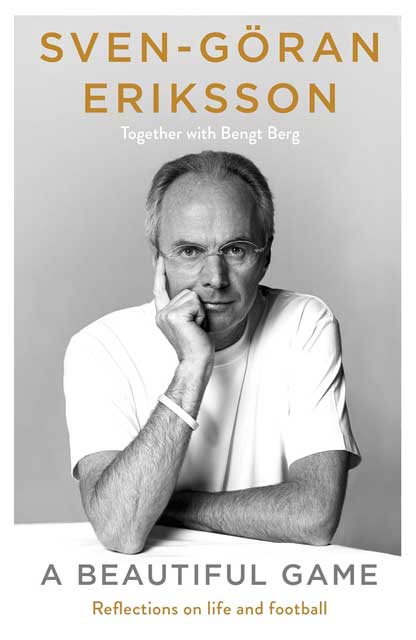
Sven-Goran Eriksson has died aged 76 after announcing he had terminal pancreatic cancer earlier this year.
He will be remembered of course as England's first foreign coach but should also be commemorated for bagging the first European trophy for a Swedish club when he guided IFK Gothenburg to the 1982 UEFA Cup, as well as having successful spells in Portugal and Italy.
Having imbibed the English school of 4-4-2 and zonal marking which came to Sweden via Roy Hodgson, who won the Swedish league with lowly Halmstad in 1976, and Bobby Houghton, who took Malmo to the 1979 European Cup final, he carried on its functional principles for the rest of his managerial career.
Eriksson's English grounding made him tailor-made for the England job, but he first enhanced his Swedish credentials with Benfica where he won the Portuguese championship and cup and took the eagles to the finals of the European Cup and UEFA Cup, no small feat.
Now one of Europe's top coaches, he responded to the call of Serie A from 1984, where he won the Coppa Italia with Roma and Sampdoria and briefly coached Fiorentina before moving back to the Stadio Olimpico with Lazio, where he brought the Biancoazzurri a trophy deluge of the Scudetto, two Coppa Italias and the Cup Winners Cup, as well as the Italian Super Cup and UEFA Super Cup.
By the turn of the millennium he was the top-rated coach on the continent, which made him England's No.1 target when the Football Association's Scottish-born chief executive Adam Crozier opted to headhunt the best man for the job. The home of football hiring outre-manche was anathema to many but Tony Blair's Cool Britannia was in full cry and London seemed to be swinging again with confident multiculturalism to the fore.
Eriksson's Scandi sangfroid still shocked many Brits used to effusive gaffers, as much as compatriot Bjorn Borg's iceman persona had surprised Wimbledon two decades earlier, but a dreamlike night in Munich in 2001 silenced the doubters as England trounced Germany 5-1 in World Cup qualifying for World Cup 2002.
A year later though a rejuvenated Mannschaft reached the World Cup final in Japan while the Three Lions lost in the quarter finals to a more creative Brazil.
The last eight proved Eriksson's England obstacle again at Euro 2004 and World Cup 2006 and the overall picture was of a team with an excellent goalkeeper and back four playing with a glut of great midfielders and strikers ahead of them who never really gelled.
Eriksson should really have dropped one or more of David Beckham, Steven Gerrard, Frank Lampard and Paul Scholes to better balance the midfield but kept faith with his stars.
The English press lazily dubbed them a golden generation but they never came close to silverware. Eriksson later reflected privately that English players lacked the intelligence of other countries' footballers.
Post-England, Eriksson flitted between clubs and nations and even returned to the World Cup with Ivory Coast in 2010 but maintained his on-field philosophy of solid pragmatism while using formations other than 442. While his sides never truly dazzled, they got results.
He always seemed decent, hard working and strong, unbowed by all the media brickbats that came his way. He stayed loyal to his players, perhaps too much, but kept friendships with them after coaching them. At all times, as they say in cricket, he played a straight bat. For a man so Scandinavian, his halcyon days came in the warm climes of the Mediterranean.
His life ended so abruptly in 2024 but his adios to the football world was wonderful - fulfilling a dream by coaching Liverpool legends at Anfield and imploring the football world to not feel sad but happy.
"Thank you for everything, coaches, players, the crowds. It has been fantastic. Take care of yourself and of your life. And live it. Bye."
© Sean O'Conor & Soccerphile
Buy tickets for soccer matches around the world