
WHO AM I? The Story of Qarabağ's Last Match in Karabakh
Rasim Movsumov
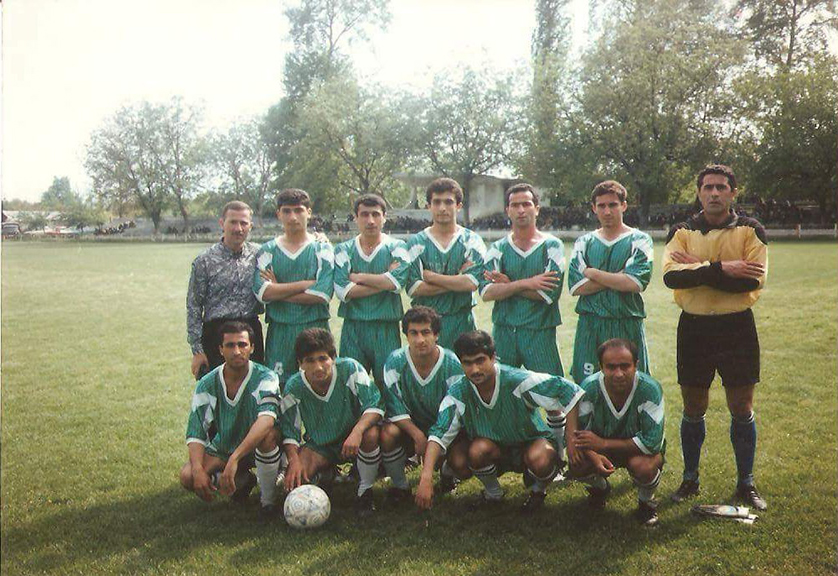
I am Qarabağ. A football club from Aghdam, named after the Karabakh region of south-western Azerbaijan - a place whose name I have carried with pride.
During the Soviet era, political pressure and ideological demands forced me to change my name several times. I was called Mahsul (Produce), Shafag (Dawn) and Kooperator (Co-operative). I finally reclaimed name Qarabağ in 1988, during Perestroika.
From 1993 onwards, I was known as a refugee club.
In 2017, following my historic qualification for the UEFA Champions League, the renowned German sports magazine Kicker described us as 'Heroes Without a Homeland'.
But who am I, really?
I am Jamaladdin Aliyev. I am Sattar Aliyev. I am Elshad Ahmadov, Aslan Kerimov, Zaur Garayev, Elfariz Isayev, Mehman Alishanov, Yashar Huseynov, Tabriz Hasanov, Mushfig Huseynov, Elshad Khudadatov and Mammad Mammadov.
I am the footballer who walked out on to the pitch at Aghdam’s Imarat Stadium for the last time on 12 May 1993, in the first leg of the Azerbaijan Cup semi-final against Turan Tovuz.
This is the story of that afternoon.
***
It is 1993. War is tearing through Karabakh.
Aghdam lives beneath the relentless thunder of rocket and artillery fire.
Training in our own city has become almost impossibly dangerous.
For nearly a year, Mingachevir, more than 100 kilometres away, has served as our place of exile.
Yet on matchdays, we make the exhausting journey home. It is a decision taken by the players and club management themselves.
No football authority orders us to do it. Nobody insists that we return.
We go because we want the world to know that Aghdam is still alive.
The match is hugely important, with a place in the cup final still within reach.
We arrive in Aghdam the day before the game and spend the night in a hotel, uncertain whether we will make it through to morning.
Still, we stay.
It is Wednesday, 12 May.
The weather could hardly be better for football.
We walk out on to the pitch in our purple shirts.
Our opponents, Turan Tovuz, have travelled to Aghdam despite the dangers. They are dressed in blue.
We look towards the stands.
By this stage, most of Aghdam's residents have already been forced to leave. Yet the official referee's report records a remarkable attendance of 8,000. Civilians and soldiers stand shoulder to shoulder.
Their presence gives us something difficult to describe: a mixture of pride, responsibility and an almost electric sense of purpose.
We have one objective. Reach the final, win the trophy and give our people something to celebrate — even if only for a moment.
To understand what that afternoon meant, however, we need to go back a little further.
In 1991, as the Soviet Union began to disintegrate, tensions across the region escalated. Qarabağ were competing in the USSR Second League, but 11 of our scheduled home fixtures in Aghdam were never played. Teams from Moldova, Belarus and Ukraine refused to travel into an active conflict zone. We were awarded 3-0 victories by default.
Then came 26 February 1992.
The Khojaly Massacre marked a devastating escalation in the war. Aghdam increasingly found itself under heavy artillery fire.
We had a player named Rizvan Valiyev, who came from neighbouring Shusha.
He had only recently joined the team and begun training with us.
When he returned to Shusha to visit his family, the helicopter carrying civilians was shot down by enemy forces.
Rizvan never came back.
His death was among the first losses our team suffered as a direct consequence of the war. But the tragedy also confronted us with another question: how could we keep a football club together, let alone compete, while everything around us was falling apart?
Azerbaijan's first domestic league season began in 1992.
For Qarabağ, even taking part was far from guaranteed. The war was intensifying, money was running out and the future of the club hung in the balance.
At our first pre-season training camp that year, we could not even assemble a full starting eleven.
It took a last-minute collection of funds from local businesses in Aghdam to get the team on to the pitch.
Football, quite literally, survived because people refused to let it die.
***
On 16 May 1992, we were scheduled to play Kapaz Ganja. Relentless shelling forced the match to be postponed.
When we eventually met them in Aghdam, on 24 June, another tragedy awaited us.
Allahverdi Baghirov — a former Qarabağ player and coach, and later recognised as a National Hero of Azerbaijan - had been killed in action.
Just before kick-off, we gathered for a minute's silence in his memory.
An artillery shell landed nearby.
Nobody moved.
During another match, against Khazar Sumgayit, a rocket struck close to the stadium. The visiting players threw themselves behind an old plane tree for cover. Play was suspended briefly before the game resumed.
Remarkably, teams continued to come to Aghdam.
Soldiers stationed on the front line would sometimes joke with visiting players, telling them: 'Don't worry. We've spoken to the other side. No shells will fall while the ball is rolling.’
It was a dark kind of humour, born out of circumstances that few footballers anywhere should ever have to experience.
On another occasion, a rocket struck the pitch just days before a fixture. The dedicated stadium staff managed to repair the damage and make the pitch fit for play in time for the match.
Seven members of our 1993 squad were born in Aghdam: Yashar Huseynov, Sattar Aliyev, Elshad Khudadatov, Mammad Mammadov and Mushfig Huseynov, as well as Vugar Jafarov and Zakir Maharramov, neither of whom featured against Turan.
While living in exile, every return to Aghdam offered us an opportunity to visit our family homes. We would look at the buildings, wondering anxiously whether they had survived another night of shelling.
Some had not.
Sattar Aliyev's and Elshad Khudadatov's homes had been reduced to rubble.
Yashar Huseynov had built a new house, but never spent a single night beneath its roof.
Then there was Vugar Jafarov. A rocket struck his family home.
His parents were killed.
The war was not something happening somewhere beyond the stadium walls. It had entered our homes. It had reached our families. It had taken people we loved.
***
Why did we continue playing football when our city was under attack? Why did we not put down our boots and pick up rifles?
National Hero Fred Asif's battalion was stationed at the club's base at the stadium. He himself had a background in both boxing and football. We pleaded with him to let us join his men.
He refused.
He believed that our contribution to the war effort was needed more on the football pitch than in the trenches. Soldiers would leave the front line to watch us play. For those 90 minutes, football offered them a brief escape from the horrors of war and a moment of peace.
He made us understand that we, too, were fighting for Aghdam and Karabakh in our own way. As he explained, continuing to play football under rocket fire was itself an act of courage.
***
And so we return to that Wednesday in May 1993.
Qarabağ against Turan Tovuz.
Kick-off.
Will the shelling begin again?
The match is refereed by Rustam Rahimov, widely regarded as one of Azerbaijan's finest officials of the 20th century, behind only the legendary Tofiq Bahramov and Eldar Azimzada.
In his autobiography, It Is My Destiny, Rahimov would later recall the experience:
'Whenever I think of Imarat Stadium, I feel a deep sorrow. I refereed Qarabağ's final match there ... I also had the opportunity to look around Aghdam. Little did I know that it would be my last time there. The situation in those days was extremely difficult. Rockets fell both near the stadium and inside it.'
***
The two teams were evenly matched.
In the 1992 league season, Turan had finished third and Qarabağ fourth. Both had once again established themselves among the strongest sides in the current campaign.
The football was open and attacking. Both teams looked for goals.
For 45 minutes, the game unfolded without interruption.
No rockets.
No shells.
Just football.
Half-time.
During an earlier fixture against Inshaatchi Baku, a rocket had landed near the stadium during half-time.
We tried to reassure our opponents that such incidents had become part of playing football in Aghdam.
The break lasted more than 15 minutes before the teams eventually returned to the pitch.
When the final whistle came, our opponents hurried straight on to their team bus and left the city without even stopping for a shower.
That was Aghdam.
***
The second half begins.
Will the shelling resume?
We press forward, determined to find a breakthrough.
Another attack develops. The ball is worked down the right, and a cross isdelivered into the penalty area. A defender gets a touch, but the clearance drops invitingly into the path of our midfielder, Yashar Huseynov.
He does not hesitate.
He strikes it with tremendous force.
The ball flies into the net.
Goal!
Qarabağ lead.
The stands erupt.
For a city living on the edge of destruction, this is more than a football goal. It is a declaration of defiance. A brief, beautiful reminder that life continues.
Years later, Yashar would look back on that moment with mixed feelings.
'I never wanted that to go down in history as the last goal ever scored at Imarat Stadium.'
***
Turan refuse to accept defeat. We push for a second goal, searching for the comfort of a more decisive lead.
It never comes.
The minutes tick away. The score remains unchanged.
Then the final whistle.
Qarabağ 1-0 Turan.
We have won.
The supporters applaud as we leave the pitch.
Once again, we have made it through an afternoon in Aghdam without losing anyone.
But now it is time to leave.
We board the bus and head back to Mingachevir.
We have no idea that we have just played our final match in our hometown, at the stadium that has been our home.
We still believe we will win the cup and bring it back to Aghdam.
We are wrong.
***
On 23 July 1993, Aghdam was occupied by Armenian forces.
The city we had returned to just weeks earlier was no longer ours to visit.
We went on to win both the league and the cup that season. On paper, it was a remarkable achievement. But the celebrations felt hollow.
How can you celebrate a trophy when your home has just been taken from you? How can you call yourself champions when the city you represent has been lost?
There was another thought that would haunt us for years to come.
Had Qarabağ not been forced into displacement, who knows how many more league titles we might have won? We had a formidable squad, with nine players competing for places in Azerbaijan's national team.
Our captain, Sattar Aliyev, expressed a dream that captured everything we had lost:
'My dream is to lead my team out onto the pitch for a European competition match in Aghdam.'
A dream not just of football, but of returning home and playing once more on the pitch where our story began.
Then came the difficult years of exile.
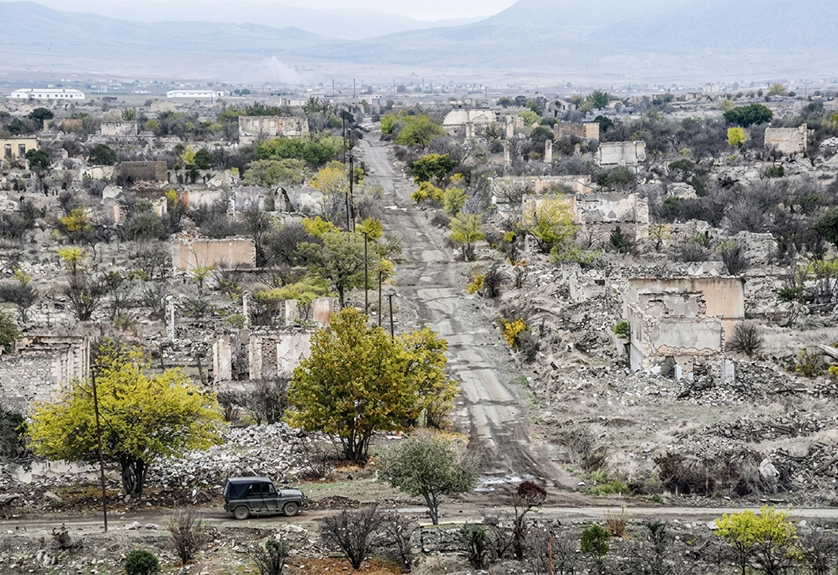
Aghdam, once a vibrant and bustling city, was reduced to ruins. For years, the outside world would know it as the 'Ghost City'.
In the years that followed, Qarabağ came close to extinction more than once. Financial difficulties, instability and the burden of displacement threatened the club's very existence.
Yet we endured.
Against the odds, Qarabağ gradually rose to the summit of European football, reaching the main stages of European competitions in 12 consecutive seasons, including two appearances in the UEFA Champions League.
From a team forced to play hundreds of kilometres from home, we became a club that could compete among Europe's elite.
But that is a story for another time.
***
So, who am I?
Allow me to introduce myself.
I am Aghdam. I am Qarabağ.
I am Aslan Kerimov, who earned 79 caps for the Azerbaijan national team between 1994 and 2008 and later served as an assistant coach under national team head coach Berti Vogts.
I am also Zaur Garayev, Elshad Ahmadov, Tabriz Hasanov, Jamaladdin Aliyev and Mushfig Huseynov, now an assistant coach at Qarabağ. Each of us represented Azerbaijan at different points between 1992 and 1995.
I am Elshad Khudadatov, a member of the Azerbaijan youth team that won the Soviet Union's Hope Cup in 1982.
I am Sattar Aliyev, team captain, affectionately known as 'The Englishman'.
I am Yashar Huseynov, the man who scored the final goal at Imarat Stadium.
I am Mammad Mammadov, Mehman Alishanov and Elfariz Isayev.
But I am more than the players who wore this shirt.
I am every supporter who stood in those stands, every soldier who found a brief moment of peace in our football, and every person who never stopped believing that one day we would return.
Together, we are the story of Qarabağ — a story of memories, sacrifice, resilience and an unbreakable bond with our home.
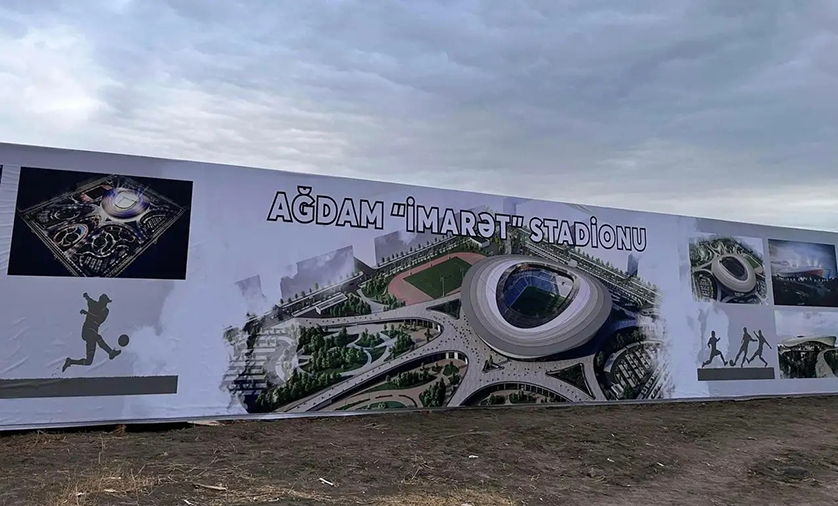
And I am still dreaming of the day when I can return to the new Imarat Stadium, now under construction in Aghdam, which has been gradually returning to life since Azerbaijan reclaimed Karabakh region a few years ago.
My story is far from over.

Rasim Mövsümov
Ballon d'Or Award Juror
Other Articles by Rasim Mövsümov
Champions League Preview 2026-2027
Buy tickets for soccer matches around the world