
Korean Word Glossary

A glossary of Korean words and phrases from Anju to Yeogwan. See a list of important Korean cultural words and terms with an explanation in English. Also listed are common Korean acronyms (AREX, DMZ, KAL, KNTO, KOSIS, ROK, USO etc), Korean food words and historical words. Further information on many of the listed terms is available via accompanying links.
A B C D E F G H I J K L M N O P Q R S T U V W X Y Z
A
Aegukga (애국가) - South Korean national anthem.
Aegyo - cute, cuteness, similar to kawaii in Japanese.
Ajeossi - an older married man.
Ajumma - an older married woman.
-am - hermitage.
Amado - maybe.
Aniyo - no.
Anju - bar snacks.
Annyeonghaseyo - hello.
Arex - (Airport Express) train from Incheon Airport into Seoul. Read more about Arex.
Army - "the Army" - global mass of BTS fans.

B
Baekje - Korean kingdom in southwestern Korea from 18 BC to 660 AD.
Baesanimsu - geomancy.
Bae Yong-joon - former Korean actor and heart-throb star of Winter Sonata.
Bap - rice.
Bang - room.
Bawi - large rock, boulder.
Bballi Bballi - quickly quickly.
Bbang - bread.
Banchan - Korean side dishes.
Beast - former K-pop boy band now known as Highlight.
Big Bang - K-pop boy band with four members: G-Dragon, T.O.P, Taeyang, and Daesung.
Blackpink - K-pop girl group.
Blue House - Korean equivalent of US White House.
BoA - K-pop band.
Bon-gwan - Korean clans.
Boshintang - dog meat stew.
BTS - aka Bangtan Boys, a hugely popular South Korean boy band formed in 2010.
Buk - north.
Buk - traditional Korean drum.
Buldak - fire chicken - heavily spiced, barbecued chicken.
Buncheong - Joseon dynasty style of pottery.
Burberry Man - flasher.
C
Cagongjok - a tribe of mainly young people who study at cafes.
Cha - tea.
Chaebol - or jaebol is a large Korean conglomerate, for example Samsung, Hyundai, LG, SK.
Charye - ceremony.
-cheon - stream.
Cheongdo So Ssa-eum - Korean Bull Fighting.
Cheong Wa Dae - Blue House.
Cheonmin - lowest social class in Joseon days.
Chigae - a Korean stew.
Chimaek - (치맥), also spelled "chimac" or "chimek" - a compound word from chikin 'fried chicken', and maekju 'beer'.
Chimek - chicken and beer restaurants.
Chogori - traditional blouse worn by a single Korean woman, often yellow.
Chogye - largest sect of Korean Buddhism.
Chosun Ilbo - Korean daily newspaper.
Chuseok - Korean Thanksgiving.

D
Dae - large, big.
Daebak - Wow! Jackpot.
Daegu - third-largest city in Korea after Seoul and Busan. Read more on Daegu.
Daegeum - traditional Korean bamboo flute.
Dancheong - traditional color scheme of Korean temples.
Dangun - mythical founder of Korean nation.
DDP - Dongdaemun Design Plaza.
DIWF - Daejeon International Wine Festival.
DMZ - Demilitarized Zone dividing North and South Korea along the 38th Parallel.
-do - province; Korea has 9 provinces.
Dong - east.
Donga Ilbo - Korean newspaper.
Dongchimi - type of kimchi.
Dongdongju - milky rice wine similar to makkeoli.
Dowa juseyo - help.
DPRK - North Korea (Democratic People's Republic of Korea).
Dubu - bean curd, tofu.
Durumagi - traditional Korean coat.

E
eok - one hundred million.
EPIK - English Program in Korea.
Eumju-ga-mu - drinking and having fun.
eup - town.
Ewha Woman's (sic) University - world's largest university for women.
F
FSS - Financial Supervisory Service.
G
Galbi - Korean dish of grilled beef or pork.
-gang - large river.
Gangam Style - dance craze inspired by song of the same name by Psy.
Gayageum - a harp-like or zither-like traditional Korean instrument.
Geobukseon - turtle ships of Admiral Yi in 16th century to fight the Japanese.
-gil - street.
Gim - seaweed.
Girls' Generation - K-pop royalty going strong since 2007.
GIST - Gwangju Institute of Science and Technology.
g.o.d. - K-pop band - Groove Over Dose.
Gomapseumnida - thank you.
Gung - palace.
-gu - division of a city.
Gun - county.
Gwaen-chan-a-yo - okay.
Gwageo - Joseon dynasty civil service exams.
Gyopo - overseas Koreans.

H
Hae - sea
Haenyeo - female pearl divers similar to Japan's ama.
Hagwon - cram school.
Hakwon - private educational institution.
Hallabong - cross-breed mandarin oranges from Jeju Island.
Hallyu - Korean new wave cinema and TV dramas.
Halmoni - lit. grandmother or term of respect for old woman.
Halsam - sea cucumbers.
Hangul - Korean alphabet (Hangeul). Read more on the Korean language.
Hangul Day - October 9.
Hanja - Chinese characters.
Hanji - traditional Korean paper that is handmade.
Hanok - traditional style of domestic architecture.
Hareubang - "Grandfather" stone statues on Jeju Island.
Hof - beer bar/pub.
Hongdae - entertainment area in Seoul.
Hongeo - fermented fish.
H.O.T - first generation K-pop idol band - Highfive Of Teenagers.
Hwaishik - after-work company drinking.
Hwajang-shil - toilet.
Hyundai - famous Korean corporation.
Hyung - older brother (used by boys).

I
Imjin River - site of famous Korean War battle.
Insa-dong - district of Seoul famous for its shopping. Read more on Insa-dong.
Insam - ginseng.
Itaewon - cosmopolitan, entertainment area close to a US base in Seoul. Read more on Itaewon.
J
Jaebol - see chaebol.
Jaeki-chagi - traditional game.
Jakmyeong - name-making, naming process.
Jang - condiments.
-jeon - temple hall.
Jeong - feelings of fondness between individuals.
Jeongshil - favoritism.
Jeonhwa beonho - telephone numbers.
Jeonse - housing deposit.
Jesa - ceremony to remember a deceased relative.
JIFF - Jeonju International Film Festival. Read more about Jeonju.
Jimjilbangs - family-orientated sauna complexes.
Jipan - family group, household.
Joesonghamnida - sorry.
Jokbo - family record.
Joseon - Korean dynasty from 1392-1897.
Juche - North Korean state ideology.
Jungin - middle class of the Joseon Period.
Jungmae - matchmaking.
Jungmae-in - matchmaker, go-between.
Juseyo - please.

K
Kaenip - perilla leaves (shiso in Japanese).
KAIST - Korea Advanced Institute of Science and Technology.
KAL - Korean Air (Korean Air Lines before 1984).
KARI - Korea Aerospace Research Institute.
KCNA - Korean Central News Agency - the state news agency of North Korea.
K-drama - Korean language TV drama.
Kal-guksu - summer noodle dish.
KICS - Korea Christian International School.
Kimchi - pickled cabbage and iconic Korean food.
Kim Il Sung - The 'Great Leader' of the North, died 1994.
Kim Jong Il - the son, led North Korea from 1994 to 2011.
KISA - Korea Internet & Security Agency.
KISDI - Korea Information Society Development Institute.
Kkaeguksu - (깨국수) sesame noodle soup.
KNTO - Korean National Tourism Organization.
Konglish - variety of English unique to Korea, for example, Grand Open, Skinship, Ssain (sign).
KOSIS - KOrean Statistical Information Service.
Kochukaru - crushed red chili powder.
Kong-guksu - cold soy milk noodle soup.
KPA - Korean People's Army (North Korea's Armed Forces).
K-pop - Korean popular music - Read more on K-pop.
KRAFTON - Korean video game developer and distributor.
KTX - Korean bullet train. Read more on KTX.
L
Leeds days - (리드 시절, Lijeu Sijeol) is slang meaning someone's prime, golden age, or peak time, like their youth or height of fame/wealth, originating from English football star Alan Smith's brilliant but short-lived peak at Leeds United before his transfer to Man Utd, with millions now using the term even without knowing the origin. Younger Koreans often shorten it to just "Leeds".
Lotte - large Korean-Japanese conglomerate.
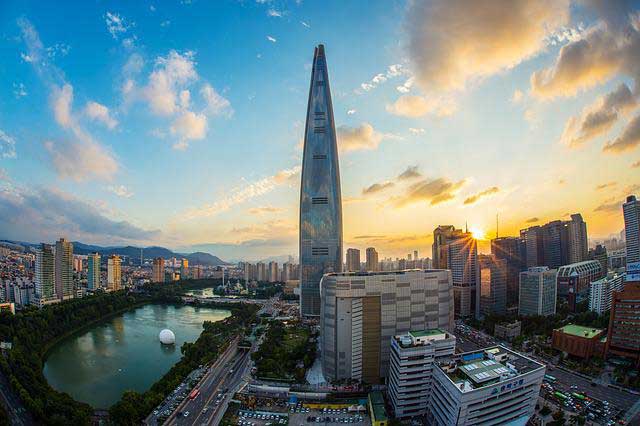
Lotte World Tower - the tallest building in South Korea at 555.7 meters (1,823 feet), and 123 storeys.
LG - Lucky Goldstar, Korean chaebol.
M
Maekju - beer in Korea. Read more on drinking in Korea.
Makgeolli - (makkoli) traditional Korean rice wine. Read more on makkoli.
Man - 10,000.
Mandu - dumplings.
Manwha - comic books (similar to the Japanese word manga).
Meongge - sea squirts.
Minbak - rented rooms in private houses.
Moonies - colloquialism for followers of The Family Federation for World Peace and Unification, aka the Unification Church.
Mugunghwa - third tier Korean train.
Mukbang - online show in which a host consumes various (often large) quantities of food while interacting with the audience.
Musok - shamanism.
Musok-in - shamanist, usually female.
Myeondong - popular shopping street in Seoul.

N
Nakhasan - parachute appointment, similar to amakudari in Japan.
Nam - south.
Namsadang - itinerant performers.
NCSoft - video game developer and publisher.
Ne - yes.
Netmarble - mobile game developer.
Nexon - a South Korean video game publisher specializing in online games for PC and mobile.
NMK - National Museum of Korea - the country's largest museum in Seoul.
Nocheonnyu - woman seen as past marriageable age.
Noona - older sister (used by boys).
Noraebang - karaoke box.
NTOK - National Theater of Korea.
Nyong - mountain pass.
O
OhmyNews - (오마이뉴스) a South Korean online news website with the motto "Every Citizen is a Reporter."
Ojing-eo - squid.
Oncheon - hot spring bath.
Ondol - underfloor heating system.
Onggi - (옹기, 甕器) Korean earthenware.
Oppa - older brother (used by girls).
Oti-gogi - duck meat.
P
Pansori - traditional Korean opera.
Park Chung Hee - president 1961-1979, assassinated by KCIA chief.
PC bang - internet cafe.
PiFAN - Puchon International Fantastic Film Festival now known as BiFan - Bucheon International Fantastic Film Festival.
-pokpo - waterfalls.
Ppongjjak - style of music more commonly known as trot.
Pujok - traditional amulet or lucky charm.
Pulgasari - Godzilla-style monster movie set in medieval Korea by director Shin Sang-ok.
Pulgogi - barbecued beef.
Pyeong - traditional unit of measurement, 3.3 suare meters used for floor spaces in homes and offices.
Q
Queen Min - Empress Myeongseong (1851 – 1895).
R
Ramyeon - Chinese noodes - ramen in Japan.
Red Devils - Korean soccer fans.
ROK - Republic of Korea.
Room Salon - Hostess Bar.

S
Saemaeul - Korean second-tier train.
Sangmin - farming class in Joseon era.
Sanseong - mountain castle.
Seo - west.
Seon - arranged date with view to marriage.
Seonsaengnim - honorific name for "teacher".
Seoul - South Korean capital.
Seowon - Joseon era Confucian academy.
Shinhwa - six-member boy band based in Seoul.
Sijang - market.
Sijo - traditional Korean poetic form.
Sikdang - restaurant.
Silla - old Korean kingdom.
SK - formerly Sunkyoung Group, large Korean chaebol - indeed, the second largest in the country.
Sogaeting - blind date.
Soju - clear Korean spirit about 25% proof.
Squid Game - (오징어 게임) a South Korean survival drama series released on Netflix in 2021.
Ssireum - Korean wrestling.
Sukgat - chrysanthemum leaves.
Suneung - university entrance exam.
Sungmu- traditional drum dance.
Sunshine Policy - rapprochement with the North.

T
Taegsi - taxi, cab.
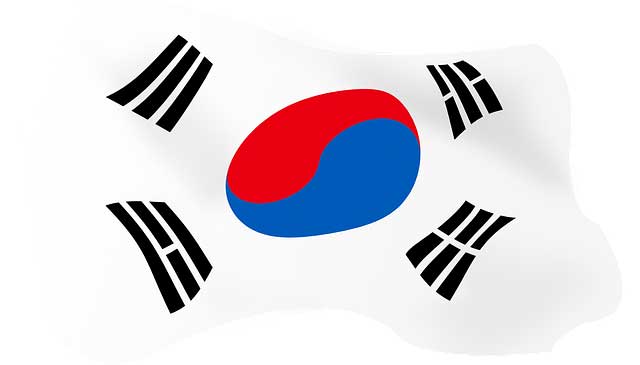
Taegukgi - Korean flag.
Taekwondo - Korean martial art. Read more about taekwondo
Tap - pagoda.
Tongil - idea of unification of the Korean peninsula.
Tongmu - comrade.
Trot - old-style Korean music from the early 1900s, aka ppongjjak.
TVXQ - K-pop duo.
Twice - K-pop girl group composed of nine members.

U
Umchinah - "mother's friend's son" - unseen, often mentioned competitior in life.
UNESCO - UNESCO World Heritage Sites in Korea.
Unnie - older sister (used by females).
USFK - United States Forces Korea.
USO - United Service Organizations.
V

W
Woeguk-in - foreigner.
Won - Korean currency.
Wonder Girls - K-pop stars.
Woori - sense of "us" or "we".
X
Y
Yak - medicine.
Yangban - highest scholar class in Joseon era.
Yeogwan - traditional Korean accommodation.
Yeonhee-dong - area of Seoul.
Yeoinsuk - similar to yeogwan but with communal facilities.
Yi-Yi - aka Lee Yulgok - Korean philosopher, writer, and Confucian scholar of the Joseon Dynasty.
Yuhaeng - trendy.
Z
Related Glossary Articles
Book Hotel Accommodation in Seoul
Hotels in Korea - Booking.com