
Poland City Guides: Auschwitz-Birkenau
Auschwitz-Birkenau Concentration Camps

Travelers to the old Polish capital of Krakow in the south of Poland invariably include a visit to the former Nazi concentration camps of Auschwitz and Birkenau about 50 km to the west of the city in their itineraries.
For many of the young visitors to Auschwitz, the tragic events that happened here during World War II are a distant memory. For people in their 20s, Auschwitz has become another stop on the modern European tour to be seen along with the Eiffel Tower, the Vatican and Big Ben.
For this reason the museum at Auschwitz is targeted at the young, with hundreds of thousands of school children from all over Europe, but particularly from Poland and Germany, visiting each year, so that the crimes against humanity that took place here will not be forgotten by future generations.
However, for older people in their 50's or upwards, the UNESCO World Heritage listed Auschwitz-Birkenau sites retain a special resonance and immediacy and make them a must-see if you are spending any time in the Krakow area during your visit to Poland.
The two camps of Auschwitz and Birkenau, just a few kilometers apart, are close to the Polish town of Oswiecim, which the invading Germans renamed Auschwitz in 1939.


Early History of Auschwitz
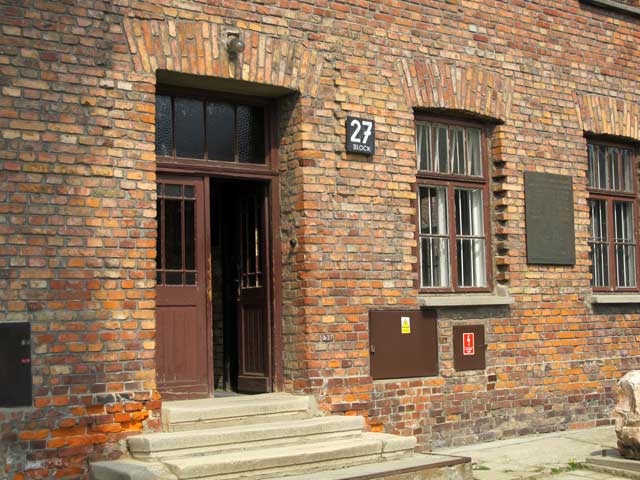
The Auschwitz concentration camp was established in 1940 in existing, brick Polish military barracks and at first housed Polish political prisoners, Soviet prisoners of war and a growing number of Jews. Later the existing Polish population living in a large radius around the camp was evicted to maintain secrecy surrounding the horrors that were to unfold.
At first the prisoners were forced to work in arms factories on site and harsh punishments and torture became commonplace. A gas chamber was constructed by the SS in 1941 and the murder of prisoners using Zyklon B gas began with their remains burnt in an adjacent crematorium. Both the gas chamber and the crematorium remain in Block 11.
Birkenau
Auschwitz I was proving to be too small for the mass murder now underway, so in 1941 the construction of the vast Auschwitz II-Birkenau was begun by the Nazis.
The brick command post, the railway line, the barb wire, guard posts and the huge scale of Auschwitz II-Birkenau will be recognisable to people who have seen the movie Schindler's List. It is truly a chilling place.
The adoption of the so-called Final Solution at the Wannsee Conference in January 1942, was to see Auschwitz II-Birkenau turned into an extermination camp for Europe's Jews and it is estimated that 1.3 million Jews were killed at Auschwitz along with 150,000 Poles, 23,000 Roma and Sinti, 15,000 Soviet prisoners of war as well as thousands of other nationalities.

Selection
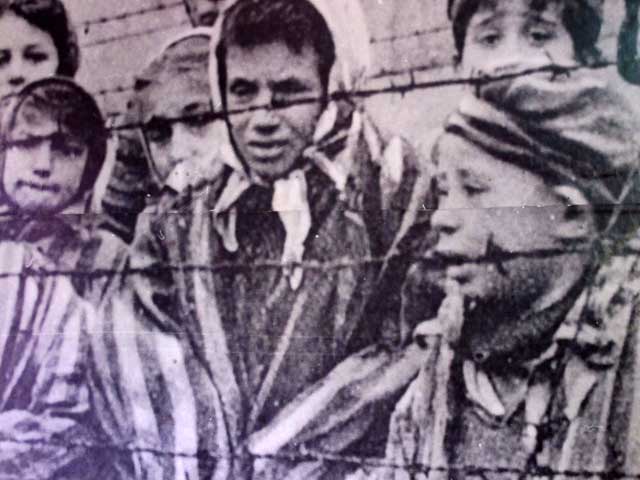
Prisoners, now mostly Jewish, began to arrive at Auschwitz from all parts of the Third Reich packed into cattle trucks and goods wagons and transported by train. Once inside the camp the infamous "selection" process began with those fit enough to work being divided from the rest (mostly children, the elderly and women with children) who were gassed.

Auschwitz Museum
The concentration camps at Auschwitz and Birkenau were turned into a museum in 1947 and after the fall of communism in 1989 more focus was placed on the genocide of the Jews that took place. Visitors enter through the infamous "Arbeit macht Frei" arch into Auschwitz I. Visitors are divided into language groups each person with a headset which allows the guide to explain the various exhibits as your group passes from building to building. The various blocks house such grisly exhibits as the victims' suitcases, artificial limbs, spectacles, pots and pans, empty Zyklon B gas canisters and even human hair. Photographs of the victims and hundreds of typed documents can also be seen as well as the Death Wall, where prisoners were executed, a gas chamber and ovens.
If you are part of a guided tour coming from Krakow, you will be taken by bus to nearby Birkenau where you enter through the brick arched watch tower following the railway line. A few wretched wooden huts reveal the awful conditions inmates were forced to endure and your tour will also take in the remains of the gas chambers dynamited by the Nazis as they were forced to flee from the advancing Soviet forces and stone memorials erected in various languages.

Getting To Auschwitz From Krakow
Air
The John Paul II International Airport is 15 km (ten miles) from the center of Krakow. There are taxis, an airport train to the main railway station, or municipal bus lines #292, #208, and nightly #902.
Flights arrive from around Europe and North America often via Frankfurt. There are direct flights to London, Vienna, Paris and Rome. There are short-hop budget connections to Malaga and Dublin. There are also connections to both Chicago and less frequently New York.

Rail
From Warsaw, a high-speed train takes under three hours with onward connections to Gdansk. From Krakow to Wroclaw is a slow, five hour journey. Similarly Poznan is a long 7 hours+ journey.
Bus/Car
Take the Autostrada A4 from the German border - where it meets the Autobahn A4 - to Kraków. There are highway buses to Warsaw but no bus connections to Wroclaw.

Getting To Auschwitz By Tour Or Public Transport
The easiest way to see Auschwitz is to join a guided bus tour from Krakow. The tourist office at Rynek Glowny Kraków; Tel 12 433 73 10 has pamphlets showing the various tours on offer which include the bus to and from Krakow and the price of the tour of Auschwitz. It is also possible to make your own way to the camps by bus via Oswiecim. By train you would arrive in Oswiecim from Krakow, where you would need to take a taxi the 2km to the camps.
Accommodation in Krakow
Hotels in Poland - find and book hotels in Poland with Booking.com
Hotels in Poland - compare and book hotels in Poland's major cities with Agoda.
Hostels & budget hotels in Poland - low cost accommodation in Poland.
Recommended Hotels in Krakow
Grand Hotel, Slawkowska 5 Kraków, Poland; Tel: 012 424 08 00
Hotel Polonia, ul. Basztowa 25, Kraków, 31-156; Tel: 012 422 12 33
Stary Hotel is a recommended luxury, five-star hotel in Krakow.

Related
Dachau Concentration Camp Memorial
Books on Poland
Buy tickets for soccer matches around the world