
Luxury Saint Petersburg
Daniel Allen
On 24 February 2022, Russia launched an unprovoked, large-scale military invasion of Ukraine, its neighbor to the southwest, marking an escalation to a conflict that began in 2014 with the Russian annexation of Crimea and the Donbass region.
Fit for a Tsar: Riches and refinement in the imperial Russian city of St. Petersburg
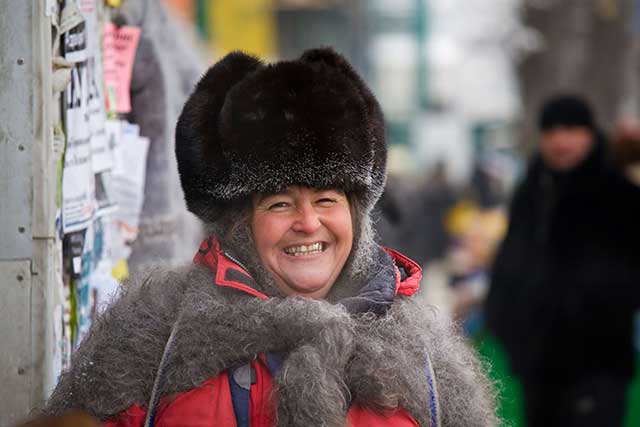
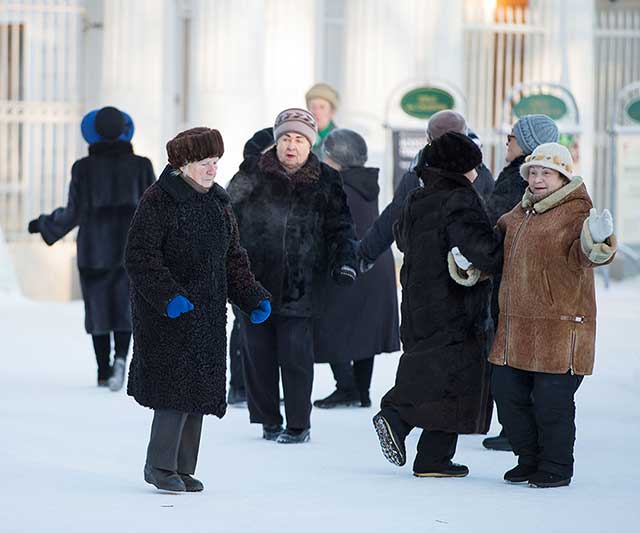
As thick flakes of snow begin to drop from a darkening sky, the cafes and boutiques of Nevsky Prospekt entice well-wrapped shoppers with light, warmth and romantic promise.
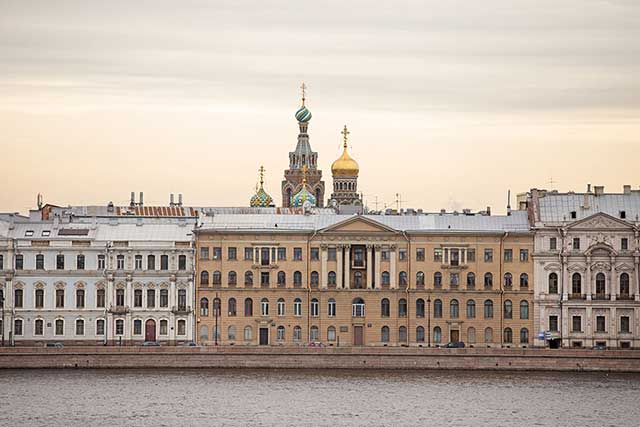
Gently kindled by an array of spotlights, the nine domes and gingerbread exterior of the Church of Our Saviour on Spilled Blood throw fairy-tale reflections across the ice-free waters of a nearby canal. Here, in the heart of St. Petersburg, winter finds this beautiful Russian city aglow with seasonal charm.

St. Petersburg in Winter
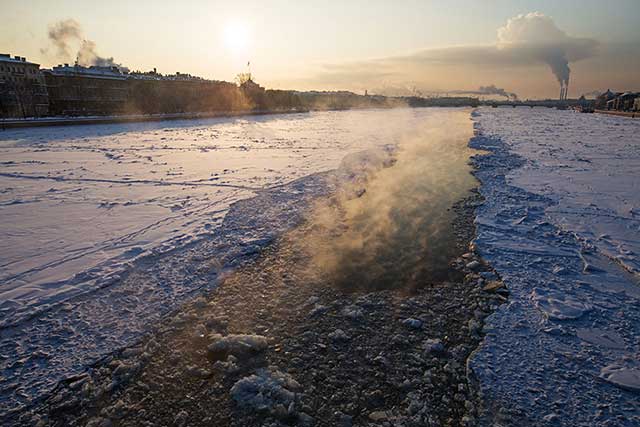
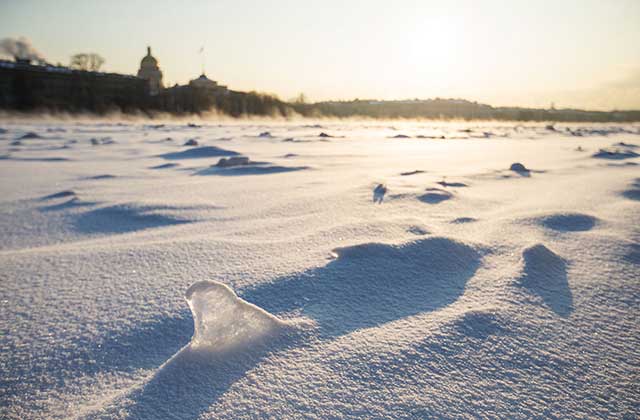
It may have defeated a succession of earlier invaders, but the Russian winter is actually the perfect time to visit St. Petersburg. Bisected by the mighty River Neva and boasting a never-ending succession of ornate architectural masterpieces, this north European metropolis has the look and feel of an enchanted city, especially when draped in a thick mantle of snow.
It was on Russia's Baltic coast that Tsar Peter the Great (1672-1725) founded St. Petersburg in 1703 as "a window onto Europe" and today the city remains a glittering shopfront for the entire Russian nation. Known affectionately as "Piter" by locals, this is Moscow's prettier younger sister - more elegant, more cultured, more welcoming.
"There is so much to see in St. Petersburg that many Muscovites call it Russia's biggest museum," says Anna Kagan, public relations director at St. Petersburg's exclusive Kempinski Hotel Moika 22 with a laugh. "In return, many of us view Moscow as Russia's biggest village."
For nearly two centuries St. Petersburg was Russia's imperial capital, so it's little wonder that the city has long been renowned for its elevated entertainment. Excerpts from Alexander Pushkin's poem Eugene Onegin illustrate how hedonistic young men once amused themselves here with endless balls, soirees, plays, recitals and lavish, multi-course banquets.
Palaces
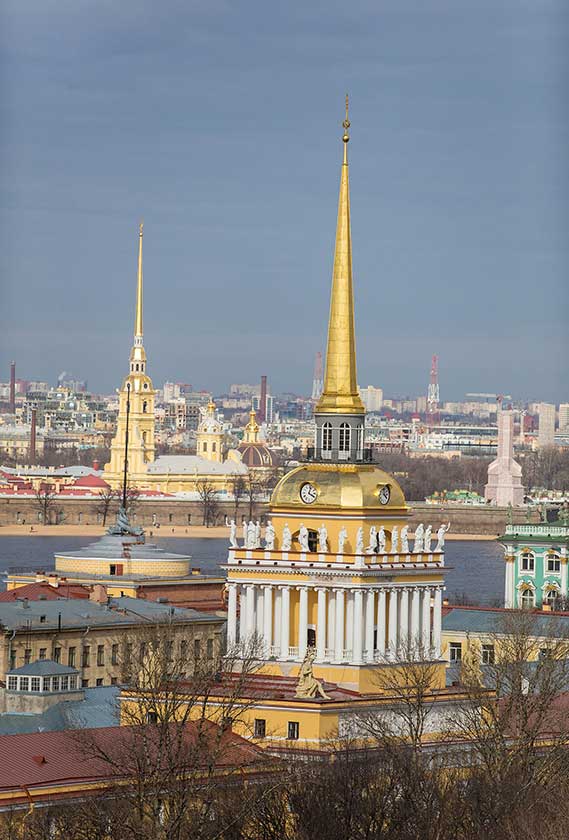
While Peter the Great's ambitions went way beyond the creation of sumptuous architecture, he was the first of the Russian tsars to build palaces for state functions, for theatrical productions, for the display of artwork. Located just outside St. Petersburg, his palace at Peterhof - known as the "Russian Versailles" - dazzled overseas visitors with its pools, fountains, manicured gardens and exquisite interiors.
"You could say that Peter the Great was the real creator of luxury in Russia," says Kagan. "He wasn't given to indulging in great luxury himself, famously living in a small wooden house while the city was built. However, it was under his reign that St. Petersburg became one of the most sophisticated and sybaritic of European capitals."
Luxury Tours
Three centuries later and today St. Petersburg is once again a place of refined pursuits. Despite all that history has thrown at it, the city in winter still feels every bit the imperial capital, frozen in time as well as weather.
With its long interweaving canals and wide boulevards lined with beautiful baroque and neoclassical buildings, there is no better place in Russia to enjoy a few days of personal pampering.
Back in 2003, to celebrate the 300th anniversary of the city, Russian president Vladimir Putin (a Petersburger born and bred) had every square metre of St. Petersburg's centre thoroughly cleaned and restored.
Millions of rubles and oceans of paint were lavished on the historic quarters, as classical facades once again regained the appearance of a newly concocted confectioner's fantasy.
What better place to start a luxury tour of St. Petersburg than Nevsky Prospekt, the city's take on the Avenue des Champs-Élysées.
"There is nothing finer than Nevsky Prospekt, not in St. Petersburg at any rate, for in St. Petersburg it is everything…", waxed the great Russian author Nikolai Gogol more than 150 years ago. Today this commercial artery is home to some of the finest shops, cafes and restaurants in Europe.
Sprawling at the intersection of Nevsky Prospekt and Sadovaya Street, Great Gostiny Dvor is not only St. Petersburg's oldest shopping centre, but also one of the first shopping arcades in the world.
Today this indoor complex of more than 100 shops sells just about everything, from 150,000 ruble (US$2500) dresses and sable jackets through to Italian briefcases and French fountain pens.
The passazh, an enclosed row of shops leading back from a main street, is a concept left over from Russia's pre-revolutionary years.
Many in St. Petersburg have now been beautifully restored and house designer boutiques and upmarket beauty salons. Be sure to check out Passage (48 Nevsky Prospekt), opposite the impressive Kazan Cathedral, and the newer Grand Palace (44 Nevsky Prospekt), both housing an array of fashion emporia and high-end chocolatiers.
"When you've done shopping head to Dom Knigi, St. Petersburg's central bookshop," advises Ala Osmond, director of UK-based luxury Russian tour company Exeter International.
"On the second floor of this beautiful art nouveau building is Cafe Singer, which offers fantastic views of Kazan Cathedral and Nevsky Prospekt, not to mention some of the best coffee, pelmeni (dumplings) and blinis (pancakes) in town."
Also on Nevsky Prospekt is one of Europe's grandest hotels - the aptly named Grand Hotel Europe. Playing a central role in the social life of the city for over 130 years, this St. Petersburg institution has hosted dignitaries from across the globe since it first opened its neo-Baroque doors in 1875. Those who stay here today follow in the footsteps of Tchaikovsky, Anna Pavlova, Bill Clinton and Queen Elizabeth II.
"Check out the hotel's Caviar Bar for St. Petersburg's finest selection of caviar," says Ala Osmond. "Nothing says Russia more than this delicacy and there's no better place to sample it. Simply revel in the Art Nouveau interior while your helpful waiter plies you with gustatory delights."
St. Petersburg Art
Whatever Muscovites may say, St. Petersburg truly is a hotbed of classical and contemporary culture. Rapidly emerging from the shadow of the Russian capital, these are exciting times for art on the banks of the Neva. With new galleries and boutiques opening monthly across the city, there's no better time for the art-minded traveller to pay a visit.
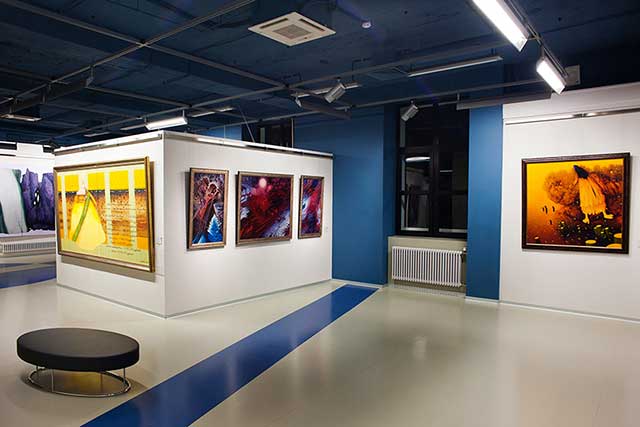
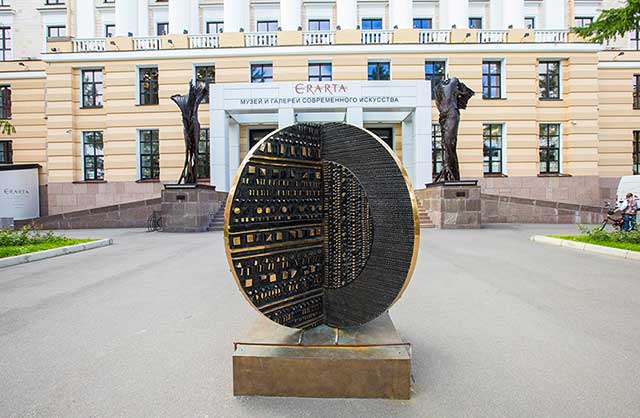
"In recent years there has been an incredible surge of interest in contemporary art in St. Petersburg," says Elizaveta Shagina, a curator at the Erarta Museum and Gallery of Contemporary Art. "Now undergoing gentrification, this city is home to huge industrial buildings which are increasingly being converted into workshops and exhibition spaces. These spaces are very popular with young people.
"The state of Russian art over the last century is very interesting," continues Shagina. "During Soviet times it consisted of either heavily politicized work or the 'underground' art of freedom-loving artists. The creative practices of the late 80's and 90's then became the 'new avant garde', and we are currently building on those foundations."
A must-see on any St. Petersburg art tour, Erarta was founded recently by a local philanthropist and Russian contemporary art lover. Housed in an ornate classical mansion, it boasts a museum on one side and a gallery on the other. One of the aims of the latter is to promote up-and-coming contemporary artists on the global stage - there are also Erarta galleries in New York, London, Zurich and Hong Kong.
Russian attitudes toward contemporary art are now certainly changing dramatically, especially in big cities such as St. Petersburg. In the more conservative museums and galleries watchful attendants still patrol each room, waiting to pounce on overly tactile visitors. But in the more innovative spaces - such as Erarta's thought-provoking installations - interaction with the artwork is now positively encouraged.
Mariinsky Theatre
In the halls and corridors of St. Petersburg's Mariinsky Theatre an expectant hum of conversation builds. With less than an hour until curtains up, the excitement is palpable and infectious. Clutching champagne flutes and smoked salmon sandwiches, prim babushkas and elegantly attired young couples mingle with schoolchildren and aficionados holding opera glasses.
The names Petipa, Pavlova, Nijinsky, and Nureyev - and myriad others associated with the theatre and the evolution of ballet in St. Petersburg - are more than enough to attract ballet lovers to the Mariinsky from far and wide. The theatre has long housed one of the world's best ballet companies, producing a plethora of stars and shows every season.
While many ballet companies do Tchaikovsky's Swan Lake well, the Mariinsky elevates it to another realm, with serried ranks of perfectly even, perfectly aligned dancers, each downy-soft swan maiden moving in hypnotic harmony.
"The consistent visual beauty of the Mariinsky Ballet's production of Swan Lake is simply fantastic," says Anna Kagan. "No other staging today so perfectly locates this ballet in the medieval age of chivalry; no other sets, costumes and lighting are so ravishingly satisfying. If you're in St. Petersburg and it's on, I strongly recommend a viewing."
The Hermitage
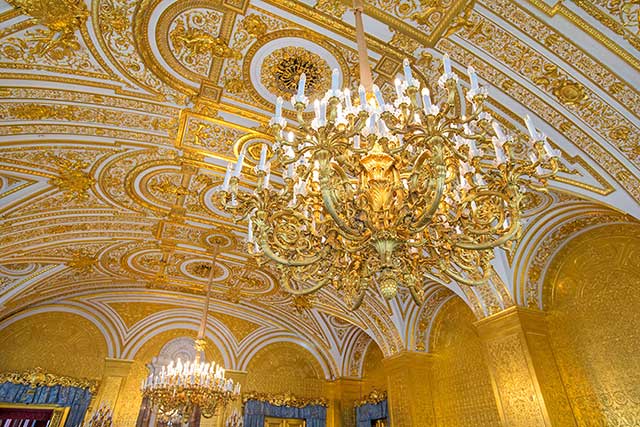
When you're tall, dark and male there's always work to be had impersonating Peter the Great. Palace Square, St. Petersburg's main plaza, is frequently filled with multiple clones of the city's famous founder, entertaining snap-happy tourists and earning a rouble or two at the same time. Behind these would-be regal look-alikes stands the main entrance to the Hermitage, for many visitors St. Petersburg's top attraction.
One of the largest and oldest museums in the world, the Hermitage was founded in 1764 by Catherine the Great. Housed in the stunning Winter Palace, it boasts the largest collection of art in the world.
"It is said that you need 11 years to view every item on display," says Ala Osmond, whose company offers after-hours tours of the Hermitage and exclusive visits to the museum's vast storage rooms. "First time visitors should focus on the masterpieces in the state rooms, with works by Renoir, Van Gogh, Manet, Monet and Degas."
The treasure-filled Hermitage Museum may be St Petersburg's top draw for classical works of art, but it is not the city's only cultural heavyweight. Opened in 2013 in the Shuvalov Palace, the privately owned Fabergé Museum is just as compelling as its famous compatriot.
The museum's collection includes over 200 objects formerly owned by the Forbes family in New York, in particular their nine Imperial and half a dozen non-Imperial eggs, all acquired by Russian entrepreneur Viktor Vekselberg in 2004 for over US$100 million.
Yusupov Palace
From Nevsky Prospekt, St. Petersburg's main canals - the Moika, the Griboyedov and the Fontanka - radiate outward like the spokes of a bicycle wheel. It is along these aquatic thoroughfares that some of the city's most opulent mansions and palaces are located, of which the richest and best preserved is undoubtedly the Moika's Yusupov Palace.
"The Yusupovs were the wealthiest aristocrats of old Russia, richer even than the Romanovs themselves," explains Ala Osmond. "A young Alexander Pushkin lived in one wing with his family, who rented rooms from the Yusupov family between 1801 and 1803."
Some of the most attractive and idiosyncratic bridges in St. Petersburg also lie along the Moika, punctuating the canal like commas in a meandering sentence. There is the Lantern Bridge, with its large hanging lamps on scrolled pediments; the Kissing Bridge, which due to the flow of traffic is less romantic than the Postal Bridge - a pint-sized wood-and wrought-iron span that is frequently patrolled by amorous young men clutching bouquets.
Also on the Moika is another of St. Petersburg's finest hotels - the Kempinski Hotel Moika 22. Facing Palace Square and the Winter Palace, it boasts one of the city's most impressive locations. Opened in 2005, the hotel combines historic elegance with modern luxury, its comfortable accommodation and excellent amenities lying behind a beautiful, mid-nineteenth century facade.
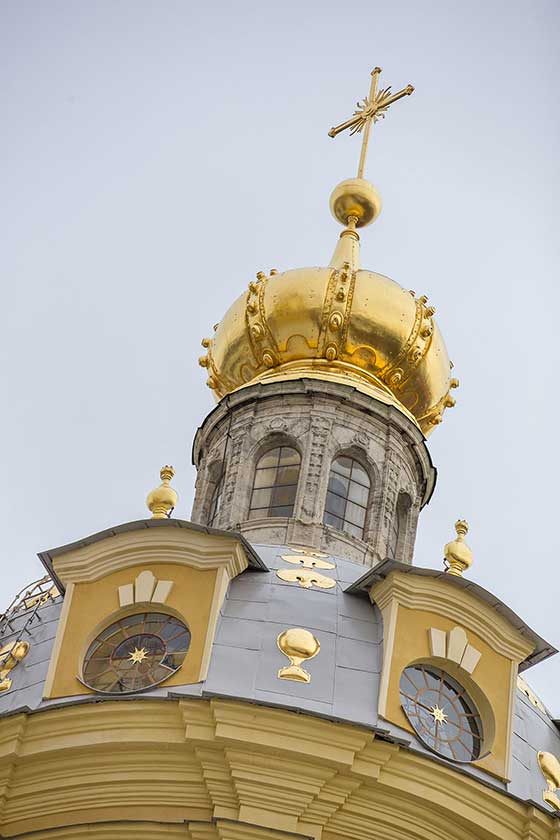
Today St. Petersburg is as breathtaking and glamorous as it was when Peter the Great first inspected its panoply of golden spires and gilded domes. Winter here means long dark nights, cold days and ice-laden streets. But is also means skating, log fires, banyas, chic couture, fine cuisine and virtually unlimited quantities of Russian culture and hospitality. In this city of tsars, wrap up warm and you can still live like a king.
Map of Russia - shows the venue cities of the 2018 World Cup.
Revolutionary Saint Petersburg - Take an anniversary tour of St. Petersburg's revolutionary distractions.
Nevsky Prospekt - Saint Petersburg's most famous street.
Saint Petersburg Contemporary Art - a look at the modern art scene in Russia's second city.
Buy tickets for soccer matches around the world