UK Stadiums: Bramall Lane, Sheffield, England

Bramall Lane in Sheffield, Yorkshire, England, is an all-seater stadium with a capacity of 32,050. It is the home of Sheffield United Football Club. Originally a cricket ground, it has hosted numerous significant matches in the context of football history. Indeed, it is one of the oldest stadiums in the country.
It was the venue for the final of the world's first football tournament, the Youdan Cup. Bramall Lane has etched itself into the football history books by installing the first floodlights and contributing to the unification of Sheffield and London association football rules.
The FA Cup final was played once, a replay between Barnsley and West Brom in 1912 and was regularly selected as the venue for the semi-finals between 1889 and 1938. UEFA chose Bramall Lane as one of the host stadiums for Women's Euro 2022.
The record for the highest attendance is 68,287 for an FA Cup tie between The Blades (Sheffield United's nickname) and Leeds United in 1936.

The Stands
Bramall Lane has four stands and several filled-in corners. The stands are; The John Street Stand, The Kop Stand, The Tony Currie Stand and The Bramall Lane Stand.
The John Street Stand was completed in 1966 and has the word "BLADES" written on the seats. This stand has a more corporate feel, as the International Bar and 31 executive boxes are situated here. The majority of hospitality provided at Bramall Lame will be conducted at the John Street.
The Kop Stand is situated on Shoreham Street. There were no seats installed here until 1991. The club initials are inscribed on the seats and can contain 10,221 fans, which makes the Kop the largest stand at the Lane. An outdoor bar was constructed in September 2007 and is a supporter's favourite.
The Tony Currie Stand is named after the contributions of legendary midfielder Tony Currie. His spell in Sheffield lasted between 1968 and 1976, but he is also famous for his time at Elland Road with Leeds United. The name change occurred in 2018, but some long-time matchgoers to Bramall Lane still refer to it as the "New Stand" since there was no stand to the south before 1975. The capacity is approximately 7,500. Most commercial facilities, including Blades Superstore, Platinum Suite, Legends of the Lane museum and a restaurant can be found here. At the bottom of the stand is the "Wall of Fame", where individual names of supporters are inscribed. Built using the prominent red bricks, this is one of the Lane's famous landmarks. On Cherry Street, statues were erected in 2010 to show appreciation to the icons Joe Shaw, United's record appearance maker and former chairman Derek Dooley.
The Bramall Lane Stand is a two-tier construction, the lower tier housing away fans on matchdays. The total capacity of the stand is 5,680. A modern colour video scoreboard was introduced in 2006-07 to replace the basic LCD scoreboard and clock, which had been part of the Bramall Lane Stand furniture for decades. Following the London Summer Olympics in 2012, the stand was renamed the "Jessica Ennis Stand" before United signed a deal with sponsors to rename it again in 2015.

Stadium Miscellaneous
Bramall Lane was the venue for Women's Euro 2022 on four occasions, three involving Sweden. The most significant event was the semi-final clash between England and Sweden, where the host nation ran out comfortable 4-0 winners. Sarina Wiegman's side claimed the trophy by defeating Germany in the final at Wembley Stadium.
The last time the arena hosted a men's international match was in 1930 when England took on Ireland at the British Home Championship. Sheffield was the first city other than London or Glasgow to be a venue for an England vs Scotland fixture. It happened in 1883.
In 1994, an order was issued that all spectators must be seated with influence from the Taylor Report. Bramall Lane recorded its highest attendance of 32,604 since this ruling in a Premier League match against Wigan Athletic in May 2007.
Before every home game, United fans will blare out "The Greasy Chip Butty Song", to the tune of "Annie's Song". The song glorifies life in Sheffield by paying homage to chip butties, which is a Northern way of saying "a sandwich with French fries in the middle". The lyrics also contain Sheffield nightlife, alcohol and tobacco products. Curiously, the song was initially written by a Rotherham United supporter, Terry Moran.

Club History
Sheffield United was founded in 1889 by members of the Sheffield United Cricket Club, who had already been in operation for 35 years when The Blades were formed. The club nickname is derived from Sheffield's cutlery industry, a major engine of the city's economy in the 19th century. However, it is vital to note that it was initially neighbours Wednesday who had The Blades tag but changed to The Owls due to their home stadium moving to Owlerton. It meant United would assume the new nickname. Sheffield United are the oldest professional outfit to have "United" in their name.
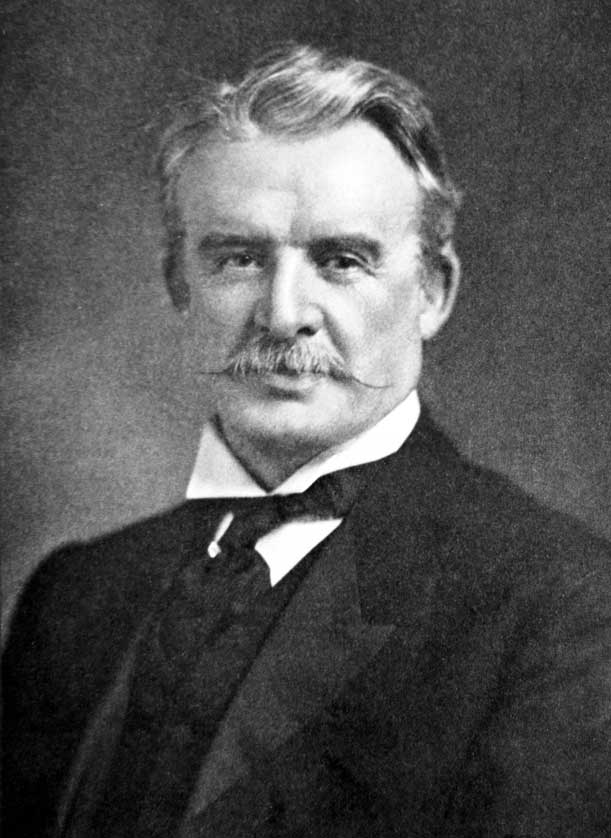
Charles Clegg
Sheffield United was formed at the Adelphi Hotel, a site demolished in 1969 to make way for the Crucible Theatre. Sir Charles Clegg, President of the FA from 1923 to 1937, finalised the formation. Clegg is a critical figure in early English football history.
A solicitor by profession, Clegg featured in the first ever international fixture for England as a player in 1872 but detested the experience as he thought his teammates were 'snobs from the south' who had no appreciation for a Northern man applying his trade in law, according to Keith Farnsworth's 1995 book Sheffield Football A History: Volume 1 1857-1961. Charles Clegg's other notable contribution as a footballer came at Bramall Lane, where he was captain of the Reds for the first football match lit by floodlights. His opposing captain was William Clegg, his younger brother, participating for the Blues. The game finished in a 2-0 Blues victory.
The man who spent all his life in Sheffield was staunchly opposed to football becoming professional, but his voice was ignored as a rule change in 1885 allowed footballers to be beyond amateurs. He fought against professionalism as he believed corrupting influences such as gambling and alcohol could tarnish the purity of the sport.
Clegg, who was President of Sheffield United Cricket Club, and believed it was appropriate for Bramall Lane to host football matches, founded Sheffield United Football Club in 1889.
United established itself as a powerhouse of the English game early on. Their only top-flight title was won in 1897-98, following second place in the previous campaign. United in their title-winning season famously had William 'Fatty' Foulke between the sticks, a player notorious for his eccentricities as a professional footballer and cricketer. He passed away in 1916 at age 42, his death certificate suggesting cirrhosis of the liver from alcoholism was his undoing.
United are four-time FA Cup winners, their last victory coming in 1925, when they defeated Cardiff City. Since this trophy, The Blades have only reached the semi-finals of the FA Cup and League Cup.
When manager Joe Mercer left for Aston Villa in 1958 after a three-year stint at Bramall Lane, former Chelsea captain John Harris inherited the team. United had a talented squad, as Harris could count on United legend Joe Shaw and Alan Hodgkinson, still the youngest goalkeeper to feature for England.
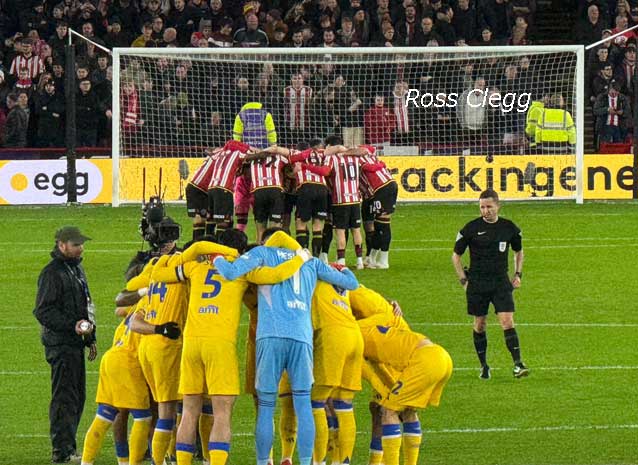
1970-71
United were promoted to the First Division in 1970-71 after finishing second. With Alan Woodward leading the line, The Blades initially took the league by storm. But their momentum was punctured at Old Trafford by some brilliance from George Best on 2 October 1971, when the Northern Irishman produced one of his many memorable goals. Sheffield United ended the campaign in tenth.
Dark times came in the mid-1970s when the club finished the 1975-76 First Division season in last place despite having the likes of Tony Currie and topscorer Chris Guthrie in their ranks. The drop to Division Two brought about colossal financial losses, and the club hoped to cover the debt by selling talisman Currie. In January 1978, United acquired the services of Harry "Happy Harry" Haslam, hoping to turn their fortunes around. Ex-Sevilla and Uruguayan striker Danny Bergara joined the club as Haslam's assistant.
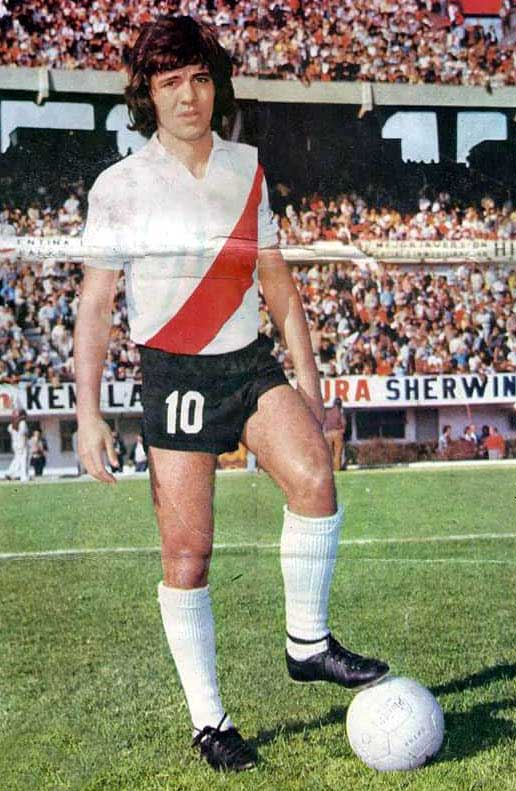
Alex Sabella
Haslam, with his 'wheeler-dealer' reputation, procured quality in the shape of Alejandro 'Alex' Sabella, who would go on to manage his native Argentina to the World Cup Final in Brazil 2014. The South American influence was almost enough to convince a little-known midfielder, Diego Maradona, a 17-year-old starring for Argentinos Juniors, to sign for United, but the deal did not materialise.
Sadly for The Blades, Sabella would leave for Leeds after two seasons, and the departures of key players such as Keith Edwards, Imre Varadi and Simon Stainrod did not help the club's cause. Alan Woodward, who played over 500 matches, left for Tulsa Roughnecks in the North American Soccer League.
Third Tier
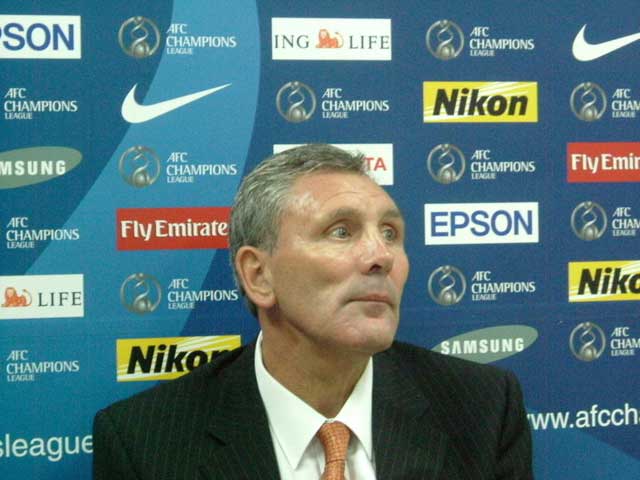
By 1979-80, United were in the third tier, and the slide was complete following another relegation in 1981. The 1980-81 campaign started well enough, but Haslam's ailments made him unable to continue in the role and was replaced by Martin Peters, a tremendous midfielder in his playing days. Peters' only tenure as a coach was a horror show, winning three of the last sixteen league games. United had a chance to stave off relegation against Walsall on the final day. But a last-minute penalty miss from Don Givens condemned United to an incredible third demotion in six years.
Division Four is the lowest level United have competed in since joining the Football League. They were occupants for a solitary season. United brought in Ian Porterfield as coach and successfully re-signed Keith Edwards, who comfortably won the Golden Boot for the season. United were now on an upward trajectory, clinching promotion to Division Two in 1983-84.
The Dave Bassett Era
Dave Bassett was recruited as manager in January 1988. Though he was unable to save United from relegation that season, back-to-back second-place finishes meant the club was back in business at the top level before 1990-91. The signings of Tony Agana and Brian Deane proved to be a masterstroke in their promotion campaigns. Sheffield United clinched promotion to the top flight with an easy 5-2 win at Filbert Street versus Leicester City. A superb season from Leeds denied The Blades the title crown.
Sheffield United and Deane cemented their names in the Premier League history books by scoring the first goal of the competition on the opening day win over Manchester United at home. Despite that win, United occupied the relegation zone for the majority of the first half of the season. After the New Year, however, United were one of the best sides in the country, ultimately settling at 14th.
Sir Alex Ferguson must have been sick of visiting the Lane that season when his team were eliminated from the FA Cup at the fifth round stage. The Blades qualified for the semi-final, facing their biggest enemy, Sheffield Wednesday. Alan Cork for United cancelled out Chris Waddle's early wonder free-kick before the break, but it was Wednesday who claimed the bragging rights when Mark Bright headed the winner in extra-time.
In the following season, Deane was sold to Leeds United and unsurprisingly, the goals dried up to a devastating extent. United failed to escape the drop, and although it took a decade for them to recover back to the Premier League, they will feel relieved to see that their relegation would not prove as costly as for the teams that went down with them, Oldham Athletic and Swindon Town.
Second Tier Frustration
Dave Bassett called it quits and employed Howard Kendall, but he could not resist the temptation to return to Everton for a third spell when the Goodison Park club came calling in 1997. Kendall's final contribution to United was qualification for the promotion playoff final, but Crystal Palace attained top-flight status at his expense.
Over the next two-and-a-half years, United had Nigel Spackman, Steve Bruce and Adrian Heath in the dugout, but none of their tenures were deemed satisfactory. The club was looking for a manager willing to steady the ship for the long-haul, knowing they were over £20m in debt. Neil Warnock was their answer.
Battle of Bramall Lane
When discussing Bramall Lane in the 21st century, one has to mention the "Battle of Bramall Lane". It was a second division fixture between United and West Bromwich Albion in March 2002. The farcicality started just nine minutes into the game when United goalkeeper Simon Tracey was given a straight red for saving a shot outside his penalty area with his hands. Warnock made Peter Ndlovu the sacrificial lamb to bring in Wilko de Vogt as a replacement. WBA opened the scoring nine minutes later as Scott Dobie met a cross from Andy Johnson. Derek McInnes doubled Albion's advantage, and soon Warnock brought Georges Santos and Patrick Suffo to change the narrative.
This was when the drama began. A loose pass from McInnes caused a 50/50 situation, where Santos took full advantage by lunging in on Andy Johnson. A melee ensued and in front of the referee Eddie Wolstenholme, the Cameroonian Suffo headbutted McInnes. The headbutt made clean contact, as McInnes was bleeding severely. Speaking to the Sheffield Star in 2020, Suffo revealed that this conduct was one of his proudest moments in his career, along with winning the 2000 Olympics and featuring in the 2002 World Cup for his country. Santos and Suffo were never to play for United after this incident. With about ten minutes remaining, Michael Brown was limping, but as United had used all of their substitutions, United had to carry on with WBA having a four-man advantage.
Wolstenholme called off the match with the scoreline reading 3-0 to The Baggies when Robert Ullathorne went down injured. Due to the "Battle of Bramall Lane", the relationship between Neil Warnock and then-WBA manager Gary Megson has fractured forever. Megson antagonized Warnock by accusing the Sheffield United boss of ordering his players to find ways to come off by any means necessary. Warnock later described the comments as "disgraceful". Controversy resurfaced when United faced WBA in later seasons and when Megson was Nottingham Forest's manager, as there have been many instances where both refused to shake hands and acknowledge each other.
2002-03
2002-03 was a glamorous campaign for an unglamorous squad, reaching the semi-finals in the FA Cup and the League Cup. Their FA Cup semi-final loss to Arsenal at Old Trafford will always be remembered for David Seaman's staggering save to deny Paul Peschisolido. As for their League Cup semi against Liverpool, goals from El-Hadji Diouf and Michael Owen at Anfield in the second leg for The Reds were enough to sink United. United also had the chance to reach the Premier League via the playoffs but had to face a Wolverhampton Wanderers team that included two Manchester United old boys, Denis Irwin and Paul Ince, in the final. Wolves stopped them in their tracks with a crushing 3-0 win.
By 2005-06, Sheffield United were in the Championship for twelve seasons, a spell far too long for Warnock's liking. United deserve credit for never failing to drop out of the top two spots despite Reading dominating the division in unprecedented fashion. United confirmed promotion with three games remaining.
2006-07
United were in the Premier League for a solitary and agonizing 2006-07 season. Sheffield United had a commendable home form, evident from their famous 1-0 win against Arsenal in December, despite having to field Phil Jagielka in goal for half an hour after an injury to Paddy Kenny. The battle to avoid the drop went down to the wire, as United hosted Wigan Athletic on the final day, both teams knowing the winner would stay up. Wigan would win 2-1, with David Unsworth's penalty sealing United's fate. In a twist of fate, United allowed Unsworth to move to The Latics mid-season as he was deemed surplus to requirements.
There was controversy post-season as United appealed to authorities to stay in the league. The irregularities of the signing of Carlos Tevez and Javier Mascherano, as United claimed, gave West Ham an unfair advantage. The Premier League agreed with Sheffield United in principle by fining West Ham £5.5 million and ordering the London club to pay compensation over a five-year period.
Sheffield United were in the third tier for the first time in over two decades when they were relegated in 2010-11.
Saudi Shake-up
Sheffield United were injected with Saudi cash in 2013 when it was announced that Abdullah bin Mosaad Al Saud, the grandson of King Ibn Saud, bought a 50 per cent stake in United's parent company "Blades Leisure Ltd". The deal was set in place together with co-owner Kevin McCabe. McCabe, who owned the other 50 per cent stake, and Prince Abdullah agreed to a roulette notice mechanism, where either party could withdraw from the deal rapidly if they wished to continue no longer. Prince Abdullah has also worked for Saudi Arabia's General Sports Authority between 2014 and 2017 as general president.
Prince Abdullah's first season, 2013-14, did not materialize in promotion to the Championship but enjoyed a fantastic FA Cup run to the semi-finals. The United hierarchy was pursuing a permanent manager but first had to sort out many candidates, including Gareth Southgate, Kenny Jackett and Paul Dickov, but opted for ex-Everton centre-back David Weir. Although Prince Abdullah was not part of Sheffield United when Weir came through the door, he was in charge of the club by the time The Blades cut ties with the Scotsman due to inconsistent form. COH Sports, led by Steven Rosen and Helmy Eltoukhy, bought out Prince Abdullah in 2024.
Nigel Clough
His replacement was Nigel Clough - the son of the legendary Brian - who had a proven track record with Burton Albion and Derby County. Sheffield United became a dark horse in the FA Cup when they eliminated Premier League sides Aston Villa and Fulham in Round Three and Round Four respectively.
After comfortably seeing off Nottingham Forest and Charlton Athletic, The Blades were at Wembley taking on Hull City in the semis. Hull City, led by former United boss Steve Bruce, were known for their solidity rather than the spectacular, but on this day, they produced a show. Hull emerged 5-3 victors, with five different goalscorers. Matty Fryatt came up with the most beautiful strike.
2014-15
2014-15 was an encouraging campaign for supporters. United reached another cup semi-final, this time in the League Cup (called the Capital One Cup at the time) after winning five games, two of which were Premier League opposition. Their semi-final tie was with Tottenham Hotspur, with the first leg played at a now-demolished White Hart Lane. Spurs took a slender lead into the return leg after Andros Townsend converted a penalty. At Bramall Lane, Tottenham's Christian Eriksen subdued the crowd early when he produced a quality free-kick. United had a mountain to climb with fifteen minutes remaining, but they were all square in a flash when Che Adams came up with a brace in double quick time. The day belonged to Tottenham and Eriksen, however, as he coolly slotted his shot with two minutes left and bagged a second.
In terms of their league form, Sheffield United were adequate to secure a promotion playoff berth and faced Swindon Town in the semi-final. But United went into the game without a win in five league matches, and Swindon pounced on their frailty by winning the first leg at the Lane 2-1. The return match at the County Ground was dream viewing for neutral fans. Swindon's Ben Gladwin's fourth-minute goal started an epic encounter where ten goals were scored in a pulsating 5-5 draw. Ultimately, the entertainment factor counted little for The Blades as they were knocked out of the competition.
Chris Wilder the Saviour
Sheffield United owe a great deal of recent success to Chris Wilder. The man from Stocksbridge, which is within the borders of the Sheffield City line, was hired as head coach before 2016-17. United started the season slowly, as they were at rock bottom in the standings after four games. But fortunes were reversed quickly and drastically, reaching 100 points in League One, which is the most the club has managed in a single season. This title win meant The Blades became the fourth team in English football history to be champions of all top-four tiers. Sheffield United became the first to achieve the feat as a non-original English Football League member.
2018-19
In 2018-19, their second season in the Championship since promotion resulted in a second-placed finish and fate with Premier League football. The season was noteworthy for their unique approach adopted by Chris Wilder, having overlapping centre-backs to sustain their attacks. Although none of John Egan, Chris Basham or Jack O'Connell, are noted for their speed, their fluid shape caused havoc for the majority of Championship defences.
United were tipped for immediate relegation from the 2019-20 Premier League, but they ripped the script by finishing in the top half of the table. Off the pitch, McCabe and Prince Abdullah butt heads, but after 20 months of litigation, the High Court took the side of the Saudi by ordering McCabe to sell his shares. McCabe appealed to the High Court and Court of Appeal, and both claims were rejected.
Unusually for a Premier League outfit, Chris Wilder assembled a core group of players entirely from the UK and Ireland except for Lys Mousset off the bench and the winter signing of Norwegian midfielder Sander Berge. It was a team without superstars, but up front, the guileful Oli McBurnie and technician David McGoldrick combined superbly. In goal, United were helped by the emergence of Dean Henderson.
2020-21 was a gloomy campaign. The Premier League had caught on to Wilder's tricks, and the club required 18 games to muster their first league win, a 1-0 victory over Newcastle United. In March 2021, Wilder and Sheffield United parted ways, and Paul Heckingbottom replaced him on an interim basis. Near the end of the season, United announced that they were hiring Slaviša Jokanović as their coach for the upcoming 2021-22 season. Jokanović was the first man outside the UK to be manager of The Blades.
For 2021-22, Sheffield United reached the playoff stage but were eliminated in the semi-final after a loss to Nottingham Forest. The tie had to be decided via the lottery of penalties. Morgan Gibbs-White, who was snapped up by Forest in the following season, was one of the culprits in the shootout alongside Conor Hourihane and Oliver Norwood.
2022-23
United matched the achievements of 2018-19 in 2022-23 by finishing second and securing automatic promotion in the process. Under the management of the returning Paul Heckingbottom, United manufactured a solid outfit capable of grinding out results every week. United's feel-good factor was strengthened by their tremendous FA Cup semi-final run, but their dreams were dashed when a mighty Manchester City put them to the sword in a 3-0 win.
With the gap between the Premier League and the Championship ever-widening, Sheffield United endured one of the worst seasons the English top flight had seen since its rebranding in 1992. Heckingbottom was deemed a man out of his depth and was replaced by Chris Wilder in early December. United confirmed their relegation after suffering a 1-5 battering at the hands of Newcastle in April. United set many unwanted records in this campaign. After a 0-1 loss against Everton at Goodison Park, United broke Swindon's record for most goals conceded in a single Premier League campaign. Swindon conceded a whopping 100 goals in a 22-team league in 1993-94, while United occupied a 20-team division. They had a goal difference of minus 69, equalling Derby's woeful season in 2007-08. The Blades conceded 57 home goals, surpassing the record set by Aston Villa in 1935-36.

Sheffield Wednesday Rivalry
Matches between Sheffield United and Sheffield Wednesday are given the "Steel City Derby" moniker. The last time this fixture was played at Premier League level was in 1993-94.
The most significant match in recent memory occurred in 2017 as Wednesday hosted United in September 2017 at Hillsborough in a Championship game. For context, United were a newly promoted side after enduring six years of League One football, while Wednesday had been knocking on the door of the Premier League for several years, coming closest in 2016 when Hull City edged The Owls 1-0 thanks to a Mo Diame goal at Wembley in the playoff final. United were in dreamland after just 15 minutes as they were ahead by two goals to nil. Wednesday showed their character by recovering to 2-2, Lucas Joao scoring a sharp equalizer. But two minutes later, Mark Duffy hammered home his effort, and United were in the ascendency. Leon Clarke capped off an excellent day, ending the scoring at 4-2.
United finished the 2017-18 season five places higher than their neighbours. Since then, Wednesday suffered the ignominy of relegation from the Championship in 2020-21, while United have bounced around between the Premier League and EFL.
Players
Billy Sharp has featured for so many clubs at this point that it is hard to believe that his best spells have been at Bramall Lane. Although he tends to switch clubs every one to two years, he was a consistent goal threat when he was registered between 2015 and 2023. At Premier League level, he served as a backup for Oli McBurnie and co. But he is almost undoubtedly their most iconic player in the 21st century.
Brian Deane, who is probably most well-known for scoring the first goal in Premier League history against Manchester United in 1991, had three separate spells at the club. His biggest contribution came in his first, appearing just under 200 times. Dean moved to his boyhood club Leeds in 1993, a record signing for the club at the time, in pursuit of playing more frequent higher-stakes matches. He also played for two foreign clubs, SL Benfica in Portugal and Perth Glory in the Australian A-League.
Access - Getting There
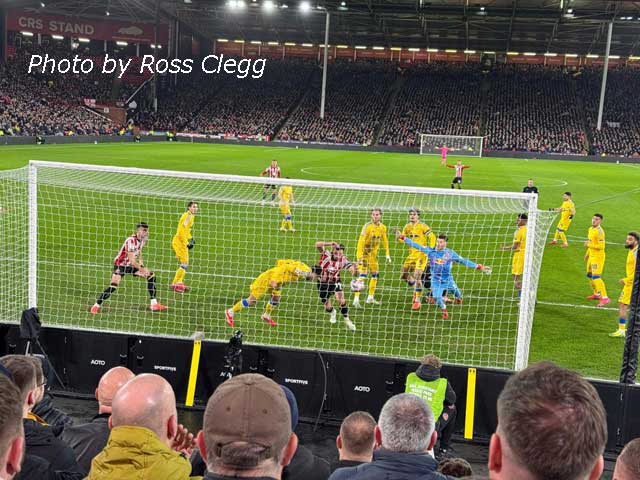
The ground is less than a mile from Sheffield Station and Sheffield Interchange, roughly a 20-minute walk.
When using the Supertram, Sheffield's light rail system, from the city centre, head to Granville Road. From Granville Road, the walking distance to the Lane is about ten minutes.
Address: Bramall Lane, Highfield, Sheffield S2 4SU
Nearby Hotels
Fairly close to Sheffield Station is the 4-star Novotel Sheffield Centre. The Leonardo Hotel Sheffield is also 4-star and offers a bar, restaurant, and a 24-hour reception. Mercure Sheffield St Paul's Hotel & Spa has a restaurant, champagne bar, sauna and indoor swimming pool.
See here for a complete listing of hotel accommodation in Sheffield.
More UK Stadiums
Kirklees Stadium (John Smith's Stadium)
©Soccerphile.com
Buy tickets for soccer matches around the world