UK Stadiums: Fir Park, Motherwell, Scotland
Joji Imamiya
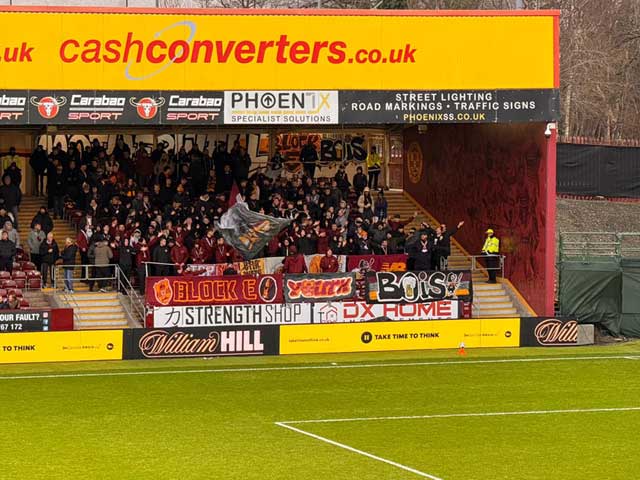
Fir Park, in Motherwell, North Lanarkshire, Scotland, has been the home of Motherwell Football Club since 1896. Their previous ground was Dalziel Park, used between 1889 and 1895. Fir Park was also the home of Gretna for one season in 2007-08, their only campaign in the Scottish top flight and their final before dissolution. The ground has a capacity of 13,677.

History
The property on which the ground was laid out belonged to Lord Hamilton of Dalzell, a soldier and politician. Although this is a romantic interpretation, it is said that claret and amber, the colours of The Well's home jersey, were inspired by Lord Hamilton's racing design.
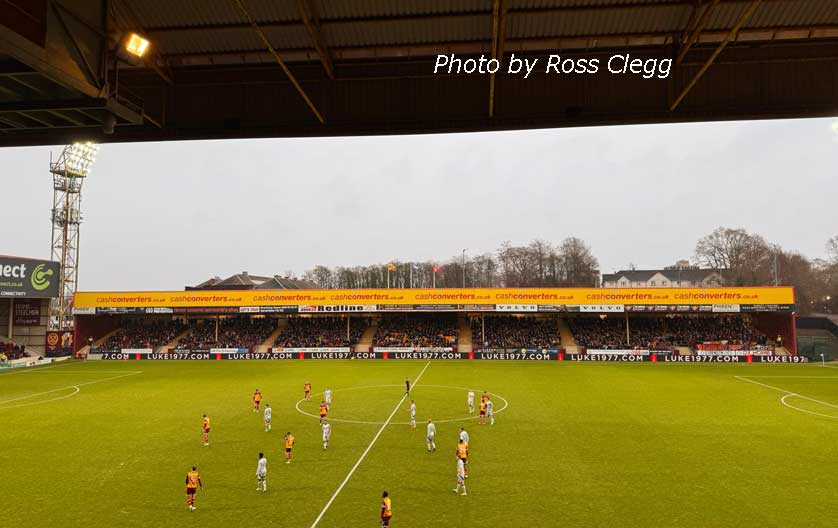
The stadium has an uneven appearance, featuring one large stand that contrasts with three smaller ones, one of which does not cover the entire length. Since the 1990s, it has been an all-seater venue with a capacity of 13,677.
Throughout the majority of the twentieth century, Fir Park was famous for its one main stand and the ring of terracing.
The Taylor Report of 1990 into the Hillsborough Disaster was a significant mandate for The Steelmen, as it had to refurbish an aged stadium into a modern facility while contending the closure of Ravenscraig steelworks in 1992, a plant that sustained the town's economy.
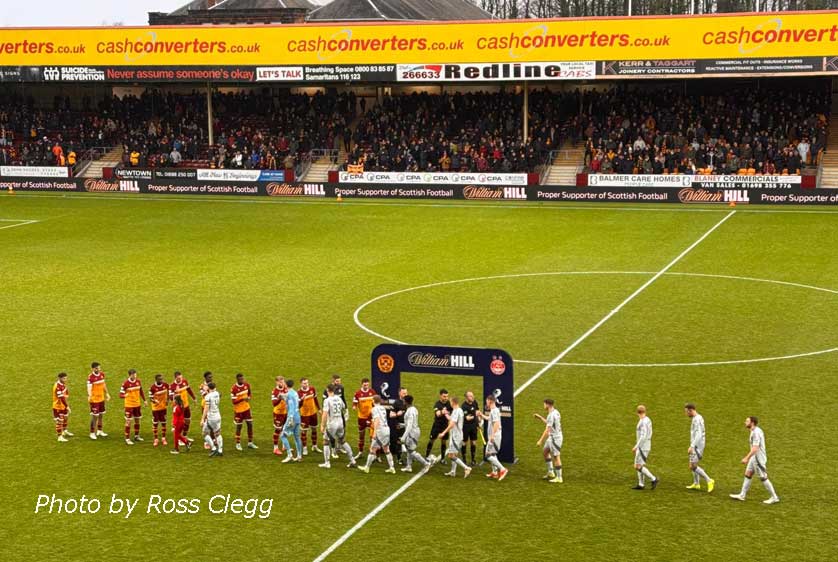
Motherwell
Before turning professional in 1893, chaos reigned at the management level as Motherwell often failed to turn up with a full squad as many players would work overtime at neighbouring ironwork plants. They became the first professional outfit from Lanarkshire. However, it also meant a ticket price increase as entry costs reached 6d (2.5p).
The Well's previous home, Dalziel Park, was deemed unsuitable for high-level football as it was muddy. Lord Hamilton granted a lease on a new plot of land to fix the issue. Fir Park has been Motherwell's home for over 120 years now.
The 1920s and 30s saw great success, with two remarkable world tours indicating a side packed with talent. The first was in Spain in 1927, where Real Madrid were conquered 3-1 and Motherwell took Barcelona to a draw. They then traversed South America, losing three of the first ten games. The tour concluded with the Brazilian League Select team hammering The Steelmen 5-0 in front of a crowd of 40,000.
The club's only first division win came in 1931-32, dominating the league with 30 wins out of 38. 52 of the 119 goals scored came from Willie MacFadyen, a seasonal tally no one has come close to matching. MacFadyen is one of the greatest goalscorers for the club with a combined total of 251. The campaign was a magnificent achievement, as between 1904 and 1947, only the Old Firm clubs were crowned champions alongside Motherwell. The Well contested three Scottish Cup finals in the 1930s but failed to be victorious.

Following relegation from the top flight in 1967-68, Motherwell saw an upturn in fortunes as they were immediately promoted back to the First Division in 1969. The 18-team First Division was slashed to a 10-team Scottish Premier League in 1975-76, managed by Willie McLean and his assistant Craig Brown. Brown would become the boss almost 35 years later. The 1975-76 Scottish Cup run captured the hearts of many fans as they eliminated Celtic but lost out to Rangers in the semis.
1980s
The 1980s was an era of yoyo-ing, with two relegations and promotions. Tommy McLean, brother of Willie, who oversaw the club for a decade, ended his spell on a high with a 1991 Scottish Cup win, defeating Dundee United in the final. The match was a family affair, as Jim McLean, who had been in charge of United for 20 years, was in the opposing dugout.
Motherwell had looked comfortable as they were ahead 3-1 in the second half, only for United to hit back and force extra time. Fortunately for The Well, super-sub Stevie Kirk was first to the corner ball and headed home the winner in a modern-day classic. As a side note, Tom Boyd, one of the brightest prospects in Scottish football, was sold off to Chelsea immediately after.

Stands
Construction of Fir Park's biggest stand, the Phil O'Donnell, began in 1962. The sales of two players funded the £92,000 cost of the work, with the departures of Pat Quinn and Ian St John.
The construction of the stand halted 20 yards short of the south end after a resident successfully opposed a full-length structure, arguing it would block light to their garden and decrease the value of their property. When the property owner eventually decided to sell, Motherwell lacked the finances to resume building, leaving the section unused.
Since then, the club has bought the house and converted it into an office space. The two hospitality suites, The Centenary and The Millennium are located here. In January 2008, the Main Stand was renamed the Phil O'Donnell Stand in tribute to the Motherwell captain, who passed away on the Fir Park pitch.
The Davie Cooper Stand, in the north of the arena, was designed by the company WH Dickie Architects - along with the South Stand. Officially opened on 6 May 1995, the stand completed in its current form and is dedicated to former player Davie Cooper, who passed away in the same year.
The South Stand, known as the Tommy McLean, is a two-tier structure and opened in 1993 with a friendly versus Coventry City. Uniquely for a stand designated for away fans, it includes a row of corporate boxes between the two tiers. It also contains a gymnasium and a warm-up area.
The John Hunter, to the east, was roofed in 1954. The 1991 Scottish Cup win covered the renovation cost of £750,000 following the Taylor Report. While the East Enclosure is shallow, it provides ample legroom by placing seats on every second step. It is home to Fir Park's most vocal supporters. The East Enclosure was renamed the John Hunter Stand to commemorate the achievements of the legendary manager who guided Motherwell's only top-flight success.

Europe
In the 21st century, Motherwell have started to knock on the door of Europe but are yet to reach the group stage of either the Champions or Europa Leagues.
Following the crisis at Ibrox in 2011-12, Motherwell had an opportunity to compete in the 2012-13 Champions League. However, Panathinaikos gave them a reality check in the third qualifying round, losing 0-5 on aggregate.
Motherwell have reached the cusp of the Europa League group phase twice. In 2010-11 they were narrowly beaten by OB Odense of Denmark whilst Levante proved too strong in 2012-13.

Club Legends
The man voted as the club's 'greatest ever player' was Andy Paton, who featured for 16 years. A no-nonsense centre-half, Paton later managed rivals Hamilton Academical for nine years.
A Champions League winner with Dortmund in 1997, midfielder Paul Lambert made over 100 appearances. Thanks in part to Lambert's contributions, the club nicknamed The Well, finished 3rd in 1993-94 in the league and 2nd the season after.
In the 1994-95 UEFA Cup, Motherwell faced off against Borussia Dortmund, losing 0-3 on aggregate. This became a scouting opportunity for then-manager Ottmar Hitzfeld, who was impressed. After a tug-of-war between the Bundesliga side and PSV, Dortmund signed him on a free transfer.
Fun Facts
Motherwell's biggest rivals are Hamilton Academical and Airdrieonians, owing to their proximity. The games contested by these three teams are known as the Lanarkshire derby.
A Sports Illustrated article from 2018 has suggested a possibility that the origins of the Viking Thunder Clap, which received wide attention in Euro 2016, can be traced back to Motherwell fans.
Stadium Facts
In the 2007-08 season, Gretna rented Fir Park and played all but one of their home SPL games there. The now-defunct club also played a UEFA Cup match against Derry City in 2006. Fir Park was the venue of the Scottish League Cup semi-finals in 2007 and 2010 and has been utilized as the home of the Scottish women's team during the qualifying rounds of the Women's World Cup 2015.
Since the late 2000s, talks of moving to a new ground have intensified. The then vice-chairman Derek Weir made his intentions clear in 2011 when he confirmed the cost that was needed (£15 million) would be beyond their means.
Access - Getting To Fir Park
Motherwell railway station is about a 15-minute walk south from Fir Park. Local trains on the Argyle Line also serve Airbles railway station, which is even nearer to the stadium to the west. Motherwell Station has trains to Haymarket Station in Edinburgh, Glasgow Central in Glasgow, Lockerbie, Manchester Piccadilly and Carlisle.
On-street parking is available on several streets near the ground. Fans can also use nearby car parks, including those at the Civic Centre/Motherwell Concert Hall, Parkhead Street, and the smaller MacDonald Street car park.
Bus numbers 240, 241, 242, 266, and 41 all stop close to Fir Park. Designated areas for wheelchair users and their carers are offered in the Phil O'Donnell Main Stand and the Tommy McLean (South) Stand.
Address: Fir Park Street, Motherwell ML1 2QN, UK
Nearby Hotels
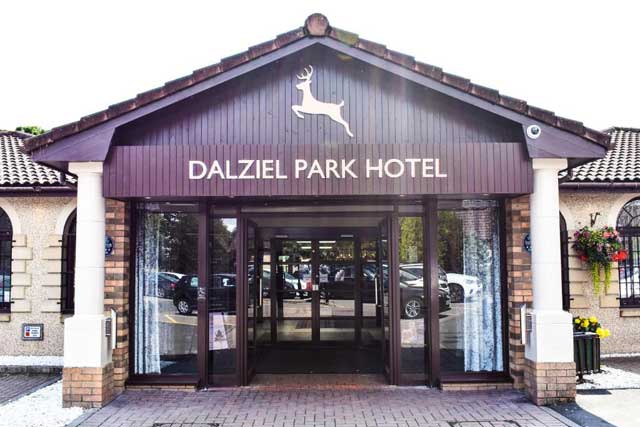
Recommended places to stay in Motherwell include the 3-star Dalziel Park Hotel, the Holiday Inn Express Strathclyde Park M74, Jct 5, and the Best Western Motherwell Centre Moorings Hotel.
See here for a complete listing of hotel accommodation in Motherwell.
More UK Stadiums
Kirklees Stadium (John Smith's Stadium)
©Soccerphile.com
Buy tickets for soccer matches around the world