
UK Stadiums: Vitality Stadium, Bournemouth
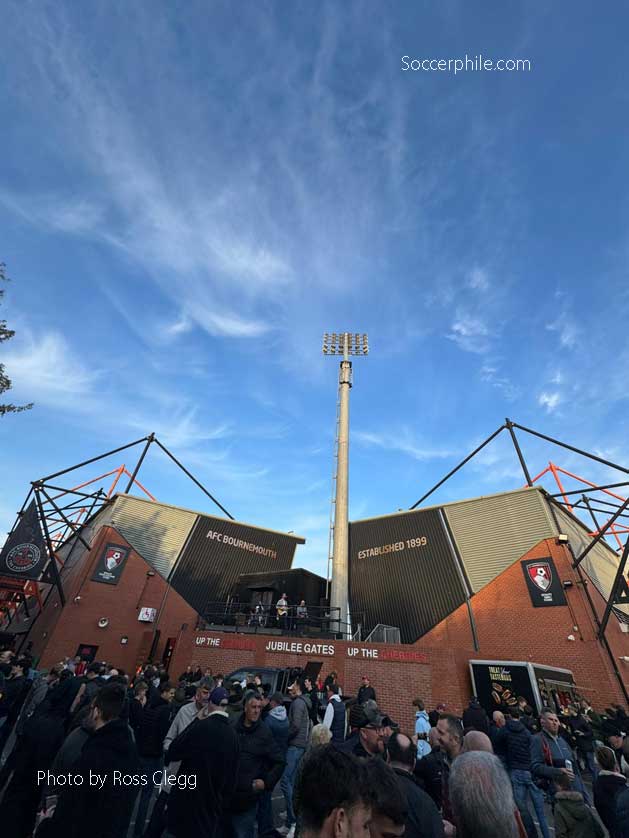
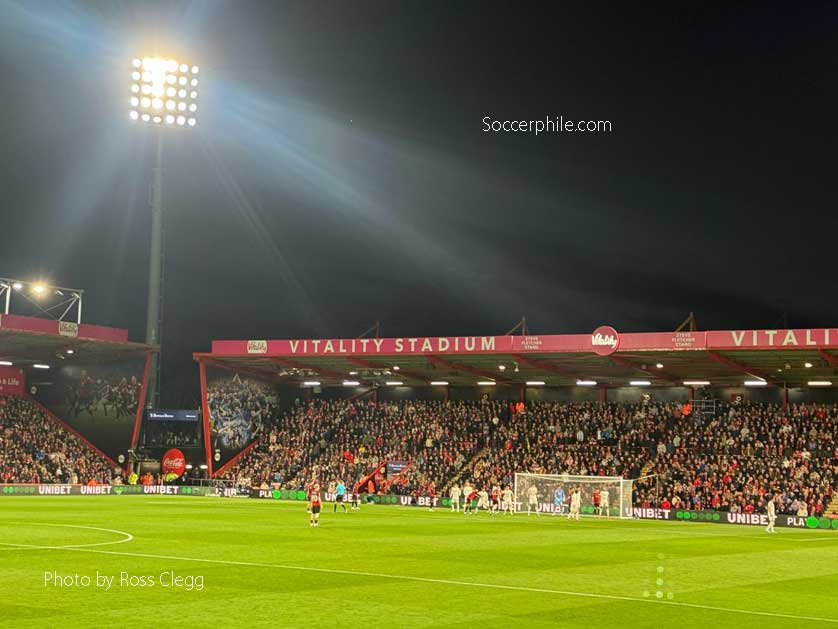
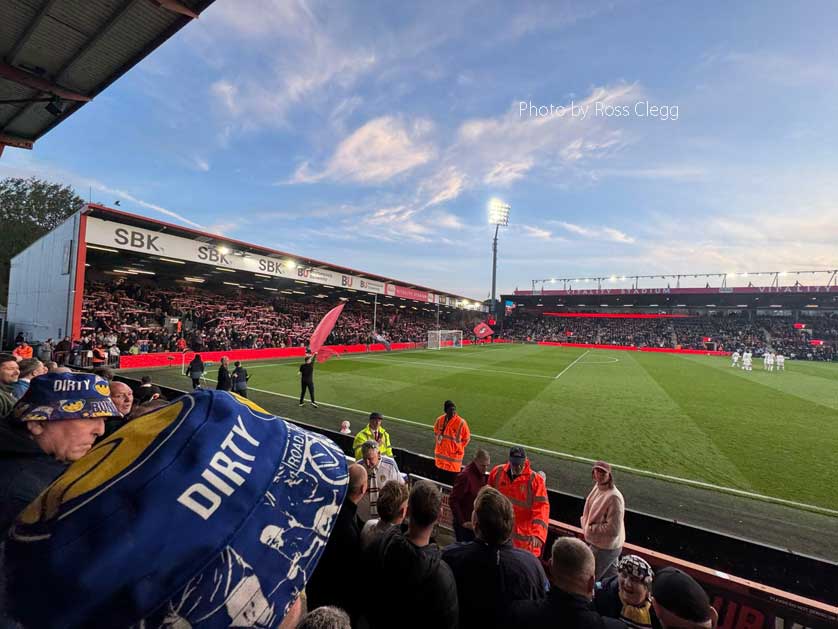
The Vitality Stadium in Bournemouth, Dorset on the south coast of England is the home of AFC Bournemouth.
The venue was previously known as Dean Court and for sponsorship reasons has been called Goldsands Stadium, Seward Stadium and Fitness First Stadium before becoming the Vitality Stadium in 2015.
The ground has hosted England under-21 games, England under-20 games and a single England women's international.

Capacity
Vitality Stadium has a capacity of 11,286 making it the smallest ground in the Premier League at present.
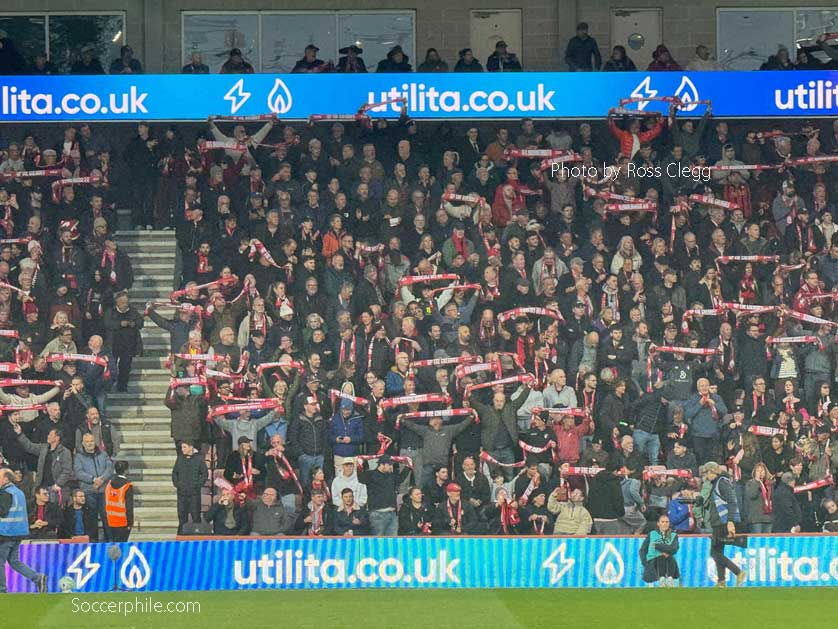
There are four stands - the Vitality Main Stand, the Ted MacDougall Stand (South), the East Stand, and the Steve Fletcher Stand (North).
There are plans afoot to expand the present ground to seat around 20,000 spectators.
History
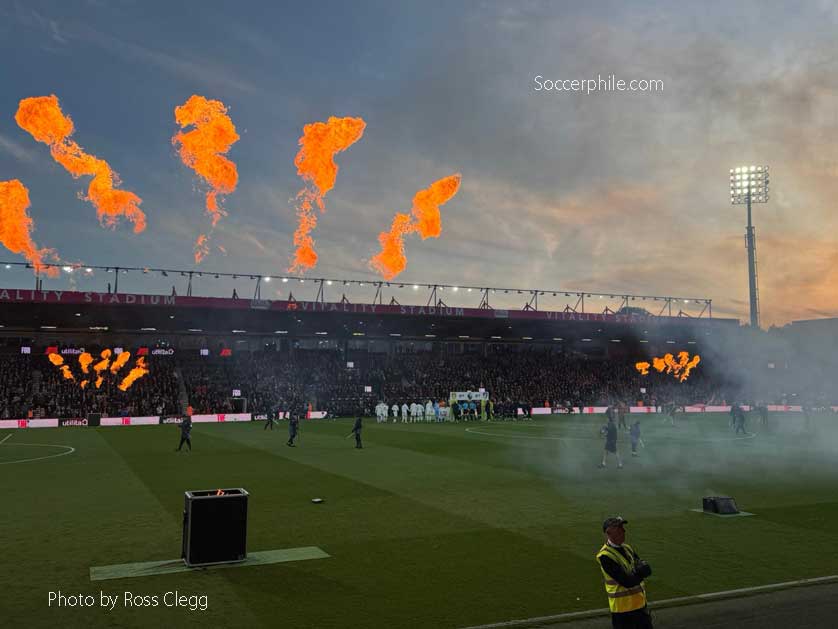
The ground opened in 1910 on a piece of land that was previously a gravel pit.
The stadium underwent a complete reconstruction in 2001. During the project, the pitch was rotated 90 degrees from its original orientation, and the entire ground was repositioned further away from nearby housing. As construction was not completed in time for the start of the 2001-02 season, Bournemouth played their opening eight matches at the Avenue Stadium in Dorchester and home to Dorchester Town.
The Cherries
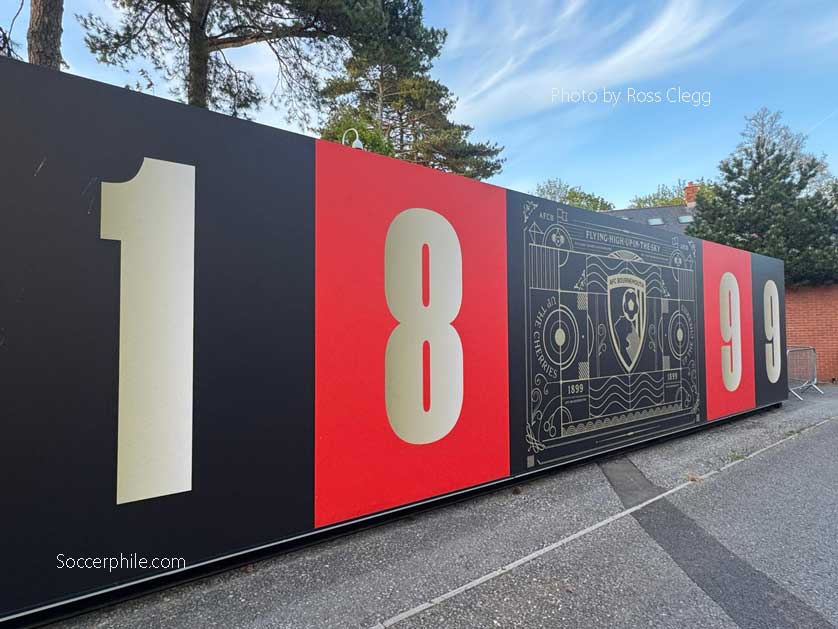
Nicknamed 'The Cherries' AFC Bournemouth date from 1899 as Boscombe. The club spent much of its early history in the lower tiers of English football before joining the Football League in 1923 as Bournemouth & Boscombe Athletic before later adopting its current name in 1971.
The club's fortunes fluctuated for decades, with notable moments including promotion to the Second Division in the late 1980s and periods of financial difficulty that brought them close to collapse in the 1990s and again in 2008.
A dramatic turnaround began under manager Eddie Howe, who led the team from League Two to the Premier League within six years, achieving promotion to the top flight for the first time in 2015. Bournemouth established themselves in the Premier League for five seasons before relegation in 2020, but they quickly returned by earning promotion again in 2022, continuing to compete in England's top divisions with a reputation for resilience and attacking football.
Bournemouth Managers
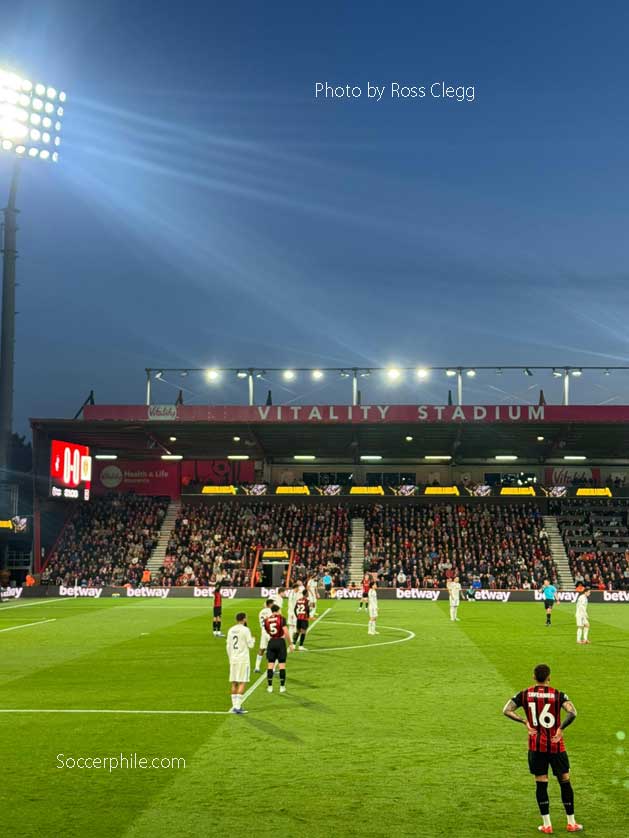
Former player Eddie Howe (now at St James' Park) is considered the club's greatest-ever manager. In two spells (2008-2011, 2012-2020), he took the club from the brink of extinction in League Two to the Premier League and established them as a top-flight side.
Harry Redknapp managed the club from 1983 to 1992 his first major managerial job. He had previously represented The Cherries as a player in the 1970s.
Sean O'Driscoll led the team from 2000 to 2006, achieving promotion to Division Two (now League One) in 2003 and establishing a respected playing style.
John Bond was in charge from 1970 to 1973, bringing a more glamorous, attacking style of play and falling just short of promotion to the second tier in 1972.
Freddie Cox had two spells with The Cherries (1956-1958, 1965-1970) and is recognized as a key figure in the 1950s and 60s.
Appointed in 2023, Andoni Iraola has been recognized for his success in the Premier League but will be leaving in the summer of 2026.
Honours
EFL Championship (Second Tier): Winners - 2014-15
EFL League One / Third Division (Third Tier): Winners - 1986-87
Football League Trophy: Winners - 1983-84
Third Division South Cup: Winners - 1946
Fun Facts
The record attendance at the ground is 28,799 for an FA Cup match against Manchester United in 1957.
The lowest attendance at the ground is only 1,873 who witnessed a 2-2 draw with Lincoln City in 1986.
Callum Wilson and Lewis Cook both earned England caps while with the club in 2018. Others who have been called up or capped after loan spells or after leaving, including striker Jermain Defoe, centre back Tyrone Mings, and keeper Aaron Ramsdale.
Celebrity Bournemouth fans include American actor Michael B. Jordan who is also a minority co-owner of the club. Other notable supporters are Blur bassist Alex James, actor Seth Rogen, and supposedly former Tory Prime Minister Rishi Sunak.
Southampton Rivalry
Southampton are considered Bournemouth United's biggest rivals and the clubs contest the "South Coast derby" though it pales in comparison with the big "South Coast derby" which is Portsmouth v Southampton.
Club Legends & Cult Heroes
One of the club's most celebrated players is forward and current assistant manager Steve Fletcher, the all-time appearance holder with over 600 games.
Another historic figure is Ron Eyre, the club's record goalscorer with 229 goals over 337 first-team matches between 1924 and 1933, a benchmark that still stands today. Ted MacDougall holds the record of 42 goals in a single season, in 1970-71 in the Fourth Division.
From more modern times, Eddie Howe is arguably the club's most important figure overall - first as a player with 200 appearances and then as the manager who led Bournemouth from the brink of relegation out of the Football League to the Premier League, an extraordinary rise.
Key players from that era are often seen as legends too, including Simon Francis (captain during the promotion years), Steve Cook (a defensive mainstay through multiple divisions), Defender Charlie Daniels, and winger Marc Pugh, who contributed across several promotions.
Other notable fan favourites include Sean O'Driscoll, a long-serving midfielder who later managed the club, and James Hayter who scored the fastest Football League hat-trick ever in 2 minutes and 21.88 seconds in 2004 v Wrexham.
Former Spurs and England winger Darren Anderton finished his career at Bournemouth.
Foreign players to represent The Cherries at some stage in their careers include Marcos Senesi (Argentina), Justin Kluivert (Netherlands), Antoine Semenyo (Ghana), and Tyler Adams (USA). Others include Arnaut Danjuma (Netherlands), Nathan Aké (Netherlands), and Christos Mandas (Greece). Bosnian keeper Asmir Begovic spent 4 years at the club from 2017 until 2021 after a move from Chelsea.
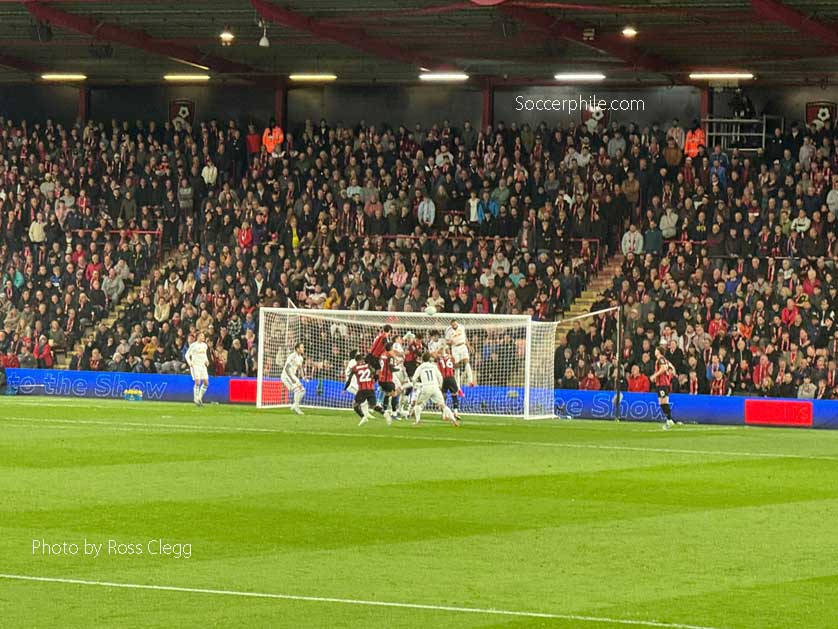
Museum & Stadium Tours
AFC Bournemouth may offer occasional guided tours of the Vitality Stadium (Dean Court), though there is no actual information regarding tours on the club's official website: afcb.co.uk
Access - Getting To Vitality Stadium
Vitality Stadium is located in Boscombe, a suburb of Bournemouth.
Bournemouth Central Train Station (wheelchair accessible) is the nearest major train station, though Pokesdown for Boscombe is nearer the ground (not wheelchair accessible).
On foot exit Bournemouth Central Train Station via the south exit, facing Asda, and turn left toward the main road. Turn left again and continue straight along Holdenhurst Road for about 25 minutes until you reach a roundabout, then turn right onto Kings Park Drive. The Vitality Stadium will be on your left.
There are trains to Bournemouth Central Train Station from London Waterloo, Weymouth, Poole, Winchester as well as one train per hour on weekdays and Saturday to Manchester Piccadilly via Reading and Birmingham New Street.
Address: Kings Park, Bournemouth, Dorset BH7 7AF.
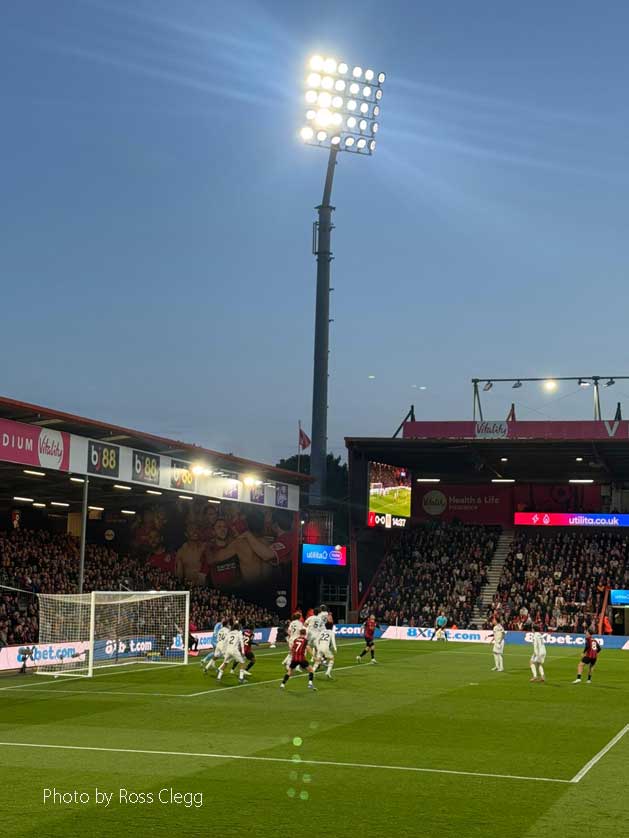
Accessibility
Vitality Stadium provides accessible facilities for disabled supporters including accessible entrances and dedicated, step-free, pitchside viewing spots. In addition, 16 accessible toilets are also available, along with a Changing Places facility in the southwest corner. There are 62 blue badge accessible parking spaces.
Nearby Hotels
Some recommended hotels in this resort town include the Deus Ex Machina Hotel with good facilities and also the 3-star Grove Hotel.
See a full listing of hotels in Bournemouth.
More UK Stadiums
Kirklees Stadium (John Smith's Stadium)
©Soccerphile.com
Buy tickets for soccer matches around the world