UK Stadiums: Toughsheet Community Stadium, Bolton, England
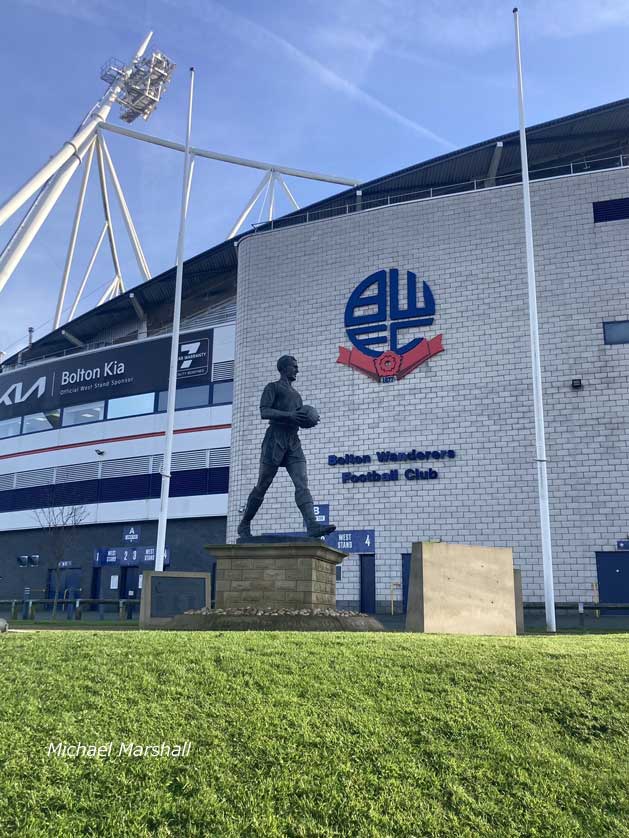
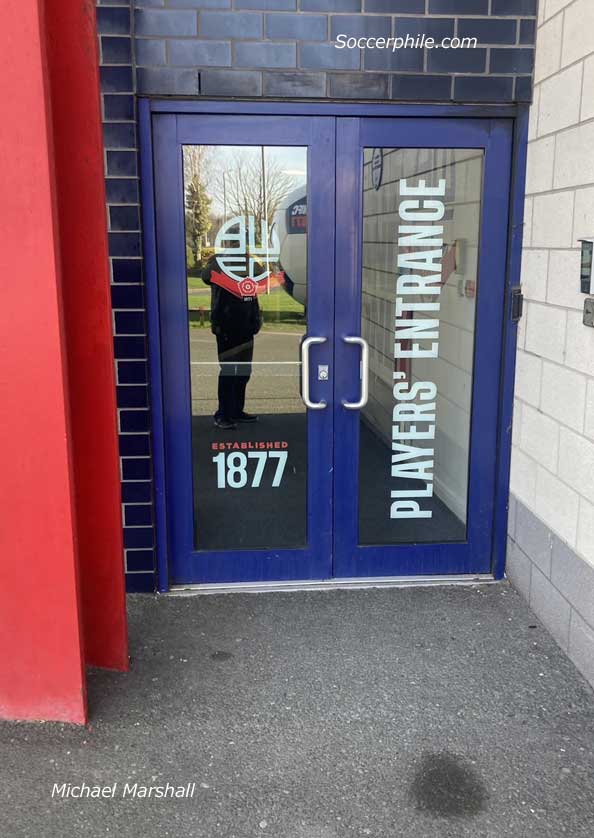
The Toughsheet Community Stadium (as of July 2023 for sponsorship reasons) is the home ground of Bolton Wanderers.
The 28,723-capacity arena is located in Horwich, Greater Manchester.
The stadium opened in 1997 to replace Burnden Park. It has previously been known as the Reebok Stadium, Macron Stadium, and University of Bolton Stadium. The venue has hosted Premier League football, international rugby matches, and the Rugby League World Cup semi-final in 2000. The site includes both a nearby rail stop (Horwich Parkway) and a shopping center.

Stands
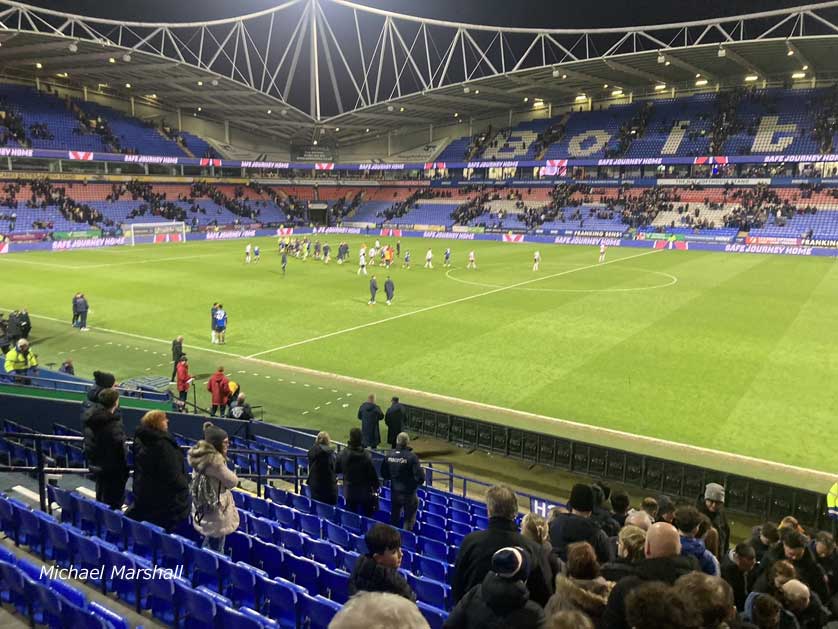
The stadium has four stands: the Carrs Pasties (North) Stand, the Franking Sense (South) Stand (away end), the Nat Lofthouse (East) Stand, and the Kia (West) Stand.
The Carrs Pasties (North) Stand is located behind a goal, this stand frequently houses the family section.
The Franking Sense (South) Stand isat the opposite end and usually houses away supporters.
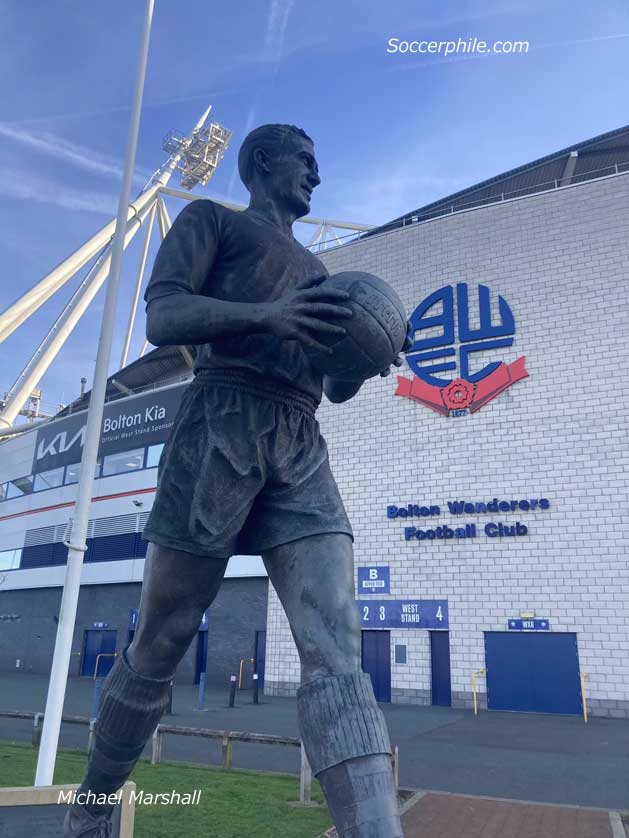
The Nat Lofthouse (East) Stand is named after the legendary Bolton forward, and runs along one side of the pitch. The Kia (West) Stand is situated on the other side of the pitch.

History
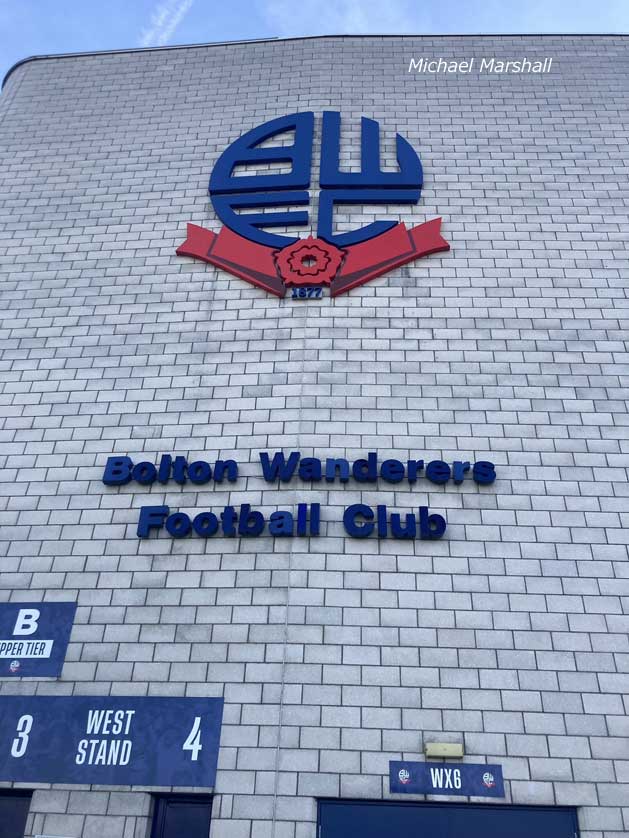
The ground was originally named the Reebok Stadium after the sportswear company (a local sponsor). It was designed by Populous and built on a former refuse site. It became known as the Macron Stadium in 2014 and was later renamed the University of Bolton Stadium in 2018. The current name, Toughsheet Community Stadium, came into effect in 2023.
It has an all-seated capacity of 28,723, with a hotel incorporated into the stadium structure where some rooms offer views of the pitch.
Bolton Wanderers
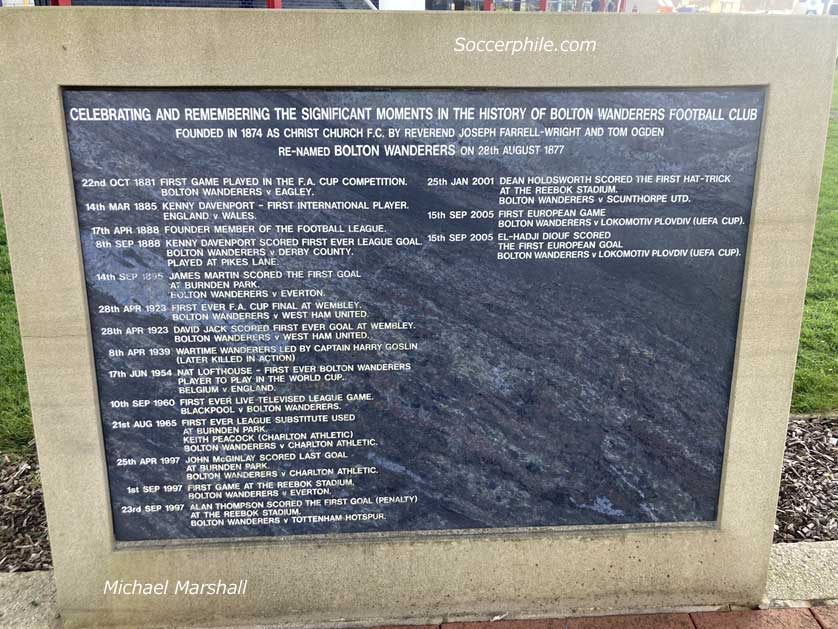
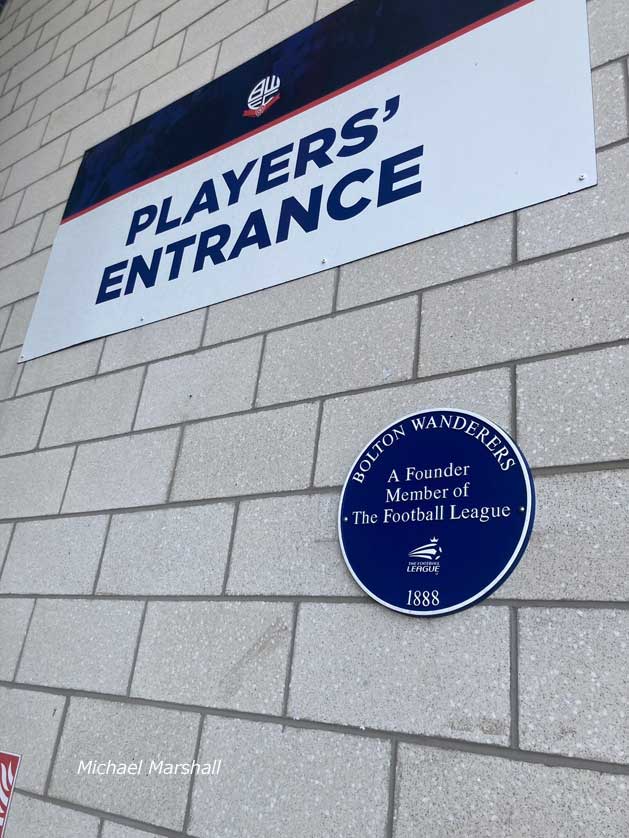
Founded in 1874 by the Reverend Thomas Ogden as "Christ Church F.C." before renaming to Bolton Wanderers in 1877. They were a founding member of the Football League in 1888 and are known for winning the FA Cup four times (1923, 1926, 1929, 1958) but have never won a First Division or Premier League title. Bolton, nicknamed the 'Trotters,' adopted a new name in 1877 due to the initial, nomadic "wanderings" of the team.
The club is known for winning the first-ever Wembley FA Cup final in 1923 (the so-called "White Horse Final"). They also won the FA Cup again in 1926 and 1929.
The 1946 Burnden Park disaster was a dark turning point that brought change to crowd safety regulations. The crowd crush resulted in the deaths of 33 people and injuries to hundreds of Bolton fans during an FA Cup Sixth Round second-leg game between Bolton and Stoke City.
Bolton's most recent major trophy was the 1958 FA Cup, defeating Manchester United (devastated three months earlier by the Munich Air Disaster) with Nat Lofthouse scoring both goals.
After falling to the fourth tier, the club enjoyed a resurgence in the 1990s and 2000s under managers Colin Todd and Sam Allardyce, playing in the Premier League from 2001-2012, and enjoying appearances in the UEFA Cup.
Famous Former Bolton Wanderers Players
Apart from Lofthouse (see below) some other Bolton legends of days gone by must include goalkeeper and record appearances holder with 578 games, Eddie Hopkinson (1952-1970) and Joe Smith, a prolific forward who scored 277 goals in 492 appearances between 1909 and 1927.
More recent names of the Sam Allardyce and Premier League era include Nigerian playmaker Jay-Jay Okocha who played for the Trotters from 2002-2006, keeper Jussi Jääskeläinen who spent 15 years at the club, making over 500 appearances and Kevin Davies, a firm fan favorite and striker. Kevin Nolan was an academy graduate and long-serving midfielder from 1999 before moving to Newcastle in 2009.
Foreign stars include French World Cup winner Youri Djorkaeff, former Real Madrid defender Fernando Hierro, Nicolas Anelka who notched 21 league goals in 40 appearances and Ivan Campo, a cult hero who joined on loan from Real Madrid in 2003 before making his move permanent.
Eiður Guðjohnsen also launched his career at Bolton before moving to Stamford Bridge. El Hadj Diouf scored the club's first European goal in 2005. South Korean international Lee Chung-yong made over 170 appearances for the club between 2009 and 2015. Many fans also remember Fabrice Muamba who survived a cardiac arrest during a game with Spurs in 2012.

Nat Lofthouse
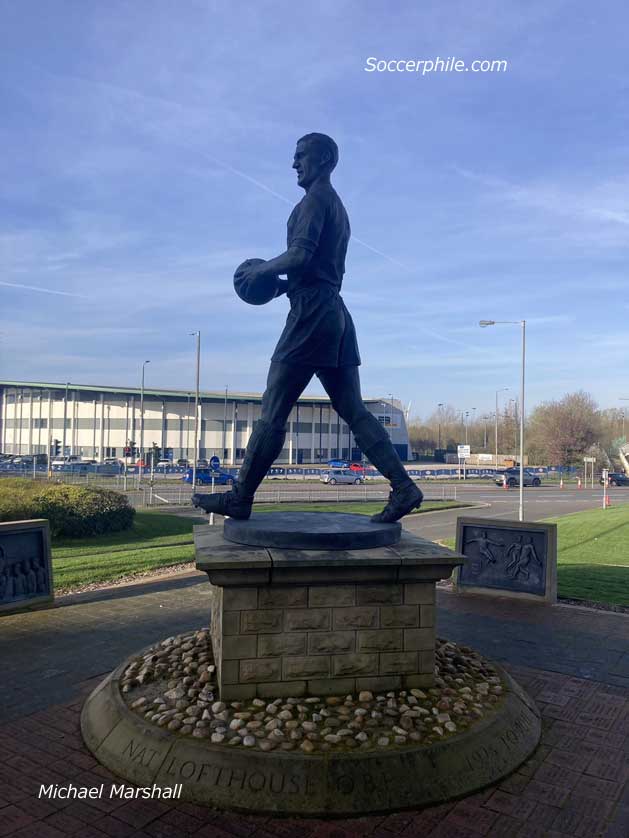
No one is above Nat Lofthouse in the history of Bolton Wanderers. Born and bred in Bolton, he spent his entire career with the club scoring 255 goals between 1946 and 1960, still a club record. A statue of the iconic centre forward stands outside the stadium. The 2.7 meter (9 foot) bronze work is by sculptor Sean Hedges-Quinn, who is also responsible for statues of Sir Bobby Robson and Sir Alf Ramsey both outside Portman Road in Ipswich.
Nicknamed the "Lion of Vienna" for his courage and physical style, he was one of the most feared forwards of post-war football. His greatest achievement came in the 1958 FA Cup final, where he scored both goals in a 2-0 victory over Manchester United. He had earlier been named Football Writers' Association Footballer of the Year in 1953 after scoring in every round of that season's FA Cup.
Internationally, Lofthouse earned 33 caps for England and scored 30 goals - one of the best goals-per-game ratios in the team's history. His most famous moment came in 1952 against Austria at the Praterstadion in Vienna, when a fearless, match-winning performance earned him his famous nickname.
After retiring in 1960, he remained devoted to Bolton in various roles, including manager and later club president. He was awarded an OBE in 1994 and inducted into the English Football Hall of Fame in 2002.
Stadium & Club Facts
The record attendance at a Bolton Wanderers home game was 69,912, set at Burnden Park against Manchester City in the FA Cup fifth round in 1933. However, the highest-ever attendance for any game involving Bolton was the 1923 "White Horse Final" against West Ham United at Wembley, with official figures of 126,047, though estimates suggest up to 300,000 attended.
The highest transfer fee paid by Bolton Wanderers is £8.25 million for Swedish striker Johan Elmander, who signed from Toulouse in the summer of 2008. The club also paid £8 million for Nicolas Anelka from Fenerbahce in 2006.
Japanese star Hidetoshi Nakata had a brief spell at the club back in 2005-2006, his last club before retiring from the game.
Accessibility
The ground is generally considered accessible for wheelchair users, featuring 75 wheelchair spaces, 158 easy access/amenity seats, and a Changing Places facility. The stadium also offers a Well-being Hub, quiet room, accessible toilets, and free audio commentary, with lifts for access.
Elevated seating for wheelchair users is available on raised platforms in front of both the Carrs Pasties (North) Stand Lower Tier and Bolton Kia (West) Stand Lower Tier. BWFC also offer the opportunity to watch the matches, out of the elements, behind glass, in the UK Healthcare Suite, located on Level 2 of the ground, in between the North and East stands.
Access - Getting There
The primary, most convenient option to get to the ground is a train to Horwich Parkway, which is on the line from Manchester to Preston Station.
There are direct trains to Horwich Parkway (200 meters from the stadium) from Manchester Piccadilly in Manchester (approximately 30 minutes), as well as services from Manchester Oxford Road and Deansgate.
Regular services also run from Preston and Blackpool North.
By bus the 575 runs between Bolton and Horwich. On match days the club also runs 15 separate double decker bus services from surrounding areas.
Address: Burnden Way, Horwich, Bolton, BL6 6JW
Nearby Hotels
The Bolton Stadium Hotel is right at the ground with some rooms having views of the pitch. The Holiday Inn Bolton Centre Hotel is a 4-star property.
Britannia Hotel Bolton is a 3-star hotel on Beaumont Road.
See here for a complete listing of hotel accommodation in Bolton.
More UK Stadiums
Kirklees Stadium (John Smith's Stadium)
©Soccerphile.com
Buy tickets for soccer matches around the world