Generali Arena, Vienna, Austria
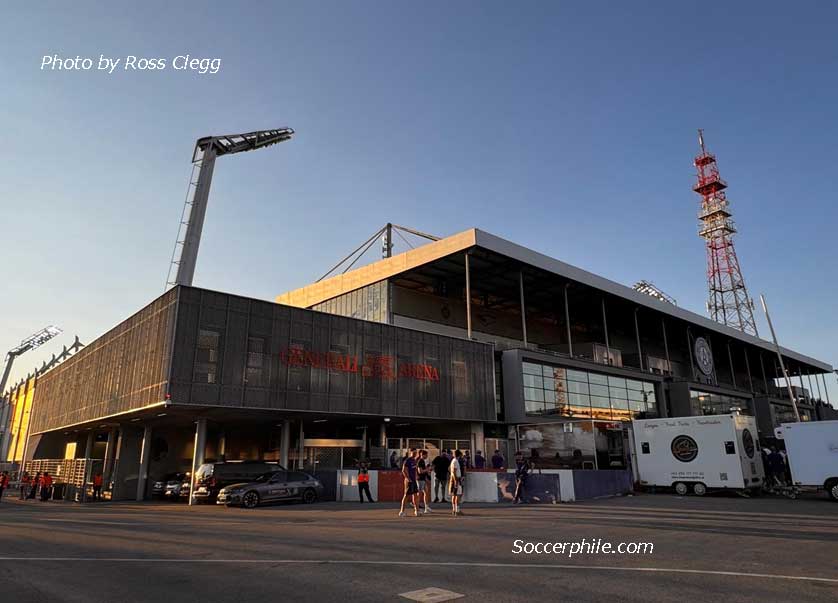
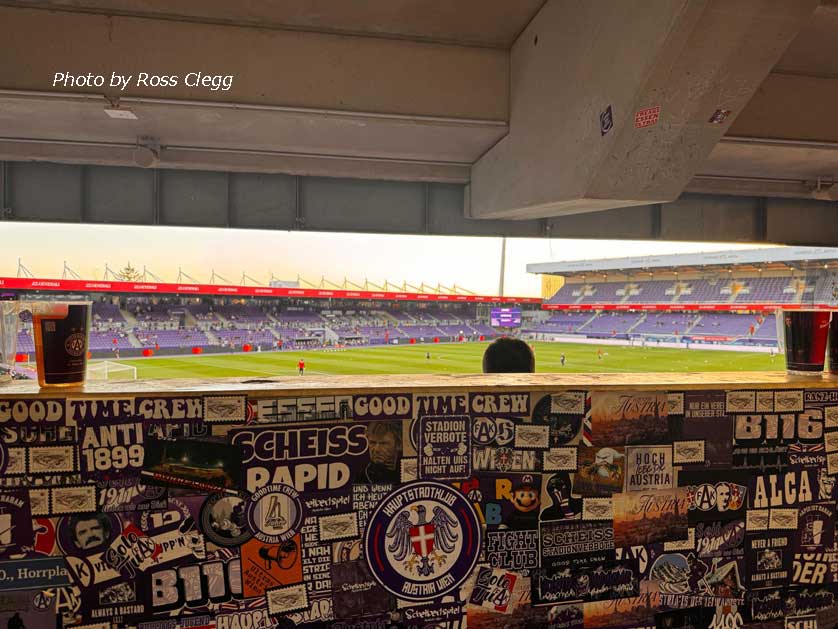
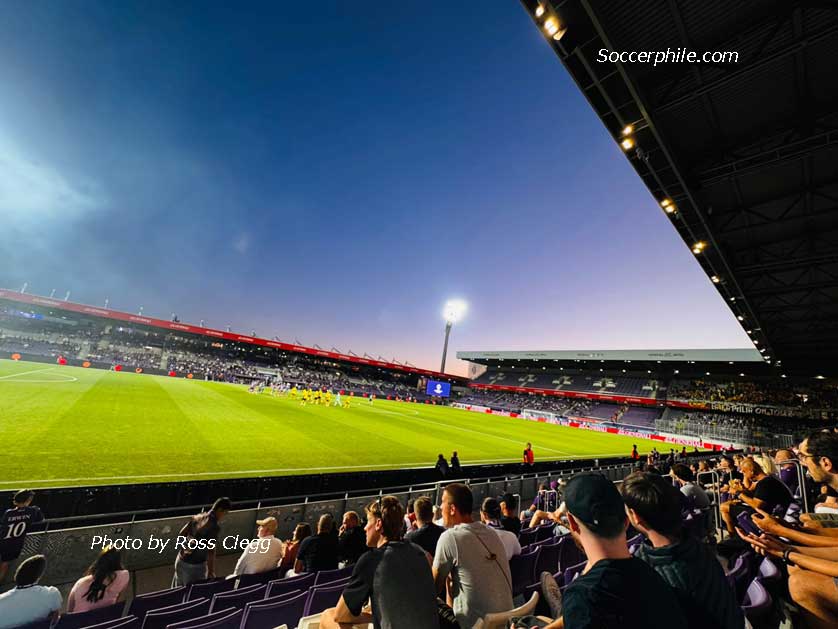
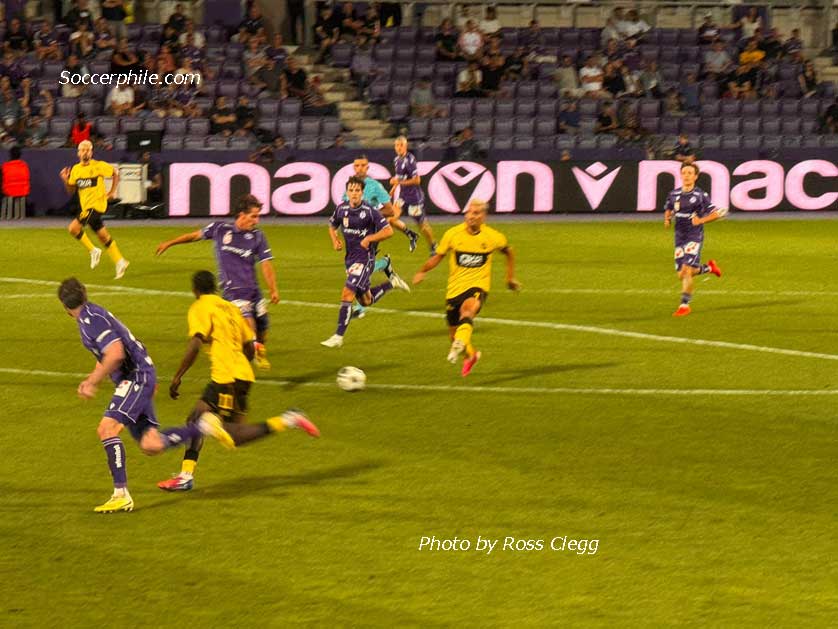
The Generali Arena (Franz Horr Stadium) in Vienna, Austria is the home ground of FK Austria Wien. It is called Viola Park for UEFA matches. The ground was not one of Austria's stadiums for Euro 2008 co-hosted with Switzerland.
The 17,500 capacity stadium first opened back in 1925 in the Favoriten district as the České srdce (Czech Heart) Platz, the home of SK Slovan Wien, a club associated with Vienna's immigrant Czech community.
The stadium was badly damaged during the Second World War and subsequently underwent reconstruction, becoming a venue for various sporting activities before eventually being taken over by the Vienna Football Association.
In 1973, FK Austria Wien moved to the ground, establishing what would become its permanent home, and following the death of Vienna Football Association president Franz Horr in 1974, the stadium was renamed the Franz-Horr-Stadion in his honour.
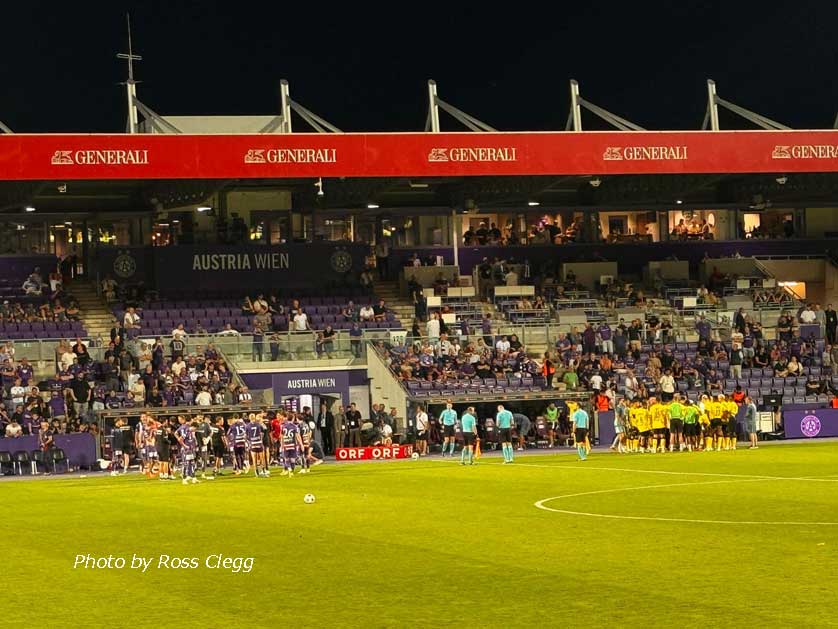
Over the following decades, the ground was progressively modernised, with new stands constructed in 1982, 1987, 1999 and 2008. A major redevelopment between 2016 and 2018 transformed the stadium into a modern 17,500-capacity football arena, officially reopening with a match between Austria Wien and Borussia Dortmund in July 2018.
The stadium had been renamed the Generali Arena in 2010 as part of a naming-rights agreement with the insurance company Generali, and it remains the home of Austria Wien.
The venue is cashless and has free WiFi throughout.
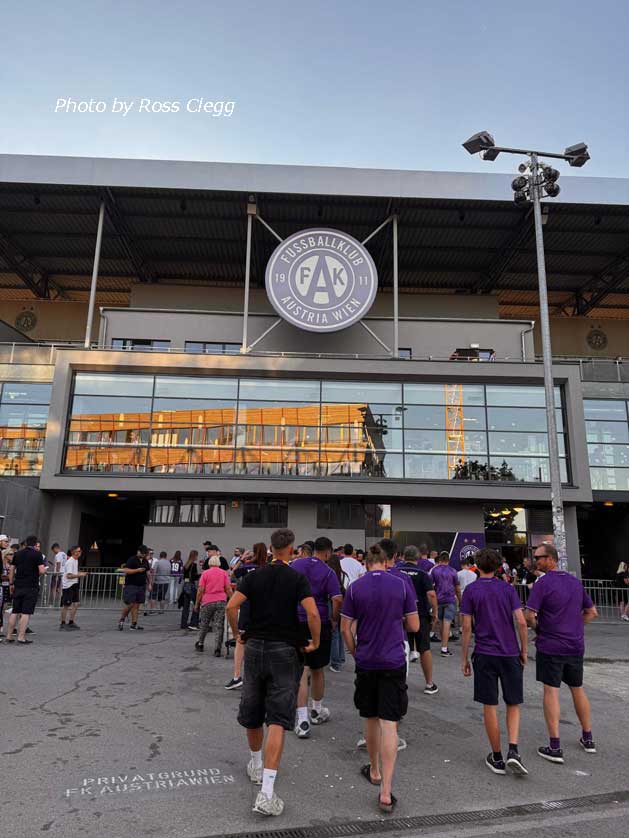
The Club: Austria Wien
FK Austria Wien's nickname is the Die Veilchen (Violets) after the club colors.
One of Austria's most successful and historic football clubs, FK Austria Wien was founded in Vienna in 1911 and originally played under the name Wiener Amateur-SV before adopting its present name in 1926.
Known as the Die Veilchen (Violets), the club enjoyed an outstanding period during the 1930s, winning the Mitropa Cup in 1933 and 1936, with the legendary forward Matthias Sindelar the outstanding figure of the team scoring 240 goals. Sindelar died in mysterious circumatances in 1939 aged only 35.
The club suffered greatly following the Anschluss in 1938, when many Jewish officials and members were persecuted under the Nazi regime. Following the Second World War, Austria Wien recovered and became a dominant force in Austrian football, with players such as Ernst Ocwirk, who won several league titles with the club and later returned as its manager, playing a major role.
Later generations produced other celebrated players, including Herbert Prohaska, Toni Polster, Walter Schachner and Thomas Parits. Prohaska was particularly influential during the club's successful 1970s and 1980s, while Polster became one of Austria's most prolific strikers.
Among the club's most notable coaches have been Hugo Meisl, who guided the team during its great inter-war period, Ernst Ocwirk, and later managers such as Walter Schachner, Christoph Daum and Joachim Löw. Löw managed the Germany national team from 2006 to 2021. He led Germany to win the 2014 FIFA World Cup in Brazil and the 2017 FIFA Confederations Cup. He holds the record for the most matches managed and won for Germany. In addition, his tenure of nearly 15 years is the longest for an international coach in Europe to date.
Austria Wien's honours include 24 Austrian championship titles and 27 Austrian Cups and counting, while its greatest European achievement came in 1978 when it reached the final of the European Cup Winners' Cup.
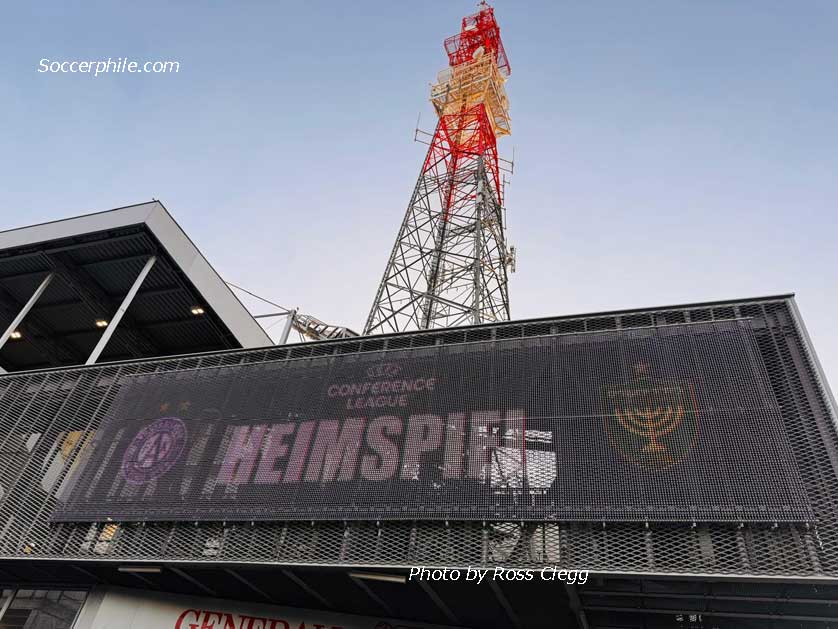
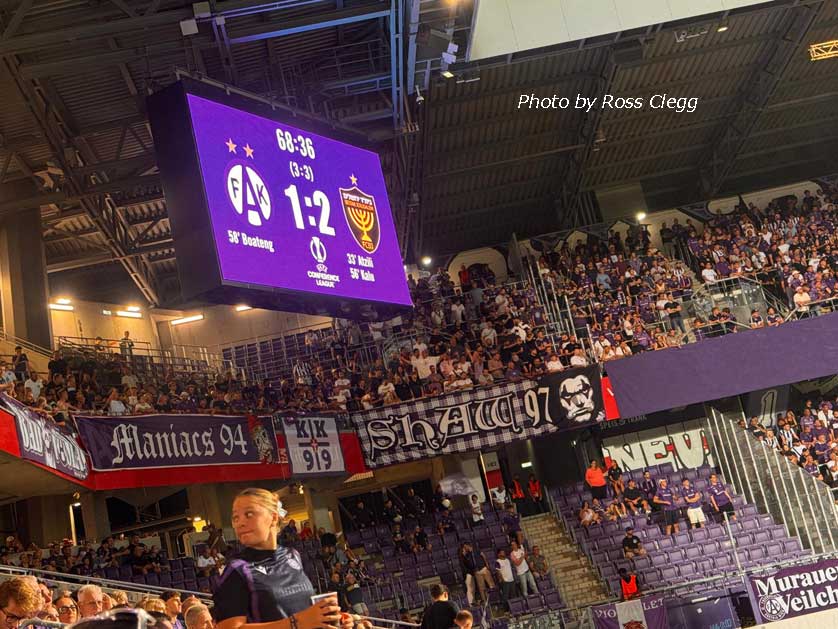
FK Austria Wien have competed in the UEFA Europa League multiple times, including reaching the group stage in seasons 2016-17 and 2017-18, as well as playing in its predecessor, the UEFA Cup. The Violets have also played more recently in the UEFA Conference League.
Fun Facts
The West Stand is the family stand with a kindergarten, raffles and autograph sessions with the players.
Super Leo and Leo Veilchen are the club mascots - two friendly purple lions.
Alongside their local rivals SK Rapid Wien, Austria Wien has never been relegated from the country's top flight.
In 1978, they became the first-ever Austrian football club to reach a major European final (the European Cup Winners' Cup) losing 4-0 to Anderlecht at the Parc des Princes in Paris.
The City: Vienna
Vienna is the largest city and capital of Austria with a population of over 2 million people.
The city has a long history and is renown for its grand architecture, classical music and rich cultural heritage. At its heart is the historic Innere Stadt, home to the magnificent St Stephen's Cathedral, the Hofburg Imperial Palace and the elegant streets of the old town.
Visitors can explore the magnificent Schönbrunn Palace, the former summer residence of the Habsburgs, and the Belvedere Palace, famous for its impressive Baroque architecture and Gustav Klimt's The Kiss.
Other highlights include the Vienna State Opera, the Kunsthistorisches Museum, the Albertina and the distinctive Hundertwasser House. The city is also known for its traditional coffee houses, Prater amusement park and giant Ferris wheel, while the River Danube and surrounding parks provide attractive opportunities for walking and relaxation.
Access - Getting There
The ground is close to the Altes Landgut station on the U1 underground line.
Address: Horrplatz 1, 1100 Vienna, Austria

From Vienna Hauptbahnhof simply take the U1 in the direction of Oberlaa and get off at Altes Landgut. The journey takes about 8 minutes. Other public transport options include bus line 15A, which runs to Generali Arena from Meidling train station or from the east via the U3 Enkplatz station, as well as bus lines 68A and 68B, which both stop at Theodor-Sickel-Gasse and travel along Laaerbergstraße.

Map of Vienna
Stadium Tours
The approximately three-hour stadium tour of the Generali Arena also includes admission to the museum, where visitors get an overview of Austria Vienna's history. After a short video clip, a welcome address by Herbert Prohaska, the guided tour begins in the East Stand.
Afterwards, the tour proceeds through the foyer to the modern VIP areas of the North Stand, then on to the away section and via the West Stand, including a visit to the children's play area, and on to the South Stand. The tour also takes in the players' tunnel, and the pitch. Finally, the tour includes a visit to the security control center, the TV studio, and the weight room in the South/East corner, before returning to the museum.

Vienna Hotels
Vienna offers a large and varied range of hotel and guesthouse options to suit most budgets.
Some recommendations in Austria's capital city include the Grand Hotel Wien which dates from 1870, and is a 5-star luxury hotel with over 200 rooms.
The Wilde Vienna Fleischmarkt has four stars and is centrally located.
All photos by Ross Clegg

World Stadiums
Estadio Nuevo Colombino Huelva
Tosu Stadium (Ekimae Real Estate Stadium)
©Soccerphile.com
Buy tickets for soccer matches around the world