
Soccer Stadiums in Tokyo & Surrounding Prefectures, Japan
Tokyo and the surrounding prefectures of Saitama, Chiba, Kanagawa and Ibaraki are home to the majority of Japan's population and has the highest concentration of soccer stadiums in the country including its largest football grounds.
See a listing of soccer stadiums in and around the Tokyo metropolitan area. If you are a soccer fan visiting Japan, the following are some of the grounds within easy reach of the center where you can catch a game and experience the atmosphere of a match in Japan.

Japan National Stadium, Tokyo
The Japan National Stadium (国立競技場/Kokuritsu Kyōgijō) was the venue of 2020 Tokyo Olympic and Paralympic games. Since then the stadium hosts international matches of Japan's men and women's national sides, the final of the Emperor's Cup and occasional J.League matches.
The previous National Stadium was built for the 1964 Tokyo Olympics and was demolished in 2016 to make way for the new structure. The 'New' National Stadium has a capacity of over 68,000 for football matches.
It was designed by the world famous Japanese architect Kengo Kuma. Kuma's works in Japan and overseas include the Nagasaki Prefectural Art Museum, Sanlitun Village in China, the V&A Dundee, Scotland, and the striking, wood and steel Asakusa Culture Tourist Information Center, also in Tokyo.
Timber sourced from all 47 of Japan's prefectures was used in the construction. Sustainability was a key concern and the stadium utilizes solar panels and recycled rain water. Thus, its design emphasizes a harmonious blend with nature, featuring a wooden lattice structure that integrates elements of traditional Japanese architecture with modern engineering techniques, a hallmark of Kuma's architectural ethos.
Tokyo National Stadium officially adopted the name "MUFG Stadium" for sponsorship reasons on January 1, 2026. This came after Mitsubishi UFJ Financial Group (MUFG) signed a five-year naming rights agreement with the stadium's operator.

Nissan Stadium, Yokohama
Nissan Stadium (日産スタジアム) aka International Stadium Yokohama was the venue of 2002 World Cup final and is the home stadium of J.League club Yokohama F. Marinos. The stadium opened in 1998 and has the highest capacity of any stadium in country at 72,327 for soccer matches (see below), though the National Stadium in Tokyo can hold more for other events.
From the outset the stadium has been owned and operated by the city of Yokohama and managed to accommodate a variety of events, from football and rugby matches to international pop concerts.
Nissan Stadium boasts a state-of-the-art eco-friendly design and operating facilities including a recycled water supply from the roof and local homes. Power is supplied from a nearby incinerator unit and heating/cooling from a local wastewater treatment plant.
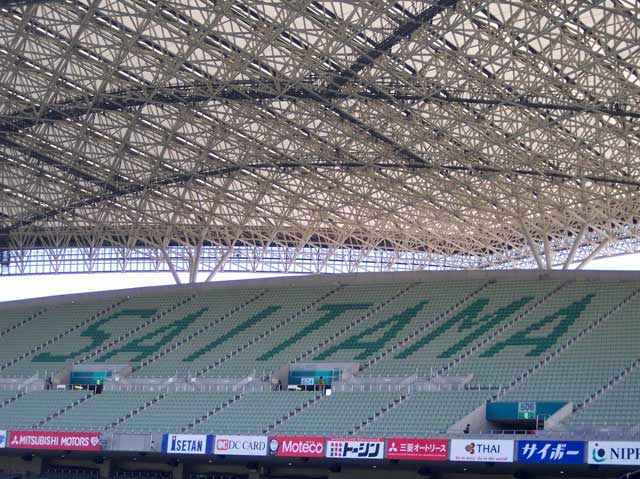
Saitama Stadium, Saitama
Saitama Stadium (埼玉スタジアム2002) is located north of the capital Tokyo near the town of Omiya. It is the home ground of Urawa Reds, the best-supported team in the J.League and a successful club with several domestic and continental titles. The ground (full name Saitama Stadium 2002) is the largest soccer-specific stadium in Japan and one of the biggest stadiums in Asia.
The 63,700 capacity stadium was built for the 2002 World Cup, though for J.League games the capacity is set at 62,300. Altogether the stadium hosted four games at World Cup 2002.
Urawa's fanatical support means the ground is often filled to near capacity for the club's J-League matches.
Often used for the Japan national team's World Cup and Asian Cup home qualifying games, the stadium can be considered the "Wembley of Japan." Additionally, Saitama Stadium hosted semi-finals of both the 2002 World Cup and the football tournament at the 2020 Summer Olympics.
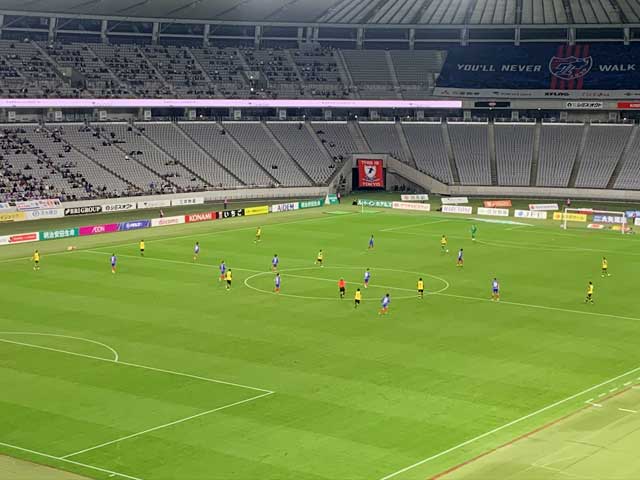
Ajinomoto Stadium, Tokyo
Ajinomoto Stadium (味の素スタジアム) in Chofu, western Tokyo is the home ground of J.League clubs FC Tokyo and Tokyo Verdy. It is the only venue which hosts two J.League clubs in Japan.
The multi-use, 50,000-capacity stadium opened in 2001. It sold its naming rights in 2003, the first stadium in Japan to do so, and is now known as Ajinomoto Stadium.
The ground also hosts other sports including rugby and American Football as well as music concerts and popular flea markets. It was a venue for both the 2019 Rugby World Cup and the 2020 Tokyo Olympics soccer tournament.
The sports complex as a whole also includes the smaller 3,060-seat Aminovital Field and the 800-seat AGF Field (former West Field). These are stadiums for American football, lacrosse, football and track and field mostly used by high school and university teams.
The stadium has various green features including a solar-power generating roof, plants growing in the walls to reduce carbon dioxide emissions and two wind power installations for outdoor LED lighting.
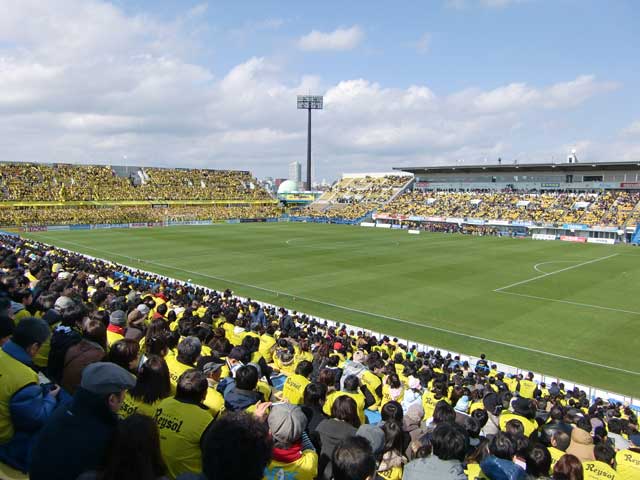
Kashiwa Stadium, Chiba
Kashiwa Stadium known as Sankyo Frontier Kashiwa Stadium (三協フロンテア柏スタジアム) in Chiba Prefecture is the home of J.League club Kashiwa Reysol. It is one of the oldest and smallest J.League stadiums in Japan. The 15,349 capacity stadium is located within Hitachidai Park.
The ground is owned by the Hitachi Corporation and was first known as Hitachi Kashiwa Stadium (日立柏サッカー場). It became Sankyo Frontier Kashiwa Stadium after a sponsorship deal with the construction equipment maker in 2018. It opened in 1985. At this time the 5,000 capacity stadium was used by Hitachi's corporate soccer team. Since the mid 1980s there has been a series of renovations to the ground.
The stadium is beginning to show its age and has only one stand with a roof, though this only covers a limited number of seats near the back. Larger sports stadiums such as the multi-purpose Kashiwa-no-ha Stadium are available but Reysol fans prefer the more intimate space without a running track at Kashiwa Stadium.

Machida Gion Stadium
Machida Gion Stadium (aka Machida Shiritsu Rikujo Kyogijo/町田市立陸上競技場) is the home of J.League club and 2025 Emperor's Cup winners Machida Zelvia. The 15,489 capacity stadium is located within Nozuta Park. The multi-purpose ground has a running track and also hosts rugby and athletics. It opened in 1990. Over the years the stadium has been expanded, renovated and upgraded.
Getting to the stadium is fairly straightforward from downtown Tokyo or Yokohama. From Shinjuku Station, take the Odakyu Line to Tsurukawa Station and then a bus as detailed below. Total journey time is around an hour. From Yokohama Station take the JR Yokohama Line to JR Machida Station (about 35 minutes) and then a bus from nearby Odakyu Machida Station (as below).
Take the direct bus to Nozuta Park from bus stop number 5 at Tsurukawa Station on the Odakyu Line and get off at the last stop, Nozuta Park. (The bus only operates when FC Machida Zelvia have home games, and runs approximately every 10 minutes from two hours before kickoff).
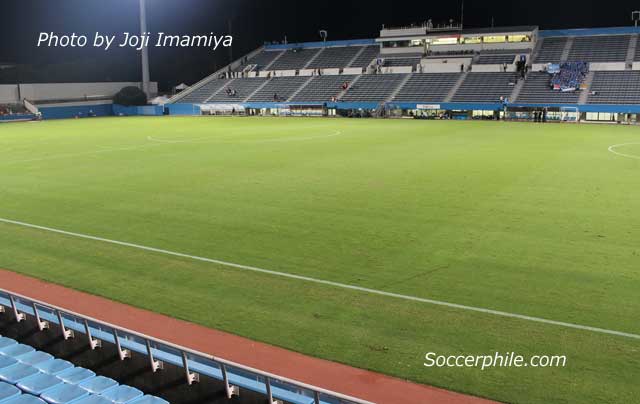
Mitsuzawa Stadium, Yokohama, Kanagawa Prefecture
NHK Spring Mitsuzawa Football Stadium (ニッパツ三ツ沢球技場) in Yokohama, Kanagawa Prefecture is the home ground of J.League side Yokohama FC. Until 1999 it was the home of Yokohama FC's predecessor, Yokohama Flügels.
Since March 2008 it has been called NHK Spring Mitsuzawa Football Stadium for sponsorship reasons. NHK Spring Company is not connected with NHK, the national broadcaster.
The stadium lies within the larger Mitsuzawa Park which also contains Mitsuzawa Park Athletic Stadium. The stadium first opened in 1955 and has a capacity of 15,454. It has been referred to as 'the first soccer-specific stadium in Japan.' It was built to host the 10th National Athletic Meet and also hosted some soccer games at the 1964 Tokyo Olympics.

Fukuda Denshi Arena, Chiba Prefecture
Fukuda Denshi Arena (フクダ電子アリーナ) aka 'Fukuari' is one of the best football-only facilities in Japan. The stadium was built as an alternative venue to JEF United's former home ground, the unpopular Ichihara Seaside Stadium.
The ground was the first modern soccer stadium to be built in Japan following the building boom preceding the 2002 World Cup co-hosted by Japan and South Korea. Fukuari is the home ground of J.League club JEF United. The club were one of the original 10 J.League clubs.
The 19,781 capacity stadium opened in October 2005 on what was a former Kawasaki Steel factory close to the ocean. The stadium is part of the larger Soga Sports Park and is located on the opposite side of Tokyo Bay from Haneda Airport.
There are four stands: North Side Stand (for home fans), South Side Stand (for away fans), Main Stand and Back Stand.

NACK5 Stadium, Omiya, Saitama Prefecture
NACK5 Stadium Omiya (ナックファイブスタジアム大宮) in Omiya, Saitama Prefecture is the home ground of J.League side RB Omiya Ardija, the second team in the city after the more prominent Urawa Reds. The ground is located about 10 km east of Urawa Reds' Saitama Stadium (see above).
The 15,491 capacity stadium was built in 1960 and was previously known as Omiya Football Stadium. The ground hosted matches at both the 1964 Summer Olympics and 1967 National Sports Festival of Japan. In 2006-2007, the stadium was closed for expansion to meet J. League Division 1 requirements, allowing Ardija to host its home matches. During this period, Ardija played at Saitama Stadium 2002 and Urawa Komaba Stadium until the renovations were completed.
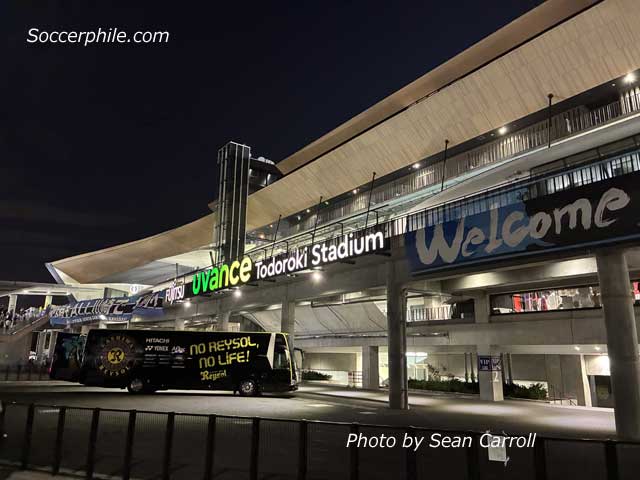
Todoroki Athletics Stadium, Kanagawa Prefecture
Todoroki Athletics Stadium (presently The Uvance Todoroki Stadium by Fujitsu) for sponsorship reasons in Kawasaki, Kanagawa Prefecture is the home ground of successful J.League side Kawasaki Frontale.
The 26,232 capacity stadium was built in 1962 and was previously known as Kawasaki Todoroki Stadium. The ground has also hosted other J.League teams including Verdy Kawasaki (Tokyo Verdy), Toshiba (Consadole Sapporo) and the now defunct NKK S.C.

Kashima Stadium, Ibaraki
Kashima Stadium (カシマサッカースタジアム) was a venue stadium for the World Cup 2002 Korea/Japan and is the home ground of successful J.League club Kashima Antlers. The stadium was also a venue for both the men and women's football events at the 2020 Tokyo Olympics. It has a capacity for 40,003 spectators. Since July 1, 2025 the stadium is now known as 'Mercari Stadium' ((メルカリスタジアム)) for sponsorship reasons. Mercari is an online marketplace and the largest shareholder in the club.
Antlers' legend Zico scored the first goal at the new stadium in a friendly versus Brazil's Fluminense in May, 1993. He followed that up with a hat-trick in the ground's first competitive J.League game versus Nagoya Grampus.
During World Cup 2002 the stadium was the venue for 3 group games: Argentina v Nigeria in Group F, Germany v Ireland in Group E and Italy v Croatia in Group G.
The stadium is rarely full - only travelling hordes of Urawa Reds fans push attendances towards capacity - yet it remains a hostile place to come and play, not least because the J. League's most successful club Kashima Antlers possess a relentlessly imposing home record.
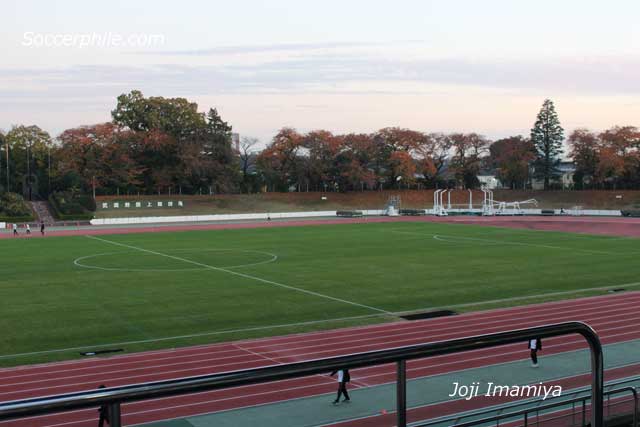
Musashino Municipal Athletic Stadium, Tokyo
Musashino Municipal Athletic Stadium (市立武蔵野陸上競技場) in western Tokyo is the home ground of JFL side Yokogawa Musashino FC. The stadium also hosts rugby matches and athletics. The stadium first opened as an athletics venue with a running track in 1989 and has a capacity of 5,000. The surface is natural grass; there are as yet no floodlights.
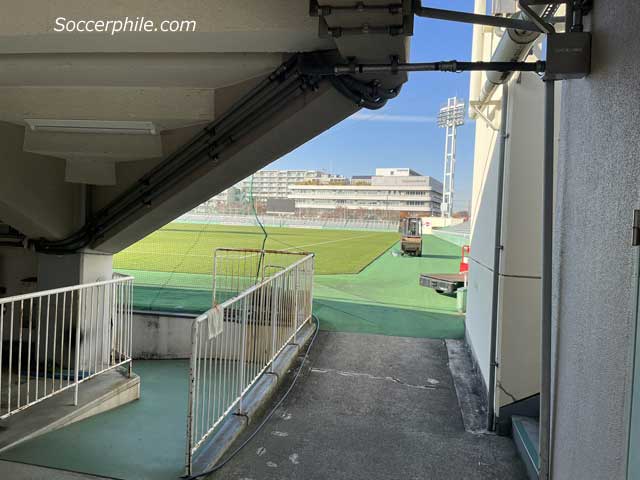
Ajinomoto Field Nishigaoka
Ajinomoto Field Nishigaoka (味の素フィールド西が丘) in Tokyo is a soccer specific stadium administered by the Japan Sports Council. It is part of the large Ajinomoto National Training Center which includes tennis courts, outdoor futsal pitches, the Japan High Performance Sport Center and an Athlete's Village. The stadium first opened in 1972 and has a capacity of 7,137. The ground is a ten-minute walk from Motohasunuma Station on the Toei Mita Line. Alternatively the ground is a 25-minute walk from Akabane Station or a 10 minute bus ride. Buses 赤50, 赤51, 赤57 and 赤80-2 are all convenient.
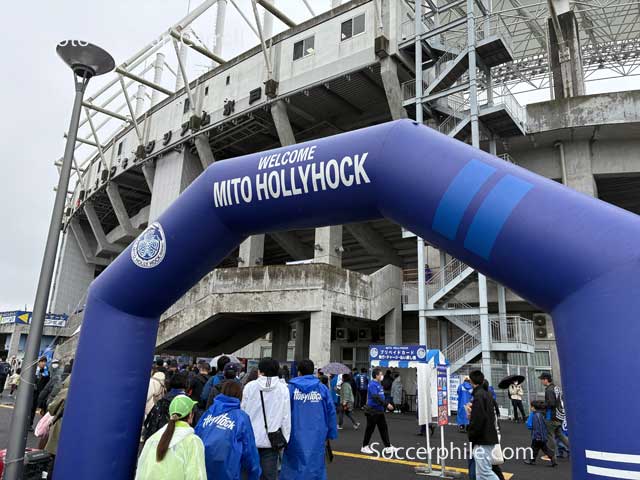
K's denki Stadium, Mito, Ibaraki Prefecture
K's denki Stadium (ケーズデンキスタジアム水戸/Ksスタ) in Mito, Ibaraki Prefecture is the home ground of J.League side Mito Hollyhock. Since 2009 it has been named K's denki Stadium for sponsorship reasons. Previously the arena was called simply Mito Municipal Stadium (水戸市立競技場). The stadium was damaged in the massive 2011 earthquake and tsunami which hit the Tohoku region of northeastern Japan.
The stadium first opened as an athletics venue with a running track in 1987 and has a capacity of 12,000 (10,152 for J-League matches). The main stand can accommodate 7,000 spectators, the back stand 3,000 and 2,000 on the lawn stands. The surface is natural grass; there is one large display video screen and traditional pylon floodlights.
Related
More Japan Stadiums
Tosu Stadium (Ekimae Real Estate Stadium)
©Soccerphile.com
Buy tickets for soccer matches around the world