
World Cup 2026 Teams' Home Stadiums

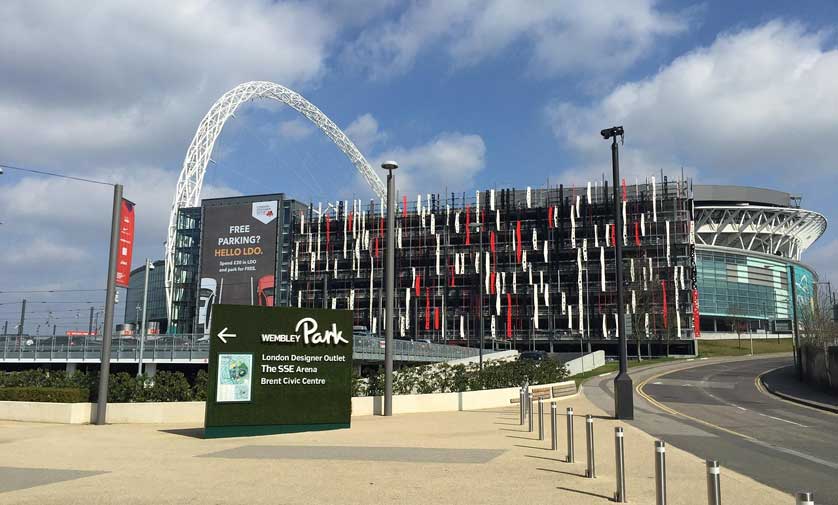
Many, though not all national football teams, have a commonly acknowledged home stadium. For example, England play most of their home games, though not 100%, at Wembley Stadium in London.
In the run up to Euro 2016 England played Turkey at the Etihad Stadium in Manchester and Australia at the Stadium of Light in Sunderland. Before that the Three Lions faced Sweden at Elland Road in 1995, Belgium at the Stadium of Light again in 1999, famously Greece at Old Trafford in 2001, when David Beckham's free kick sent England to Korea and Japan, a 1-3 loss to Australia at Upton Park in 2003, and a 2-0 win over Wales back at Old Trafford in 2004. More recently England faced Switzerland at the King Power Stadium, Leicester in 2018 and suffered their worst defeat in 94 years, 0-4 against Hungary at Molineux in 2022, a game resonant of the historic 6-3 drubbing at Wembley in 1953 against the same opponents.

Croatia, who England will meet in Group L at FIFA World Cup 2026 play mostly at the Maksimir Stadium in the Croatian capital, Zagreb, though occasionally they also play in Split.
Host the USA, have no clearly defined home stadium and play matches in different parts of their huge country as do Brazil.
As a general rule of thumb, the smaller the nation, the fewer venues are available.
Find out more about World Cup 2026 competing teams' home stadiums.
| National Team | Home Stadium; Capacity |
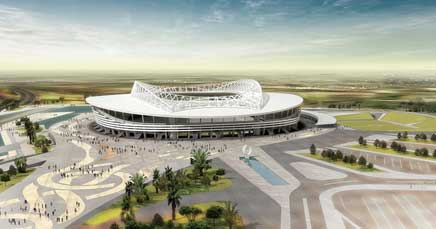
| Algeria | Nelson Mandela Stadium, Baraki, Algiers (40,784) |
| Argentina | Estadio Monumental, Buenos Aires (85,000) |
| Australia | Various; Stadium Australia (Accor Stadium), Sydney (83,000); Sydney Football Stadium, Sydney (42,000); Perth Stadium, Perth (60,000); Melbourne Rectangular Stadium, Melbourne (30,000); Adelaide Oval, Adelaide ( 53,500) |
| Austria | Ernst-Happel-Stadion, Vienna (50,865) |
| Belgium | King Baudouin Stadium [1] (Stade Roi Baudouin), Brussels (50,000) |
| Bosnia and Herzegovina | Bilino Polje Stadium, Zenica (15,000) and others |
| Brazil | Estádio Nacional Mané Garrincha [2] (Arena BRB Mané Garrincha), Brasilia (72,000) |
| Canada | BMO Field, Toronto (45,000 for 2026) |
| Cape Verde | Estádio Nacional de Cabo Verde, Praia (15,000) |
| Colombia | Estadio Metropolitano Roberto Meléndez, Barranquilla (46,788) |
| Croatia | Maksimir Stadium, Zagreb (35,123) |
| Curaçao | Ergilio Hato Stadium, Willemstad (10,000) |
| Czechia | Stadion Letná, (epet Arena), Prague (18,900) |
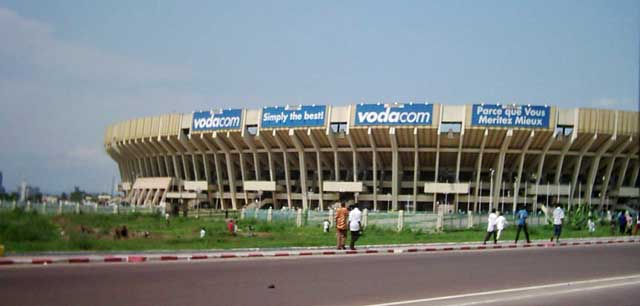
| DR Congo | Stade des Martyrs, Kinshasa (80,000) |
| Ecuador | Estadio Olímpico Atahualpa, Quito (35,000) |
| Egypt | Misr Stadium, Cairo (93,000) |
| England | Wembley Stadium, London (90,000) |
| France | Stade de France, Saint-Denis, Paris (81,338)[4] |
| Germany | Various - Olympiastadion, Berlin (74,475), Signal Iduna Park, Dortmund (81,000) & Allianz Arena, Munich (75,000)[5] |
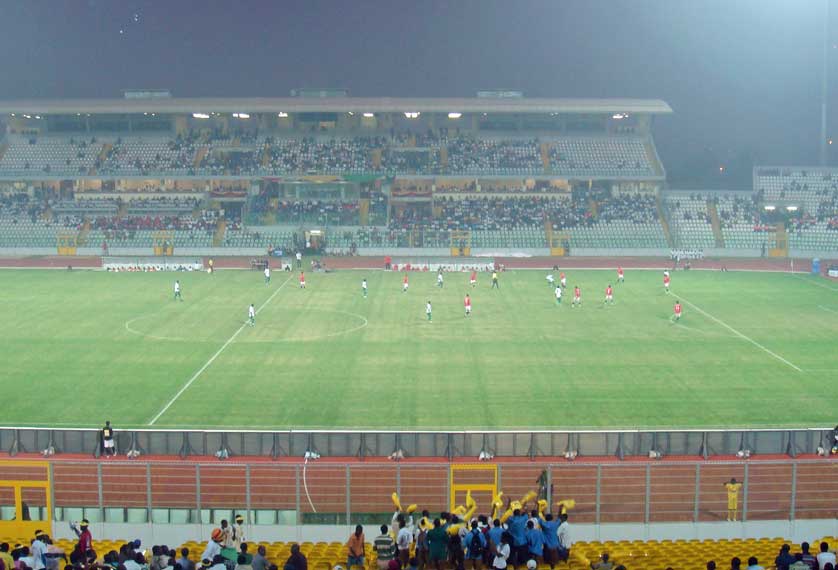
| Ghana | Accra Sports Stadium, Accra (40,000) & Baba Yara Stadium, Kumasi (40,500) |
| Haiti | Stade Sylvio Cator [3], Port-au-Prince, (10,500) |
| Iran | Azadi Stadium, Tehran (approx. 78,000) |
| Ivory Coast | Alassane Ouattara Stadium aka Olympic Stadium of Ebimpé, Abidjan (60,000); Stade Felix Houphouet Boigny, Abidjan (33,000) |
| Japan | Saitama Stadium, Omiya, (62,000) [6] |
| Jordan | Amman International Stadium (17,600); and the King Abdullah II Stadium, Amman (13,265) |
| Mexico | Estadio Azteca, Mexico City (87,523) |
| Morocco | Prince Moulay Abdellah Stadium, Rabat (68,700) |
| Netherlands | Johan Cruijff ArenA, Amsterdam (55,865) |
| New Zealand | Various: Sky Stadium (Westpac Stadium), Wellington, (34,500), FMG Stadium Waikato, Hamilton (25,800), Mount Smart Stadium, Auckland (25,000). |
| Norway | Ullevaal Stadium, Oslo (28,000) |
| Panama | Estadio Rommel Fernández Gutiérrez, Panama City (23,000) |
| Paraguay | Estadio Defensores del Chaco, Asunción (36,000) |
| Portugal | Not entirely fixed but Estádio da Luz, Lisbon (52,000) and Estádio do Dragão, Porto, (50,000) |
| Qatar | Various stadiums used for World Cup 2022: Ahmad bin Ali Stadium (45,000), Khalifa International Stadium (40,000), Al Thumama Stadium, Doha (44,400), Jassim bin Hamad Stadium, Al Rayyan (15,000). |
| Saudi Arabia | King Abdullah Sports City Stadium, Jeddah (62,345) |
| Scotland | Hampden Park, Glasgow (51,866) |
| Senegal | Diamniadio Olympic Stadium (Stade Abdoulaye Wade), Diamniadio (50,000) |
| South Africa | Various: Bafana Bafana use several of the 2010 World Cup stadiums including FNB Stadium (Soccer City), Johannesburg (94,734); Moses Mabhida Stadium, Durban (55,500); Free State Stadium, Bloemfontein (46,000); Mbombela Stadium, Mbombela (43,500) |
| South Korea | Seoul World Cup Stadium, Seoul (66,704) |
| Spain | Various stadiums throughout Spain: Santiago Bernabéu (85,000), Wanda Metropolitano, (70,692), Madrid, Camp Nou, Barcelona, (105,000); La Cartuja, Sevilla (70,000) |
| Sweden | Nationalarenan, aka Strawberry Arena (50,000), also home to AIK |
| Switzerland | Various: St. Jakob-Park, Basel (37,500); Stadion Wankdorf, Bern (32,000) |
| Tunisia | Hammadi Agrebi Stadium (aka Stade Olympique de Radès), Radè, Tunis (60,000) |
| Turkey | Atatürk Olympic Stadium, Istanbul (70,000) & various other stadiums in the country [7] |
| Uruguay | Estadio Centenario, Montevideo (60,235) |
| USA | Various including Mercedes-Benz Stadium, Atlanta (71,000); SoFi Stadium, LA (70,000), Lumen Field, Seattle (69,000) |
| Uzbekistan | Milliy Stadium aka Bunyodkor Stadium, Tashkent (34,000); Pakhtakor Central Stadium, Tashkent (35,000) |
Notes
[1] Formerly Heysel Stadium which was rebuilt following the 1985 Heysel disaster
[2] Brazil does not really have one single permanent national stadium, but the Maracanã Stadium in Rio de Janeiro is their most famous and often used venue for major matches. The Seleção rotate home games across various stadiums in Brazil to showcase the team nationwide, often using large grounds in cities like São Paulo.
[3] Due to domestic unrest, Haiti played their home qualifying matches in Curaçao. Indeed, their coach, Sebastien Migne, has yet to set foot in the country and the squad is entirely foreign-based.
[4] For qualifying matches for World Cup 2026, France played their games at PSG's Parc des Princes in Paris.
[5] Germany's qualifying games for World Cup 2026 took place at the Red Bull Arena in Leipzig, the RheinEnergieStadion in Cologne and the Rhein-Neckar-Arena in Sinsheim.
[6] During qualifying for World Cup 2026, Japan also played at Suita City Football Stadium in Suita, Osaka.
[7] Atatürk Olympic Stadium hosted the 2005 Champions League Final between Liverpool and AC Milan.

World Cup Tickets
Buy tickets for World Cup 2026 from HelloTickets
FIFA World Cup 2026
England v Croatia - A Rivalry Revisited
Trionda - 2026 World Cup Official Ball - it's round and gets a kicking
2026 World Cup Groups - A-L
Coaches at World Cup 2026 - men in the hot seat
World Cup 2026 Schedule - all the games listed
World Cup 2026 Draw - deconstructed
Team Nicknames at WC2026 - lions, wolves, elephants
Team Jerseys World Cup 2026 - all the kits for '26
Mascots for World Cup 2026 - meet La'Maple the Moose (Canada), Zayu the Jaguar (Mexico) and Clutch the Bald Eagle (United States)
Gallery



World Cup Venue Cities
2026 World Cup Venue Cities Guide - All 16 venues in USA, Mexico and Canada.
Buy tickets for soccer matches around the world